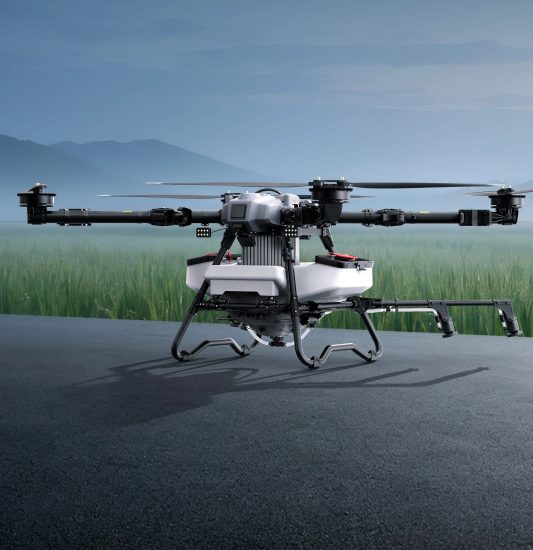


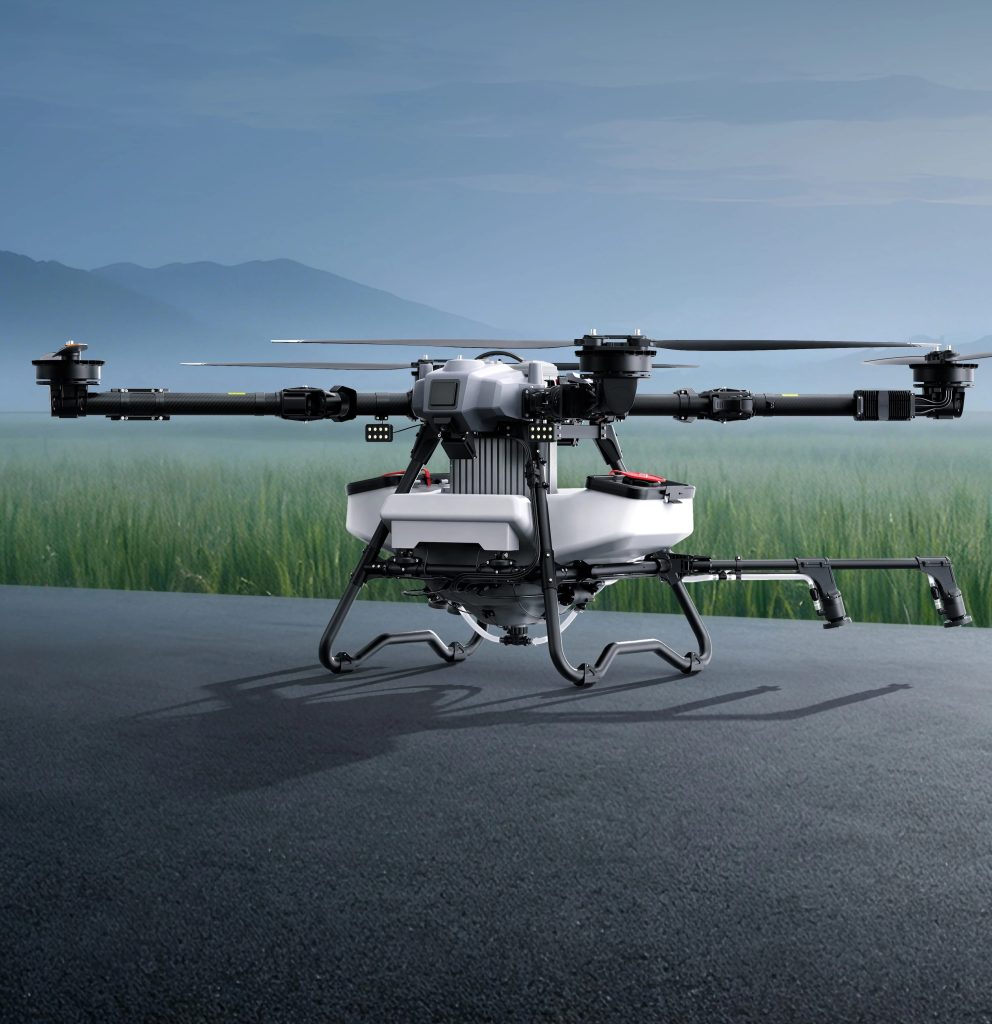
Switzerland has quietly become one of the most important innovation hubs for crop protection UAVs in Europe. While the global conversation around agricultural drones has long been dominated by Asian mass-market brands, Swiss manufacturers have carved out a distinct position: engineered for precision, built for sustainability, and certified for the world’s most demanding environmental standards. This article explores what defines a Swiss agricultural drone sprayer manufacturer, the technology that sets these platforms apart, and why global distributors, vineyards, and high-value crop operators are increasingly looking to Switzerland for their crop protection UAV solutions.
Why Switzerland? The Engineering Heritage Behind the Drone
Swiss agricultural drone manufacturers operate in a unique ecosystem. The country’s agricultural landscape — characterized by steep vineyards, fragmented plots, and high-value specialty crops — demanded a different kind of spraying solution from the outset. Tractor-based spraying in the terraced vineyards of Valais or Vaud is not merely inefficient; it is genuinely hazardous. This geographic reality forced Swiss engineers to solve problems that flat-land agriculture never had to confront.
The result is a generation of electric, lightweight, centimeter-accurate crop protection UAVs that prioritize precision over raw payload. Where mass-market drones compete on tank size, Swiss manufacturers compete on spray accuracy, environmental compliance, and operator safety.
Aero41, one of the most prominent Swiss crop protection drone manufacturers, exemplifies this philosophy. Founded in 2019 and headquartered in Aigle and Lausanne, Switzerland, Aero41 is the only crop protection drone manufacturer on the market officially labelled “Swiss made” . In March 2024, the company became a majority-owned subsidiary of Tonner Drones (91% stake) , giving it the capital backbone to scale internationally while retaining its Swiss engineering DNA.
What a Swiss Crop Protection UAV Actually Delivers
Engineered for Hard-to-Reach Terrain
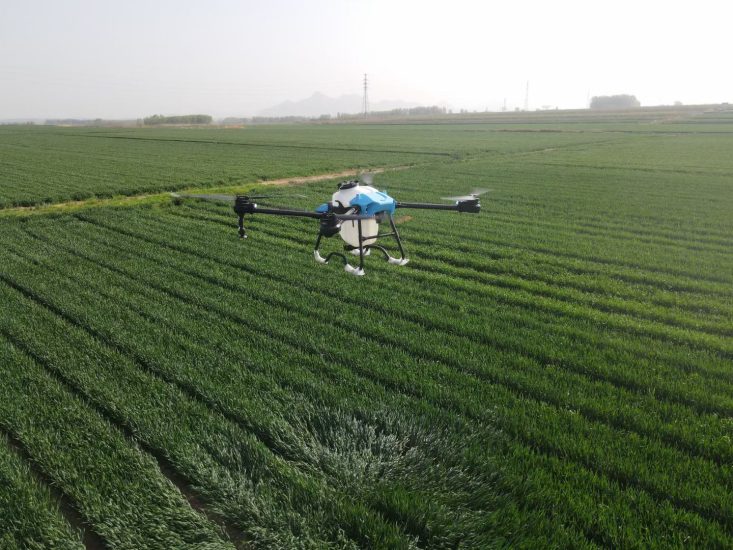
The flagship Aero41 AGv2 platform carries a 17-litre tank specifically designed for vineyards and vertically growing, high-value crops . It operates at 10.5 km/h with an optimized spraying ramp for ideal distribution. The larger Aero41 platform boasts a payload capacity of up to 42 kg, covers 1,700 m² in just 6–8 minutes, and can be deployed by a single operator in five minutes from a van or pickup truck .
These specs tell a story: Swiss drones are not built to blanket 100-hectare grain fields in a single flight. They are built to navigate steep inclines, weave through vineyard rows, and treat high-value crops with surgical precision — exactly the use cases that traditional agricultural aviation cannot serve.
Electric Propulsion & Environmental Compliance
Swiss crop protection UAVs run on clean electric propulsion . This is not merely a marketing choice; it is a regulatory necessity. Switzerland enforces some of the world’s strictest environmental standards for pesticide application, and the “Swiss made” label carries a legal obligation to minimize ecological footprint.
The Aero41 approach goes beyond the drone itself. The company has partnered with start-up Dpendent Sàrl to develop an automated filling station — a system with a collecting tray and mixing tank that allows the AGv2 to land with centimeter precision and automate the entire filling sequence . The objective is clear: transform the end user into a “simple observer” fully protected from any contact with crop protection chemicals.
This design philosophy directly addresses one of the most serious, yet under-discussed, problems in agriculture: farmer exposure to pesticides during mixing and loading. By automating the filling process, Swiss manufacturers are not just selling a drone — they are selling a completely redesigned, human-safe crop protection workflow.
RTK Centimeter-Level Positioning
Precision is the defining feature of Swiss crop protection UAVs. RTK (Real-Time Kinematic) positioning uses a fixed ground reference station to correct GPS signal errors in real-time, achieving positional accuracy within 2–3 centimeters .
This level of precision eliminates the two biggest problems in drone spraying: overlap (wasting chemicals) and missed strips (leaving pests untreated). For vineyards, where rows are narrow and terrain is uneven, centimeter-level navigation is not a luxury — it is the only way to achieve uniform coverage.
AgroFly, another pioneering Swiss company, demonstrated this capability as early as 2017. Its 40 kg spraying UAV — carrying up to 20 kg payload and 16 litres of liquid — flew over vines at 1.5 m above ground, directed by RTK GPS with centimetre accuracy . Trials were conducted in the Valais region in collaboration with Syngenta and Agroscope, with the explicit goal of maximizing deposits on the vines while minimizing drift .
The Swiss Advantage: Certification & Regulatory Readiness
One of the most compelling reasons global buyers turn to Swiss agricultural drone manufacturers is regulatory readiness.
AgroFly developed the first crop-spraying UAV system certified by Swiss national authorities — spanning civil aviation, agricultural, public health, and environmental agencies . Scientific assessments were conducted jointly with:
-
Agroscope (the Swiss institute for agricultural research) — noise, application homogeneity, nozzle configuration
-
University of Geisenheim — ISO 22866 drift assessments
-
Syngenta Global — Crop Protection / Application Technology department — quality deposit and drift measurement
This multi-agency certification process is uniquely Swiss. A distributor importing a Swiss-certified crop protection UAV inherits a documentation package that satisfies the world’s most rigorous environmental and aviation regulators. For buyers in the EU, North America, and increasingly regulated markets like Brazil and Australia, this translates into dramatically faster local approval timelines.
Aero41’s strategic decision to adopt PX4 and MAVLink open-source flight control standards — the same standards chosen by the U.S. Department of Defense — further reinforces its global compatibility . At a time when some governments are questioning the security of closed-source, foreign-made agricultural drones, Swiss manufacturers offer a transparent, auditable, and politically neutral alternative.
Real-World Deployment: Proven at Scale
The credibility of a Swiss agricultural drone sprayer manufacturer is best measured by actual field deployments.
Aero41 has delivered more than 30 drones to over 25 clients across Switzerland, Germany, Austria, and France . Its customer base spans:
-
Organic farmers who value automated, minimal-intervention operations
-
Vineyard operators in steep-terrain regions
-
High-value crop producers requiring centimeter-accurate treatment
In 2022, Aero41 raised CHF 700,000 in seed funding from Boundary Holding, a European deep-tech investment firm, to expand sales across Europe and the United States . The company explicitly positions its technology for “the most complex and hard to reach terrains” — from steep vineyards to high-elevation tea fields .
The Broader Swiss Precision Agriculture Ecosystem
Swiss innovation in crop protection extends beyond drones. Ecorobotix, a Vaud-based agritech company, has developed the ARA Ultra-High Precision Sprayer — an AI-powered, tractor-mounted robot that uses computer vision to spot-spray herbicides with 3 × 8 cm precision, reducing chemical use by up to 95% . In May 2023, Ecorobotix secured USD 52 million in growth capital, with backing from chemical giants BASF and Yara .
In 2026, Ecorobotix announced a $50 million investment to expand U.S. operations, assembling its ARA sprayers in Lyons, Kansas . This move signals a broader trend: Swiss precision agriculture technology is going global, and drone-based crop protection is a core part of that expansion.
For a Swiss agricultural drone sprayer manufacturer, this ecosystem provides:
-
Shared R&D infrastructure (Agroscope, EPFL, ETH Zurich)
-
Access to world-class AI and computer vision talent
-
A culture of environmental compliance that resonates with global ESG-driven buyers
-
Proven venture capital appetite (Boundary Holding, Highland Europe, BASF, Yara)
Key Technical Specifications: What to Look for in a Swiss Crop Protection UAV
When evaluating a Swiss-made agricultural drone sprayer, professional buyers should verify the following:
Specification |
Swiss Market Standard |
Why It Matters |
|---|---|---|
Payload Capacity |
17 L (AGv2) to 42 kg (large platform) |
Optimized for vineyards & high-value crops |
Coverage Rate |
1,700 m² in 6–8 min |
Single-operator productivity |
Deployment Time |
5 minutes, solo |
Minimal labor requirement |
Positioning |
RTK, 2–3 cm accuracy |
Zero overlap, zero missed strips |
Propulsion |
Clean electric |
Regulatory compliance & low noise |
Certification |
Multi-agency Swiss certification |
Global import readiness |
Flight Control |
PX4 / MAVLink (open source) |
Security auditability, DoD-compatible |
Filling System |
Automated station (optional) |
Operator safety from chemical exposure |
Choosing a Swiss Agricultural Drone Sprayer Manufacturer
For global distributors, cooperatives, and large-scale farming operations evaluating Swiss suppliers, consider the following:
1. Verify the “Swiss made” label. Aero41 is officially certified as “Swiss made” — a legally protected designation that guarantees Swiss-origin components and Swiss-based manufacturing . Not every company claiming to be “Swiss” meets this bar.
2. Assess your terrain and crop profile. Swiss UAVs excel in vineyards, orchards, steep terrain, and high-value specialty crops. If your primary use case is 1,000-hectare grain fields, a high-payload Asian brand may be more cost-effective. If you operate in fragmented, high-value, or hard-to-reach terrain, Swiss precision is unmatched.
3. Evaluate certification documentation. Request the full agronomic assessment package (drift tests, deposit studies, noise measurements). Swiss manufacturers like AgroFly have already conducted these with Agroscope and Syngenta — this documentation can fast-track your local regulatory approval .
4. Plan for the filling station upgrade. Aero41’s automated Dpendent filling station represents the future of operator-safe crop protection . If your operation prioritizes worker safety and environmental compliance, this is a decisive advantage over manual-mix systems.
5. Consider open-source flight control. PX4/MAVLink compatibility means you are not locked into a proprietary ecosystem. Your data remains yours, your security posture is auditable, and your future upgrade path is open .
The Global Trajectory
The Swiss agricultural drone sprayer manufacturing sector is at an inflection point. With Aero41 now backed by Tonner Drones’ consolidation strategy , AgroFly’s certified SpUAV platform, and Ecorobotix’s $50M U.S. expansion , Swiss precision agriculture technology is rapidly transitioning from a domestic niche to a global category.
For buyers, the message is unambiguous: if your operation values precision over payload, environmental compliance over cheap chemicals, and long-term sustainability over short-term cost — a Swiss crop protection UAV is not merely an option, it is the benchmark.
The terrains may be steep, the vines may be narrow, and the environmental standards may be uncompromising — but that is precisely why Swiss agricultural drone sprayer manufacturers exist. They were engineered for exactly these conditions. And now, they are ready for yours.
About Swiss Crop Protection UAV Technology: This article is written for global distributors, vineyard operators, and agricultural cooperatives evaluating Swiss-manufactured agricultural drone sprayers. For technical specifications, certification documentation, or distribution partnerships, contact a verified Swiss manufacturer directly. The “Swiss made” label is legally protected and guarantees Swiss-origin engineering, manufacturing, and quality assurance.
THE END


No comments yet