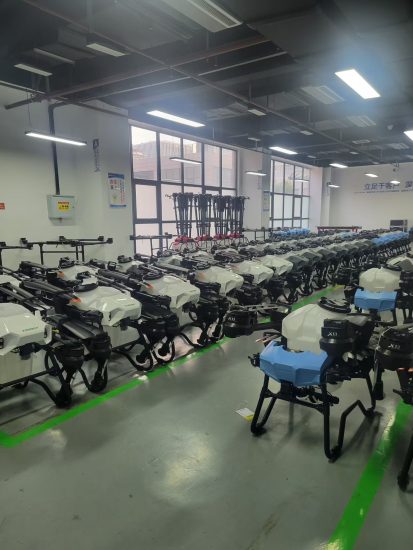


Agricultural Drone Fleet
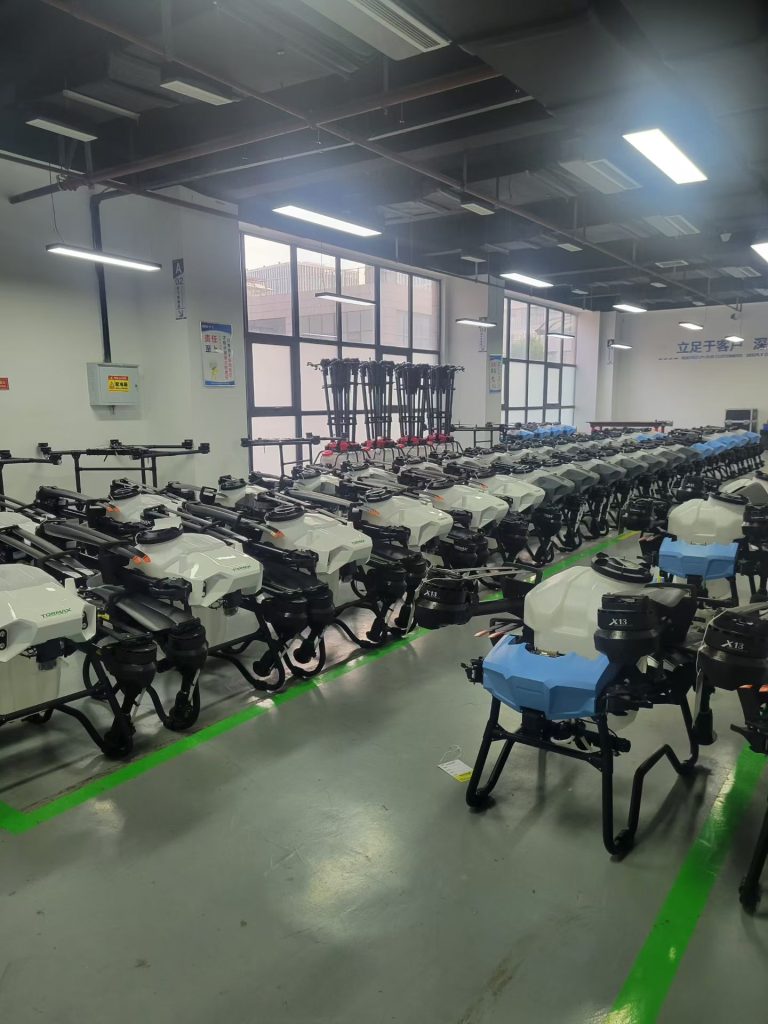
Management: How to Build a Reliable Commercial Drone Operation
Buying one agricultural drone is mainly a product-selection decision.
Managing five, ten, twenty, or more agricultural drones is an operational decision.
Once a drone becomes part of a commercial farming or crop-spraying business, the aircraft itself is only one part of the system. Battery availability, charging, operators, spare parts, maintenance, transportation, scheduling, field conditions, and manufacturer support can all determine whether the fleet actually delivers the expected productivity.
This is why agricultural drone fleet management should be planned before a large equipment order is placed.
A well-designed fleet is not necessarily the fleet with the largest number of drones or the highest payload. It is the fleet that can maintain reliable operating capacity when the farming season becomes busy.
What Is Agricultural Drone Fleet Management?
Agricultural drone fleet management is the process of organizing multiple agricultural UAVs, operators, batteries, charging equipment, spare parts, maintenance schedules, field assignments, and technical support as one operating system.
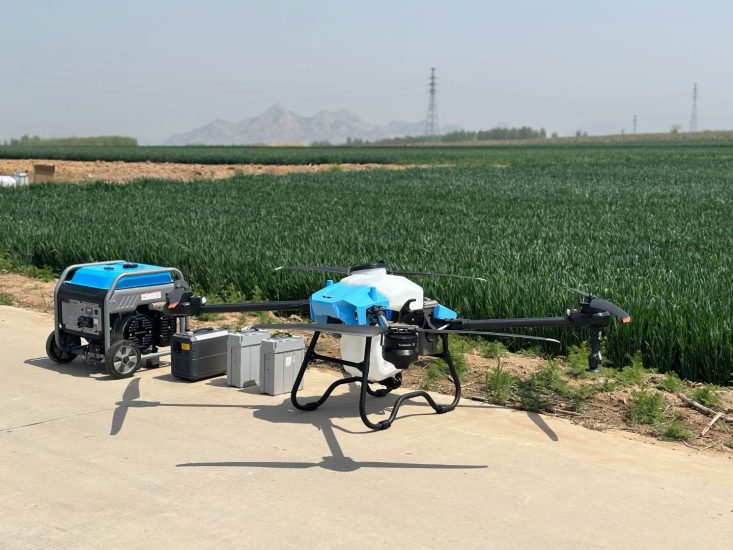
A commercial fleet may include:
- Agricultural spraying drones
- Fertilizer spreading drones
- Flight batteries
- Battery chargers
- Remote controllers
- Pumps and spraying components
- Nozzles and filters
- Spare motors and propellers
- Maintenance equipment
- Transportation equipment
- Trained operators
- Technical documentation
- Replacement parts
The purpose is simple: keep the required number of aircraft ready to work when the field requires them.
A drone sitting on the ground because its battery is unavailable is not productive capacity. A second drone waiting for a replacement pump is also not productive capacity.
For commercial operators, availability matters almost as much as aircraft specifications.
When Does a Farm Need Multiple Agricultural Drones?
Not every large farm needs a large fleet.
The better question is:
How much agricultural work must be completed during the available operating window?
For example, a farm may have a large total area but only need spraying during several specific periods of the growing season. Another operation may provide spraying services to multiple customers and need aircraft almost every working day.
Multiple drones become more attractive when:
- Treatment windows are short
- Several fields need service at the same time
- Weather can interrupt operations
- The business serves multiple farms
- One aircraft cannot meet daily workload requirements
- Equipment downtime creates significant losses
- The operator wants backup capacity
- The company plans to expand its service area
This means fleet size should be connected to actual workload rather than simply farm acreage.
Start With the Workload, Not the Number of Drones
A common mistake is to decide:
“We need ten drones.”
before calculating what those ten drones actually need to accomplish.
A better planning process starts with:
- Total area requiring treatment
- Crop types
- Application frequency
- Available working days
- Daily operating hours
- Expected spraying rate
- Refill time
- Battery replacement time
- Travel time between fields
- Weather limitations
- Number of available operators
- Required backup capacity
Only after these factors are understood should the buyer decide how many aircraft are necessary.
The same fleet size can produce very different results in two different farming environments.
A compact farm with short distances between fields may operate efficiently with fewer batteries and operators. A fragmented operation covering multiple locations may require more transportation capacity and additional backup aircraft.
One Large Drone or Several Medium-Capacity Drones?
This is one of the most important decisions in fleet planning.
A high-capacity agricultural drone can carry more liquid or material per flight. That can reduce refill frequency and potentially increase productivity.
However, a larger aircraft also means:
- Higher equipment investment
- Greater battery requirements
- More demanding transportation
- Larger charging requirements
- Higher replacement-part costs for some components
- Greater dependence on each individual aircraft
Several medium-capacity drones create a different operating model.
If one aircraft is undergoing maintenance, other aircraft can continue working. Operators can also divide the fleet between different fields.
For many commercial operations, redundancy has real value.
The objective should therefore be to find the right balance between:
Payload + productivity + reliability + investment + availability.
There is no universal fleet configuration that works for every agricultural business.
Crop Type Should Influence Fleet Design
A fleet used for rice fields may have different requirements from a fleet used primarily in orchards.
Rice fields can involve wet or soft ground, large continuous areas, and relatively open flight paths.
Orchards can require more careful navigation because of:
- Tree height
- Canopy density
- Row spacing
- Terrain
- Obstacles
- Different crop structures
Vineyards may involve narrow rows and uneven terrain, while large field crops may prioritize coverage efficiency.
For this reason, fleet planning should begin with the actual agricultural application.
MSOEN’s guide to crop-specific agricultural drones explains how rice, fruit trees, vineyards, and field crops can require different configurations and operating approaches.
Agricultural Drones for Rice, Fruit Trees and Field Crops
Tank Capacity Is Only One Part of Fleet Productivity
When buyers compare agricultural drones, tank capacity is often the first specification they notice.
But a larger tank does not automatically mean proportionally higher daily output.
Actual productivity can be influenced by:
- Tank capacity
- Spray width
- Flight speed
- Flow rate
- Application rate
- Battery endurance
- Refill time
- Battery replacement time
- Field shape
- Travel distance
- Operator efficiency
- Weather
- Maintenance downtime
For example, a large tank may reduce refill frequency, but if the aircraft requires significantly more time to recharge or transport, some of the expected productivity advantage may disappear.
This is why fleet planning should use complete operating cycles, not a single specification.
Battery Management Can Make or Break a Fleet
For a commercial agricultural drone fleet, batteries are not simply accessories.
They are production resources.
Imagine a company owns eight drones but only has enough charged batteries to keep three or four aircraft working continuously.
The business does not really have eight fully operational aircraft.
Battery planning should consider:
- Number of drones
- Flight time under actual payload
- Charging time
- Number of daily operating hours
- Battery replacement time
- Charger capacity
- Battery cooling requirements
- Backup batteries
- Battery storage
- Battery service life
The exact number of batteries required depends on the aircraft configuration and operating schedule.
For intensive operations, buying one battery set per aircraft may not be sufficient.
Build a Battery Rotation System
A professional fleet should have a defined battery rotation process.
For example:
Aircraft operating → Battery removed → Battery charging → Battery cooling/inspection → Battery returned to operation
The goal is to avoid having aircraft waiting for batteries.
Fleet managers should also record battery usage rather than treating all batteries as identical.
Useful information includes:
- Battery identification
- Number of cycles
- Purchase date
- Charging history
- Operating condition
- Abnormal temperature events
- Replacement date
This becomes increasingly important as fleet size increases.
Spare Parts Should Be Purchased Before the Busy Season
Waiting until a component fails is one of the easiest ways to increase fleet downtime.
A commercial operation should establish a basic spare-parts inventory before the main agricultural season.
Depending on the aircraft, commonly required parts may include:
- Propellers
- Motors
- Pumps
- Nozzles
- Filters
- Hoses
- Connectors
- Power cables
- Landing components
- Electronic modules
- Spraying components
International buyers should pay particular attention to spare-parts availability.
If a replacement part must be shipped internationally after a failure occurs, the aircraft may remain unused while waiting for delivery.
For a large fleet, spare parts should be treated as part of the original procurement plan.
Standardization Makes Fleet Management Easier
If every aircraft in a fleet uses a completely different configuration, management becomes complicated.
Operators need different training.
Technicians need different maintenance procedures.
The company needs more types of spare parts.
Battery management becomes more complicated.
Technical support becomes more difficult.
Where practical, commercial buyers should consider standardizing the fleet around a smaller number of proven configurations.
Standardization can simplify:
- Operator training
- Battery management
- Maintenance
- Spare-parts inventory
- Software configuration
- Troubleshooting
- Technical support
- Future procurement
This is particularly important for distributors and agricultural service companies.
Operator Training Is Part of the Equipment Investment
A commercial fleet is only as effective as the people operating it.
Operators should understand:
- Pre-flight inspection
- Battery procedures
- Flight controls
- Route planning
- Spraying system operation
- Emergency procedures
- Basic troubleshooting
- Post-operation cleaning
- Equipment storage
- Local operating requirements
A standardized checklist can help ensure that different operators follow the same basic procedures.
A pre-flight inspection may include:
- Battery condition
- Propellers
- Motors
- Tank
- Pump
- Nozzles
- Hoses
- Remote controller
- Positioning system
- Flight environment
- Emergency procedures
Training should not be treated as an optional extra when purchasing a commercial fleet.
Preventive Maintenance Is Better Than Emergency Repair
Fleet maintenance should be planned before the equipment becomes unreliable.
A useful maintenance record can contain:
| Item | Information to Record |
|---|---|
| Aircraft | Serial number or fleet ID |
| Flight time | Total operating hours |
| Battery | Cycle count and condition |
| Motors | Inspection and replacement history |
| Propellers | Inspection and replacement |
| Pump | Operating condition |
| Nozzles | Cleaning and replacement |
| Electronics | Fault history |
| Repairs | Date and repair details |
| Software | Version and update record |
This information allows fleet managers to identify recurring problems.
If one aircraft repeatedly requires the same repair, the problem can be investigated before it affects the entire fleet.
Fleet Availability Is a More Useful KPI Than Maximum Payload
Maximum payload is easy to advertise.
Fleet availability is harder to see, but often more useful to a commercial operator.
Consider a fleet with ten aircraft.
If all ten are operational, the business has ten available aircraft.
If three are waiting for repairs, spare parts, batteries, or technical support, the effective operational capacity is much lower.
Fleet managers should therefore monitor:
- Aircraft availability
- Downtime
- Daily operating hours
- Battery utilization
- Maintenance frequency
- Repair turnaround time
- Completed field work
- Operator utilization
This creates a more realistic picture of fleet performance.
How to Compare Two Agricultural Drone Fleet Configurations
Suppose a buyer is comparing two options.
Configuration A
- Fewer high-capacity drones
- Higher payload per aircraft
- Fewer operators
- Higher dependence on each aircraft
Configuration B
- More medium-capacity drones
- More operational redundancy
- More batteries
- More operators
- Greater flexibility between fields
The correct decision should not be based only on the initial quotation.
Compare:
| Cost or Capability | Configuration A | Configuration B |
|---|---|---|
| Aircraft purchase | Compare | Compare |
| Batteries | Compare | Compare |
| Chargers | Compare | Compare |
| Spare parts | Compare | Compare |
| Operators | Compare | Compare |
| Transportation | Compare | Compare |
| Maintenance | Compare | Compare |
| Daily productivity | Estimate | Estimate |
| Backup capacity | Estimate | Estimate |
| Long-term support | Evaluate | Evaluate |
The cheaper fleet at the time of purchase may not necessarily be the cheaper fleet to operate.
Manufacturer Capability Becomes More Important With Fleet Purchases
Buying one drone and buying twenty drones are very different purchasing decisions.
With a fleet order, the buyer needs confidence that the manufacturer can provide:
- Consistent product configuration
- Stable production quality
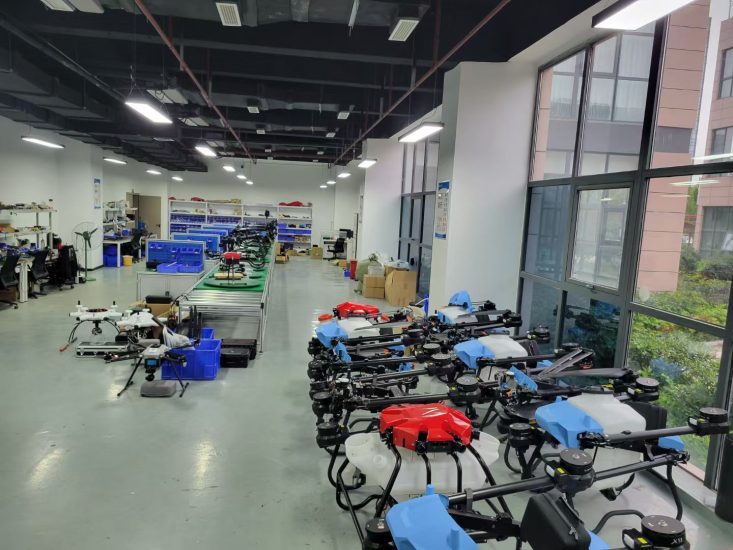
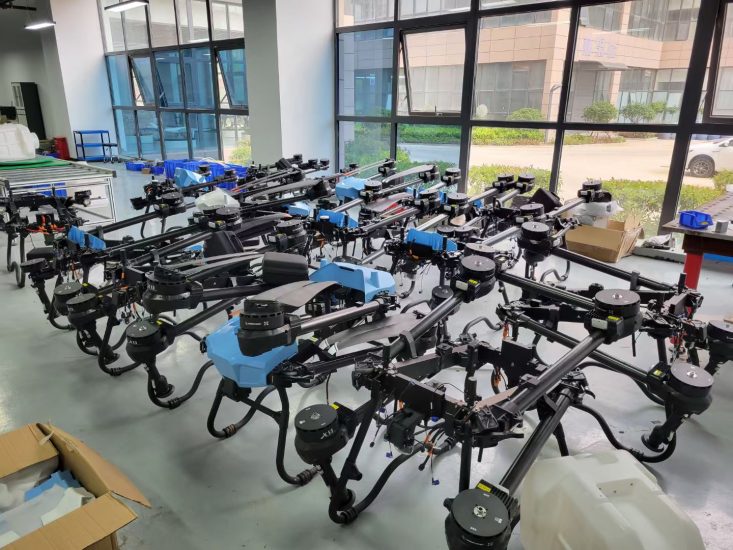
- Sufficient production capacity
- Battery supply
- Spare parts
- Technical documentation
- Quality control
- Flight testing
- After-sales support
- Future replacement units
This is why commercial buyers should evaluate the manufacturer itself rather than only comparing product specifications.
Agricultural Drone Manufacturer in China: Products, Factory and OEM Capabilities
What Should a Buyer Check at the Factory?
For a significant fleet purchase, buyers should ask how the manufacturer handles:
Product Development
How are aircraft designed and configured for different payload requirements?
Assembly
Where are the aircraft assembled?
Quality Control
How are components inspected before assembly?
Flight Testing
Are complete aircraft flight-tested before shipment?
Battery Testing
How are batteries and power systems checked?
Spraying System Testing
How are pumps, nozzles, tanks, hoses, and flow systems tested?
Production Consistency
Can multiple production batches maintain the same agreed configuration?
Spare Parts
Can commonly required parts be supplied for future maintenance?
Technical Support
What support is available after the fleet arrives?
For a deeper look at manufacturing and production processes, buyers can review:
China Agricultural Drone Factory: From R&D to Mass Production
Fleet Buyers Should Think About the Second Order
A good fleet strategy does not end with the first shipment.
If the initial fleet performs well, the buyer may need additional aircraft later.
Therefore, ask the manufacturer:
- Can the same model be supplied again?
- Can the same battery system be maintained?
- Are spare parts still available?
- Can production specifications remain consistent?
- Can additional aircraft be delivered as the business grows?
- Can the manufacturer support OEM or ODM requirements?
This matters especially for distributors.
A distributor does not want to sell one configuration today and discover six months later that the supplier has completely changed the product.
When Does OEM or ODM Make Sense?
OEM and ODM become more relevant when a distributor or agricultural equipment business wants to build a differentiated product line.
Possible customization areas include:
- Brand logo
- Product appearance
- Packaging
- Manuals
- Labels
- Accessories
- Battery configuration
- Spraying configuration
- Controller configuration
- Product specifications
However, customization should start with the target market rather than simply changing the logo.
For example, a distributor serving small farms may prioritize compact transportation and simple operation.
A commercial agricultural service company may instead prioritize higher capacity, battery availability, spare parts, and long-term serviceability.
For distributors considering a customized product program:
Agricultural Drone OEM & ODM: A Complete Guide for Global Distributors
Transportation Should Be Included in Fleet Planning
As the fleet becomes larger, transportation becomes part of the operating system.
A commercial operator may need to transport:
- Multiple aircraft
- Batteries
- Chargers
- Spare parts
- Tools
- Spraying equipment
- Maintenance equipment
International buyers also need to consider packaging, battery transportation requirements, import documentation, and destination-country regulations.
These requirements should be discussed before the purchase rather than after the equipment is ready to ship.
When Should You Expand an Agricultural Drone Fleet?
Buying additional aircraft simply because business is growing is not always the right decision.
Fleet expansion should be supported by actual operating data.
Consider expansion when:
- Existing aircraft are consistently operating near full capacity
- Customer demand exceeds available service capacity
- Weather windows are too short for the current fleet
- Aircraft utilization remains high
- New service areas are being added
- Additional trained operators are available
- Battery and charging capacity can support more aircraft
- Spare-parts inventory can support the larger fleet
A company can start with a manageable fleet, collect real operating data, and then expand based on actual demand.
This is usually more reliable than purchasing a large fleet before the operating model has been tested.
A Practical Agricultural Drone Fleet Planning Formula
There is no universal formula for determining fleet size, but buyers can start with a simple planning model:
Required Fleet Capacity = Total Workload ÷ Realistic Daily Productivity
The important word is realistic.
Do not use the manufacturer’s maximum theoretical coverage as the only input.
Daily productivity should account for:
Flying + refilling + battery changes + transportation + setup + field turns + maintenance + weather interruptions
For commercial planning, this gives a much more realistic estimate.
How MSOEN Supports Commercial Agricultural Drone Buyers
MSOEN focuses on agricultural drone manufacturing for international buyers, agricultural businesses, distributors, and customized UAV projects.
Its agricultural drone offering covers different payload configurations and agricultural applications, allowing buyers to evaluate equipment according to farm size, crop type, workload, and operating requirements.
For commercial customers, the important consideration is not simply purchasing an aircraft. The complete system may include:
- Drone configuration
- Batteries
- Charging equipment
- Spraying or spreading system
- Spare parts
- Technical documentation
- Training
- OEM/ODM customization
- Long-term supply
Buyers looking at the complete agricultural drone range can review:
Final Thoughts
Building an agricultural drone fleet is not simply a matter of buying more aircraft.
A reliable commercial operation depends on the entire system:
Aircraft + Batteries + Charging + Operators + Spare Parts + Maintenance + Transportation + Training + Manufacturer Support
The most important question is not:
“How many drones can we buy?”
It is:
“How many aircraft can we keep reliably operational when our customers and crops need them?”
That change in thinking can significantly improve fleet planning.
Before placing a large order, commercial buyers should calculate their actual workload, evaluate crop requirements, compare different fleet configurations, plan battery capacity, establish spare-parts inventory, and investigate the manufacturer’s production and support capabilities.
For distributors, the same principle applies. The ideal supplier is not simply the company offering the lowest unit price. A stronger long-term partner should be able to maintain product consistency, provide spare parts, support additional orders, and help the distributor build a sustainable product line.
A well-planned agricultural drone fleet is ultimately a business system, not just a collection of UAVs.
Frequently Asked Questions
How many agricultural drones do I need?
There is no universal number. Fleet size depends on total workload, crop type, field conditions, daily operating hours, aircraft productivity, battery availability, operators, and required backup capacity.
Is one large agricultural drone better than several smaller drones?
Not necessarily. A large drone can provide higher capacity per aircraft, while several medium-capacity drones can provide redundancy and greater scheduling flexibility. The correct choice depends on the operation.
How many batteries should I buy for an agricultural drone fleet?
Battery requirements depend on flight time, charging time, operating hours, number of aircraft, and charging infrastructure. Intensive commercial operations may require multiple battery sets per aircraft.
What spare parts should a commercial drone fleet keep?
Common requirements can include propellers, motors, pumps, nozzles, filters, hoses, connectors, power cables, electronic components, and other model-specific parts.
Why is fleet standardization important?
Using fewer aircraft configurations can simplify operator training, battery management, maintenance, spare-parts inventory, troubleshooting, and technical support.
What is the most important agricultural drone fleet KPI?
Aircraft availability is one of the most useful indicators. A fleet with a high theoretical capacity but frequent downtime may deliver less practical productivity than a smaller but more reliable fleet.
Should I buy spare parts with the initial drone order?
For commercial operations, it is generally sensible to discuss spare-parts requirements before delivery. International buyers should pay particular attention to components that could create significant downtime if unavailable.
Can agricultural drone manufacturers provide OEM or ODM services?
Depending on the manufacturer, OEM and ODM services may include branding, packaging, product configuration, battery systems, spraying systems, accessories, and deeper product customization.
What should I ask an agricultural drone manufacturer before ordering a fleet?
Ask about production capacity, product consistency, quality control, flight testing, battery configuration, spare parts, lead time, technical support, warranty, future supply, and customization capabilities.
How can I reduce agricultural drone fleet downtime?
Use preventive maintenance, maintain sufficient spare parts, establish battery rotation procedures, standardize aircraft configurations where practical, train operators, and maintain access to technical support.
Is the cheapest agricultural drone fleet always the best option?
No. The total operating value also depends on batteries, maintenance, spare parts, downtime, operator requirements, transportation, productivity, and long-term manufacturer support.
When should a distributor consider OEM agricultural drones?
OEM can make sense when a distributor has an established market or wants to build a private-label agricultural drone product line. The project should begin with clear technical, quality, packaging, and support requirements.
Need Help Planning an Agricultural Drone Fleet?
If you are purchasing agricultural drones for a commercial farm, agricultural service business, distribution network, or private-label project, start by defining your actual workload rather than selecting equipment based only on payload or price.
MSOEN can discuss agricultural drone configurations, fleet requirements, OEM/ODM projects, spare-parts planning, and long-term supply requirements with international buyers.


No comments yet