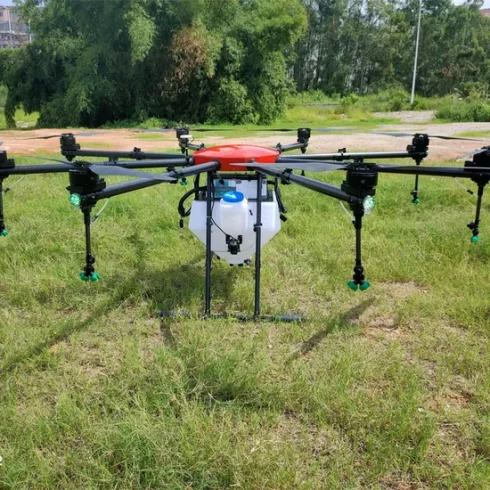


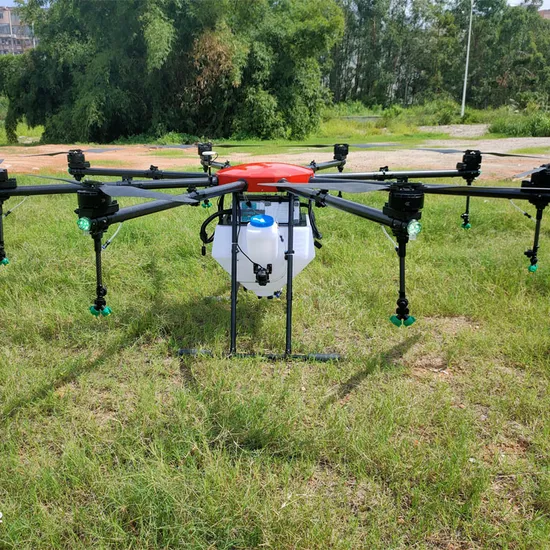
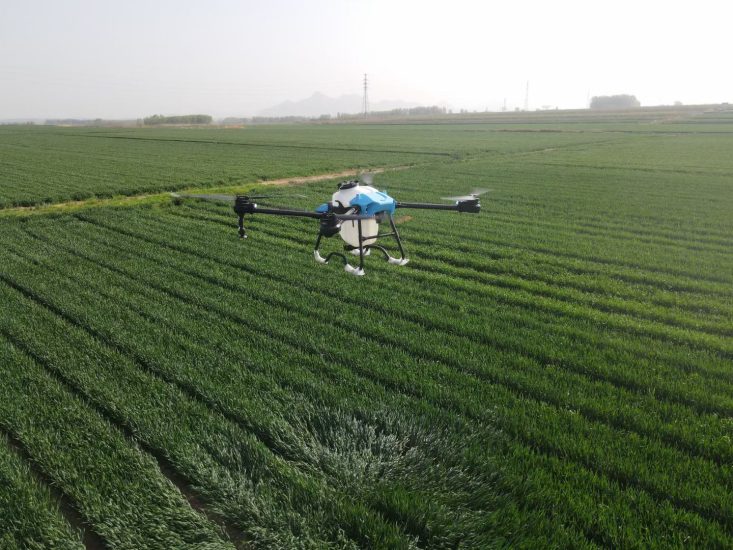
The modern farming industry is rapidly evolving, with an increasing emphasis on efficiency, precision, and sustainability. One of the most transformative technologies in agriculture is the use of smart agricultural drones designed for crop spraying. These drones combine advanced navigation systems, intelligent spraying mechanisms, and real-time monitoring to deliver precise pesticide and fertilizer application, saving time, reducing costs, and protecting the environment.
This article delves into the features, benefits, applications, and real-world results of smart agricultural drones, providing a comprehensive guide for farmers, distributors, and agritech professionals.
1. The Role of Smart Drones in Modern Farming
Traditional spraying methods such as manual application, tractors, or helicopters have limitations:
- Labor-intensive operations
- Uneven chemical distribution
- Environmental contamination due to chemical drift
- Difficulty accessing irregular or waterlogged terrain
Smart agricultural drones address these challenges by offering:
- Autonomous or semi-autonomous flight
- Precision spraying with adjustable flow rates
- Real-time environmental monitoring
- Rapid coverage of small to large-scale farms
By integrating drones into modern agriculture, farmers achieve higher productivity, lower chemical usage, and safer operations.
2. Core Features of Smart Agricultural Drones
A. Intelligent Flight Control
- GPS + RTK navigation ensures centimeter-level accuracy
- AI-assisted flight planning allows full field coverage
- Obstacle detection and avoidance prevent crop and equipment damage
B. Efficient Spraying Systems
- Atomized nozzles for uniform droplet distribution
- Adjustable spraying rates based on crop type, density, and terrain
- Low-altitude spraying ensures penetration while minimizing drift
C. High-Capacity and Modular Design
- Tank sizes from 10L to 50L suitable for various farm scales
- Modular tanks for easy refill and maintenance
- Foldable arms and lightweight materials for portability
D. Smart Sensors and Real-Time Monitoring
- Wind, humidity, and temperature sensors optimize spraying conditions
- AI-controlled spraying adjusts flow and altitude based on real-time data
- Cloud-based data collection tracks application history and performance
3. Advantages of Using Smart Agricultural Drones
A. Increased Efficiency
- Cover large areas in less time compared to traditional methods
- Multi-drone operation enables simultaneous spraying of extensive fields
B. Cost Savings
- Reduced labor and machinery requirements
- Optimized chemical usage lowers input costs
C. Improved Crop Health
- Uniform coverage enhances plant growth and yield
- Reduces over-application and missed spots
D. Environmental Sustainability
- Minimized chemical drift protects surrounding ecosystems
- Supports eco-friendly and sustainable farming practices
4. Applications Across Different Crops
Smart agricultural drones are versatile and effective across various crops:
- Rice and Paddy Fields: Hover at low altitude to reach dense crop canopies
- Orchards and Vineyards: Navigate between trees and vines without causing damage
- Vegetables and Fruits: Precise spraying reduces chemical waste and increases yield
- Grain Fields and Large Farms: Multi-drone fleets cover extensive areas efficiently
Farmers benefit from timely crop intervention, increased productivity, and reduced costs.
5. Safety and Compliance
Safety is a key advantage of smart UAV sprayers:
- Operators remain at a safe distance from chemicals
- Automated spraying ensures precise dosage, avoiding crop damage
- Accurate data recording simplifies compliance with local regulations
- Built-in fail-safes prevent collisions, missed areas, and over-spraying
Reliable drones combine operational safety with agricultural efficiency.
6. Technological Innovations in Smart Drones
Smart agricultural drones integrate advanced technologies:
- RTK Navigation: Provides highly accurate flight paths and spraying
- AI-Assisted Spraying: Adjusts altitude, flow, and speed based on real-time field conditions
- Obstacle Avoidance: Prevents damage to crops and equipment
- Data Analytics: Tracks spraying history, evaluates crop performance, and supports farm management decisions
These technologies allow farmers to manage large fields efficiently with minimal labor.
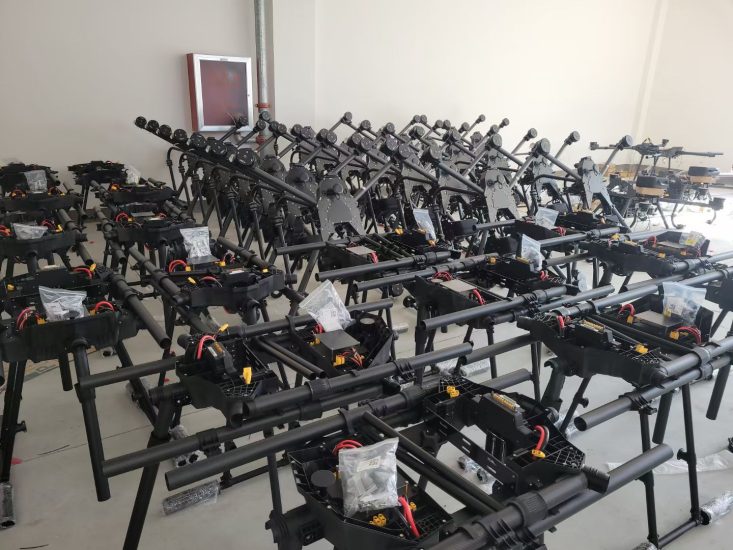
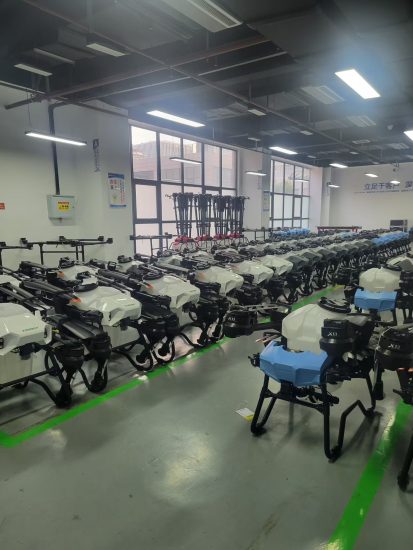
7. Customization and OEM Options
Manufacturers offer tailored UAV solutions:
- Different tank capacities and spraying modules
- Custom software for specific crops and regional conditions
- OEM branding and packaging options
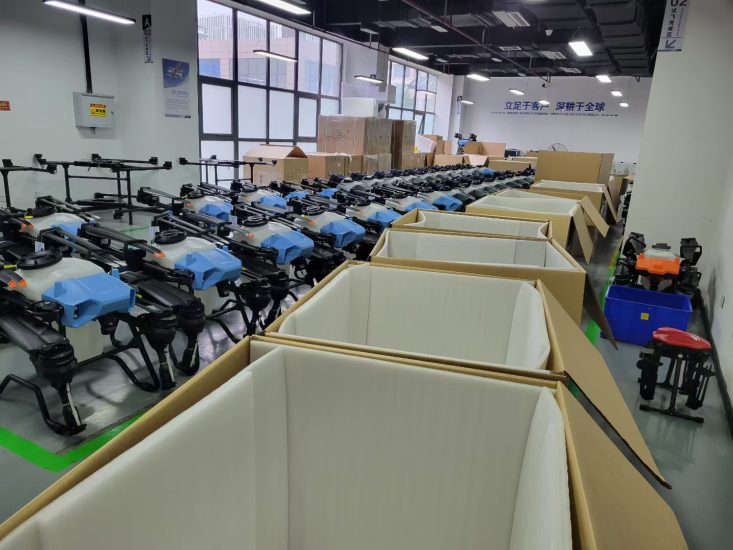
- Maintenance kits and spare parts for long-term operation
- Multi-language support for manuals and customer service
Customization ensures drones meet unique farm needs and operational requirements.
8. Benefits for Large-Scale Farming Operations
High-performance smart drones offer significant advantages for large farms:
- Rapid coverage of extensive areas
- Reduced reliance on heavy machinery and labor
- Precise application improves yield and reduces chemical costs
- Ability to operate on challenging terrain such as slopes, terraces, or wetlands
Integrating smart UAVs transforms large-scale farms into efficient, data-driven, and sustainable operations.
9. The Future of Smart Agricultural Drones
Emerging trends in smart UAV technology include:
- Swarm Drone Operations: Coordinated fleets covering large fields simultaneously
- AI Crop Analysis: Detects pests, diseases, and nutrient deficiencies before spraying
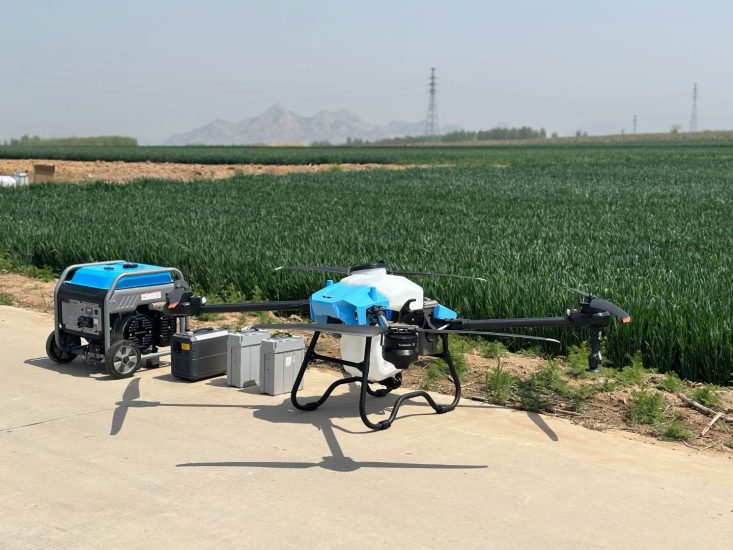
- Automated Refill and Battery Stations: Enables continuous operation with minimal downtime
- Cloud-Based Farm Management: Provides data-driven insights for better yield and cost optimization
- Multi-Functional UAVs: Combining spraying, fertilizing, seeding, and monitoring in one device
The future of smart agriculture increasingly relies on drones for efficient, sustainable, and precise crop management.
⭐ John R.
👤 Avatar: Man with short brown hair
🇺🇸 USA
📅 January 22, 2025
“Covers large areas quickly and efficiently. Very reliable drone.”
⭐ Maria L.
👤 Avatar: Woman with ponytail
🇪🇸 Spain
📅 January 20, 2025
“Excellent for vineyards. Navigation is precise and stable.”
⭐ Ahmed S.
👤 Avatar: Middle-aged man in traditional attire
🇸🇦 Saudi Arabia
📅 January 19, 2025
“Strong motors and long battery life. Works perfectly in harsh conditions.”
⭐ Mateo P.
👤 Avatar: Young farmer with straw hat
🇦🇷 Argentina
📅 January 18, 2025
“Reduced chemical use by 25% and cut labor costs significantly.”
⭐ Sakura T.
👤 Avatar: Japanese woman with short hair
🇯🇵 Japan
📅 January 17, 2025
“Easy to operate in rice paddies. Spraying is accurate every time.”
⭐ Sophia L.
👤 Avatar: Blonde woman smiling
🇬🇧 UK
📅 January 16, 2025
“Battery lasts long enough for large-scale spraying. Excellent build quality.”
⭐ Carlos M.
👤 Avatar: Bearded man
🇧🇷 Brazil
📅 January 15, 2025
“Fleet operation reduces total spraying time by half. Highly recommended.”
⭐ Ivan K.
👤 Avatar: Man in winter jacket
🇷🇺 Russia
📅 January 14, 2025
“Reliable even in cold weather. Accurate spraying and durable motors.”
⭐ Thabo N.
👤 Avatar: African man smiling
🇿🇦 South Africa
📅 January 13, 2025
“Swarm operation works perfectly. Efficient for large farms.”
⭐ Mohammed A.
👤 Avatar: Man with cap
🇦🇪 UAE
📅 January 12, 2025
“Accurate, easy to maintain, and excellent investment for our farm.”


No comments yet