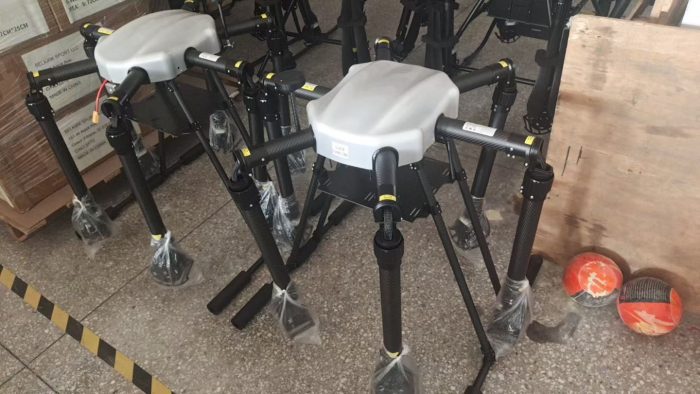


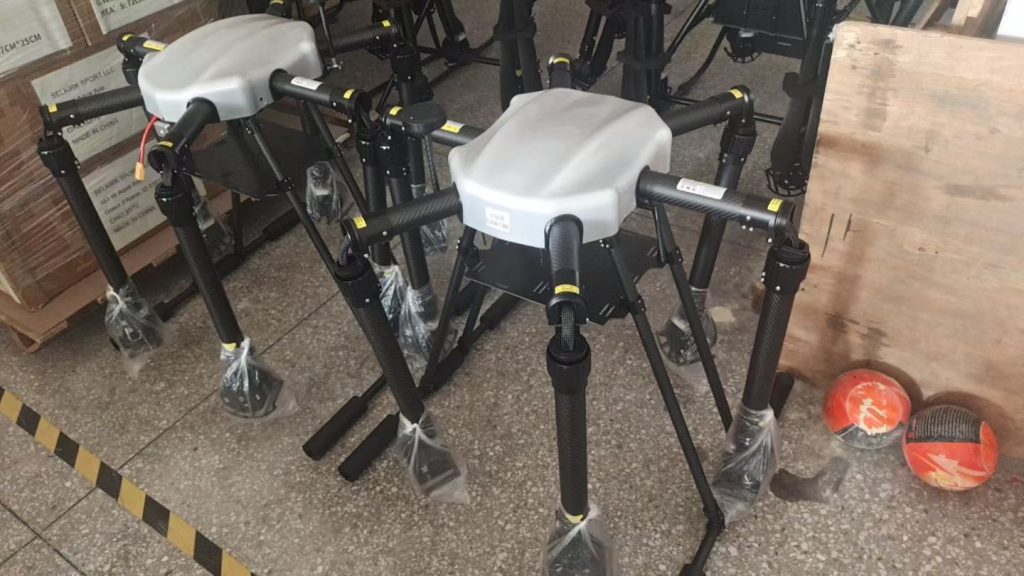
In an era where global food demand is projected to surge by 50% by 2050, driven by a growing population and shifting dietary patterns, agriculture faces unprecedented challenges. Traditional crop protection methods—reliant on manual labor, large machinery, or manned aircraft—are increasingly falling short. They are slow, costly, environmentally taxing, and often unsafe for farmworkers exposed to toxic pesticides. Enter plant protection drones, a cutting-edge solution that merges robotics, artificial intelligence (AI), and remote sensing to transform how farmers safeguard their crops. These unmanned aerial vehicles (UAVs) are not just tools; they represent a paradigm shift in precision agriculture, offering efficiency, sustainability, and scalability that were once unimaginable.
The Rise of Plant Protection Drones: From Niche to Mainstream
The concept of using drones in agriculture is not entirely new. Early experiments with UAVs in farming began in the 2000s, primarily for crop monitoring via multispectral cameras. However, it was not until the 2010s that plant protection—specifically, targeted pesticide and fertilizer spraying—emerged as a killer application. By 2023, the global agricultural drone market was valued at over 3 billion, with projections to exceed 12 billion by 2030, according to MarketsandMarkets. This exponential growth is fueled by advancements in battery technology, sensor miniaturization, and regulatory progress, such as relaxed airspace rules in countries like China, the U.S., and Brazil.
In regions like East Asia, where rice paddies and smallholder farms dominate, drones have become indispensable. For instance, in China, over 100,000 plant protection drones were deployed in 2022 alone, covering more than 1 billion acres of farmland. This rapid adoption underscores their ability to address critical pain points: labor shortages (as rural populations age), uneven terrain (common in hilly areas), and the need for hyper-localized treatment to combat pests and diseases.
Core Technologies Powering Precision Spraying
What makes plant protection drones so effective? Their success hinges on integrating multiple advanced technologies into a compact, agile platform.
1. Sensing and Imaging: The “Eyes” of the Drone
Before spraying, drones must identify where treatment is needed. Equipped with multispectral, hyperspectral, or thermal cameras, they capture data across various light wavelengths, revealing subtle changes in crop health invisible to the human eye. For example, stressed plants (due to pests, diseases, or water deficiency) reflect less near-infrared light. AI algorithms analyze this imagery to generate “health maps,” pinpointing infected or nutrient-deficient zones. Some drones even use LiDAR (Light Detection and Ranging) to create 3D maps of fields, ensuring precise altitude adjustments during flight—critical for uniform spraying.
2. Navigation and Flight Control: Autonomy in Action
Modern plant protection drones rely on RTK-GPS (Real-Time Kinematic Global Positioning System) for centimeter-level accuracy. This eliminates drift and ensures overlapping spray patterns, a common issue with manual methods. Advanced models incorporate vision-based navigation, using downward-facing cameras to detect obstacles (e.g., trees, power lines) and adjust trajectories in real time. Swarm technology further enhances efficiency: fleets of drones coordinate autonomously, dividing large fields into grids and working in parallel to reduce operation time by up to 70% compared to single units.
3. Spraying Systems: Efficiency Meets Sustainability
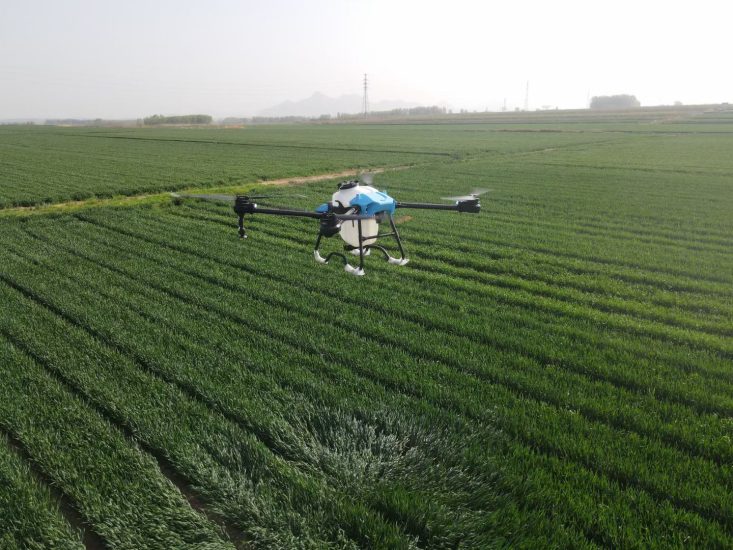
The heart of a plant protection drone lies in its spraying mechanism. Unlike traditional sprayers, which drench entire fields, drones employ variable-rate technology (VRT), adjusting spray volume based on the health map. High-efficiency centrifugal nozzles atomize liquid into micro-droplets (50–200 microns), ensuring even coverage while reducing chemical usage by 30–50%. Some drones feature “smart tanks” that mix pesticides on-site, minimizing waste and exposure risks. Additionally, downward-facing fans create a localized airflow, pushing droplets downward onto crops rather than drifting away—a key environmental benefit.
Transformative Applications Across Crops and Terrains
Plant protection drones are not one-size-fits-all; their adaptability makes them suitable for diverse agricultural scenarios.
1. High-Value Crops: Orchards and Vineyards
Orchards (e.g., apples, oranges) and vineyards pose unique challenges: irregular tree canopies, narrow rows, and the need to avoid damaging fruit. Drones navigate these spaces with ease, their compact size allowing them to fly between branches and deliver targeted sprays to the canopy’s underside—where pests like aphids and mites often hide. In California’s vineyards, drones have reduced pesticide use by 40% while improving grape quality, as uniform coverage minimizes fungal infections like powdery mildew.
2. Large-Scale Field Crops: Rice, Wheat, and Corn
For staple crops planted in vast, flat fields, drones excel in speed. A single drone can cover 50–100 acres per day—equivalent to 10–20 manual laborers. In India, where rice cultivation employs millions, drones have cut spraying time from weeks to days during peak seasons, preventing crop losses due to delayed pest control. Their ability to operate in wet conditions (when tractors would get stuck) further boosts reliability.
3. Hilly and Remote Areas
In mountainous regions like Yunnan, China, or parts of Southeast Asia, traditional equipment struggles with rough terrain. Drones, however, hover above the ground, avoiding mud, slopes, and uneven surfaces. They also reach remote villages where access to agricultural services is limited, empowering smallholder farmers who previously relied on expensive, infrequent manned aircraft spraying.
Advantages: Beyond Efficiency
The impact of plant protection drones extends far beyond speed and cost savings:
-
Reduced Environmental Footprint: By targeting only affected areas and minimizing drift, drones lower pesticide runoff into waterways and reduce exposure to non-target species (e.g., bees, birds). A 2021 study in Nature Food found that drone-sprayed fields had 60% less pesticide residue in nearby rivers compared to conventionally treated ones.
-
Improved Farmer Safety: Pesticide poisoning affects millions of farmworkers annually. Drones eliminate direct human contact with chemicals, reducing respiratory issues, skin burns, and long-term health risks.
-
Data-Driven Decision Making: Spray data, combined with health maps, creates a digital twin of the farm. Farmers can track historical trends, predict outbreaks, and optimize input usage—key to transitioning from reactive to proactive agriculture.
Challenges and the Road Ahead
Despite their promise, plant protection drones face hurdles:
-
Regulatory Fragmentation: Airspace regulations vary globally. While China has streamlined drone registration, the E.U. imposes strict limits on flight altitude and payload, complicating cross-border operations.
-
Battery Limitations: Most drones have a 20–30-minute flight time, restricting coverage per charge. Advances in solid-state batteries and hydrogen fuel cells could extend this to an hour or more, but commercial viability remains uncertain.
-
Farmer Adoption: Many smallholders lack technical skills to operate or maintain drones. Training programs and “drone-as-a-service” models (where companies provide drones and operators) are bridging this gap.
Looking forward, the next frontier lies in AI-driven autonomy. Future drones may integrate real-time weather data, pest outbreak forecasts, and soil sensor information to make independent decisions—e.g., adjusting spray parameters mid-flight based on sudden rain or detecting a new infestation. Collaboration with IoT devices (soil moisture sensors, weather stations) will create fully integrated smart farms, where drones act as the “mobile backbone” of crop protection.
Conclusion
Plant protection drones are more than technological novelties; they are catalysts for a sustainable agricultural revolution. By combining precision, speed, and environmental stewardship, they address the dual challenges of feeding a growing population and preserving natural resources. As regulations evolve, batteries improve, and AI matures, these flying machines will become even more integral to global food security—proving that innovation, when applied thoughtfully, can nurture both people and the planet.
THE END


No comments yet