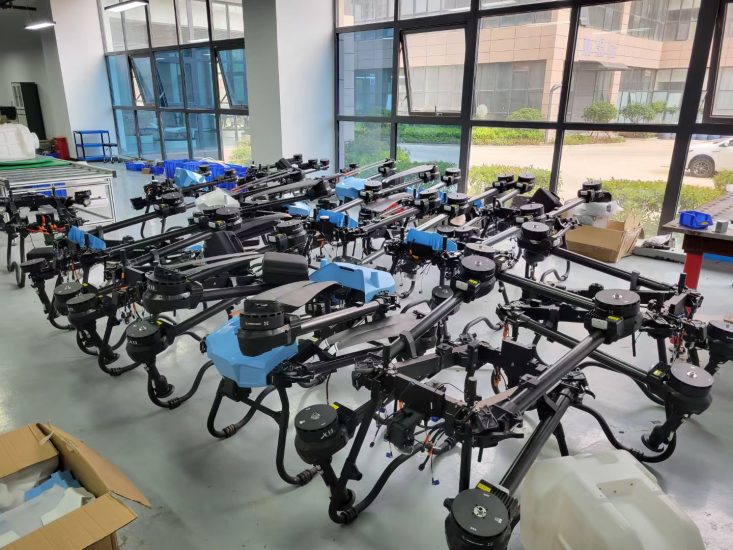


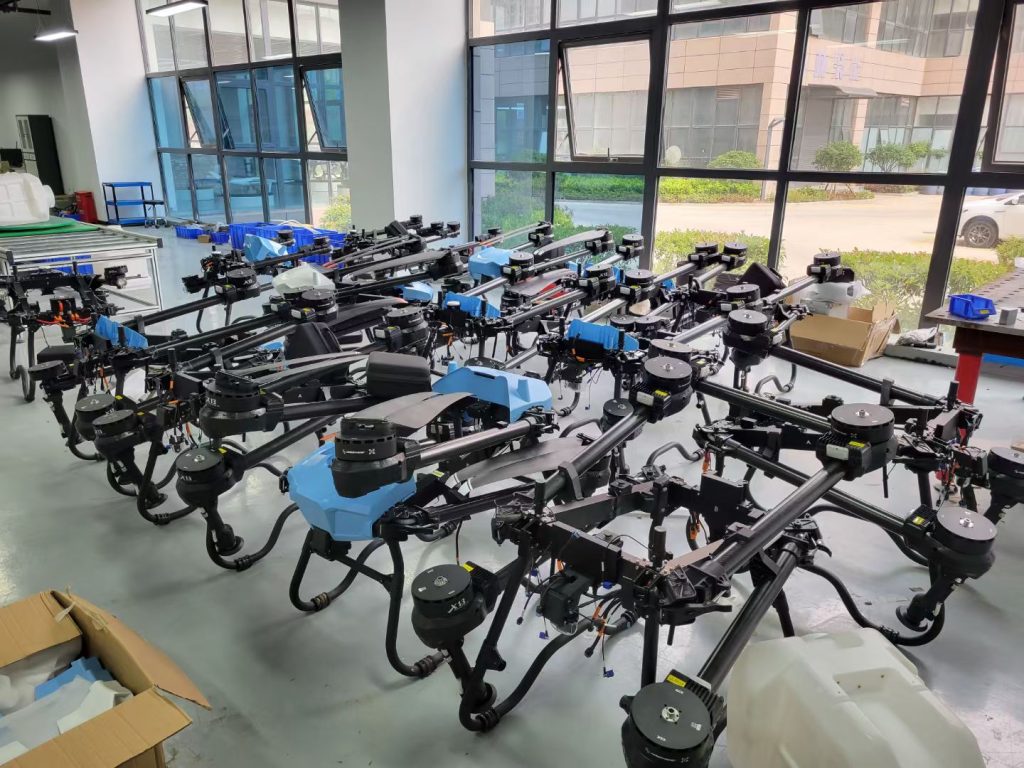
Buying agricultural drones in bulk is very different from purchasing a single drone for personal use. For distributors, agricultural equipment dealers, farming service companies, and OEM buyers, the manufacturer behind the aircraft can directly affect product consistency, operating performance, spare-parts supply, customer support, and long-term business costs.
A supplier may offer an attractive quotation, but price alone does not tell you whether the manufacturer can produce the same configuration consistently, support customization, provide replacement components, or handle repeat orders.
Before placing a bulk order, buyers should therefore evaluate the manufacturer from several practical perspectives rather than relying only on product photographs, advertised payload capacity, or a low unit price.
This guide explains the main factors international buyers should examine when selecting an agricultural drone manufacturer.
1. Start With the Manufacturer, Not the Quotation
One of the most common mistakes in drone sourcing is asking several suppliers for prices before understanding what each supplier actually manufactures.
An agricultural drone company may be:
-
A manufacturer with its own engineering and production capabilities
-
An OEM factory producing equipment for other brands
-
A trading company purchasing drones from another factory
-
A distributor representing a manufacturer
-
A company combining manufacturing and outsourced components
These business models can all appear similar during an initial online search.
For a long-term distributor or importer, however, the difference is important.
A direct manufacturer may have greater control over product configuration, engineering changes, quality inspection, spare parts, and customization. A trading company may still provide a useful service, but buyers need to understand where the actual production takes place.
MSOEN positions itself as a professional agricultural and industrial drone manufacturer in China, covering agricultural spraying drones, mapping drones, industrial UAVs, heavy-lift drones, and customized OEM/ODM projects. Its manufacturing model includes product development, engineering, quality control, customization, and international supply.
For buyers evaluating the company behind an agricultural UAV, the important question is not simply “How much is the drone?”
The better question is:
Who is actually responsible for designing, producing, testing, and supporting the drone?
2. Check Whether the Factory Matches Your Application
Not every agricultural drone is designed for the same operating environment.
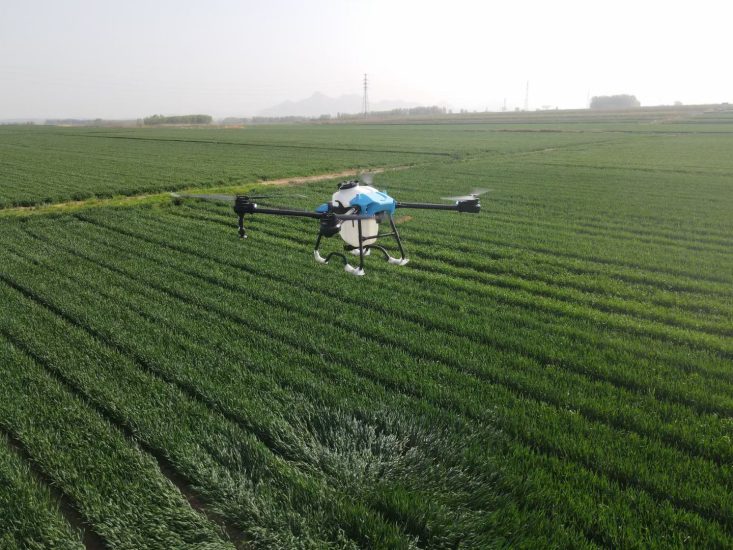
A drone used for rice-field spraying may have different requirements from one used in orchards, plantations, large grain fields, or specialized agricultural applications.
Before comparing manufacturers, define your operating requirements.
Consider:
-
Crop type
-
Field size
-
Terrain
-
Typical weather conditions
-
Required tank capacity
-
Desired payload
-
Spray width
-
Flow rate
-
Flight endurance
-
Battery requirements
-
Operating altitude
-
Terrain-following requirements
-
Mapping or positioning requirements
-
Fertilizer spreading requirements
For example, a buyer interested in rice spraying may prioritize stable low-altitude operation and reliable liquid delivery, while an orchard operator may have different requirements related to terrain, canopy structure, and application conditions.
If rice production is your target market, it is useful to understand the equipment requirements in greater detail. See our guide to [Rice Spraying Drone Manufacturer: Professional Agricultural Drone Solutions for Rice Farming].
The goal is not to find the drone with the largest advertised specification.
The goal is to find a configuration that matches the actual application.
3. Do Not Evaluate Payload Capacity by the Number Alone
Payload capacity is one of the most frequently discussed specifications in agricultural drones, but it can also be one of the most misunderstood.
A manufacturer may describe a drone as a 30 kg, 50 kg, or larger payload platform. However, maximum payload does not automatically mean that the drone can operate efficiently with that load in every environment.
Actual performance depends on several factors, including:
-
Aircraft weight
-
Motor performance
-
Propeller configuration
-
Battery capacity
-
Flight conditions
-
Wind
-
Payload distribution
-
Flight altitude
-
Operating temperature
-
Remaining battery reserve
-
Flight-control system
For buyers comparing heavy-payload agricultural UAVs, payload should therefore be evaluated together with endurance and operating efficiency.
Our article [What Is the Heaviest Load an Agricultural Drone Can Lift?] explains why maximum lifting capacity should not be considered in isolation.
For commercial users, a slightly smaller aircraft with better operational balance can sometimes be more useful than a larger aircraft that consumes substantially more energy.
4. Examine the Spraying System Separately From the Aircraft
An agricultural spraying drone is not simply a flying platform with a tank attached.
The spraying system is a major part of the actual agricultural operation.
Buyers should evaluate:
-
Tank construction
-
Pump capacity
-
Nozzle configuration
-
Flow control
-
Spray width
-
Droplet characteristics
-
Filtration
-
Pipe design
-
Pump reliability
-
Cleaning and maintenance
-
Replacement parts
The aircraft may fly perfectly, but inconsistent liquid delivery can still produce poor field results.
For this reason, a professional agricultural drone manufacturer should understand the relationship between the aircraft, flight control, battery system, spraying equipment, and field application.
When comparing suppliers, ask for complete spraying-system specifications rather than accepting a single statement such as “high-efficiency spraying.”
5. Ask How the Manufacturer Tests Its Drones
A serious agricultural drone manufacturer should have a testing process before products are shipped.
Testing can include different stages depending on the product and configuration:
Component testing
Individual components such as motors, electronic systems, pumps, batteries, and flight-control equipment should be checked before final assembly.
Assembly inspection
The completed aircraft should be inspected for mechanical installation, electrical connections, structural integrity, and system integration.
Flight testing
The drone should be tested under appropriate operating conditions to verify flight stability and system response.
Spraying testing
For agricultural spraying models, the spraying system should also be evaluated rather than testing only the aircraft itself.
Final inspection
The finished product should be checked before packaging and shipment.
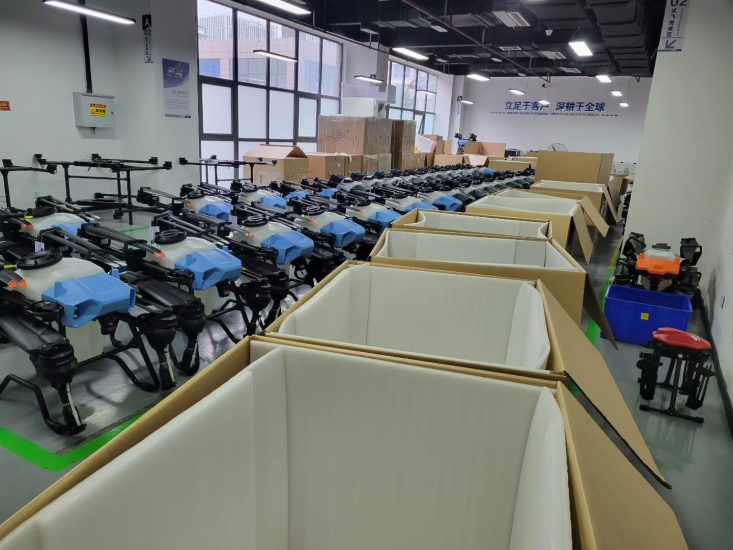
For buyers placing repeated orders, consistency is particularly important.
The first sample may perform well, but the real question is whether the manufacturer can maintain similar standards across 50, 100, or more units.
Our article [Agricultural Drone Factory in China: Manufacturing, Testing and Quality Control] provides a deeper look at why factory capability matters when sourcing agricultural UAVs.
6. Review the Manufacturer’s OEM and ODM Capability
OEM and ODM are particularly important for distributors that want to build their own agricultural equipment brand.
However, OEM and ODM do not always mean the same thing.
OEM generally involves producing a product according to a customer’s specifications or branding requirements.
ODM can involve greater participation from the manufacturer in product design, engineering, configuration, and development.
Customization may include:
-
Brand logo
-
Product color
-
Packaging
-
Remote controller configuration
-
Battery configuration
-
Spraying system
-
Payload configuration
-
Software requirements
-
Product documentation
-
Accessories
-
Market-specific configurations
A distributor should define the required level of customization before requesting a quotation.
If your goal is to launch your own agricultural drone brand, our guide [Agricultural Drone OEM and ODM: A Complete Guide to Custom Drone Manufacturing] explains the main stages involved in a custom manufacturing project.
For distributors specifically, [OEM Agricultural Drone Manufacturer: How to Build Your Own Drone Brand] provides a more business-oriented explanation of how an OEM relationship can support private-label sales.
7. Check Production Capability Before a Large Order
Production capacity should be evaluated realistically.
A manufacturer may be able to produce one prototype or a small batch, but that does not automatically prove that it can handle consistent large-volume orders.
Ask questions such as:
-
What is the normal production lead time?
-
What is the minimum order quantity?
-
Can the same configuration be repeated?
-
Are key components consistently available?
-
How are production batches inspected?
-
How are product changes documented?
-
Can spare parts be supplied for older batches?
-
Can the manufacturer support repeat orders?
This is particularly important for distributors.
A distributor does not simply need a good first shipment. The business model depends on being able to reorder the same or an updated configuration months later.
8. Spare Parts Are Part of the Product
For professional agricultural drone users, downtime can be expensive.
A drone operating during an important spraying period may need a replacement component quickly.
Therefore, buyers should ask about spare parts before signing an order.
Important items may include:
-
Motors
-
Propellers
-
Pumps
-
Nozzles
-
Spray pipes
-
Landing gear
-
Batteries
-
Chargers
-
Flight-control components
-
Remote controllers
-
Electronic modules
The availability of replacement parts can be just as important as the initial purchase price.
A manufacturer that can supply the original configuration consistently may provide greater long-term value than a supplier offering a cheaper initial quotation but limited after-sales support.
9. Evaluate Technical Support
Agricultural drones combine multiple technologies.
A commercial system can include:
Aircraft + Battery + Flight Control + Navigation + Spraying System + Remote Controller + Software
If one part of the system fails, identifying the cause may require technical knowledge.
Before purchasing, ask how the manufacturer handles:
-
Installation guidance
-
Operator training
-
Flight setup
-
Troubleshooting
-
Software updates
-
Spare-parts identification
-
Maintenance
-
Remote technical assistance
For international distributors, documentation is particularly important because the final customer may not communicate directly with the factory.
A manufacturer that can provide clear manuals, configuration information, troubleshooting guidance, and technical support can make the distributor’s after-sales process much easier.
10. Compare Total Cost, Not Just Factory Price
The cheapest quotation is not necessarily the cheapest solution.
Consider the total cost of ownership.
This may include:
Drone price + batteries + chargers + spare parts + shipping + training + maintenance + replacement components + after-sales support
For example, a lower-priced drone may require more frequent replacement of consumable components or may have a more limited spare-parts system.
A higher initial purchase price may sometimes be justified if the aircraft offers better durability, easier maintenance, stronger support, or a configuration that better fits the intended application.
When requesting quotations, make sure all suppliers are quoting comparable specifications.
Otherwise, you may be comparing different products while assuming they are equivalent.
11. Ask for a Complete Technical Specification
Before placing a bulk order, request a written specification sheet.
At minimum, it should clearly identify:
-
Model
-
Empty weight
-
Maximum takeoff weight
-
Payload capacity
-
Tank capacity
-
Spray width
-
Flow rate
-
Flight time
-
Battery specification
-
Charger specification
-
Navigation system
-
Remote-control system
-
Dimensions
-
Operating temperature
-
Recommended application
-
Warranty terms
-
Spare-parts availability
This document becomes especially important when ordering the same product repeatedly.
It gives both the buyer and manufacturer a common technical reference.
12. Verify Whether the Product Fits Your Target Market
A drone suitable for one country may not automatically be suitable for another.
Before importing agricultural UAVs, distributors should investigate the requirements of their destination market.
Depending on the country and application, requirements may involve:
-
Drone registration
-
Operational restrictions
-
Radio-frequency requirements
-
Import documentation
-
Battery transportation
-
Agricultural chemical regulations
-
Operator qualifications
-
Local aviation requirements
-
Product labeling
The manufacturer should provide the technical documentation available for the product, but the importer remains responsible for understanding the regulations applicable to its own market.
Do not assume that a product legally operated in one country will automatically satisfy another country’s requirements.
13. Look Beyond the Website
A professional website is useful, but it should not be the only basis for evaluating a manufacturer.
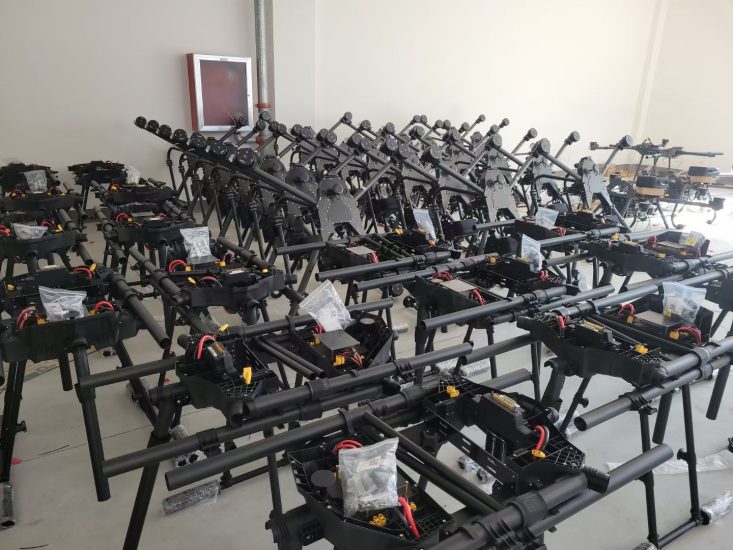
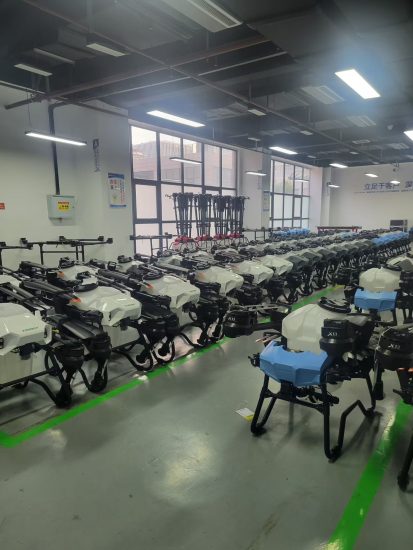
Buyers should look for evidence of actual manufacturing capability.
Useful evidence may include:
-
Factory photographs
-
Product development information
-
Production areas
-
Testing procedures
-
Product specifications
-
Real product photographs
-
Packaging
-
Spare-parts information
-
Technical documentation
-
Certifications where applicable
-
Customer application information
This is one reason factory evaluation is more useful than simply comparing online prices.
A buyer looking specifically for a Chinese production partner can also review [China Agricultural Drone Factory: From R&D to Mass Production] to understand the production capabilities that should be considered.
14. Build a Supplier Comparison Sheet
Before making the final decision, create a comparison table.
For example:
Evaluation Area |
Manufacturer A |
Manufacturer B |
Manufacturer C |
|---|---|---|---|
Product Model |
|||
Payload |
|||
Tank Capacity |
|||
Spray Width |
|||
Flight Time |
|||
Battery |
|||
OEM/ODM |
|||
MOQ |
|||
Lead Time |
|||
Spare Parts |
|||
Warranty |
|||
Technical Support |
|||
Certifications |
|||
Factory Evidence |
|||
Total Cost |
This makes it easier to identify differences that are hidden behind similar product descriptions.
The manufacturer offering the lowest price may not be the strongest candidate once all factors are included.
15. When Should You Request a Sample?
For a new supplier relationship, a sample or demonstration unit can be useful before committing to a large order.
A sample can help you evaluate:
-
Build quality
-
Flight stability
-
Spraying performance
-
Battery performance
-
Controller usability
-
Software
-
Maintenance
-
Packaging
-
Documentation
However, a sample should be tested according to your actual business requirements.
If you are purchasing drones for commercial spraying, testing only whether the aircraft can take off and land is not enough.
The evaluation should focus on the complete operating system.
16. What Makes a Good Long-Term Manufacturing Partner?
The best agricultural drone manufacturer is not necessarily the company with the largest product catalog.
A strong long-term partner should be able to support the business after the first shipment.
Look for a combination of:
Engineering capability
The manufacturer should understand the aircraft rather than simply reselling it.
Production consistency
The same configuration should be reproducible across different batches.
Customization capability
The factory should be able to support reasonable OEM or ODM requirements.
Quality control
Products should be inspected before shipment.
Spare-parts support
Replacement components should remain available.
Technical support
The manufacturer should be able to help distributors and operators solve practical problems.
Communication
Technical specifications, quotations, lead times, and changes should be clearly documented.
17. Why the Right Manufacturer Matters More for Distributors
For a farmer purchasing one drone, product performance may be the primary concern.
For a distributor, the relationship is much more complicated.
The distributor has to manage:
Manufacturer → Import → Local Distribution → Customer → Training → Spare Parts → After-Sales Service
If the manufacturer cannot provide consistent products or technical support, the distributor may eventually have to solve those problems locally.
That can increase costs and damage the distributor’s reputation.
This is why professional buyers should evaluate the entire supply relationship rather than choosing purely on the lowest quotation.
Conclusion
Selecting an agricultural drone manufacturer should be treated as a manufacturing and supply-chain decision, not simply a product-shopping exercise.
Before placing a bulk order, evaluate the manufacturer’s engineering capabilities, factory production, payload and spraying performance, quality-control procedures, OEM/ODM services, spare-parts supply, technical support, documentation, and ability to maintain consistent production.
The right drone also depends on the application. Rice farming, orchards, plantations, large-scale crop spraying, fertilizer spreading, and specialized agricultural operations can require different configurations.
For international buyers, the best starting point is to clearly define the application and technical requirements before comparing manufacturers.
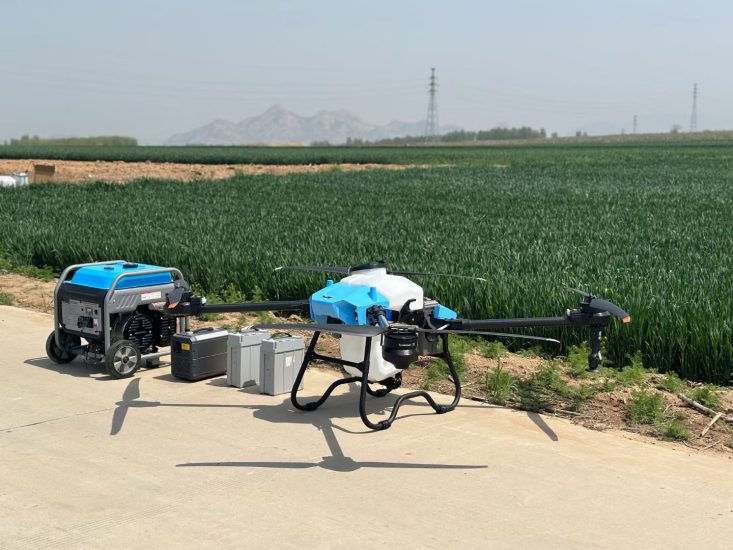
MSOEN provides agricultural and industrial UAV manufacturing, including agricultural spraying drones, heavy-lift platforms, mapping drones, and customized OEM/ODM solutions for international buyers and distributors.
If you are evaluating a manufacturer for a new agricultural drone project, prepare your target market, crop type, required payload, spraying requirements, expected order quantity, and customization needs before requesting a quotation. This gives the manufacturer enough information to recommend a practical configuration instead of sending you a generic price.
THE END


No comments yet