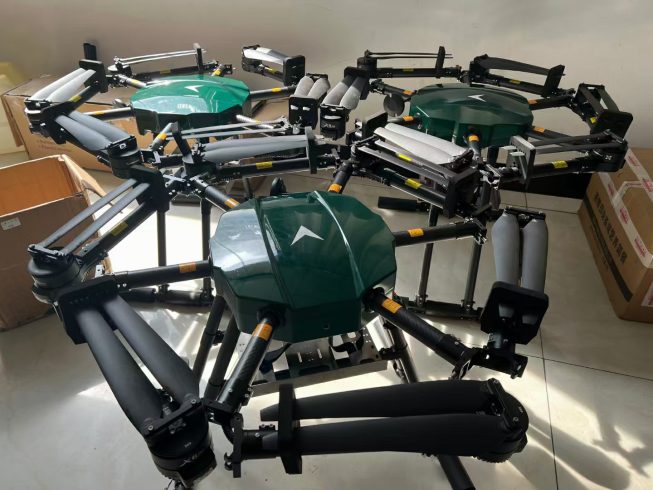


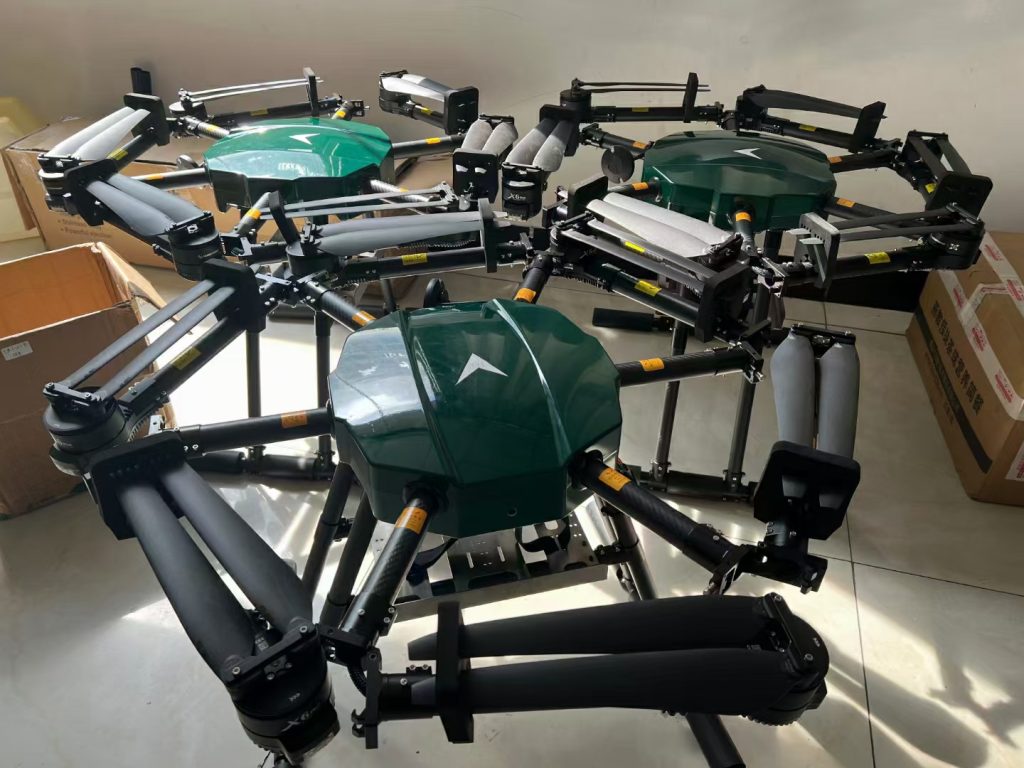
In the skies above cities, farms, and disaster zones, a distinct silhouette has become ubiquitous: the multi-rotor drone. With its symmetrical arms, whirring propellers, and ability to hover mid-air, this compact unmanned aerial vehicle (UAV) has redefined aerial agility. Unlike fixed-wing drones that require runways for takeoff and landing, multi-rotor drones leverage vertical lift from multiple rotors to take off and land anywhere—transforming how humans capture data, assist in emergencies, and interact with the world from above.
The Engineering Marvel: How Multi-rotor Drones Work
At the core of a multi-rotor drone’s design is simplicity and versatility. Most models feature 4, 6, or 8 rotors (quadcopters, hexacopters, octocopters), each powered by an electric motor. By adjusting the speed of individual rotors, the drone achieves precise control: increasing thrust on one side causes rotation, while varying all rotors equally enables ascent or descent. This “differential thrust” system grants multi-rotors unmatched maneuverability—allowing them to hover, rotate 360 degrees, or navigate tight spaces inaccessible to larger aircraft.
Key technological enablers include:
-
Flight Controllers: Miniature computers that process data from gyroscopes, accelerometers, and GPS to stabilize the drone in wind or turbulence.
-
Brushless Motors: Efficient, low-maintenance motors that convert electrical energy into rotational force, extending flight times.
-
Lightweight Materials: Carbon fiber frames and plastic propellers reduce weight, balancing agility with durability.
Versatility in Action: Where Multi-rotor Drones Shine
The multi-rotor’s adaptability has unlocked applications across industries, making it a jack-of-all-trades in the UAV world.
1. Aerial Photography and Cinematography
For filmmakers and photographers, multi-rotors are revolutionary. Their ability to hover and move slowly enables cinematic shots—tracking a runner through a forest, orbiting a mountain peak, or capturing a wedding from a bird’s-eye view. Gimbals (stabilizing mounts) attached to cameras eliminate shake, producing smooth 4K footage that once required expensive helicopters. Amateur creators now use entry-level quadcopters to film travel vlogs, democratizing aerial content creation.
2. Precision Agriculture
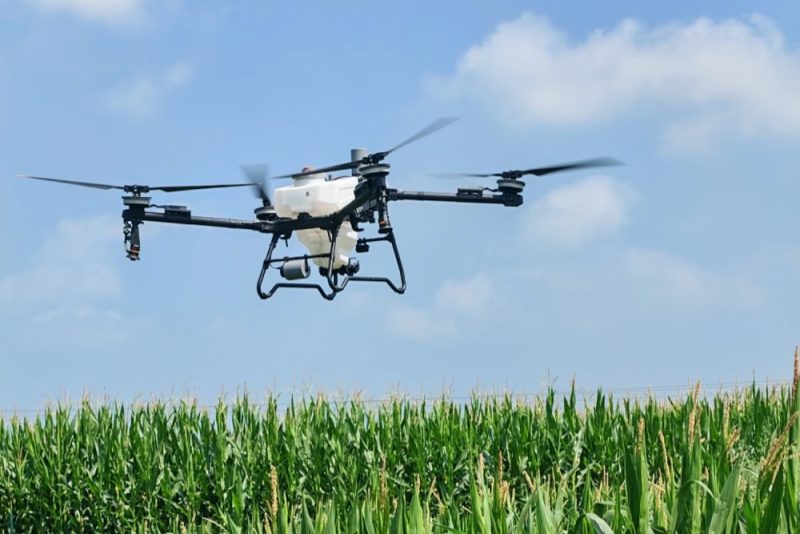
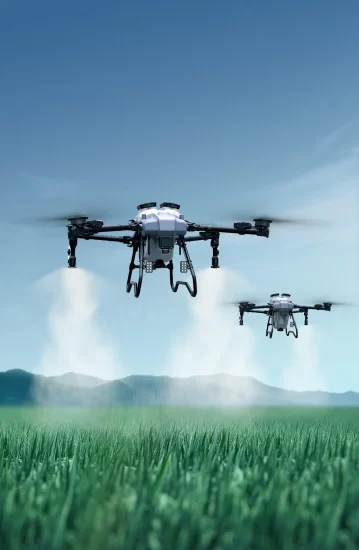
In farming, multi-rotors act as mobile scouts. Equipped with multispectral cameras, they fly low over fields, capturing data on crop health, soil moisture, and pest infestations. Farmers use this to create “prescription maps” for targeted fertilizer or pesticide application—cutting input costs by 20–30% while boosting yields. For small plots or irregularly shaped fields (e.g., vineyards), multi-rotors outperform fixed-wing drones, which struggle with tight turns.
3. Emergency Response and Search-and-Rescue
During disasters, multi-rotors are first responders. Their portability allows them to be deployed within minutes: after earthquakes, they survey collapsed buildings for survivors using thermal cameras; in floods, they map evacuation routes; in wildfires, they track flame spread to guide firefighting efforts. In 2021, a multi-rotor drone located a hiker stranded in a remote canyon by detecting his heat signature, reducing rescue time from hours to 45 minutes.
4. Infrastructure Inspection
Inspecting bridges, wind turbines, or cell towers is risky for humans, but easy for multi-rotors. Pilots fly drones close to structures, using high-resolution cameras to spot cracks, rust, or loose bolts. Oil and gas companies use them to monitor pipelines for leaks, while utility firms check power lines for damage after storms—all without shutting down operations.
Advantages Over Fixed-Wing Drones: Why Multi-rotors Dominate
While fixed-wing drones excel at covering large areas quickly, multi-rotors win in scenarios requiring precision and flexibility:
-
VTOL Capability: Vertical takeoff and landing eliminate the need for runways, making them ideal for urban or mountainous terrain.
-
Hovering: Stationary flight allows for detailed inspections (e.g., examining a single tree for disease) or stable video recording.
-
Low-Speed Maneuvering: Slow, controlled movements are perfect for close-up shots or navigating dense forests.
Challenges: Pushing the Limits of Multi-rotor Design
Despite their strengths, multi-rotors face inherent limitations. Their small size and multiple motors result in shorter flight times (typically 20–40 minutes) compared to fixed-wing drones (1–3 hours). Payload capacity is also limited—most consumer models carry <1 kg, restricting heavy equipment use. Battery technology remains a bottleneck: lithium-polymer batteries are lightweight but store less energy than gasoline, limiting endurance.
Regulatory hurdles add complexity. Many countries restrict multi-rotor flights near airports or over crowds, requiring pilots to obtain licenses. Privacy concerns also arise, as drones can inadvertently capture images of private property.
The Future: Smarter, Longer, and More Collaborative
Innovation is addressing these challenges. Swarm technology—where multiple multi-rotors work together—enables large-scale mapping or search missions. For example, a swarm of 10 drones can survey 100 acres in an hour, dividing the area into sections. Solar-powered multi-rotors, with foldable wings for extended flight, are in development for long-range monitoring.
AI is also enhancing autonomy: drones now use computer vision to avoid obstacles, follow moving targets, or even land autonomously on charging pads. In the future, “self-healing” swarms could reconfigure themselves if one drone fails, ensuring mission continuity.
Conclusion
The multi-rotor drone is more than a flying gadget—it is a symbol of how small-scale engineering can solve big problems. Its agility, accessibility, and adaptability have made it indispensable in fields ranging from art to emergency response. As battery life improves and AI advances, multi-rotors will only grow more capable, continuing to push the boundaries of what’s possible from the sky. In a world that demands speed, precision, and flexibility, the multi-rotor drone is not just keeping up—it’s leading the way.
THE END



No comments yet