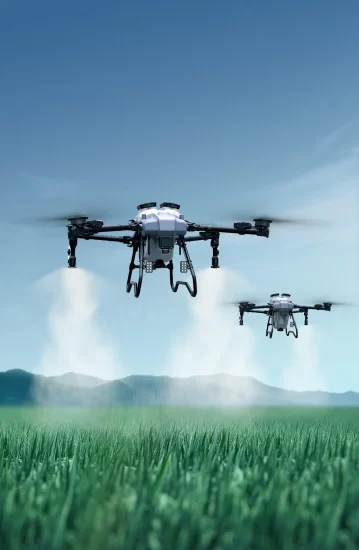


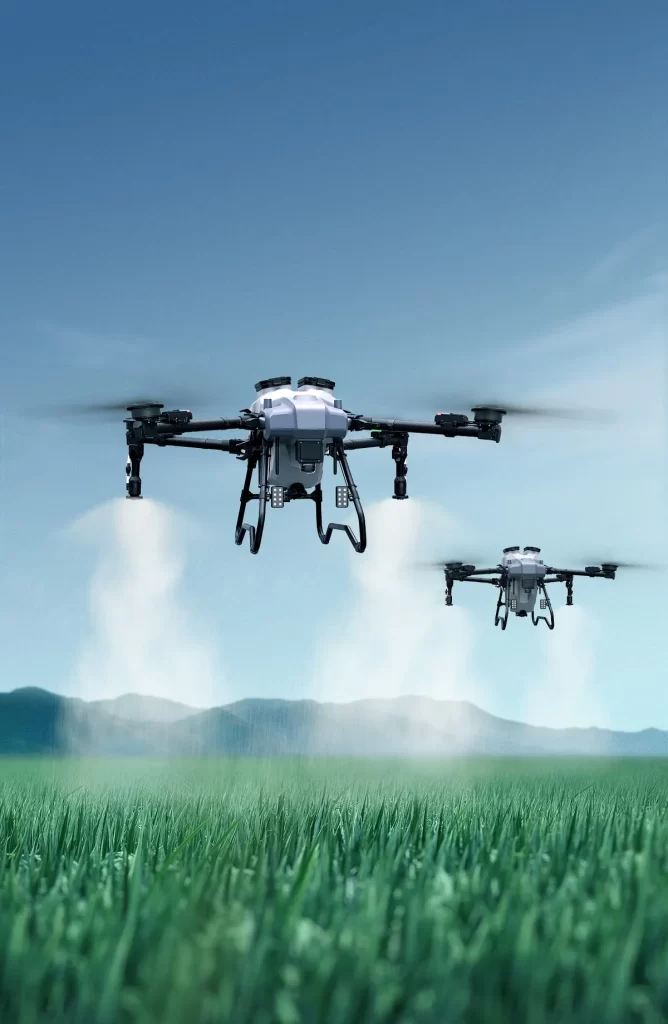
Uneven spraying is a common problem in fruit orchards. Dense canopies, narrow rows, uneven terrain, wind, and inconsistent manual operation can all result in some areas receiving too little spray while others receive too much.
An orchard spraying drone can help improve operational consistency, but the drone itself does not automatically guarantee better coverage. The aircraft, spray system, flight parameters, weather conditions, and orchard structure all need to work together.
This guide explains how spraying drones can reduce missed areas and what buyers should look for when choosing an agricultural drone.
Why Do Orchards Have Missed Spraying Areas?
Fruit trees create a three-dimensional spraying environment.
Leaves and branches can be located at different heights and depths, making it difficult to achieve uniform coverage.
Common causes of missed areas include:
-
Dense foliage
-
Incorrect flight altitude
-
Excessive flight speed
-
Poor route planning
-
Incorrect spray width
-
Inappropriate nozzles
-
Strong wind
-
Uneven terrain
-
Operator error
-
Excessive distance from the canopy
Simply increasing the amount of pesticide does not necessarily solve the problem.
The goal is to achieve appropriate coverage with the correct application rate.
1. How Can a Drone Improve Spraying Consistency?
A spraying drone can use automated flight routes and positioning technology to maintain a more consistent path.
Instead of manually controlling every movement, the operator can plan routes according to the orchard layout.
Useful functions can include:
-
Automatic route planning
-
Accurate positioning
-
Automatic altitude control
-
Adjustable spray flow
-
Terrain following
-
Obstacle sensing
-
Constant-speed operation
These functions can help reduce inconsistent flight paths and unnecessary overlap.
2. Flight Altitude Directly Affects Coverage
Flying too high can increase the distance between the spray system and the tree canopy.
This can increase drift and reduce the amount of spray reaching the intended target.
Flying too low can create other problems, including:
-
Contact with branches
-
Reduced spray distribution
-
Increased collision risk
-
Poor maneuverability
The appropriate altitude depends on the drone, crop, canopy structure, nozzle system, weather, and pesticide application requirements.
Operators should follow manufacturer recommendations and the pesticide label.
3. Flight Speed Matters
Flight speed must be coordinated with spray flow.
If the drone moves too quickly, the application rate can become too low for the intended treatment.
If the drone moves too slowly while maintaining the same flow rate, it may apply more liquid per unit area than intended.
The basic relationship is:
Application rate = Spray flow ÷ Effective ground coverage
Therefore, the operator should calibrate:
Flight speed + spray flow + spray width
before commercial operation.
4. Choose the Correct Nozzles
Nozzles are a critical part of the spraying system.
Different nozzles can produce different spray patterns and droplet characteristics.
The correct configuration depends on:
-
Fruit tree type
-
Canopy density
-
Application requirements
-
Weather
-
Product label
-
Desired coverage
Buyers should ask manufacturers what nozzle options are available and how they are tested for orchard applications.
5. Dense Canopies Need More Careful Planning
Dense apple, citrus, mango, avocado, and other fruit-tree canopies can make it difficult for spray to reach internal foliage.
The operator should consider:
-
Flight direction
-
Flight height
-
Flight speed
-
Spray flow
-
Spray width
-
Nozzle configuration
A higher spray volume is not automatically the solution.
The correct settings should be established through field testing.
6. Terrain Following Can Reduce Uneven Spraying
Mountain orchards can have significant elevation changes.
If the drone maintains a fixed altitude relative to its takeoff point, the distance from the drone to the trees may change as the terrain rises and falls.
Terrain-following technology can help maintain a more consistent relative height.
This can be useful in:
-
Mountain citrus orchards
-
Hillside apple orchards
-
Mango plantations
-
Avocado orchards
-
Other sloped fruit farms
However, performance depends on the drone’s sensors, software, terrain, and environmental conditions.
7. Automated Route Planning Can Reduce Overlap
Manual operation can create inconsistent flight paths.
The drone may accidentally:
-
Repeat part of a previous route
-
Leave gaps between flight lines
-
Fly too close to one row
-
Fly too far from another row
Automated route planning can reduce these problems.
Before spraying, the operator can define:
-
Orchard boundaries
-
Row direction
-
Flight paths
-
Turning areas
-
Obstacles
-
No-spray zones
This can make the operation more repeatable.
8. Obstacle Avoidance Helps Protect the Flight Path
Orchards may contain:
-
Tree branches
-
Utility poles
-
Power lines
-
Buildings
-
Fences
-
Irrigation equipment
Obstacle-sensing systems can help the drone detect potential hazards.
However, these systems should be considered an additional safety feature, not a guarantee that every obstacle will be detected.
Operators should inspect the orchard before operation and maintain appropriate clearance.
9. Wind Can Cause Missed Areas
Even a perfectly planned flight can produce uneven spraying if weather conditions are unsuitable.
Wind can:
-
Move droplets away from the target
-
Increase drift
-
Change deposition patterns
-
Reduce coverage
-
Increase off-target application
Operators should follow the pesticide label and local regulations regarding wind and spraying conditions.
If conditions are unsuitable, spraying should be postponed.
10. How Much Does an Orchard Spraying Drone Cost?
The price depends on tank capacity and configuration.
A general budget range is:
Tank Capacity |
Indicative Price Range |
|---|---|
5–10 L |
US$2,000–5,000 |
10–16 L |
US$3,500–7,000 |
16–25 L |
US$5,000–10,000 |
25–40 L |
US$8,000–15,000+ |
Professional/customized systems |
US$15,000–25,000+ |
These are indicative price ranges rather than fixed quotations.
Actual prices can vary depending on:
-
Battery quantity
-
Charger
-
Spray system
-
Sensors
-
Remote controller
-
Spare parts
-
OEM customization
-
Shipping
-
Import taxes
-
Certification requirements
11. How Can You Test Spray Coverage?
Before spraying the entire orchard, conduct a small field test.
One useful approach is to use appropriate coverage assessment materials such as water-sensitive cards.
Place test cards in different areas:
-
Upper canopy
-
Outer canopy
-
Lower canopy
-
Inner canopy
-
Different sides of the tree
After the test flight, examine the deposition pattern.
This can reveal whether the current:
-
Flight height
-
Flight speed
-
Spray flow
-
Nozzle configuration
-
Route spacing
is suitable.
Testing is much more reliable than simply observing the drone from the ground.
12. Does Better Coverage Mean More Pesticide?
Not necessarily.
The objective of precision spraying is not to maximize the amount of pesticide applied.
It is to deliver the appropriate application rate to the intended target.
Excessive spraying can increase:
-
Chemical costs
-
Environmental risk
-
Off-target drift
-
Potential crop damage
The correct application must follow the product label and local agricultural regulations.
13. Can Spraying Drones Reduce Pesticide Waste?
Potentially.
If a farm previously experienced significant:
-
Overlapping
-
Poor route planning
-
Excessive application
-
Uneven spraying
-
Off-target spraying
then improved control may reduce unnecessary chemical use.
However, actual savings depend on the crop, equipment, operator, weather, and application practices.
Farmers should measure real consumption rather than relying on general claims.
14. What Should Buyers Look for in a Drone?
When purchasing an orchard spraying drone, consider:
Flight System
Look for reliable positioning and stable flight control.
Spraying System
Check pump capacity, nozzle options, flow control, and spray width.
Terrain Capability
For mountain orchards, ask about terrain following.
Obstacle Detection
Check what types of obstacles the sensors can detect.
Battery System
Ask about flight time under actual spraying loads and battery cycle life.
Software
Route planning and flight-recording functions can be valuable for commercial operations.
After-Sales Support
Make sure spare parts, technical support, and training are available.
Questions to Ask the Manufacturer
Before purchasing, ask:
-
What is the recommended spraying altitude?
-
What is the recommended flight speed?
-
What is the effective spray width?
-
What is the pump flow rate?
-
Which nozzles are available?
-
Does the system automatically adjust spray flow?
-
Does the drone support terrain following?
-
What obstacle sensors are included?
-
How accurate is the positioning system?
-
How long can it fly under a full spraying load?
-
How many batteries are recommended?
-
Can you provide orchard field-test results?
-
What is the warranty?
-
What spare parts are available?
-
Is operator training provided?
FAQ
Can orchard spraying drones completely eliminate missed areas?
No. They can improve flight consistency and route accuracy, but coverage still depends on tree structure, weather, spray settings, and operator skill.
What causes the most missed spraying?
Dense canopies, incorrect altitude, excessive flight speed, poor route planning, inappropriate nozzles, and wind are common causes.
Can a drone spray dense fruit-tree canopies?
Yes, but the flight and spraying parameters need to be properly configured for the canopy structure.
Does a larger drone provide better coverage?
Not necessarily. Tank capacity and spray coverage are different issues. A larger drone may carry more liquid but does not automatically provide better deposition.
How much does an orchard spraying drone cost?
Depending on capacity and configuration, a general budget can range from approximately US$2,000 to more than US$25,000.
Conclusion
An orchard spraying drone can help improve spraying consistency by combining accurate positioning, automated route planning, adjustable spray flow, appropriate nozzles, terrain following, and stable flight control.
However, the technology should be properly calibrated for the orchard.
The most important factors are:
Correct flight height + correct speed + correct spray flow + suitable nozzle + suitable weather + accurate route
Before purchasing, ask the manufacturer for real orchard test results rather than relying only on theoretical specifications.
For farmers dealing with dense canopies, uneven terrain, and high labor costs, a properly configured orchard spraying drone can be a valuable tool for improving operational efficiency and achieving more consistent agricultural spraying.
THE END


No comments yet