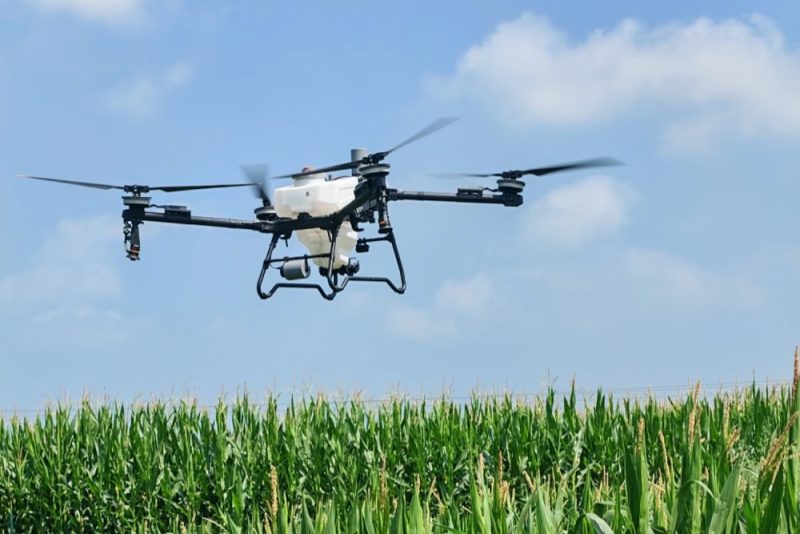



Buying a 100KG payload agricultural spraying drone is only the beginning of the investment. For farms, agricultural contractors, and distributors, the more important question is often:
How much does it actually cost to operate the drone per hectare?
A drone with a low purchase price may have expensive batteries, high maintenance requirements, or low field efficiency. On the other hand, a more expensive drone may reduce labor, improve daily productivity, and lower the operating cost per hectare.
For this reason, buyers should evaluate the total cost of ownership, rather than comparing the initial equipment price alone.
This guide explains how to calculate the operating cost of a 100KG agricultural spraying drone and which expenses should be included.
What Is the Operating Cost of an Agricultural Drone?
The operating cost is the money required to keep the drone working during agricultural operations.
A simplified formula is:
Operating Cost per Hectare = Total Operating Cost ÷ Total Treated Area
The total operating cost can include:
- Electricity
- Battery depreciation
- Maintenance
- Spare parts
- Operator labor
- Transportation
- Drone depreciation
- Insurance
- Software
- Charging equipment
- Cleaning
- Other operating expenses
The exact cost will vary according to the drone, farm size, local labor costs, electricity prices, and operating conditions.
1. Drone Purchase Cost
The initial drone investment should be included when calculating long-term operating costs.
A commercial 100KG-class agricultural drone can have a significant purchase price depending on its configuration.
A broad indicative equipment range may be approximately:
US$15,000–60,000+
The final price depends on:
- Aircraft configuration
- Battery quantity
- Charger
- Spray system
- RTK
- Radar
- Remote controller
- Spare parts
- Spreading system
- OEM customization
The initial price should be converted into an annual depreciation cost when calculating long-term operation.
2. Battery Depreciation
Battery depreciation is one of the most important costs.
Agricultural drones require powerful batteries because they must generate sufficient thrust while carrying a large working payload.
Battery life depends on:
- Number of charge cycles
- Operating temperature
- Charging method
- Storage conditions
- Working load
- Maintenance
A simple calculation is:
Battery Cost per Flight = Battery Purchase Price ÷ Expected Useful Flights
For example, if a battery costs US$1,500 and provides approximately 500 useful operating cycles:
US$1,500 ÷ 500 = US$3 per cycle
This is only an example. Actual battery life depends on the specific battery and operating conditions.
3. Electricity Cost
Electricity is another operating expense.
The calculation is relatively simple:
Electricity Cost = Energy Consumption × Electricity Price
For example, if charging a battery consumes 10 kWh and electricity costs US$0.15/kWh:
10 × 0.15 = US$1.50
The actual electricity consumption will depend on:
- Battery capacity
- Charging efficiency
- Charger efficiency
- Battery condition
- Number of flights
Large commercial farms should measure actual electricity consumption rather than relying only on battery specifications.
4. Labor Cost
Agricultural drones can reduce some manual spraying work, but they still require trained personnel.
Labor may include:
- Drone operator
- Agricultural product preparation
- Refilling
- Battery management
- Equipment transportation
- Maintenance
- Field setup
The actual labor requirement depends on the level of automation and farm organization.
A highly efficient operation can reduce downtime by preparing batteries, water, agricultural products, and equipment before the drone begins flying.
5. Maintenance Cost
Regular maintenance should be included in the operating budget.
Maintenance may include:
- Motor inspection
- Propeller replacement
- Pump maintenance
- Nozzle replacement
- Wiring inspection
- Sensor cleaning
- Battery maintenance
- Frame inspection
- Software updates
Agricultural chemicals and dust can create additional cleaning requirements.
A professional maintenance schedule can help reduce unexpected failures.
6. Spare Parts
Spare parts are an unavoidable cost for commercial drone operations.
Common parts include:
- Propellers
- Motors
- Pumps
- Nozzles
- ESCs
- Wiring
- Landing gear
- Sensors
- Batteries
- Chargers
For large farms, maintaining a small inventory of critical spare parts can reduce downtime.
However, spare-parts costs should be tracked over time and included in the cost-per-hectare calculation.
7. Drone Depreciation
The aircraft itself loses value over time.
A simple depreciation model is:
Annual Depreciation = Purchase Price − Residual Value ÷ Useful Life
For example, if a drone system costs US$30,000 and is expected to have a useful life of five years with a residual value of US$5,000:
(US$30,000 − US$5,000) ÷ 5 = US$5,000 per year
This is a simplified accounting example.
Actual depreciation depends on utilization, technology changes, maintenance, and resale value.
8. Calculate Cost Per Hectare
Once annual costs are known, divide them by the treated area.
For example:
Annual drone-related operating costs:
- Depreciation: US$5,000
- Batteries: US$3,000
- Electricity: US$1,500
- Maintenance: US$2,000
- Labor: US$4,000
Total:
US$15,500 per year
If the drone treats:
5,000 hectares per year
then:
US$15,500 ÷ 5,000 = US$3.10 per hectare
This example does not include agricultural chemicals because those costs depend on the crop and treatment plan.
9. Why Hectares Per Day Matter
A drone’s productivity directly affects operating cost.
Suppose two drones have similar annual expenses.
Drone A
Treats 30 hectares per day.
Drone B
Treats 60 hectares per day.
If both systems have similar annual fixed costs, Drone B can distribute those costs across more hectares.
Therefore:
Higher utilization can reduce fixed cost per hectare.
This is one reason commercial agricultural contractors often focus heavily on daily field productivity.
10. How Tank Capacity Affects Cost
A larger tank can reduce the number of refilling operations.
For example, suppose:
- Application rate = 10 L/ha
- Usable tank capacity = 100 L
Theoretical coverage:
100 ÷ 10 = 10 hectares
If the usable tank capacity is only 50 liters:
50 ÷ 10 = 5 hectares
The larger tank could reduce the number of refilling operations.
However, a larger tank also increases payload and energy requirements.
Therefore, tank capacity must be evaluated together with battery endurance.
11. How Spray Width Affects Cost
A wider effective spray width can potentially increase field productivity.
A simplified theoretical formula is:
Coverage Rate = Spray Width × Flight Speed × 3.6
For example:
- Spray width: 8 m
- Flight speed: 6 m/s
Theoretical coverage:
8 × 6 × 3.6 = 172.8 hectares/hour
This is not a real-world productivity figure.
Turning, refilling, battery replacement, obstacles, and field boundaries all reduce actual efficiency.
The most useful figure is therefore actual hectares completed per hour.
12. Battery Changes and Downtime
Battery changes can affect daily productivity.
Suppose a drone has:
- 15 minutes practical flight time
- 10 minutes battery-change and preparation time
A large part of the operating cycle can be spent on the ground.
Multiple batteries can help maintain continuous operations.
Commercial buyers should therefore evaluate:
Flight Time + Charging Time + Battery Change Time
rather than flight time alone.
13. Refilling Time
Refilling can also become a major productivity limitation.
A large drone may have a high payload capacity, but the operator still needs to prepare and transfer agricultural liquid.
Efficiency can be improved by:
- Preparing water in advance
- Positioning tanks close to the field
- Using suitable filling equipment
- Organizing operators efficiently
- Preparing multiple batteries
The goal is to minimize non-flying time.
14. Transportation Cost
Transportation should not be ignored.
The drone may need to move between:
- Different farms
- Different fields
- Storage facilities
- Charging locations
Transportation costs can include:
- Vehicle fuel
- Driver labor
- Equipment loading
- Battery transportation
- Insurance
Agricultural contractors serving multiple customers should include these costs in their service pricing.
15. Cost Comparison With a Tractor Sprayer
A tractor sprayer has a different cost structure.
Typical costs include:
- Fuel
- Tractor depreciation
- Sprayer depreciation
- Tires
- Engine maintenance
- Hydraulic maintenance
- Labor
- Repairs
A drone has different costs:
- Electricity
- Batteries
- Motors
- Electronics
- Propellers
- Pumps
- Labor
- Software
- Depreciation
Therefore, the comparison should be:
Drone cost per hectare vs. Tractor system cost per hectare
rather than:
Drone purchase price vs. Tractor purchase price
16. Example: Drone vs. Traditional Equipment
Consider a simplified example.
Agricultural Drone
Operating cost:
US$3.50/ha
Annual treated area:
4,000 ha
Annual operating cost:
US$14,000
Traditional Sprayer
Operating cost:
US$5/ha
Annual treated area:
4,000 ha
Annual operating cost:
US$20,000
Potential annual difference:
US$6,000
This is only an illustrative calculation.
Actual results can be significantly different depending on:
- Fuel prices
- Electricity prices
- Labor costs
- Farm size
- Terrain
- Equipment utilization
- Maintenance
- Crop type
17. When Is a 100KG Drone Economically Attractive?
A high-payload agricultural drone may provide stronger economic value when:
- The farm is large
- Labor costs are high
- Fields are difficult to access
- Ground machinery causes crop damage
- Soil is wet
- The drone can be used frequently
- Daily field productivity is high
A drone that sits unused for most of the year may have a poor return on investment regardless of its technical specifications.
18. Agricultural Contractors Have Different Economics
For agricultural contractors, equipment utilization can be much higher.
A contractor may operate the drone across:
- Multiple farms
- Multiple crops
- Different regions
- Different seasons
This can spread the fixed equipment cost across more hectares.
Contractors should track:
- Revenue per hectare
- Operating cost per hectare
- Daily hectares
- Battery cost
- Maintenance cost
- Transportation cost
- Operator cost
- Downtime
This provides a clear picture of profitability.
19. How to Reduce Operating Costs
Several strategies can improve the economics of a 100KG agricultural drone.
Maintain Batteries Properly
Good battery management can help extend useful battery life.
Maintain Pumps and Nozzles
Clean spraying components regularly.
Optimize Flight Routes
Automatic route planning can reduce unnecessary flight paths.
Reduce Downtime
Prepare batteries, water, agricultural products, and spare parts before starting.
Train Operators
Well-trained operators can reduce mistakes and improve field efficiency.
Buy Critical Spare Parts
Keeping essential parts available can reduce downtime.
20. Don’t Ignore Productive Downtime
Downtime has an economic cost.
If a drone is unavailable because of:
- Battery failure
- Motor failure
- Pump problems
- Damaged propellers
- Software problems
- Lack of spare parts
the farm may miss an important agricultural treatment window.
Therefore, reliability should be included in the purchasing decision.
A slightly more expensive drone with strong spare-parts availability may provide better economic value than a cheaper drone with frequent downtime.
21. Calculate Return on Investment
A simplified ROI calculation is:
ROI = Annual Net Benefit ÷ Initial Investment × 100%
Suppose a drone system costs:
US$30,000
and provides annual savings or additional income of:
US$10,000
A simplified payback period would be:
US$30,000 ÷ US$10,000 = 3 years
This is only a basic calculation and does not account for financing, taxes, depreciation, residual value, or changing operating costs.
22. What Data Should You Collect?
To calculate real operating costs, record:
- Flight hours
- Hectares treated
- Battery cycles
- Electricity consumption
- Maintenance expenses
- Spare-parts expenses
- Labor hours
- Transportation costs
- Downtime
- Number of flights
- Refilling time
After several months of operation, this data can provide a much more accurate cost-per-hectare figure.
23. Questions to Ask the Manufacturer
Before buying, ask:
Battery
- How many cycles is the battery rated for?
- What is the replacement cost?
- How long does charging take?
Maintenance
- What parts require regular replacement?
- What is the recommended maintenance interval?
Productivity
- How many hectares can the drone cover per day?
- What is the flight time with working payload?
- What is the effective spray width?
Operating Costs
- How much electricity does one battery charge require?
- What are the recommended spare parts?
- What is the expected service life?
These answers can help build a realistic financial model.
24. Recommended Cost Calculation Table
Use the following structure when evaluating a drone:
| Cost Category | Annual Cost |
|---|---|
| Drone depreciation | US$_____ |
| Battery depreciation | US$_____ |
| Electricity | US$_____ |
| Maintenance | US$_____ |
| Spare parts | US$_____ |
| Labor | US$_____ |
| Transportation | US$_____ |
| Software | US$_____ |
| Insurance | US$_____ |
| Other | US$_____ |
| Total | US$_____ |
Then calculate:
Total Annual Cost ÷ Annual Hectares = Cost per Hectare
This is one of the most useful financial metrics for agricultural drone buyers.
Final Conclusion
The true cost of a 100KG payload agricultural spraying drone cannot be determined by its purchase price alone.
The complete economic calculation should include:
Purchase Price + Battery Depreciation + Electricity + Maintenance + Spare Parts + Labor + Transportation + Depreciation + Other Costs
The most useful performance indicators are:
- Cost per hectare
- Hectares per day
- Flight time with payload
- Battery life
- Downtime
- Maintenance cost
- Annual utilization
A high-payload agricultural drone can provide strong economic value when it is used frequently and efficiently, especially on large farms, difficult terrain, wet fields, mature crops, and commercial agricultural-service operations.
Before purchasing, buyers should calculate the expected cost per hectare under their own local conditions rather than relying on generic marketing claims.
The best drone is not necessarily the cheapest one.
It is the system that provides the right combination of reliability, productivity, payload capacity, battery efficiency, maintenance, and total operating cost.
FAQ
How much does it cost to operate a 100KG agricultural drone?
There is no universal figure. Operating cost depends on electricity, battery depreciation, maintenance, labor, transportation, spare parts, depreciation, and annual utilization.
What is the most important operating-cost metric?
For commercial agriculture, cost per hectare is one of the most useful metrics because it combines equipment expenses with actual productivity.
Do batteries significantly affect operating costs?
Yes. Heavy agricultural drones require high-capacity batteries, and battery depreciation and replacement can represent a significant operating expense.
How can I reduce agricultural drone operating costs?
Improve battery management, maintain pumps and nozzles, optimize flight routes, reduce refilling and charging downtime, train operators, and maintain essential spare parts.
Is a 100KG drone more economical than a tractor?
It can be, depending on the farm. Drones can have advantages in labor, difficult terrain, wet fields, and reduced crop contact, while tractors can be highly efficient on large, flat, easily accessible farmland.
How many hectares should a drone treat each year?
There is no universal target. Higher annual utilization generally helps spread fixed equipment costs across more hectares, improving the economics of the investment.
How long does a 100KG agricultural drone last?
Service life depends on construction quality, operating hours, maintenance, battery management, environmental conditions, and component replacement. Ask the manufacturer for expected service life and replacement schedules.
Should battery costs be included in ROI calculations?
Yes. Batteries are consumable components and should be included in total cost-of-ownership calculations.
Can agricultural contractors make money with a 100KG drone?
Potentially. Contractors can improve equipment utilization by serving multiple farms and spreading fixed costs across a larger number of hectares. Profitability depends on local service prices, operating costs, utilization, and competition.



No comments yet