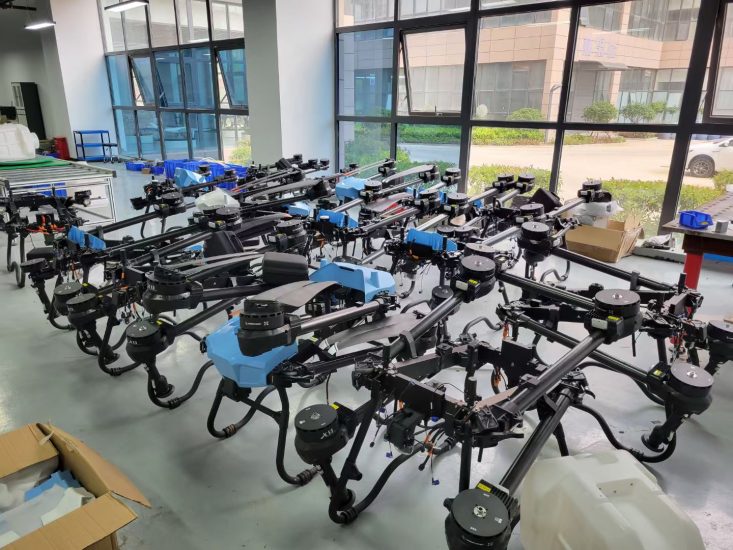


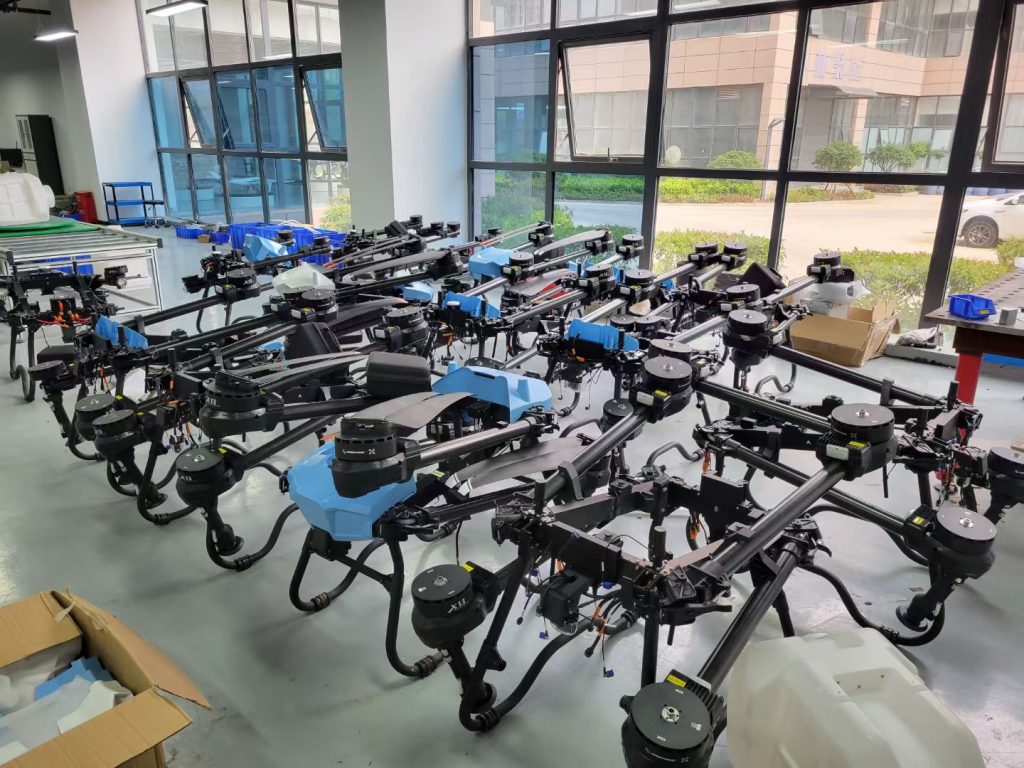
Heavy lift drones have become increasingly important for construction, industrial logistics, agriculture, infrastructure maintenance, emergency supply delivery, mining and other applications where conventional transportation can be difficult, expensive or dangerous.
One of the first questions buyers ask is:
How much does a heavy lift drone cost?
The short answer is that a commercial heavy lift drone can cost anywhere from approximately US$5,000 to more than US$100,000, depending on payload capacity, flight time, battery configuration, navigation systems, safety equipment, cargo delivery mechanism and customization.
For many commercial buyers, a realistic budget is approximately US$8,000–US$30,000 for a 30–80 kg industrial drone, while a professional 100 kg-class system can commonly fall into the US$20,000–US$60,000+ range. Highly customized industrial systems can cost considerably more. Current Chinese supplier listings also show 100 kg-class products with advertised prices ranging from roughly US$20,000 to above US$50,000, demonstrating how strongly configuration affects the final price.
However, the advertised drone price is not always the final procurement cost.
A buyer should determine exactly what is included before comparing quotations.
Heavy Lift Drone Price at a Glance
The following table provides a practical market reference for commercial buyers.
| Heavy Lift Drone Class | Typical Payload | Indicative Price Range |
|---|---|---|
| Entry industrial drone | 10–20 kg | US$3,000–8,000 |
| Light heavy-lift drone | 20–30 kg | US$5,000–12,000+ |
| Medium heavy-lift drone | 30–50 kg | US$8,000–20,000+ |
| Large industrial cargo drone | 50–80 kg | US$12,000–30,000+ |
| 80–100 kg heavy-lift drone | 80–100 kg | US$18,000–40,000+ |
| Premium 100 kg-class system | Around 100 kg | US$40,000–60,000+ |
| Customized industrial UAV | 100 kg+ | US$40,000–100,000+ |
These are indicative purchasing ranges rather than fixed factory prices. Battery quantity, charger capacity, RTK, radar, LiDAR, winch systems, parachutes, software, training, spare parts, certification and OEM requirements can significantly change the final quotation.
How Much Does a 20 kg Heavy Lift Drone Cost?
A 20 kg payload drone is generally much more affordable than a large industrial cargo UAV.
A typical commercial system in this category may cost approximately:
US$5,000–US$10,000
depending on the configuration.
A 20 kg drone may be suitable for:
- Construction tools
- Agricultural equipment
- Emergency supplies
- Small industrial components
- Remote-area deliveries
- Mountain transportation
- Utility maintenance
For buyers whose normal cargo is only 5–15 kg, purchasing a 50 kg or 100 kg drone may not be economically efficient.
The most suitable drone should be selected according to the normal payload, not simply the maximum payload advertised by the manufacturer.
How Much Does a 30 kg Heavy Lift Drone Cost?
A commercial 30 kg heavy lift drone typically falls around:
US$5,000–US$12,000+
The final price depends on whether the quotation includes batteries, charger, remote controller, cargo platform, sensors and other equipment.
A 30 kg platform can be useful for construction, agricultural transportation, emergency logistics and short-distance industrial delivery.
For many companies, this payload class offers a good balance between purchase cost and transportation capacity.
How Much Does a 50 kg Heavy Lift Drone Cost?
A 50 kg heavy lift drone generally costs approximately:
US$8,000–US$20,000+
A more complete professional system may cost more.
The price can increase when the aircraft includes:
- Multiple high-capacity batteries
- Fast charger
- RTK positioning
- Obstacle avoidance
- Radar
- Long-range communications
- Winch delivery system
- Payload weighing system
- Parachute
- Ground station
- Spare parts
- Training
A 50 kg drone can be attractive for construction companies, infrastructure contractors, mining operations and industrial logistics providers.
How Much Does a 100 kg Heavy Lift Drone Cost?
The 100 kg class is one of the most interesting categories in the industrial cargo drone market.
A realistic purchasing range is approximately:
US$20,000–US$60,000+
Some basic or lower-cost 100 kg platforms may be advertised around US$20,000, while more sophisticated complete systems can reach US$40,000–US$60,000 or more. Public supplier listings show substantial variation between different 100 kg-class systems.
This does not mean that a US$20,000 drone is necessarily poor quality or that a US$50,000 drone is overpriced.
The two aircraft may have completely different configurations.
For example, one system may include only the aircraft and standard controller, while another quotation may include:
- Aircraft
- Multiple batteries
- High-power charger
- RTK navigation
- Radar
- LiDAR
- Winch
- Cargo release system
- Payload weighing
- Parachute
- Spare motors
- Spare propellers
- Software
- Operator training
- Warranty support
Therefore, comparing only the headline price can be misleading.
Why Does a Heavy Lift Drone Cost So Much?
A heavy lift drone is much more complicated than a consumer camera drone.
When payload capacity increases, nearly every major component has to become stronger.
1. Motors
Heavy cargo requires significantly more thrust.
Large industrial drones therefore use high-power motors designed for continuous operation under high loads.
2. Propellers
Larger propellers can produce more thrust efficiently, but they also require stronger motors, arms and mounting structures.
3. Battery System
Battery capacity is one of the most important cost factors.
A heavy drone may require multiple high-capacity batteries, and buyers should determine whether the advertised price includes the batteries.
4. Flight Controller
Industrial cargo transportation requires stable flight control under changing payload conditions.
A professional flight-control system can cost significantly more than the electronics used in recreational drones.
5. Frame
The frame must support the aircraft, batteries and payload while maintaining acceptable structural weight.
Carbon-fiber components are commonly used to achieve a combination of strength and low weight.
6. Navigation
Professional systems may use RTK positioning, GNSS, radar and other sensors.
These technologies can significantly increase the total system price.
7. Cargo Delivery System
A cargo drone may use:
- Cargo box
- Hook
- Sling
- Winch
- Automatic release mechanism
- Payload platform
A winch system can be especially useful when the drone needs to deliver materials without landing.
Heavy Lift Drone Price Is Not the Same as Total Project Cost
This is one of the most important points for buyers.
Suppose a manufacturer quotes:
US$25,000 for a 100 kg heavy lift drone.
That does not necessarily mean the company can begin commercial operations immediately after paying US$25,000.
Additional costs may include:
| Cost Item | Possible Requirement |
|---|---|
| Drone aircraft | Main purchase |
| Batteries | Often additional |
| Charger | May be separate |
| Spare batteries | Recommended for operations |
| Remote controller | May be included |
| RTK | Optional or included |
| Ground station | Depends on system |
| Winch | Optional |
| Radar/LiDAR | Optional |
| Parachute | Safety equipment |
| Spare parts | Recommended |
| Training | May be charged separately |
| Shipping | Depends on destination |
| Import duties/taxes | Country dependent |
| Certification | Depends on local regulations |
Therefore, buyers should request a complete commercial quotation, rather than asking only for the aircraft price.
What Is the Difference Between Payload and Maximum Takeoff Weight?
This is a critical specification that is sometimes misunderstood.
Payload is not the same as maximum takeoff weight.
For example, if a manufacturer says:
Maximum takeoff weight: 150 kg
that does not mean the drone can carry 150 kg of cargo.
The maximum takeoff weight may include:
- Aircraft
- Motors
- Batteries
- Controller-related equipment
- Cargo
- Other accessories
If the drone itself and its batteries weigh 60 kg, the available payload is obviously much lower than 150 kg.
Therefore, when comparing heavy lift drones, always ask the manufacturer for:
Maximum payload under actual operating conditions.
Does a 100 kg Drone Always Carry 100 kg?
No.
A published maximum payload should be examined carefully.
Actual useful payload can change according to:
- Flight distance
- Battery configuration
- Wind speed
- Temperature
- Altitude
- Flight mode
- Remaining battery reserve
- Takeoff location
- Cargo dimensions
- Safety requirements
A drone that can technically lift 100 kg for a short test flight may not be able to transport 100 kg over a long commercial route.
This is why serious buyers should request test data showing the payload, distance, flight time and environmental conditions.
Heavy Lift Drone Operating Cost
Purchase price is only one part of the economics.
A commercial operator should also consider operating costs.
Important cost items include:
Battery Replacement
High-capacity lithium batteries have a finite service life.
Frequent heavy-load operations can increase battery wear.
Electricity
Large industrial batteries require considerably more charging energy than consumer drones.
Maintenance
Motors, propellers, landing gear, connectors and other components require regular inspection.
Spare Parts
Professional operators should maintain an inventory of critical spare parts.
Personnel
Depending on the country and operation, trained pilots, technicians and safety personnel may be required.
Insurance and Compliance
Commercial drone operations may require insurance, registration, permits or other regulatory procedures.
What Applications Use Heavy Lift Drones?
Heavy lift drones are being developed for many industrial applications.
Construction
They can transport tools, materials and components to locations that are difficult to reach using trucks or cranes.
Mining
Remote mining areas can benefit from aerial transportation where conventional roads are unavailable.
Infrastructure
Drones can transport equipment for bridges, towers, power lines and other infrastructure projects.
Agriculture
Heavy UAVs can carry agricultural materials or specialized equipment.
Emergency Response
Heavy cargo drones can potentially transport emergency supplies to remote or inaccessible areas.
Logistics
Cargo UAVs can provide point-to-point transportation where conventional ground transportation is inefficient.
How to Choose the Right Heavy Lift Drone
Do not begin the purchasing process by asking:
“How much does a 100 kg drone cost?”
Instead, provide the manufacturer with a complete mission profile.
1. Required Payload
Determine your normal cargo weight and maximum cargo weight.
2. Flight Distance
A drone designed for a 2 km delivery is very different from one required to fly 20 km with cargo.
3. Flight Time
Ask for flight time with the intended payload, not empty-aircraft flight time.
4. Altitude
High-altitude operations can affect propulsion performance.
5. Wind Conditions
The aircraft should be evaluated under the expected operating environment.
6. Cargo Type
Determine whether you need a cargo box, platform, hook or winch.
7. Delivery Method
Landing delivery and winch delivery require different configurations.
8. Safety Requirements
Consider redundancy, emergency landing procedures, parachutes and obstacle detection.
9. Battery Strategy
Ask how many batteries are included and how many flight cycles are expected.
10. After-Sales Support
For commercial operations, technical support and spare parts can be just as important as the initial purchase price.
What Should You Ask a Heavy Lift Drone Manufacturer?
Before placing an order, request a detailed specification sheet.
At minimum, ask for:
- Maximum payload
- Recommended payload
- Maximum takeoff weight
- Empty weight
- Flight time with payload
- Maximum range
- Maximum flight altitude
- Maximum wind resistance
- Battery capacity
- Battery quantity
- Charging time
- Motor model
- Propeller specifications
- Navigation system
- RTK availability
- Radar
- Obstacle avoidance
- Cargo system
- Winch specifications
- Emergency system
- Spare parts
- Warranty
- Training
- Delivery time
- Export packaging
- Incoterm
- Certification documents
This makes it much easier to compare quotations from different manufacturers.
Is a Cheap Heavy Lift Drone a Good Deal?
Not necessarily.
Online marketplaces may show surprisingly low prices for “100 kg heavy lift drones.”
For example, some listings can be below US$2,000.
However, such a price may represent only:
- Frame
- Motor kit
- Propulsion system
- Basic UAV platform
- Partial kit
rather than a complete ready-to-operate industrial cargo drone. Current marketplace data shows examples of 100 kg-class frames around US$1,799 while complete-looking systems can be priced above US$20,000.
Therefore:
Never compare a frame price with the price of a complete industrial drone.
Always compare the bill of materials and specifications.
How Much Should You Budget for a Heavy Lift Drone?
For a company planning a commercial project, a practical initial budget could look like this:
Small Industrial Operation
US$5,000–US$12,000
Suitable for approximately 20–30 kg payload applications.
Medium Industrial Operation
US$10,000–US$25,000
Suitable for approximately 30–60 kg payload applications.
Large Industrial Operation
US$20,000–US$60,000+
Suitable for approximately 80–100 kg-class cargo transportation.
Customized Industrial Project
US$40,000–US$100,000+
Suitable for specialized applications requiring customized payload systems, long endurance, additional safety equipment, advanced navigation or special certification.
These figures are planning ranges rather than fixed quotations. Actual factory pricing can vary considerably.
Final Thoughts
So, how much does a heavy lift drone cost?
For a commercial buyer, the answer depends primarily on payload capacity and system configuration.
A reasonable market reference is:
- 20–30 kg: about US$5,000–US$12,000+
- 30–50 kg: about US$8,000–US$20,000+
- 50–80 kg: about US$12,000–US$30,000+
- 80–100 kg: about US$18,000–US$40,000+
- Premium 100 kg class: about US$40,000–US$60,000+
- Customized 100 kg+ systems: about US$40,000–US$100,000+
The most important point is that the cheapest advertised price is not necessarily the lowest-cost solution.
A professional buyer should compare payload performance, flight time, battery configuration, safety systems, cargo mechanism, navigation equipment, spare parts, warranty and after-sales support together.
For a commercial project, it is usually better to select a drone based on the actual mission requirements rather than buying the largest payload capacity available.
Frequently Asked Questions
How much does a heavy lift drone cost?
A commercial heavy lift drone can cost approximately US$5,000 to US$60,000+, while highly customized industrial systems can exceed US$100,000. Payload capacity, batteries, navigation, safety equipment and customization are major price factors.
How much does a 50 kg heavy lift drone cost?
A 50 kg-class industrial drone typically costs approximately US$8,000–US$20,000+. A complete system with additional batteries, RTK, radar, winch and safety equipment may cost more.
How much does a 100 kg heavy lift drone cost?
A 100 kg-class heavy lift drone can cost approximately US$20,000–US$60,000+ depending on configuration. Public supplier listings show substantial price differences between basic and professional systems.
Why do some 100 kg drones cost US$20,000 while others cost US$50,000?
Because they may not have the same specifications.
The more expensive system may include additional batteries, RTK, radar, LiDAR, winch systems, parachutes, high-power chargers, software, training and spare parts.
Does the drone price include batteries?
Not always. Some manufacturers quote the aircraft separately from batteries and chargers. Buyers should request an itemized quotation.
Is a 100 kg payload the same as a 100 kg takeoff weight?
No.
Payload means cargo weight.
Maximum takeoff weight includes the drone, batteries, payload and other equipment.
These specifications must not be confused.
How long can a heavy lift drone fly?
Flight time depends heavily on payload, battery capacity, weather, altitude and aircraft configuration.
A manufacturer should provide flight-time data with the intended payload rather than only quoting empty-aircraft endurance.
Can heavy lift drones carry construction materials?
Yes. Construction material transportation is one of the important applications for industrial heavy lift drones, particularly in mountainous, remote or difficult-to-access areas.
Can a heavy lift drone deliver cargo without landing?
Yes. Some industrial cargo drones can use winches, hooks or other delivery mechanisms to lower cargo without landing. The exact system depends on the aircraft configuration and mission requirements.
Is it better to buy a 50 kg or 100 kg heavy lift drone?
It depends on your normal cargo weight and operating distance.
If your typical payload is 15–30 kg, a 50 kg-class drone may provide better economics.
If you regularly transport 50–80 kg cargo, a 100 kg-class aircraft may provide more useful capacity and operating flexibility.
What should I ask a heavy lift drone manufacturer before buying?
Ask for the maximum and recommended payload, flight time with payload, range, battery specifications, maximum takeoff weight, wind resistance, navigation system, cargo mechanism, safety systems, warranty, spare parts, training and complete system price.
The best quotation is not necessarily the cheapest one. It is the quotation that clearly defines what the buyer receives and what the aircraft can actually do in the intended operating environment.


No comments yet