

How to Choose an Agricultural Drone for Large Farms: Capacity, Coverage, Flight Time and Operating Cost
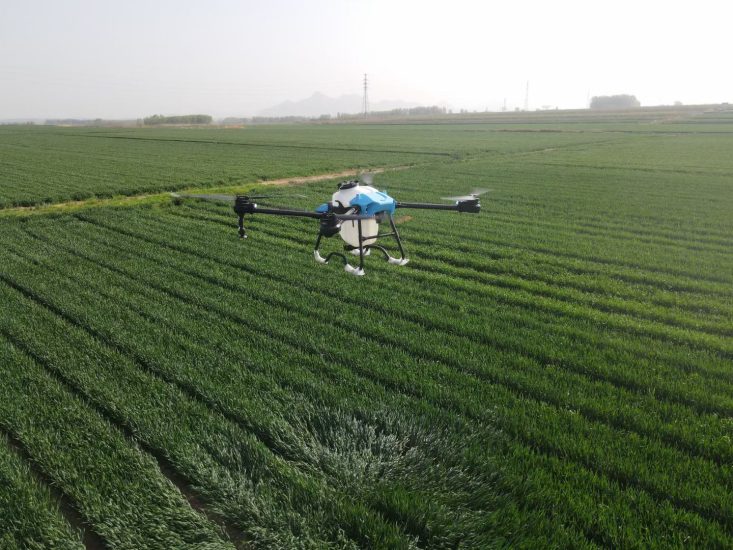
Large-scale farming requires equipment that can cover substantial areas efficiently while maintaining consistent application quality. Agricultural drones have become an increasingly practical tool for crop spraying, fertilization, and other precision farming operations because they can operate in areas where conventional ground equipment may be difficult to use.
However, choosing an agricultural drone for a large farm is not simply a matter of selecting the model with the largest tank or the longest flight time. Farm size, crop type, terrain, field layout, application rate, battery capacity, charging arrangements, payload capacity, and operating conditions all affect actual productivity.
For farmers, distributors, and agricultural equipment buyers, the right selection should be based on the complete operating system rather than a single specification.
1. Start With the Actual Requirements of the Farm
Before purchasing an agricultural drone, the first step is to understand how the equipment will be used.
A large farm may contain different crops, field sizes, terrain conditions, and spraying requirements. A drone that works efficiently in a large open field may require a different configuration for orchards, hills, or irregularly shaped farmland.
Important factors include:
- Total cultivated area
- Average size of individual fields
- Crop type
- Crop height and density
- Terrain and elevation changes
- Required application rate
- Available water or liquid preparation facilities
- Daily operating hours
- Battery charging capacity
- Transport distance between fields
- Local weather conditions
- Availability of operators and support personnel
For example, a farm with several large and relatively flat fields may benefit from a higher-capacity agricultural drone because the aircraft can spend more time spraying and less time returning for refilling.
By contrast, a farm divided into many small fields may not gain the same productivity advantage from simply choosing a larger tank.
2. Understand Agricultural Drone Capacity
Tank capacity is one of the most visible specifications when comparing agricultural drones.
Common capacity ranges include approximately 20 liters, 30 liters, 40 liters, 50 liters, and larger configurations. The appropriate capacity depends on the farm’s operating conditions rather than the farm’s total acreage alone.
A larger tank can reduce the number of refill cycles required during a working day. This can be particularly useful when the drone is operating far from the preparation area.
For example, consider two drones operating under otherwise similar conditions:
- Drone A has a 30-liter tank.
- Drone B has a 50-liter tank.
If the application rate is 10 liters per hectare, one full tank theoretically contains enough liquid for approximately:
30 ÷ 10 = 3 hectares
and:
50 ÷ 10 = 5 hectares
These figures are theoretical and actual coverage will vary because of field shape, overlap, terrain, application settings, liquid consumption, and operational losses.
The calculation demonstrates why tank capacity should always be evaluated together with application rate and field conditions.
3. Do Not Evaluate Tank Capacity Alone
A large tank does not automatically mean higher productivity.
Increasing payload capacity also affects the aircraft’s total operating weight. The propulsion system, battery consumption, flight characteristics, and takeoff performance must all be considered.
A useful evaluation should therefore include:
Tank capacity + payload + battery endurance + refill time + flight speed + spraying width
rather than looking at tank capacity independently.
For large farms, the objective is not simply to carry more liquid. The objective is to maximize useful spraying work during the available operating period.
4. Evaluate Coverage Efficiency
Coverage is one of the most important measurements for agricultural drone operations.
A basic theoretical calculation can be expressed as:
Coverage Area = Flight Speed × Effective Spray Width × Operating Time
For example, if a drone travels at 5 meters per second and has an effective spray width of 8 meters, its theoretical working rate is:
5 × 8 = 40 square meters per second.
However, actual field productivity will be lower than the theoretical figure because the drone must turn, refill, reposition, avoid obstacles, adjust its route, and sometimes wait for suitable operating conditions.
This is why manufacturers and buyers should distinguish between theoretical coverage and actual field productivity.
A realistic evaluation should consider:
- Flight speed
- Effective spray width
- Turning time
- Route planning
- Field shape
- Refill time
- Battery replacement time
- Operator efficiency
- Weather interruptions
5. Flight Time Is More Than a Specification
Flight time is another important factor when selecting an agricultural drone.
Manufacturers may provide flight-time figures under specific test conditions. Actual flight time can vary according to payload, battery condition, temperature, wind, flight mode, altitude, and operating behavior.
A drone carrying a full tank generally consumes more energy than one flying with a partially filled tank.
For large farms, buyers should therefore ask:
- Is the stated flight time measured with or without payload?
- What battery capacity is used?
- How long does battery replacement take?
- How many batteries are recommended for continuous operation?
- How long does charging take?
- Can multiple batteries be charged simultaneously?
- How does payload affect endurance?
These questions are more useful than comparing advertised flight time alone.
6. Battery Management Can Determine Daily Productivity
For professional agricultural operations, batteries are part of the production system.
A drone may have excellent flight performance, but if batteries cannot be charged or replaced efficiently, the overall operation can still experience significant downtime.
A large farm should consider establishing a complete battery workflow:
Charged batteries → Flight operation → Battery replacement → Charging → Cooling → Reuse
The number of batteries required depends on daily working hours, charging speed, field location, weather, and the number of drones operating simultaneously.
For high-volume agricultural work, buyers should calculate the expected number of battery cycles per day rather than purchasing only the batteries required for one flight.
Battery maintenance is equally important. Proper charging, storage, temperature management, inspection, and cycle monitoring can help maintain consistent performance over time.
7. Consider the Application Rate
Agricultural drones are used for different applications, and each application may require a different liquid volume per hectare.
The required application rate depends on factors such as:
- Crop type
- Crop growth stage
- Target pest or disease
- Product concentration
- Field conditions
- Spray system
- Agronomic recommendations
- Local operating requirements
The drone’s tank capacity should therefore be selected based on the actual application rate.
For example, if a 50-liter tank is used at an application rate of 10 liters per hectare, the theoretical tank capacity corresponds to five hectares.
If the application rate increases to 20 liters per hectare, the same tank theoretically covers only 2.5 hectares.
This illustrates why capacity comparisons without application-rate information can be misleading.
8. Spray Width and Droplet Management Matter
Spraying performance depends on more than the amount of liquid carried by the aircraft.
Important spray-system characteristics include:
- Number and position of nozzles
- Effective spray width
- Droplet size
- Flow rate
- Pump performance
- Spray pressure
- Flight altitude
- Flight speed
Different crops may require different spraying conditions.
A drone operating above a low-growing crop may use different parameters from one operating around taller vegetation. Orchards and other crops with complex canopies may require particularly careful route planning and spray parameter adjustment.
The objective should always be to achieve appropriate application coverage rather than simply maximizing spray width.
9. Farm Layout Has a Major Impact on Productivity
Two farms with the same total area can have completely different drone operating requirements.
Consider:
Farm A:
Several large rectangular fields located close together.
Farm B:
Many small fields separated by roads, buildings, trees, irrigation channels, or other obstacles.
Farm A may allow longer continuous flight paths and fewer repositioning operations.
Farm B may require more takeoffs, turns, transport, and route adjustments.
Consequently, total hectares alone cannot accurately predict daily productivity.
Before purchasing an agricultural drone, buyers should examine the actual field layout.
10. Terrain and Obstacles Should Be Included in the Selection
Large agricultural areas are not always flat and open.
Potential obstacles include:
- Trees
- Power lines
- Buildings
- Irrigation structures
- Greenhouses
- Poles
- Hills
- Uneven terrain
- Water channels
Obstacle detection and route-planning functions can help operators manage complex environments, but they should not replace responsible flight planning.
Operators should understand the local environment before beginning agricultural operations.
For large farms, mapping and route planning can also reduce unnecessary flight paths and improve operational consistency.
11. Calculate Operating Cost Per Hectare
Purchase price is only one part of the total cost of agricultural drone operations.
A more useful measurement for large farms is the operating cost per hectare.
A simplified calculation can include:
Operating Cost per Hectare = Total Operating Cost ÷ Completed Hectares
Total operating costs may include:
- Electricity
- Battery depreciation
- Maintenance
- Spare parts
- Labor
- Transportation
- Liquid preparation
- Cleaning
- Equipment depreciation
For example, if a farming operation spends USD 500 on drone-related operating expenses while completing 100 hectares of work, the simplified operating cost is:
USD 500 ÷ 100 hectares = USD 5 per hectare
The actual cost structure will vary considerably between farms.
This calculation is useful because it allows buyers to compare different equipment configurations based on actual agricultural output rather than purchase price alone.
12. Compare Drone Productivity With Existing Equipment
Large farms may already use tractors, ground sprayers, or other agricultural machinery.
The decision to introduce drones should therefore consider the specific advantages and limitations of each method.
Agricultural drones can provide operational advantages in situations where:
- Soil compaction is a concern
- Crops are too tall for conventional ground equipment
- Fields are wet
- Terrain is difficult
- Access to certain areas is limited
- Small sections need targeted treatment
- Rapid deployment is required
Ground equipment may remain practical for other applications.
The goal is not necessarily to replace every existing agricultural machine. In many operations, aerial and ground equipment can perform different tasks within the same agricultural management system.
13. Consider Refill Logistics
Refilling can become a major source of downtime on large farms.
A drone with a large tank still requires regular refilling. If the mixing or water preparation area is far from the field, the time spent traveling between the operating area and refill point can reduce productivity.
A well-designed operation should therefore consider:
- Water source location
- Mixing area
- Filling equipment
- Transport tanks
- Battery charging location
- Drone takeoff points
- Field access
- Operator position
For large farms, logistics can have as much impact on productivity as the drone’s flight performance.
14. Think About Maintenance Before Purchasing
Agricultural drones operate in demanding environments.
Dust, moisture, chemicals, vibration, and repeated takeoff and landing cycles can place stress on mechanical and electronic components.
Routine maintenance may include inspection and cleaning of:
- Propellers
- Motors
- Pumps
- Spray nozzles
- Pipes
- Filters
- Landing structures
- Battery connectors
- Flight-control components
- Sensors
Spray-system components deserve particular attention because residue can affect flow consistency.
A professional agricultural drone program should establish a maintenance schedule rather than waiting until a component fails.
15. Spare Parts Availability Is Important for Large Farms
Downtime during an agricultural spraying season can have a significant operational impact.
For this reason, buyers should evaluate spare-parts availability before purchasing equipment.
Common replacement items may include:
- Propellers
- Motors
- Pumps
- Nozzles
- Filters
- Pipes
- Landing components
- Batteries
- Electronic modules
For commercial agricultural operations, maintaining a reasonable stock of commonly replaced parts can reduce unnecessary downtime.
16. Choose Equipment Based on the Farm’s Working Pattern
There is no single agricultural drone configuration that is ideal for every large farm.
A farm should match equipment to its own working pattern.
Large Open Fields
A higher-capacity drone may be suitable when fields are large and continuous, especially when refill facilities are well organized.
Orchards
Orchards require careful consideration of canopy structure, terrain, flight height, route planning, and spray distribution.
Rice Fields
Rice production can benefit from aerial application because wet fields may limit the use of heavy ground machinery.
Hilly Agricultural Areas
A drone can access areas where conventional ground equipment may have difficulty operating, but terrain and wind conditions require careful planning.
Mixed-Crop Farms
A flexible configuration may be more valuable than simply choosing the largest available payload capacity.
17. Questions to Ask an Agricultural Drone Manufacturer
Before placing an order, professional buyers should request detailed technical information.
Useful questions include:
- What is the rated tank capacity?
- What is the recommended operating payload?
- What is the effective spraying width?
- What is the expected flight time under different payload conditions?
- What battery capacity is required?
- How long does battery charging take?
- How many batteries are recommended for continuous operation?
- What is the pump flow rate?
- What nozzle configurations are available?
- What maintenance is required?
- Which spare parts are commonly needed?
- What operator training is provided?
- What customization options are available?
- What are the minimum order requirements for commercial buyers?
- What technical support is available after delivery?
These questions help buyers evaluate the complete equipment package instead of comparing only the purchase price.
18. Agricultural Drone Selection Checklist
Before making a purchasing decision, buyers can use the following checklist:
Farm Requirements
- [ ] Total cultivated area
- [ ] Main crop types
- [ ] Average field size
- [ ] Terrain conditions
- [ ] Obstacles
Drone Specifications
- [ ] Tank capacity
- [ ] Payload capacity
- [ ] Spray width
- [ ] Flight time
- [ ] Flight speed
- [ ] Battery capacity
- [ ] Charging system
Spraying System
- [ ] Pump performance
- [ ] Nozzle configuration
- [ ] Flow control
- [ ] Spray adjustment
- [ ] Application-rate compatibility
Operations
- [ ] Refill logistics
- [ ] Battery management
- [ ] Operator requirements
- [ ] Route planning
- [ ] Daily working capacity
After-Sales Support
- [ ] Spare parts
- [ ] Maintenance instructions
- [ ] Technical support
- [ ] Operator training
- [ ] Warranty conditions
19. Why a Complete System Matters More Than One Specification
When selecting an agricultural drone for a large farm, it is easy to focus on one impressive number, such as tank capacity, maximum flight time, or maximum spraying width.
However, agricultural productivity is determined by the entire operating system.
A drone with a large tank may require longer charging or have greater energy consumption. A drone with long flight time may not achieve high productivity if its refill process is slow. A drone with a wide spray system may not perform efficiently in irregular fields.
The best purchasing decision therefore comes from balancing:
Capacity + Coverage + Flight Time + Battery Management + Refill Logistics + Maintenance + Operating Cost
This approach provides a more realistic understanding of how the equipment will perform in daily agricultural operations.
20. Conclusion
Choosing an agricultural drone for a large farm requires more than comparing product specifications.
Farm size, field layout, crop type, application rate, tank capacity, spray width, flight time, battery management, refill logistics, maintenance, and operating cost should all be evaluated together.
For large-scale agricultural operations, the most useful equipment is the configuration that matches the actual working environment and can maintain reliable productivity throughout the agricultural season.
Before purchasing, farmers, distributors, and agricultural equipment buyers should define their operational requirements, calculate expected productivity, evaluate total operating costs, and confirm technical support and spare-parts availability.
A carefully selected agricultural drone can become an important part of a modern farm management system, particularly when it is integrated with appropriate flight planning, field management, battery logistics, and professional operating procedures.
For agricultural equipment buyers looking for customizable spraying drone solutions, OEM/ODM manufacturing, or commercial agricultural drone supply, a detailed discussion of farm requirements is an important first step toward selecting the appropriate configuration.


No comments yet