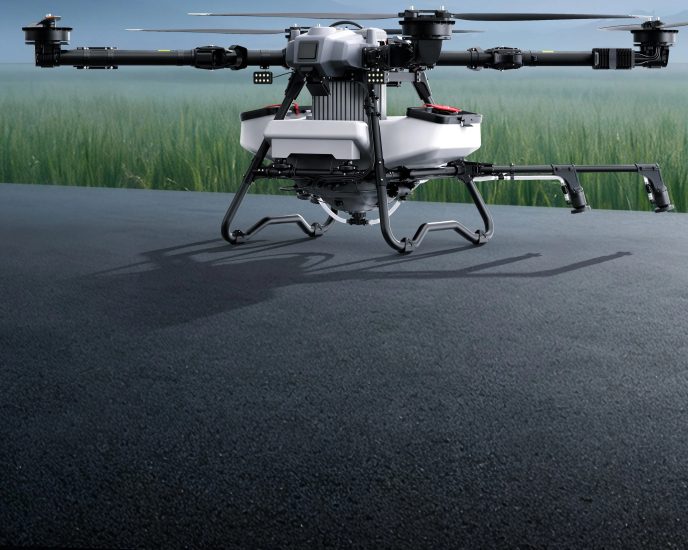


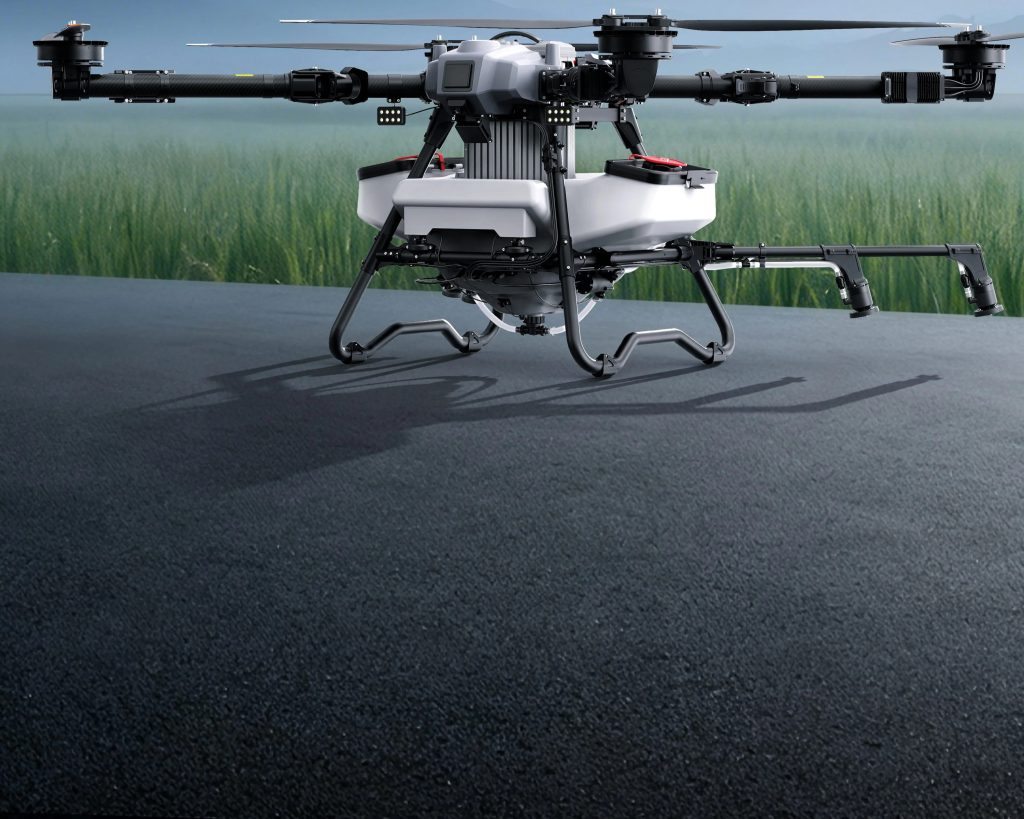
New Zealand’s agricultural sector is undergoing a quiet but profound transformation. Across the Canterbury plains, Central Otago orchards, and North Island dairy farms, drone technology is steadily replacing traditional backpack sprayers and tractor-mounted boom systems. For many farm operators, sourcing spraying drones directly from Chinese manufacturers has become an economically compelling option—offering significant cost advantages over domestic or US-sourced alternatives.
However, importing an unmanned aerial vehicle (UAV) configured for agricultural chemical application into New Zealand is not a simple matter of placing an order and clearing customs. The regulatory architecture governing these devices is multi-layered, involving the Civil Aviation Authority (CAA), the Ministry for Primary Industries (MPI), Customs New Zealand, and in some cases local regional councils. A single misstep can result in a drone being held at the border, denied flight authorization, or—worse—operated illegally with substantial penalties.
This guide provides a comprehensive, step-by-step walkthrough of everything you need to know to import a Chinese-manufactured agricultural spraying drone into New Zealand legally, safely, and efficiently in 2026.
1. Understanding New Zealand’s Regulatory Framework for Agricultural Drones
1.1 The CAA and Part 102 Certification
In New Zealand, all drone operations fall under the Civil Aviation Rules. The baseline is Part 101, which covers low-risk recreational and some commercial operations. However, agricultural spraying is explicitly excluded from Part 101’s low-risk category. Spraying pesticides from the air introduces hazards—chemical drift, overflight of people and property, and payload release—that Part 101 was never designed to accommodate.
Instead, agricultural spraying drones require a Part 102 Unmanned Aircraft Operator Certificate (UAOC). This is not a trivial process. Part 102 demands a documented safety system, a named accountable manager, and—critically for imported equipment—a CAA inspection and acceptance of the aircraft itself before it can be used for commercial agricultural operations.
1.2 MPI Oversight of Agrichemicals
Beyond aviation rules, the Ministry for Primary Industries (MPI) regulates the use of agrichemicals under the Agricultural Compounds and Veterinary Medicines (ACVM) Act 1997. Any pesticide you spray must be an approved product with a valid label that permits aerial application. The drone is the delivery mechanism, but MPI is concerned with what you are delivering and where it ends up.
1.3 The Intersection: Why Importing Is More Complex for Spraying Drones
A photography drone can enter New Zealand under relatively straightforward customs clearance. A spraying drone, however, triggers additional scrutiny:
-
The CAA must verify the aircraft’s airworthiness and operational safety before it flies commercially.
-
MPI may inspect the drone if there is any concern about chemical residue on imported equipment.
-
Customs will require accurate HS codes and valuation documentation, particularly given the increased enforcement of rules of origin and anti-dumping measures affecting Chinese-made goods in some categories.
2. Pre-Import Planning: What to Specify Before You Order
2.1 Aircraft Specifications That Matter for Compliance
When sourcing from a Chinese manufacturer, you must communicate your destination country’s requirements clearly. Key specifications to confirm before manufacture:
| Specification | Why It Matters for NZ Import |
|---|---|
| Maximum takeoff weight (MTOW) | Determines CAA classification and inspection rigor. Drones over 25 kg MTOW face stricter scrutiny. |
| Tank capacity and material | Must be compatible with the specific agrichemicals you intend to use; chemical resistance documentation may be requested. |
| Nozzle type and flow rate | Must allow for drift-reduction compliance under MPI and regional council rules. |
| RTK (Real-Time Kinematic) GPS | Highly recommended for precision application; some councils effectively require it for sensitive areas. |
| Geofencing and flight logging | CAA expects evidence of flight data recording for safety audits. |
| Emergency stop / payload release | Required safety feature under Part 102 risk assessment. |
| Spare parts availability | CAA may ask about your maintenance and repair plan during the UAOC application. |
2.2 Documentation to Request from the Manufacturer
Before the drone leaves China, obtain the following from your supplier:
-
Certificate of Conformity (declaring the drone meets the manufacturer’s published specifications)
-
Detailed technical manual in English (including maintenance schedules, wiring diagrams, and component specifications)
-
Materials Safety Data Sheets (MSDS) for any tanks, hoses, or seals that contact chemicals
-
Manufacturer’s statement of compliance with relevant international standards (e.g., IP rating for weather resistance, CE or FCC certification—note: FCC is US-specific but often used as a reference for radio emissions)
-
Packing list and commercial invoice with accurate descriptions and values (critical for Customs)
2.3 Radio Frequency Compliance
New Zealand’s radio spectrum is managed by Radio Spectrum Management (RSM) under the Ministry of Business, Innovation and Employment (MBIE). Agricultural drones typically operate on 2.4 GHz and 5.8 GHz bands for control links, and some use 900 MHz for telemetry.
Chinese-manufactured drones must comply with New Zealand’s radio standards. Confirm with your supplier that the radio modules are configurable to NZ-legal power limits and frequencies. Non-compliant transmitters can be seized at the border or require an RSM licence to operate.
3. Customs Clearance: Getting Your Drone into the Country
3.1 Tariff Classification
Agricultural spraying drones are typically classified under HS Code 8806.22 (drones and other unmanned aircraft with a maximum take-off weight not exceeding 250 kg). As of 2026, New Zealand’s Most Favoured Nation (MFN) tariff rate for this classification is 0%, meaning no customs duty is payable on the drone itself.
However, accuracy matters. Misclassification can trigger delays, penalties, or incorrect GST assessment. Spare parts, batteries, and ground control stations may fall under different codes and should be declared separately.
3.2 Goods and Services Tax (GST)
GST in New Zealand is currently 15%. It applies to the customs value of the imported goods plus any applicable duty and freight (the CIF value). If you are importing as a registered business and the drone is for taxable supplies (e.g., providing spraying services to other farmers), you can claim the GST back through your regular GST return—but you must pay it at the border first.
3.3 Import Entry Process
For commercial imports, you will need a Customs broker or use the Trade Single Window (TSW) system. Required documents include:
-
Commercial invoice
-
Packing list
-
Bill of lading or air waybill
-
Certificate of origin (recommended, even when duty is 0%, as it supports valuation verification)
-
Any permits or certificates required by other agencies (e.g., CAA acceptance letter, though this is typically post-import)
3.4 Lithium Battery Considerations
Spraying drones use high-capacity lithium-polymer (LiPo) or lithium-ion batteries. These are classified as Dangerous Goods (Class 9) for transport. Ensure your supplier:
-
Uses UN 38.3 certified batteries
-
Provides proper dangerous goods documentation for the carrier
-
Packs batteries according to IATA/IMO regulations
Non-compliant battery shipments are routinely rejected by airlines and freight forwarders. This is one of the most common causes of import delays.
4. CAA Inspection and Part 102 Certification
4.1 The Aircraft Acceptance Process
Once your drone has cleared customs, it cannot immediately begin commercial spraying. The CAA must inspect and accept the aircraft under the Part 102 framework. This involves:
-
Submitting an application for a UAOC (or adding the aircraft to an existing certificate).
-
Providing the CAA with the drone’s technical documentation—manuals, specifications, maintenance records from the manufacturer, and your proposed operating procedures.
-
Scheduling a physical inspection where a CAA aviation inspector examines the aircraft, verifies its configuration matches the documentation, and checks safety-critical systems (e.g., emergency stop, payload release, flight controller redundancy).
-
Demonstrating operational competence—typically through a combination of logged flight hours, training certificates, and a practical flight assessment.
4.2 The Operator Certificate vs. Pilot Certification
It is important to distinguish between:
-
Part 102 UAOC (Operator Certificate): This certifies the organisation or individual as an operator and approves the specific aircraft for use. It includes an exposition (a detailed safety manual) that covers everything from pre-flight checks to emergency procedures.
-
Pilot qualifications: The person flying must hold at least a Part 61 pilot licence (typically a Private Pilot Licence or higher) or have completed an approved drone pilot training course. For agricultural operations, additional competency in chemical handling and aerial application procedures is expected.
4.3 What the CAA Looks for in Imported Chinese Drones
Based on CAA guidance and industry experience, inspectors pay particular attention to:
-
Build quality and component traceability: Can you identify the flight controller model, ESC specifications, and motor ratings? A drone with no markings or documentation is a red flag.
-
Software integrity: Is the flight control software from a known, verifiable source? Custom or heavily modified firmware may raise concerns about reliability and fail-safe behaviour.
-
Maintenance documentation: Do you have a schedule for inspecting booms, nozzles, pumps, and batteries? The CAA expects a proactive maintenance plan, not a “fix it when it breaks” approach.
-
Spare parts chain: Can you obtain replacement parts in a reasonable timeframe? A drone that cannot be repaired locally may be deemed unsuitable for commercial operation.
5. MPI Compliance for Agrichemical Application
5.1 Approved Products and Label Compliance
Under the ACVM Act, every agrichemical product used in New Zealand must be approved by MPI (or be an approved verifiable product). The product label is the law—you may only use the product in accordance with its label directions.
Before importing your drone, verify that the agrichemicals you intend to spray:
-
Are approved for aerial application
-
Have label directions that match your intended use (crop, pest, application rate, buffer zones)
-
Are compatible with your drone’s tank and nozzle materials
5.2 Record Keeping Requirements
MPI requires operators to maintain detailed records of every spraying operation, including:
-
Date, time, and location
-
Product name and batch number
-
Application rate and total volume applied
-
Weather conditions at the time of application
-
Name of the person who applied the product
These records must be kept for a minimum of three years and made available to MPI on request. Modern spraying drones with integrated flight logging significantly simplify this requirement—but you must ensure the data is backed up and retrievable.
5.3 Regional Council Rules
In addition to national MPI rules, New Zealand’s 16 regional councils have their own regulations governing agrichemical use, water protection, and spray drift. Key examples:
-
Environment Canterbury: Strict rules on spraying near waterways; requires a resource consent for some applications.
-
Auckland Council: Specific buffer zones for spraying near residential areas and sensitive ecological sites.
-
Waikato Regional Council: Rules on spraying near roads and public spaces.
Before your first commercial flight, contact your regional council’s compliance team to confirm local requirements. Many councils now accept drone spraying as a lower-drift alternative to traditional methods, but you must still demonstrate compliance.
6. Training and Competency
6.1 Chemical Application Training
Operating a spraying drone requires more than drone piloting skills. You need to understand:
-
Spray drift dynamics: How wind speed, droplet size, temperature inversions, and boom height affect where your chemical ends up.
-
Chemical compatibility: Which products can be mixed, and which will react or clog your system.
-
Calibration: How to calculate application rates, calibrate nozzles, and verify output.
-
Emergency response: What to do if a chemical spill occurs during filling or a drone crashes with a full tank.
In New Zealand, the New Zealand Certified Handler system covers competency for agrichemical handling. While not always mandatory for drone operators specifically, holding a Certified Handler certificate demonstrates to both CAA and MPI that you take chemical safety seriously.
6.2 Drone-Specific Training
If your Chinese manufacturer offers training—either online or on-site—take it. Document everything. The CAA will want to see evidence of training as part of your Part 102 application. At minimum, you should be able to demonstrate:
-
Familiarity with the drone’s flight control system
-
Competence in pre-flight inspection and post-flight maintenance
-
Understanding of emergency procedures (e.g., forced landing, payload jettison)
-
Logged flight hours on the specific model (CAA typically expects a minimum of 5–10 hours on type before commercial operation)
7. Insurance Considerations
7.1 Aviation Liability Insurance
Standard farm insurance policies typically exclude aviation-related liabilities. You will need a specialist aviation insurance policy that covers:
-
Third-party liability: Damage to other people’s property or persons caused by your drone.
-
Environmental liability: Chemical drift onto neighbouring properties or waterways.
-
Hull insurance: Coverage for the drone itself against crash, theft, or damage.
Premiums vary based on MTOW, flight hours, pilot experience, and the types of chemicals carried. Expect to pay between NZD $2,000 and $6,000 annually for a comprehensive policy on a commercial agricultural drone, depending on coverage limits.
7.2 Public Liability for Spraying Services
If you are offering spraying services to other farmers, ensure your public liability policy explicitly covers aerial agrichemical application. Some insurers treat this as a high-risk activity and may exclude it without a specific endorsement.
8. Cost Analysis: What to Budget For
| Cost Item | Estimated Range (NZD, 2026) |
|---|---|
| Drone purchase (mid-size, 20–30 L tank) | $18,000 – $35,000 |
| Shipping and freight forwarding | $1,500 – $4,000 |
| Customs broker fees | $300 – $800 |
| GST (15% on CIF value) | Varies by purchase price |
| CAA Part 102 application and inspection | $1,200 – $2,500 |
| Pilot training and certification | $2,000 – $5,000 |
| Chemical handling certification | $500 – $1,200 |
| Insurance (annual) | $2,000 – $6,000 |
| Spare parts and consumables (initial) | $1,000 – $3,000 |
| Total estimated first-year cost | $26,500 – $57,500 |
Note: These figures are estimates based on current market conditions and may vary. The drone purchase price is the largest variable—larger models with 40 L+ tanks can exceed $60,000.
9. Common Pitfalls and How to Avoid Them
9.1 “I’ll Just Fly Under Part 101”
Some importers mistakenly believe they can operate a spraying drone under Part 101 rules by flying below 120 metres and staying away from people. This is incorrect. Part 101 explicitly does not cover the aerial application of substances. Operating a spraying drone without Part 102 certification is an offence under the Civil Aviation Act and can result in fines, confiscation of equipment, and potential prosecution.
9.2 Buying Without Verifying CAA Acceptability
Not every drone that can spray is acceptable to the CAA. Drones with undocumented flight controllers, no maintenance manuals, or poor build quality may be rejected during inspection. Before purchasing, ask the manufacturer if they have previously supplied drones to New Zealand operators who obtained Part 102 certification. If they cannot provide references or documentation, proceed with caution.
9.3 Ignoring Battery Shipping Regulations
As noted earlier, lithium batteries are dangerous goods. We have seen cases where an entire shipment was returned to China because the batteries were not properly declared or packaged. Build this lead time into your planning—shipping delays of 3–6 weeks are common when dangerous goods documentation is incorrect.
9.4 Underestimating the Part 102 Timeline
The CAA Part 102 application and inspection process is not instant. From submission to certificate issuance, allow 8–16 weeks, depending on the complexity of your operation and the CAA’s current workload. Factor this into your seasonal planning—ordering a drone in October expecting to spray in November is unrealistic.
9.5 Forgetting About Software Updates and Connectivity
Many Chinese drone manufacturers provide software updates, flight planning tools, and cloud services that require internet connectivity. Confirm that:
-
The software is available in English
-
It functions without access to Chinese-only servers or services
-
You can export flight logs in a format you can store and retrieve for compliance purposes
10. Practical Import Timeline
Here is a realistic timeline for importing and commissioning a Chinese agricultural spraying drone in New Zealand:
| Phase | Duration | Key Activities |
|---|---|---|
| Pre-order research | 2–4 weeks | Identify suitable model, confirm specifications, request documentation from manufacturer |
| Order and manufacture | 2–6 weeks | Production, quality control, packaging |
| Shipping | 2–5 weeks | Ocean freight (cheaper, slower) or air freight (faster, more expensive); dangerous goods handling for batteries |
| Customs clearance | 1–2 weeks | Broker submission, GST payment, CAA/RSM checks if triggered |
| Pre-CAA preparation | 2–4 weeks | Compile documentation, draft exposition, complete training |
| CAA inspection and certification | 8–16 weeks | Application review, physical inspection, certificate issuance |
| MPI compliance setup | 1–2 weeks | Verify product labels, establish record-keeping system, contact regional council |
| First commercial flight | — | Begin operations with full compliance |
Total realistic timeline: 4–7 months from initial order to first legal commercial spray.
11. Future Regulatory Developments to Watch
11.1 CAA Remote Operator Certificate (ROC) Consultation
The CAA has signalled interest in streamlining certification for drone operators, potentially introducing a tiered system that could reduce the burden for smaller agricultural operators. Monitor the CAA website for consultation updates—changes could materially affect the process outlined in this guide.
11.2 Beyond Visual Line of Sight (BVLOS)
Currently, most agricultural drone operations in New Zealand require visual line of sight (VLOS). BVLOS operations—essential for large-scale, efficient spraying—require specific CAA approval and are granted on a case-by-case basis. If your operation plans to scale, begin building the safety case for BVLOS early.
11.3 Sustainability and Carbon Accounting
As New Zealand moves toward more rigorous environmental reporting, drone spraying’s lower fuel consumption and reduced soil compaction compared to tractor-based systems may become a competitive advantage. Some regional councils are beginning to recognise drone application as a best-practice low-impact method. Stay engaged with industry bodies to leverage these developments.
Conclusion
Importing an agricultural spraying drone from China to New Zealand in 2026 is entirely feasible—and for many farm operators, it is a sound commercial decision. The cost savings over domestic alternatives are real, and the technology available from Chinese manufacturers is mature and capable.
But the regulatory path is not a shortcut. Success requires treating the import not as a simple purchase, but as a project with distinct phases: specification, procurement, customs clearance, CAA certification, MPI compliance, and ongoing operational management. The operators who thrive are those who invest the time upfront to understand the rules, build relationships with regulators, and document everything.
If you are serious about importing, start with three actions today:
-
Identify your target drone model and request full technical documentation from the manufacturer in English.
-
Contact a New Zealand-based aviation consultant or drone operator who holds a Part 102 certificate and can advise on CAA expectations for imported equipment.
-
Reach out to your regional council to understand local agrichemical spraying rules that will apply to your operation.
With proper planning, your Chinese-sourced spraying drone can become a productive, compliant, and profitable part of your agricultural operation—delivering precision application, reduced chemical use, and genuine efficiency gains for years to come.
THE END


No comments yet