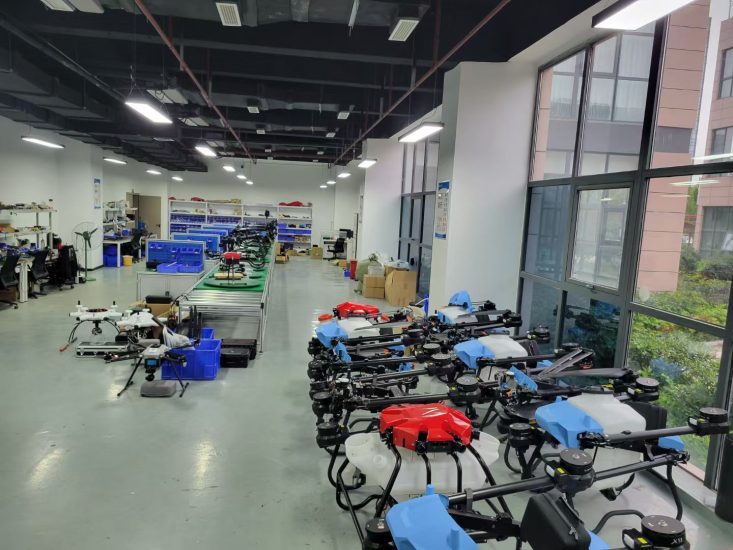


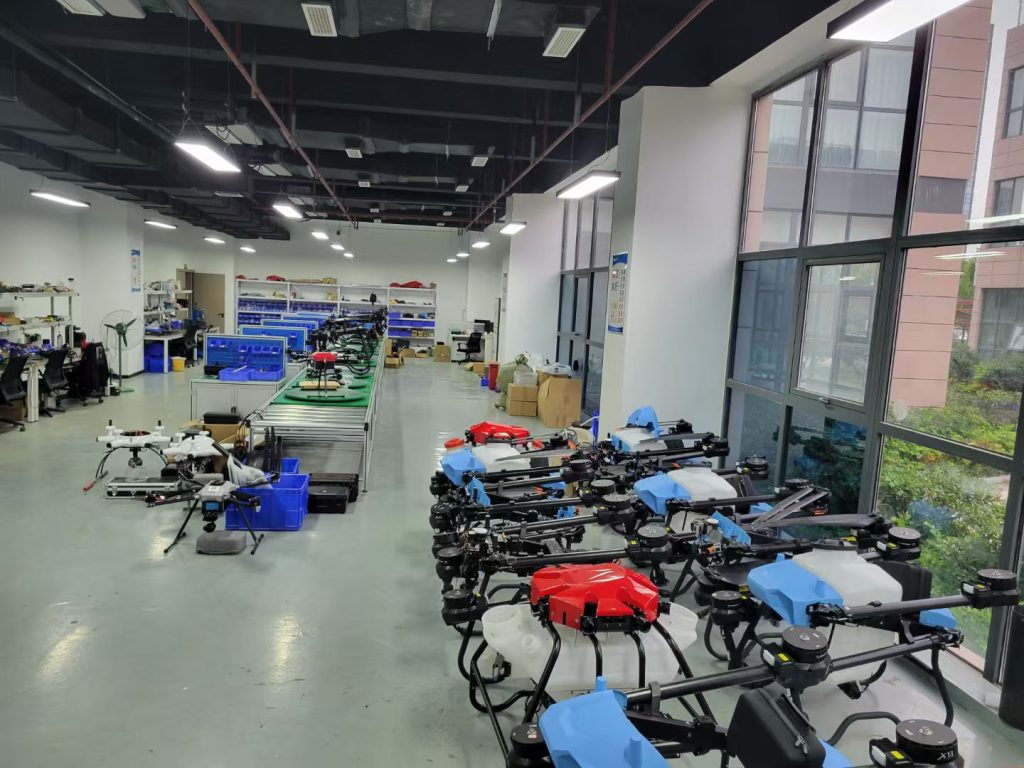
Agricultural spraying drones are becoming an increasingly important part of modern farming operations. They can be used for crop protection, liquid fertilizer application, pest management, and other precision spraying tasks across different types of agricultural environments.
For international buyers, distributors, agricultural equipment companies, and commercial farm operators, choosing an agricultural spraying drone involves more than selecting a drone with the largest tank or the lowest price.
The manufacturer behind the product can have a major impact on long-term performance, spare-parts availability, technical support, product consistency, and customization options.
This guide explains how to evaluate an agricultural spraying drone manufacturer, compare different spraying drone configurations, understand the most important technical specifications, and select a suitable manufacturing partner.
What Is an Agricultural Spraying Drone?
An agricultural spraying drone is an unmanned aerial system designed to carry and distribute liquid materials over agricultural land.
Depending on the application, the drone may be used for:
-
Crop protection
-
Pesticide application
-
Liquid fertilizer application
-
Foliar feeding
-
Disease-control operations
-
Orchard spraying
-
Rice-field spraying
-
Vegetable-field operations
A complete spraying drone system normally includes more than the aircraft itself.
The system may consist of:
-
Drone frame
-
Motors
-
Propellers
-
Flight-control system
-
Spray tank
-
Pump
-
Nozzles
-
Hoses
-
Flow-control system
-
Battery
-
Charger
-
Remote controller
-
Positioning and navigation systems
Because these components work together, buyers should evaluate the complete system rather than focusing on only one specification.
Why the Manufacturer Matters
Two agricultural spraying drones may appear similar when viewed online, but the manufacturing process, component selection, system configuration, testing procedures, and after-sales support can be very different.
A reliable agricultural spraying drone manufacturer should be able to provide clear information about:
-
Product specifications
-
Manufacturing capability
-
Assembly procedures
-
Quality control
-
Flight testing
-
Spraying-system testing
-
Battery configuration
-
Spare parts
-
Technical support
-
OEM and ODM capabilities
For commercial buyers, the objective should be to find a supplier capable of supporting the product beyond the initial shipment.
A Spraying Drone Is a Working Machine
Agricultural drones are often operated in demanding conditions.
They may be exposed to:
-
Dust
-
Moisture
-
Agricultural chemicals
-
High temperatures
-
Wind
-
Long working hours
-
Frequent takeoff and landing cycles
This means reliability and maintenance planning are important.
A low purchase price may become less attractive if replacement parts are difficult to obtain or technical problems cannot be resolved quickly.
Main Types of Agricultural Spraying Drones
Agricultural spraying drones can be designed with different payload capacities and operating configurations.
Small and Medium-Capacity Spraying Drones
These models may be suitable for:
-
Smaller farms
-
Demonstration projects
-
Specialized crops
-
Narrow operating areas
-
Regional distribution markets
Buyers should consider whether smaller equipment provides enough working efficiency for the intended operation.
Large-Capacity Spraying Drones
Larger models may provide:
-
Greater liquid capacity
-
Reduced refill frequency
-
Higher potential field efficiency
However, larger capacity also creates additional requirements for:
-
Battery performance
-
Motor power
-
Structural strength
-
Transportation
-
Charging
-
Operator training
The correct choice depends on the actual application.
Multi-Function Agricultural Drones
Some agricultural drone platforms can support both:
-
Liquid spraying
-
Granular spreading
This can provide additional flexibility for agricultural businesses that need to perform different operations using one drone platform.
Before purchasing a multi-function system, buyers should confirm the compatibility of the spraying and spreading equipment and understand how conversion between different systems is handled.
Key Specifications to Compare
When evaluating an agricultural spraying drone manufacturer, technical specifications should be compared under similar operating conditions.
1. Tank Capacity
Tank capacity determines how much liquid the drone can carry during a flight.
However, a larger tank does not automatically mean higher efficiency.
A larger payload may also:
-
Reduce flight time
-
Increase battery consumption
-
Require more powerful motors
-
Affect maneuverability
The recommended working capacity is often more useful than simply comparing the largest possible tank.
2. Payload Capacity
Ask the manufacturer to distinguish between:
Maximum payload and recommended operating payload.
A drone may technically be capable of lifting a certain weight, but continuous agricultural operations may require a lower practical payload.
3. Flight Time
Flight time should always be evaluated under realistic conditions.
Ask:
-
What payload was used?
-
Was the spraying system operating?
-
What battery configuration was used?
-
What weather conditions were involved?
-
Was the flight time measured in hovering or actual field operation?
Actual operating time can vary significantly from a maximum advertised figure.
4. Spray Flow Rate
The spray flow rate determines how much liquid the system can distribute over a given period.
The required flow rate depends on:
-
Crop type
-
Application method
-
Chemical requirements
-
Flight speed
-
Spray width
-
Field conditions
A higher flow rate is not automatically better. The system needs to provide controllable output appropriate for the intended application.
5. Spray Width
Spray width affects potential field coverage.
However, practical coverage depends on multiple factors, including:
-
Nozzle configuration
-
Flight height
-
Flight speed
-
Crop structure
-
Wind conditions
-
Droplet characteristics
Manufacturers should explain how their recommended spray width is determined.
6. Battery System
Battery performance is critical for daily agricultural operations.
Important questions include:
-
Battery capacity
-
Voltage
-
Battery quantity required
-
Charging time
-
Charger capacity
-
Recommended charging procedures
-
Replacement availability
For commercial operations, charging efficiency can influence the number of hectares or acres that can be covered in a working day.
Understanding the Agricultural Drone Spraying System
The spraying system is one of the most important parts of the aircraft.
Spray Tank
The tank should be suitable for the intended agricultural liquid and easy to inspect, fill, and clean.
Buyers should consider:
-
Capacity
-
Material
-
Structural design
-
Filling access
-
Drainage
-
Cleaning requirements
Pump
The pump controls liquid delivery.
Important factors include:
-
Flow capacity
-
Pressure
-
Reliability
-
Power consumption
-
Replacement availability
A manufacturer should be able to explain the operating range of the pump rather than providing only a maximum number.
Nozzles
Nozzle selection can affect spraying performance.
Consider:
-
Nozzle type
-
Number of nozzles
-
Spray pattern
-
Compatibility
-
Ease of replacement
The correct nozzle configuration may depend on the intended crop and agricultural application.
Flow Control
A spraying drone should provide a suitable method for controlling liquid output.
Depending on the configuration, operators may need to adjust spraying performance according to:
-
Flight speed
-
Application rate
-
Field conditions
-
Crop requirements
Buyers should ask the manufacturer how the spraying system is controlled during operation.
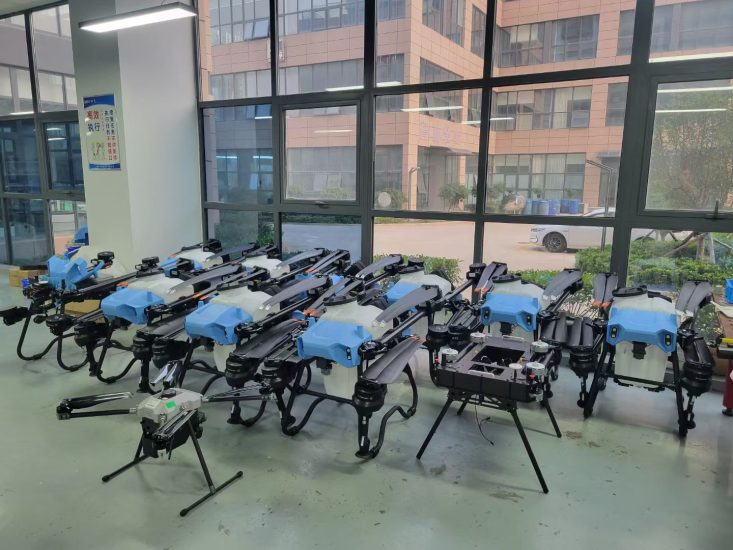
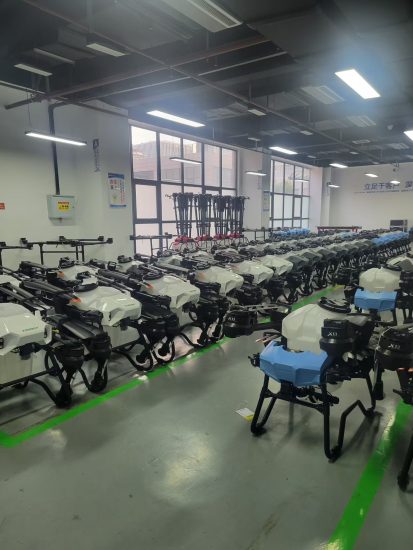
How Agricultural Spraying Drones Are Manufactured
The exact production process differs between manufacturers, but a typical workflow may involve several stages.
Product Design and Engineering
The design process can include:
-
Structural design
-
Payload planning
-
Power-system integration
-
Flight-control configuration
-
Spraying-system integration
For customized projects, engineering communication may continue throughout development.
Component Inspection
Before assembly, important components may be checked for:
-
Physical condition
-
Electrical performance
-
Compatibility
-
Configuration
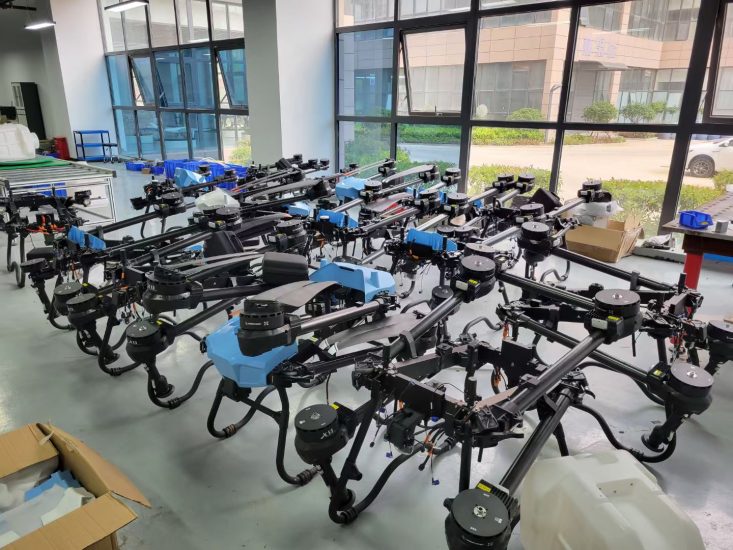
Assembly
The drone is assembled by integrating:
-
Frame
-
Motors
-
Propellers
-
Electronics
-
Flight controller
-
Spray tank
-
Pump
-
Hoses
-
Nozzles
-
Landing components
System Configuration
After assembly, the aircraft may require configuration of:
-
Flight-control parameters
-
Remote controller
-
Spraying system
-
Safety functions
-
Other operational settings
Functional Testing
Testing may include:
-
Motor operation
-
Communication
-
Spray output
-
Pump operation
-
Controller response
-
Battery operation
Flight Testing
A finished agricultural spraying drone should be evaluated through practical flight testing according to the manufacturer’s quality procedures.
Possible tests include:
-
Takeoff
-
Landing
-
Hover stability
-
Flight response
-
Spray-system operation
-
Communication performance
Buyers should ask what testing procedures are applied before shipment.
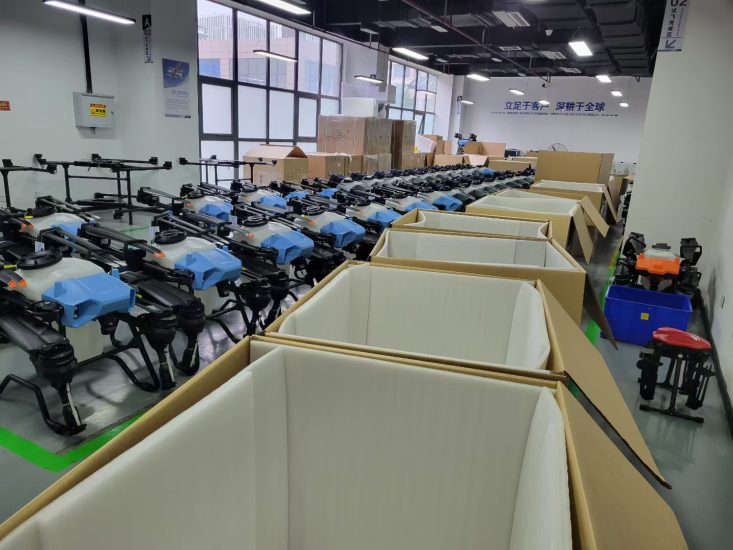
How to Evaluate an Agricultural Spraying Drone Factory
Factory capability can influence product consistency and long-term cooperation.
Ask the manufacturer:
Who assembles the drone?
Determine whether the supplier directly controls the assembly process.
How are products tested?
Ask about both functional testing and flight testing.
What quality-control procedures are used?
A manufacturer should be able to explain how problems are identified before products leave the factory.
Are spare parts stocked?
Spare-parts availability can be particularly important for distributors.
Can the factory support larger orders?
If you plan to expand distribution, confirm production capacity and supply stability.
Agricultural Spraying Drone OEM Services
OEM services may allow distributors and agricultural equipment companies to sell products under their own brand.
Possible OEM options include:
-
Custom logo
-
Product labeling
-
Packaging
-
User manuals
-
Accessories
-
Product configuration
The available options will depend on the manufacturer’s production and engineering capabilities.
Before starting an OEM project, buyers should confirm:
-
Minimum order quantity
-
Sample requirements
-
Branding specifications
-
Packaging requirements
-
Production timeline
-
Quality standards
Agricultural Spraying Drone ODM Development
ODM projects generally involve deeper product customization.
Depending on the manufacturer, this may include:
-
Product appearance
-
Structural configuration
-
Payload system
-
Spraying system
-
Battery system
-
Controller configuration
-
Software features
-
Specialized agricultural applications
ODM projects usually require more planning, technical communication, testing, and development time than standard OEM orders.
A clear product specification should be established before development begins.
How to Compare Agricultural Spraying Drone Manufacturers
Instead of comparing manufacturers only by price, create a structured comparison.
Evaluation Area |
Questions to Ask |
|---|---|
Product |
Is the configuration suitable for your application? |
Payload |
What is the recommended working payload? |
Tank |
What is the practical liquid capacity? |
Flight Time |
How is operating time measured? |
Battery |
What capacity and charging system are used? |
Spraying |
What flow rate and control options are available? |
Manufacturing |
Is assembly controlled by the supplier? |
Testing |
Is the finished drone flight-tested? |
Spare Parts |
Are key components available? |
Support |
How are technical problems handled? |
OEM |
What branding options are available? |
ODM |
Can deeper customization be supported? |
Export |
Can the manufacturer support international orders? |
Using the same evaluation criteria for each supplier can make the selection process more accurate.
Spare Parts and After-Sales Support
Agricultural spraying drones are designed for repeated operation and may eventually require replacement components.
Important spare parts can include:
-
Propellers
-
Motors
-
Pumps
-
Nozzles
-
Hoses
-
Batteries
-
Chargers
-
Landing components
-
Electronic modules
Before ordering, buyers should ask:
Which spare parts are normally available?
How quickly can replacement parts be supplied?
Can spare-parts packages be included with the initial order?
For distributors, keeping a local inventory of commonly required components can reduce customer downtime.
Technical Support for International Buyers
Distance can create challenges when purchasing technical equipment from another country.
A manufacturer should therefore have a clear support process.
Depending on the supplier, support may include:
-
Product manuals
-
Installation guidance
-
Operating instructions
-
Maintenance recommendations
-
Remote troubleshooting
-
Technical videos
-
Spare-parts identification
-
Software guidance
Before placing an order, clarify how technical issues will be handled after delivery.
Choosing the Right Capacity for Your Market
The largest agricultural spraying drone is not always the best choice.
The appropriate capacity depends on:
-
Farm size
-
Crop type
-
Field layout
-
Terrain
-
Transportation conditions
-
Operator experience
-
Local regulations
-
Daily workload
A distributor serving small farms may need a different product strategy from a company supplying large commercial agricultural operations.
Manufacturers should therefore understand the intended market before recommending a product.
Common Mistakes When Buying Agricultural Spraying Drones
Choosing Only by Price
A lower quotation may result in higher long-term costs if maintenance, spare parts, or support are limited.
Comparing Only Tank Capacity
Tank size does not provide a complete picture of operational performance.
Ignoring Battery Requirements
Battery quantity and charging speed can significantly affect daily productivity.
Not Checking Spare Parts
Equipment without accessible replacement parts can create expensive downtime.
Ignoring Destination Requirements
Importers should understand applicable requirements in their destination market before placing an order.
Ordering Large Quantities Without Testing
A sample order or demonstration can help buyers evaluate the actual product before a large purchase.
A Practical Buying Process
A structured purchasing process can reduce unnecessary risks.
Step 1: Define Your Application
Provide information about:
-
Crop type
-
Farm size
-
Required application
-
Expected workload
-
Destination market
Step 2: Define Technical Requirements
Specify:
-
Required payload
-
Tank capacity
-
Battery requirements
-
Spraying requirements
-
Accessories
Step 3: Request Detailed Specifications
Ask manufacturers for complete configuration information.
Step 4: Compare Manufacturers
Evaluate product performance, factory capability, support, spare parts, and total cost.
Step 5: Verify the Supplier
Review manufacturing information and product-testing procedures.
Step 6: Test a Sample
Where appropriate, evaluate a sample before placing a large order.
Step 7: Confirm Commercial Terms
Confirm:
-
Product configuration
-
Quantity
-
Price
-
Production time
-
Payment terms
-
Warranty
-
Spare parts
-
Packaging
-
Shipping terms
Working With an Agricultural Spraying Drone Manufacturer
A successful cooperation begins with clear technical communication.
When requesting a quotation, provide as much relevant information as possible.
For example:
-
Target market
-
Intended application
-
Required payload
-
Crop type
-
Estimated order quantity
-
Branding requirements
-
Required accessories
-
Destination country
This allows the manufacturer to recommend a more appropriate solution.
For distributors and long-term buyers, it may also be useful to discuss:
-
Spare-parts planning
-
Technical training
-
OEM branding
-
Future product upgrades
-
Additional product categories
Final Thoughts
Choosing an agricultural spraying drone manufacturer is a long-term purchasing decision.
The best supplier is not necessarily the manufacturer offering the lowest price or the largest advertised tank.
A more complete evaluation should include:
Product suitability + spraying performance + battery system + manufacturing quality + testing + spare parts + technical support + OEM/ODM capability + export experience.
For global buyers, the goal should be to find an agricultural drone manufacturer capable of providing a suitable product and supporting it throughout its operating life.
Before placing an order, define the agricultural application clearly, compare technical specifications under realistic conditions, verify manufacturing capability, and understand how spare parts and technical support will be handled.
A well-structured evaluation process can help buyers select a more suitable agricultural spraying drone and build a stronger long-term relationship with the manufacturer.
FAQ
What is an agricultural spraying drone manufacturer?
An agricultural spraying drone manufacturer develops, assembles, tests, and supplies UAV systems designed to distribute agricultural liquids for applications such as crop protection and liquid fertilizer application.
How do I choose an agricultural spraying drone?
Start with the intended application, then compare payload, tank capacity, flight time under working conditions, battery system, spray flow rate, spray width, spare parts, and manufacturer support.
What tank capacity should an agricultural spraying drone have?
The appropriate tank capacity depends on the crop, field size, operating conditions, transportation requirements, and expected workload. A larger tank is not always the most efficient choice.
How long can an agricultural spraying drone fly?
Flight time depends on payload, battery condition, weather, flight speed, spraying activity, and other operating conditions. Buyers should ask for expected flight time under realistic working conditions.
What should I check about the spraying system?
Check the tank, pump, hoses, nozzles, flow rate, spray-control method, replacement parts, and suitability for the intended agricultural application.
Can agricultural spraying drones provide OEM branding?
Depending on the manufacturer, OEM services may include custom branding, labels, packaging, manuals, accessories, and selected product configurations.
What is ODM agricultural drone development?
ODM involves deeper customization or product development, which may include changes to appearance, structure, payload systems, spraying systems, batteries, controllers, or software.
Are spare parts important?
Yes. Agricultural spraying drones may require replacement components during their operating life. Buyers should confirm the availability of batteries, propellers, motors, pumps, nozzles, and other important parts.
Should I order a sample before purchasing in large quantities?
For new suppliers or new products, a sample order or demonstration can help buyers evaluate actual performance before placing a larger commercial order.
What information should I provide when requesting a quotation?
Provide the intended application, crop type, required payload, preferred tank capacity, expected order quantity, destination country, branding requirements, and any special technical requirements.
How can I compare different agricultural spraying drone manufacturers?
Use the same comparison criteria for every supplier, including product specifications, recommended payload, flight time, battery system, spraying performance, manufacturing capability, quality control, testing, spare parts, technical support, OEM/ODM options, and total cost.
THE END


No comments yet