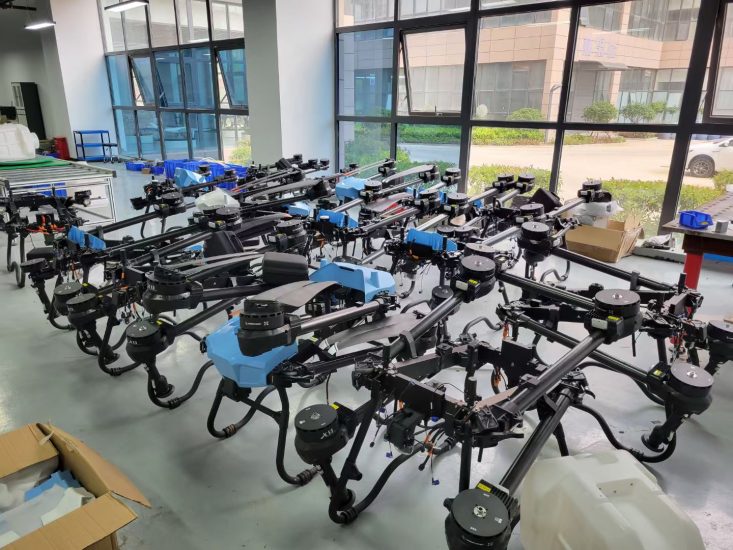


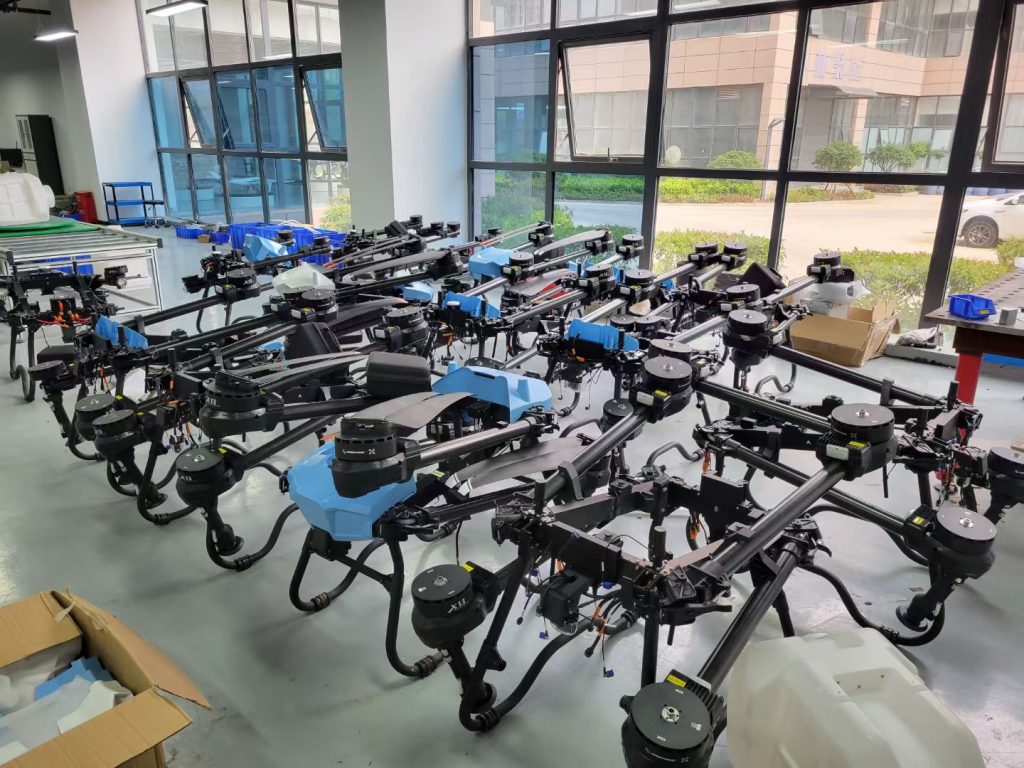
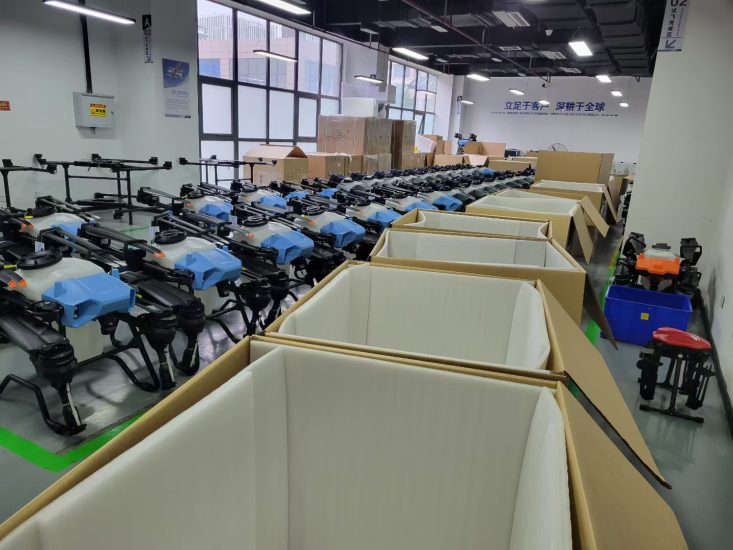
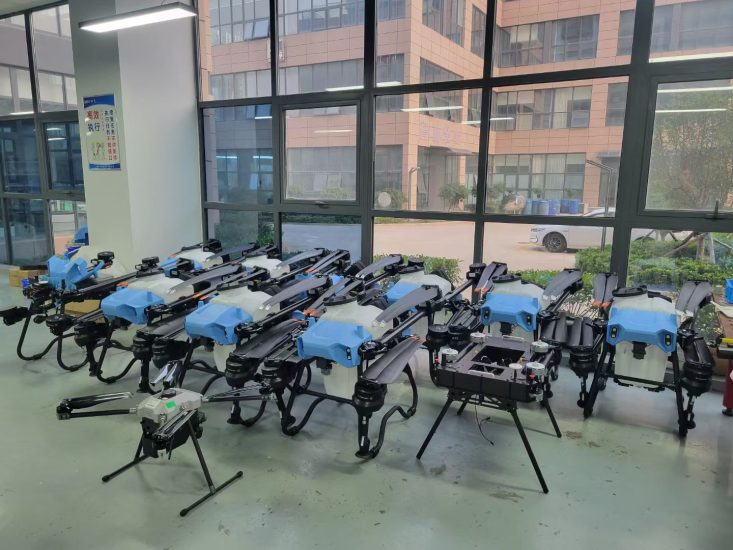
A 30KG agricultural drone is designed for farms that need higher spraying or spreading capacity without relying entirely on traditional ground equipment. Its actual cost depends on payload configuration, battery system, flight controller, positioning technology, spraying or spreading equipment, and customization. Buyers should compare the complete operating system rather than judging a drone only by its advertised payload or factory price.
How Much Does a 30KG Agricultural Drone Cost?
The price of a 30KG agricultural drone can vary considerably depending on its configuration and intended application.
A basic agricultural drone designed for spraying or spreading may have a relatively simple configuration, while a professional system can include RTK positioning, intelligent flight planning, terrain following, obstacle detection, high-capacity batteries, multiple charging options, and customized application equipment.
For this reason, there is no single price that applies to every 30KG agricultural drone.
When comparing quotations from manufacturers, buyers should look at the complete equipment configuration, not simply the drone’s advertised payload capacity.
The major factors affecting the final price include:
Cost Factor |
Why It Matters |
|---|---|
Payload capacity |
Determines the size and strength of the aircraft and propulsion system |
Battery capacity |
Affects flight time, payload performance and operating efficiency |
Motors and ESCs |
Higher-performance propulsion systems generally cost more |
Spraying system |
Pump type, flow rate, nozzles and plumbing affect application performance |
Spreading system |
Granule size, hopper design and spreading accuracy influence configuration |
RTK positioning |
Improves positioning accuracy for precision agricultural operations |
Obstacle avoidance |
Adds sensors and processing capability |
Flight controller |
Determines navigation and automation functions |
Remote controller |
Influences operating range, display and control functions |
Charger |
Charging speed and battery management affect operating efficiency |
Spare parts |
Batteries, motors, pumps and other consumables add to total ownership cost |
OEM customization |
Customized hardware, software or branding can increase the project cost |
Therefore, the right question is not simply “How much is a 30KG agricultural drone?”
A better question is:
“What configuration do I need for my farm, and what is the total cost of operating that configuration?”
What Does “30KG Payload” Mean?
One of the most important points buyers should clarify is what the manufacturer means by 30KG payload.
Payload capacity normally refers to the maximum weight the aircraft is designed to carry in addition to the aircraft itself. However, maximum payload does not necessarily mean that the drone will achieve its longest flight time or highest operating efficiency at that load.
For example, a drone carrying a full agricultural payload may experience:
-
Higher power consumption
-
Shorter flight duration
-
Greater battery demand
-
Increased motor load
-
Different flight characteristics
-
Reduced operating efficiency compared with a lighter load
The practical payload for a farm therefore depends on more than the maximum advertised number.
A professional buyer should request test data showing performance under different payload conditions.
What Can a 30KG Agricultural Drone Be Used For?
A 30KG agricultural drone can be configured for different agricultural operations.
Crop Spraying
Spraying is one of the most common applications.
Depending on the configuration, a spraying system may be used for:
-
Crop protection products
-
Liquid fertilizers
-
Foliar nutrients
-
Certain biological agricultural products
-
Other permitted agricultural liquids
The actual application rate depends on the crop, chemical product, nozzle selection, weather conditions, flight speed and local agricultural requirements.
The drone itself does not determine the correct chemical application rate. That should be established according to the product label, agronomic recommendations and applicable regulations.
Granular Spreading
A 30KG-class platform can also be configured with a spreading hopper for applications such as:
-
Granular fertilizer
-
Seeds
-
Certain agricultural granules
-
Other compatible materials
Spreading performance depends on material density, particle size, hopper design, spreader mechanism, flight altitude and speed.
A buyer should therefore request actual spreading test data rather than relying only on hopper capacity.
What Determines the Real Cost of a 30KG Agricultural Drone?
1. Aircraft Structure
The frame must support the aircraft’s own weight, batteries and working payload.
A stronger structure can increase durability but may also increase aircraft weight.
Manufacturers therefore need to balance:
Structural strength + aircraft weight + payload + flight efficiency
This is one reason two drones with similar payload ratings can have different prices and operating characteristics.
2. Battery System
The battery is one of the most important components of an agricultural drone.
A higher-capacity battery can provide greater energy storage, but it also adds weight.
Buyers should examine:
-
Battery voltage
-
Battery capacity
-
Battery chemistry
-
Rated cycles
-
Charging time
-
Charging temperature requirements
-
Battery management system
-
Replacement cost
-
Availability of spare batteries
A drone quotation that looks inexpensive may become considerably more expensive if additional batteries and charging equipment are required for daily operation.
3. Motors and Propulsion System
The propulsion system determines how effectively the aircraft can lift its payload.
Important specifications include:
-
Motor power
-
Propeller size
-
ESC specifications
-
Motor efficiency
-
Operating temperature
-
Water and dust resistance
-
Expected service life
For agricultural operations, reliability is often more important than simply choosing the most powerful motor available.
4. Spraying System
For spraying applications, the spraying system can have a significant effect on the overall configuration.
Buyers should evaluate:
-
Tank capacity
-
Pump type
-
Maximum flow rate
-
Number of nozzles
-
Nozzle type
-
Spray width
-
Flow control
-
Filtration
-
Anti-drip design
-
Cleaning requirements
A larger tank does not automatically mean better spraying performance.
The entire system needs to be matched to the aircraft’s flight speed, operating height and application requirements.
5. RTK and Positioning
Precision agriculture increasingly relies on accurate positioning.
An RTK-enabled agricultural drone can provide more precise positioning than basic satellite navigation when the complete RTK system is correctly configured and operating under suitable conditions.
However, buyers should clarify:
-
Which positioning systems are supported
-
Whether an RTK module is included
-
Whether a base station is required
-
Correction-source compatibility
-
Coverage limitations
-
What happens if RTK corrections are interrupted
These details can affect both the initial purchase price and the complexity of field operations.
How Much Area Can a 30KG Agricultural Drone Cover?
There is no universal coverage figure for every 30KG agricultural drone.
Actual field capacity depends on several variables:
Field capacity = working width × operating speed × operational efficiency
Operational efficiency includes time spent on:
-
Battery changes
-
Refilling
-
Turning
-
Flying to and from the operating area
-
Mixing or preparing materials
-
Refilling water or product
-
Maintenance
-
Weather interruptions
For this reason, a manufacturer’s theoretical maximum area per hour should not automatically be treated as the actual daily field capacity.
A buyer should ask for field-test data under defined conditions.
Useful questions include:
-
What was the operating speed?
-
What was the application rate?
-
What was the working width?
-
How long did one battery cycle last?
-
How much time was required for refilling?
-
Was the test performed in an open field or an orchard?
-
What was the actual weather condition?
These questions provide much more useful information than a single “hectares per hour” number.
30KG Agricultural Drone vs. Smaller Agricultural Drone
A 30KG-class drone is not automatically the best option for every farm.
A smaller aircraft may be easier to transport and may require less initial investment.
A larger aircraft can offer greater payload capacity and potentially reduce the number of refill cycles.
The right choice depends on:
-
Farm size
-
Crop type
-
Field conditions
-
Required application rate
-
Transport distance
-
Battery infrastructure
-
Labor availability
-
Local regulations
-
Budget
-
Required daily operating capacity
For small farms, a smaller drone may be sufficient.
For larger commercial operations, the additional payload capacity of a 30KG platform may provide better operational efficiency.
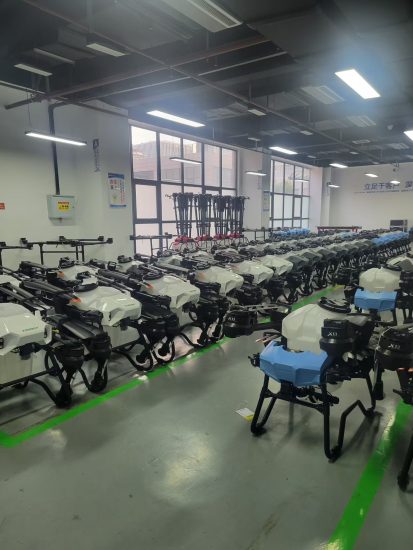
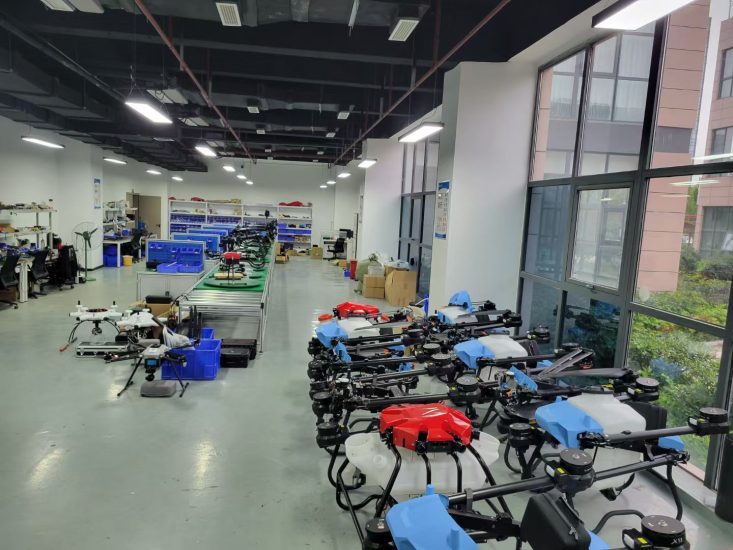
What Should Buyers Ask a China Agricultural Drone Manufacturer?
When purchasing directly from a manufacturer, buyers should request a complete technical specification rather than asking only for the unit price.
A professional inquiry should include:
Aircraft
-
Maximum takeoff weight
-
Empty weight
-
Maximum payload
-
Dimensions
-
Folding dimensions
-
Operating temperature
-
Wind resistance
Spraying
-
Tank capacity
-
Pump flow rate
-
Number of nozzles
-
Spray width
-
Recommended operating height
-
Flow control method
Spreading
-
Hopper capacity
-
Maximum spreading rate
-
Compatible material size
-
Spreading width
-
Calibration method
Battery
-
Voltage
-
Capacity
-
Charging time
-
Battery cycle life
-
Charger specifications
-
Recommended number of batteries
Navigation
-
GNSS systems
-
RTK capability
-
Autonomous flight functions
-
Terrain-following capability
-
Obstacle detection
After-Sales Support
-
Warranty period
-
Spare parts availability
-
Remote technical support
-
Operator training
-
Software updates
-
Repair procedures
The more complete the technical information, the easier it is to compare different suppliers objectively.
Why the Cheapest 30KG Agricultural Drone May Not Be the Best Choice
Price is important, but agricultural drones are working machines.
A lower initial price may not necessarily result in a lower total cost of ownership.
For example, if a drone requires frequent battery replacement, has limited spare-parts availability, or requires more downtime for maintenance, the long-term operating cost can be higher.
Buyers should therefore consider:
Purchase price + batteries + charger + spare parts + maintenance + transportation + downtime + training
This gives a more realistic view of the investment.
What Is the Total Cost of Ownership?
Total cost of ownership, or TCO, is particularly important for commercial agricultural operations.
A simple calculation can include:
TCO = Initial Purchase + Batteries + Charging Equipment + Spare Parts + Maintenance + Transportation + Operating Costs
The exact calculation should be based on the expected operating hours and local costs.
For example, if a farm operates the drone frequently, battery replacement and maintenance may become more important than a small difference in the initial purchase price.
What About OEM and ODM Agricultural Drones?
Commercial buyers, distributors and agricultural equipment companies may require customized configurations.
Possible customization areas can include:
-
Brand logo
-
Packaging
-
Remote controller language
-
Software interface
-
Battery configuration
-
Spraying equipment
-
Spreading equipment
-
Accessories
-
Documentation
-
Color or appearance
-
Communication systems
OEM and ODM requirements should be discussed before production because customization can affect:
-
Minimum order quantity
-
Development time
-
Certification
-
Testing
-
Tooling
-
Software development
-
Final unit cost
For a distributor planning long-term sales, it is often more useful to establish a stable configuration than to focus only on obtaining the lowest first-order price.
How to Evaluate a 30KG Agricultural Drone Manufacturer
Before placing an order, buyers should perform basic supplier due diligence.
A reliable evaluation process can include:
1. Check Technical Documentation
Request detailed specifications and operating manuals.
2. Ask for Real Test Data
Request videos, field demonstrations or test reports showing the aircraft working under realistic conditions.
3. Confirm Factory Capability
Determine whether the supplier actually manufactures the aircraft or primarily operates as a trading company.
4. Check Spare Parts
Ask whether motors, propellers, pumps, batteries, controllers and other key components can be supplied separately.
5. Discuss Warranty
Understand exactly which components are covered and under what conditions.
6. Confirm Export Requirements
The buyer should verify import regulations, radio requirements, drone regulations and agricultural chemical regulations in the destination country.
7. Request a Complete Quotation
The quotation should clearly identify what is included and what is optional.
Questions to Ask Before Requesting a Quote
Instead of sending only:
“Please give me the price of a 30KG agricultural drone.”
A more useful inquiry would include:
-
Intended application
-
Crop type
-
Required payload
-
Spraying or spreading
-
Estimated farm area
-
Destination country
-
Required number of batteries
-
RTK requirement
-
OEM requirement
-
Quantity
-
Delivery requirements
This allows the manufacturer to recommend a configuration instead of simply providing a generic price.
Is a 30KG Agricultural Drone Worth the Investment?
For farms that need higher payload capacity and frequent aerial application, a 30KG agricultural drone can be a practical investment.
Its value depends on how efficiently it can perform the required work.
The most important performance indicators are not simply payload capacity or purchase price. Buyers should consider:
-
Actual field capacity
-
Application accuracy
-
Battery efficiency
-
Refill time
-
Reliability
-
Maintenance requirements
-
Spare-parts availability
-
Operator requirements
-
Total cost of ownership
A properly matched aircraft can provide meaningful operational advantages, but the best model depends on the farm’s actual working conditions.
Conclusion
The cost of a 30KG agricultural drone depends on much more than the aircraft itself. Battery configuration, propulsion, spraying or spreading equipment, positioning technology, automation features, accessories and customization can all change the final quotation.
For buyers, the best approach is to define the required application first and then compare complete configurations from qualified manufacturers. Instead of selecting the lowest quoted price, evaluate field performance, reliability, support, spare parts and total operating cost.
A good purchasing decision should answer one fundamental question:
Can this agricultural drone deliver the required field performance at an acceptable total operating cost?
FAQ
1. How much does a 30KG agricultural drone cost?
There is no universal price. The cost depends on the aircraft configuration, battery system, spraying or spreading equipment, navigation technology, accessories, quantity and customization requirements.
2. What does 30KG payload mean?
It generally refers to the maximum payload the drone is designed to carry in addition to its own aircraft weight. Actual flight performance can vary depending on payload, battery, weather and operating conditions.
3. Can a 30KG agricultural drone be used for spraying?
Yes. A suitable 30KG-class agricultural drone can be configured with a liquid spraying system. The appropriate application rate and operating procedure should follow the product label, agronomic recommendations and local regulations.
4. Can a 30KG agricultural drone spread fertilizer?
Yes. A compatible spreading system can be installed for certain granular materials. Buyers should check the hopper capacity, spreading rate, particle-size compatibility and calibration procedure.
5. How long can a 30KG agricultural drone fly?
Flight time varies according to battery capacity, aircraft weight, payload, flight speed, weather and operating conditions. Buyers should request flight-test data under a clearly defined payload rather than relying on an unloaded flight-time figure.
6. How much land can a 30KG agricultural drone cover?
Coverage depends on working width, flight speed, application rate, battery duration, refill time and field conditions. Actual field capacity can be significantly different from theoretical maximum coverage.
7. Is RTK necessary for an agricultural drone?
RTK can improve positioning precision and is useful for applications requiring more accurate flight paths. Whether it is necessary depends on the farm, application and required operating accuracy.
8. What should I check before buying a 30KG agricultural drone?
Check payload, empty weight, battery specifications, flight time under load, spraying or spreading performance, navigation system, spare parts, warranty, software, training and local regulatory requirements.
9. Can agricultural drones be customized?
Yes. Depending on the manufacturer, customization may include branding, packaging, batteries, software, spraying systems, spreading systems, accessories and other configurations.
10. Is buying directly from a China manufacturer cheaper?
Direct purchasing can provide access to factory pricing and customization options, but the final landed cost also includes shipping, taxes, import requirements, certification, spare parts and after-sales support. Buyers should compare the complete landed cost rather than only the factory quotation.
11. Should I buy one 30KG drone or several smaller drones?
It depends on the farm’s operating requirements. One larger drone may reduce refill cycles, while multiple smaller drones can provide redundancy and operational flexibility. Farm size, labor, terrain and required daily capacity should be considered.
12. What information should I provide when requesting a quotation?
Provide the destination country, application, crop type, required payload, spraying or spreading requirement, expected quantity, battery requirements, RTK requirements and any OEM or ODM requirements. More detailed information usually leads to a more accurate quotation.
Article Link:
How Much Does a 30KG Agricultural Drone Cost?
THE END


No comments yet