


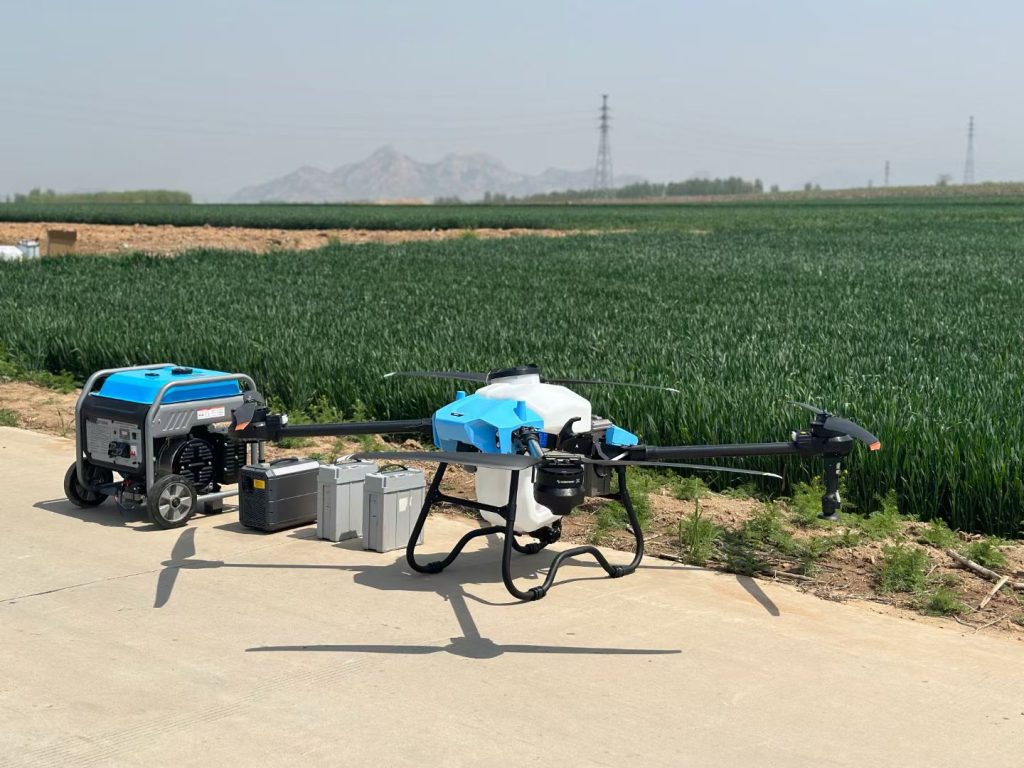
China is one of the world’s major manufacturing bases for agricultural drones. International distributors, agricultural equipment companies, farming businesses, and importers can find a wide range of agricultural spraying and spreading drones from Chinese manufacturers.
However, importing an agricultural drone is different from purchasing a normal consumer product. Buyers need to consider product specifications, supplier verification, batteries, export documentation, shipping, customs clearance, local regulations, and after-sales support.
This guide explains how to import agricultural drones from China step by step.
1. Determine What Type of Agricultural Drone You Need
Before contacting Chinese manufacturers, define your requirements.
Important factors include:
-
Tank capacity
-
Payload capacity
-
Spray width
-
Flow rate
-
Flight time
-
Battery capacity
-
Charging system
-
RTK positioning
-
Obstacle avoidance
-
Spreading capability
-
Remote controller
-
OEM requirements
Common agricultural drone configurations may include 10L, 20L, 30L, 40L, and larger models.
The correct capacity depends on your farm size, crop type, operating environment, application rate, and budget.
2. Define Your Application
Different agricultural applications may require different configurations.
Crop Spraying
Spraying drones can be used for suitable agricultural applications involving:
-
Pesticides
-
Herbicides
-
Fungicides
-
Liquid fertilizer
-
Other approved agricultural liquids
Fertilizer Spreading
A spreading attachment may be used for:
-
Granular fertilizer
-
Seeds
-
Rice
-
Other suitable granular materials
Orchard Operations
Orchards may require specialized spraying configurations because trees can create different airflow and coverage conditions.
Before ordering, explain your actual application to the manufacturer.
3. Find a Qualified Agricultural Drone Manufacturer
Once your requirements are clear, start evaluating Chinese suppliers.
You can search through:
-
Manufacturer websites
-
B2B platforms
-
Industry exhibitions
-
Trade directories
-
Referrals
-
Search engines
-
Professional agricultural equipment networks
Do not select a supplier based only on price.
A reliable manufacturer should be able to provide:
-
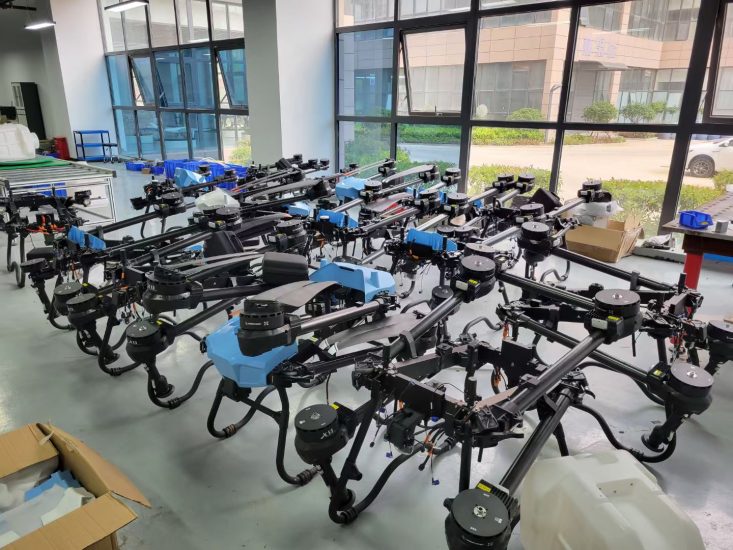
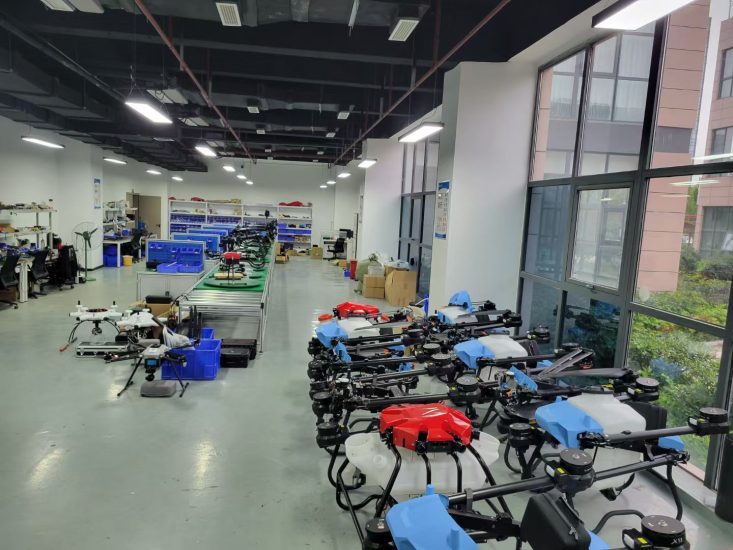
Factory information
-
Product specifications
-
Factory or production photos
-
Product videos
-
Technical documentation
-
Quality-control information
-
Warranty terms
-
Spare-parts information
-
Export experience
4. Verify the Manufacturer
Supplier verification is one of the most important steps.
Ask:
Are you a manufacturer or trading company?
Then request evidence supporting the answer.
Useful information includes:
-
Business information
-
Factory address
-
Production facilities
-
R&D capabilities
-
Assembly process
-
Testing procedures
-
Product serial numbers
-
Export experience
For large orders, consider arranging a third-party factory inspection.
A live video factory tour can also help international buyers understand the supplier’s actual capabilities.
5. Request a Detailed Specification Sheet
Do not request only a price.
Ask the manufacturer to provide a complete technical specification.
For example:
Specification |
Information to Request |
|---|---|
Tank Capacity |
Liters |
Maximum Payload |
KG |
Recommended Payload |
KG |
Flight Time |
At specified payload |
Spray Width |
Meters |
Flow Rate |
L/min |
Battery |
Voltage and capacity |
Charging Time |
Minutes |
Motor |
Model/specification |
Propeller |
Size/type |
Navigation |
GNSS/RTK |
Obstacle Avoidance |
Sensor configuration |
Controller |
Range and functions |
Dimensions |
Folded/unfolded |
Net Weight |
KG |
This makes it easier to compare different manufacturers.
6. Ask for Real Performance Data
Marketing specifications are not enough.
Ask the supplier for real testing data.
Important information includes:
-
Flight time at full payload
-
Actual spraying speed
-
Spray width
-
Flow rate
-
Battery consumption
-
Working area per hour
-
Refilling time
-
Charging time
For example, if a supplier claims a certain flight time, ask:
Is this flight time measured with an empty drone or at full payload?
This simple question can reveal major differences between products.
7. Request a Quotation
After confirming the specification, request a detailed quotation.
Your RFQ should include:
-
Model
-
Quantity
-
Required configuration
-
Number of batteries
-
Chargers
-
Spare parts
-
OEM requirements
-
Destination country
-
Shipping terms
You can request different Incoterms such as:
-
EXW
-
FOB
-
CIF
-
DAP
-
DDP
Make sure you understand what is included in each quotation.
8. Compare the Total Import Cost
Do not compare only the factory price.
Your total import cost may include:
Product price + batteries + charger + spare parts + packaging + shipping + customs clearance + import duties + taxes + local delivery
For example, a supplier offering the lowest drone price may not offer the lowest total landed cost.
Always compare suppliers using the same configuration.
9. Pay Special Attention to Lithium Batteries
Agricultural drones typically use high-capacity lithium batteries.
Battery transportation can have additional requirements compared with ordinary cargo.
Before shipping, confirm:
-
Battery type
-
Battery capacity
-
Packaging requirements
-
Dangerous-goods transportation requirements
-
Required transportation documents
-
Airline or shipping-line restrictions
Your logistics provider should confirm the applicable transportation requirements for the destination.
Do not assume that batteries can be shipped in exactly the same way as ordinary electronic products.
10. Check Import Regulations in Your Country
This is one of the most important steps.
Agricultural drones may be subject to different rules depending on the destination country.
Potential requirements may involve:
-
Drone registration
-
Import permits
-
Radio-frequency requirements
-
Aviation regulations
-
Agricultural chemical regulations
-
Operator licensing
-
Product certification
-
Battery transportation requirements
The exact requirements vary by country and can change over time.
Before ordering, check with the relevant aviation, customs, telecommunications, and agricultural authorities in your destination market.
The manufacturer can provide technical documents, but the importer is responsible for complying with local regulations.
11. Confirm Customs Documents
A Chinese manufacturer or exporter may provide documents such as:
-
Commercial invoice
-
Packing list
-
Sales contract
-
Certificate of origin where applicable
-
Product specification
-
Battery documentation
-
Shipping documents
Additional documents may be required depending on the destination country and shipping method.
Confirm the documentation requirements before shipment.
12. Choose the Right Shipping Method
Agricultural drones can be shipped internationally by different methods.
Air Freight
Advantages:
-
Faster transportation
-
Suitable for urgent shipments
-
Useful for samples and small orders
Disadvantages:
-
Higher transportation cost
-
Lithium batteries may have additional restrictions
Sea Freight
Advantages:
-
More economical for larger shipments
-
Suitable for bulk orders
-
Better for distributors purchasing multiple units
Disadvantages:
-
Longer transit time
-
More complicated for urgent orders
Express or Courier
This may be suitable for certain small accessories or spare parts, but complete agricultural drones with batteries may have special transportation restrictions.
Always confirm the shipping method with a freight forwarder experienced in lithium-battery cargo.
13. Choose the Correct Incoterm
Common Incoterms include:
EXW
The buyer handles transportation from the manufacturer’s location.
FOB
The seller generally delivers the goods on board the vessel at the agreed port, with responsibilities divided according to the contract.
CIF
The seller arranges freight and insurance to the named destination port, while the buyer handles import clearance and subsequent costs according to the agreed terms.
DAP
The seller arranges delivery to the agreed destination, while import clearance and related import charges are generally handled by the buyer.
DDP
The seller takes responsibility for delivery including import clearance and duties/taxes where applicable under the agreed contract.
For international buyers, always confirm exactly what the quotation includes rather than relying only on the Incoterm abbreviation.
14. Order a Sample Before a Large Purchase
If you are a distributor or importer, purchasing a sample can reduce risk.
A sample allows you to evaluate:
-
Build quality
-
Flight stability
-
Spraying performance
-
Battery endurance
-
Controller operation
-
Software
-
Packaging
-
Spare parts
-
Technical support
If you plan to purchase 20, 50, or 100 units, testing one unit first can be a sensible step.
15. Test the Drone Before Shipment
If possible, ask the manufacturer to conduct a pre-shipment inspection.
The test can include:
-
Motor operation
-
Flight controller
-
Remote controller
-
GPS/RTK
-
Spraying system
-
Pump
-
Nozzles
-
Battery
-
Charger
-
Flight test
-
Emergency functions
Ask the supplier to record videos or provide inspection documentation.
16. Understand Warranty Terms
Before payment, obtain written warranty information.
Ask:
-
How long is the warranty?
-
Which components are covered?
-
What is excluded?
-
Who pays shipping for warranty parts?
-
How are defective components handled?
-
How quickly can replacement parts be supplied?
For overseas buyers, remote technical support is particularly important.
17. Purchase Spare Parts
Agricultural drones operate in environments involving dust, moisture, chemicals, and frequent takeoff and landing.
It is therefore useful to maintain spare parts.
Common spare parts may include:
-
Propellers
-
Motors
-
Pumps
-
Nozzles
-
Filters
-
Pipes
-
Landing gear
-
Arms
-
Batteries
-
Chargers
-
Electronic components
The exact spare-parts package should be based on the model and expected operating intensity.
18. Arrange Technical Training
A professional manufacturer should be able to provide operating instructions.
Training can cover:
-
Drone assembly
-
Battery installation
-
Controller operation
-
Flight planning
-
Takeoff and landing
-
Spraying configuration
-
Emergency procedures
-
Battery maintenance
-
Cleaning
-
Routine inspection
Operators should also follow local aviation and agricultural regulations.
19. Calculate Your Total Cost of Ownership
Import cost is only the beginning.
Long-term costs may include:
-
Batteries
-
Charging equipment
-
Spare parts
-
Maintenance
-
Software
-
Operator training
-
Transportation
-
Insurance
-
Repairs
-
Downtime
For distributors, also consider:
Product cost + import cost + warehouse cost + marketing cost + after-sales cost
This gives you a more realistic picture of your business margin.
20. Build a Long-Term Relationship With the Manufacturer
If the first order performs well, maintaining a stable relationship with the manufacturer can provide several advantages.
You may receive:
-
More consistent product quality
-
Faster spare-parts support
-
Better OEM cooperation
-
Improved pricing for larger orders
-
Product customization
-
Technical training
-
Priority production
For distributors, a stable supply chain can be an important competitive advantage.
Example Agricultural Drone Import Process
A typical purchasing process can look like this:
Requirement → Supplier Search → Manufacturer Verification → Specification Comparison → Quotation → Sample Order → Testing → Contract → Payment → Production → Inspection → Shipping → Customs Clearance → Delivery → After-Sales Support
Each stage should be documented clearly.
Common Mistakes When Importing Agricultural Drones
Mistake 1: Choosing the Cheapest Supplier
The cheapest quotation may exclude batteries, chargers, spare parts, or important features.
Mistake 2: Comparing Different Configurations
A 30L drone with one battery cannot be fairly compared with a 30L drone supplied with four batteries, RTK, advanced sensors, and a complete spare-parts package.
Mistake 3: Ignoring Local Regulations
Importing a drone does not automatically mean you can legally operate it.
Check the destination country’s aviation and agricultural regulations before purchasing.
Mistake 4: Ignoring Battery Logistics
Lithium batteries can have special transportation requirements.
Confirm shipping requirements before the order is finalized.
Mistake 5: Buying Too Many Units Without Testing
For a new supplier, start with a sample or small order when practical.
Mistake 6: Not Planning After-Sales Support
A distributor needs spare parts and technical support to serve customers after the sale.
FAQ
Can I buy agricultural drones directly from China?
Yes. International buyers can purchase agricultural drones directly from Chinese manufacturers or suppliers. However, they should verify the supplier, product specifications, shipping requirements, and destination-country regulations before ordering.
How much does it cost to import an agricultural drone from China?
The total cost depends on the drone configuration, quantity, batteries, shipping method, customs duties, taxes, and destination. The factory price alone does not represent the final landed cost.
Can agricultural drones with lithium batteries be shipped internationally?
They can often be transported internationally, but lithium batteries are subject to transportation and packaging requirements. The applicable rules depend on the battery and shipping method.
Should I buy directly from a factory?
Direct factory purchasing can be useful for distributors and large buyers, especially when OEM, customization, or larger quantities are required. However, manufacturing capability and after-sales support should be verified.
Do I need a drone import license?
Requirements vary by country. Some markets may require registration, permits, certifications, or other approvals. Buyers should check with the relevant local authorities before importing.
Should I order a sample first?
For a new supplier, a sample can help verify product quality, flight performance, spraying capability, and technical support before a larger order.
What documents should I request from the supplier?
At minimum, request a commercial invoice, packing list, product specifications, battery information, warranty terms, and any certificates or documents required for your destination market.
Can Chinese agricultural drone manufacturers provide OEM services?
Many manufacturers offer OEM or ODM services, depending on their capabilities and minimum order requirements. Customization may include logos, packaging, manuals, colors, hardware, or software.
Final Checklist for Importers
Before importing agricultural drones from China, confirm:
-
[ ] Product model
-
[ ] Payload
-
[ ] Tank capacity
-
[ ] Flight time
-
[ ] Spray width
-
[ ] Flow rate
-
[ ] Battery specifications
-
[ ] Number of batteries
-
[ ] Charger
-
[ ] RTK
-
[ ] Obstacle avoidance
-
[ ] Spare parts
-
[ ] Warranty
-
[ ] OEM requirements
-
[ ] Factory verification
-
[ ] Quality inspection
-
[ ] Shipping method
-
[ ] Lithium-battery requirements
-
[ ] Customs requirements
-
[ ] Import taxes
-
[ ] Local drone regulations
-
[ ] Operator requirements
Conclusion
Importing agricultural drones from China can provide international buyers with access to a wide range of professional agricultural UAV solutions. However, successful sourcing requires more than finding a low factory price.
Buyers should evaluate the manufacturer, specifications, real-world performance, battery system, shipping requirements, import regulations, quality control, warranty, spare parts, and total landed cost.
A well-planned purchasing process can reduce import risks and help distributors, agricultural companies, and professional farming operations establish a reliable long-term supply chain.
When requesting quotations from Chinese agricultural drone manufacturers, provide detailed requirements and ask for a complete configuration-based quotation. This makes supplier comparisons more accurate and helps prevent unexpected costs after the order is placed.
THE END




No comments yet