



China has become an important sourcing destination for agricultural equipment and drone technology. For farmers, agricultural service providers, distributors, and importers, choosing the right agricultural drone manufacturer is an important decision.
However, finding a suitable manufacturer is not only about comparing prices. Buyers should also evaluate product quality, production capabilities, technical support, spare parts availability, customization options, and long-term cooperation potential.
This guide explains how to evaluate an agricultural drone manufacturer in China before placing an order.
1. Define Your Agricultural Drone Requirements First
Before contacting a manufacturer, buyers should clearly understand what they need.
Important requirements may include:
- Crop type
- Farm size
- Required payload capacity
- Daily spraying area
- Expected flight time
- Battery requirements
- Operating environment
- Order quantity
- Destination country
- OEM requirements
For example, a small farm may need a compact agricultural drone for flexible operation, while a professional spraying service may require higher capacity and longer continuous working capability.
The clearer your requirements are, the easier it is for a manufacturer to recommend a suitable configuration.
2. Check Whether the Supplier Is a Real Manufacturer
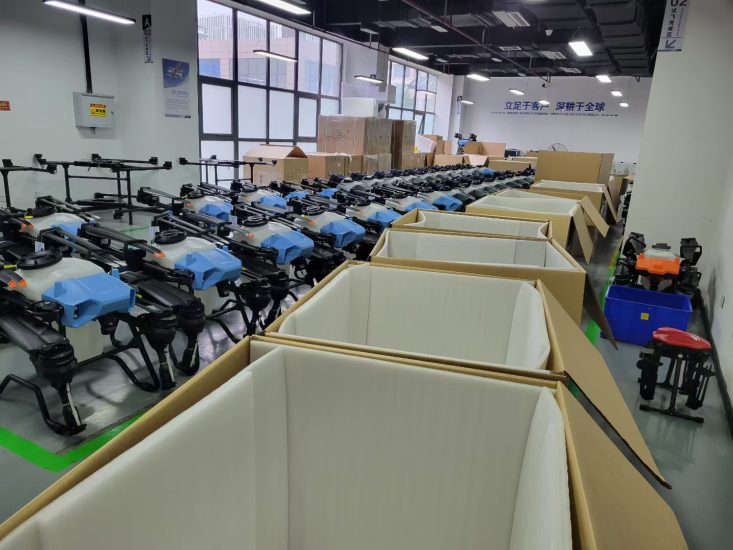
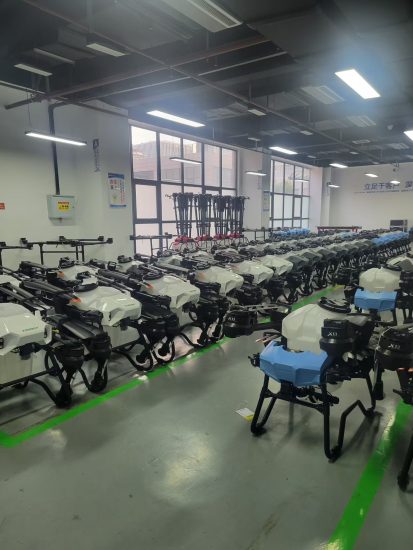
One of the first things buyers should verify is whether the supplier is an actual manufacturer or only a trading company.
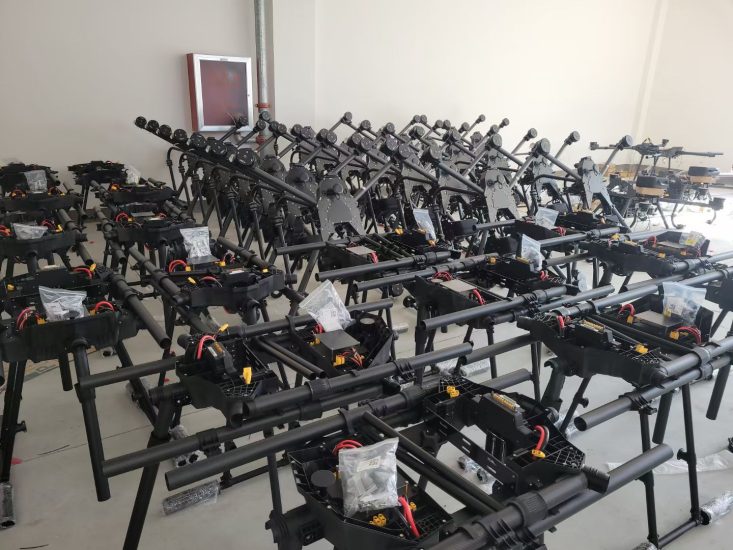
A real agricultural drone manufacturer should generally be able to provide information about:
- Production facilities
- Product development
- Quality control
- Technical team
- Assembly process
- Testing procedures
- Product documentation
Buyers can ask for factory information, production photos, product videos, technical documents, or online factory inspections.
This does not mean every trading company is unsuitable. However, understanding the supplier’s actual role can help buyers make better purchasing decisions.
3. Evaluate Product Quality and Technical Design
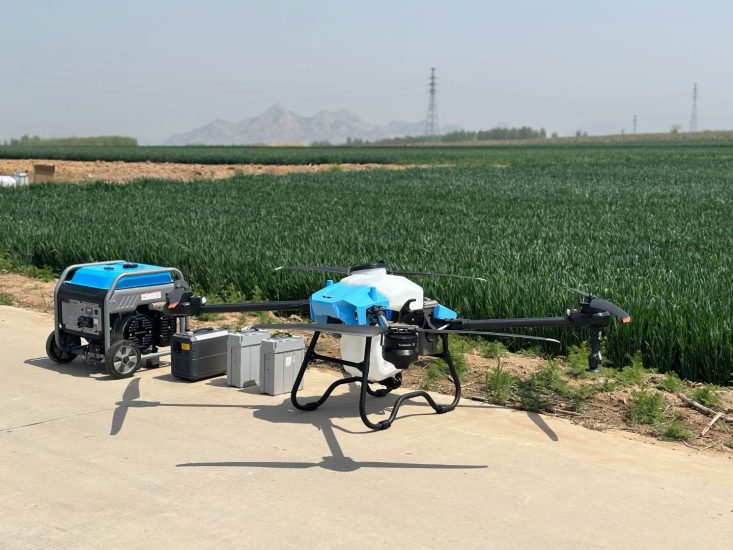
An agricultural drone is a professional working machine. It may operate in outdoor environments with dust, moisture, wind, chemicals, and frequent daily use.
Therefore, product quality is very important.
Buyers should evaluate:
- Frame structure
- Motor performance
- Flight control system
- Battery design
- Spraying system
- Pump reliability
- Protection design
- Component quality
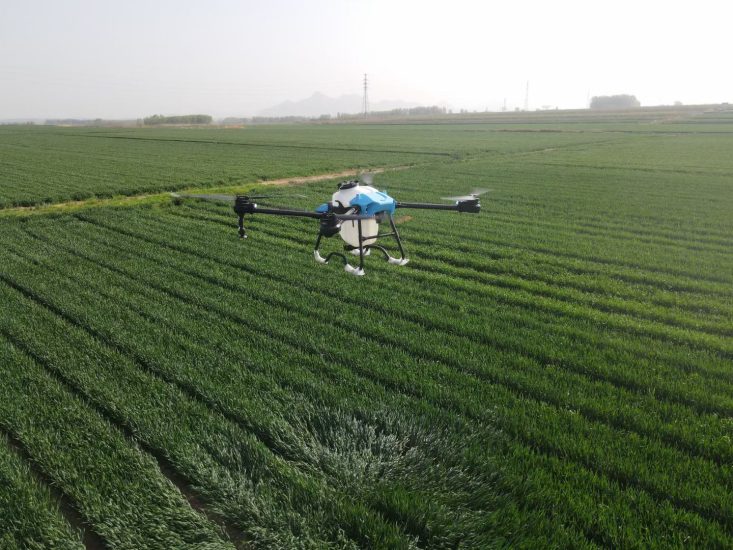
It is also useful to understand how the drone performs under actual working conditions.
Ask the manufacturer:
- What is the recommended payload?
- What is the typical flight time?
- What is the expected working efficiency?
- How does the drone perform in windy conditions?
- How often does the drone require maintenance?
Clear technical information can help buyers avoid unrealistic expectations.
4. Check the Manufacturer’s Product Range
A manufacturer with different agricultural drone configurations may be able to provide more flexible solutions.
A product range may include drones designed for:
- Small farms
- Large agricultural operations
- Field crops
- Orchards
- Agricultural service providers
- Commercial distributors
A wider product range can be useful when your business grows or your application requirements change.
For distributors, product diversity may also make it easier to develop different market segments.
5. Review the Spraying System Carefully
The spraying system is one of the most important parts of an agricultural drone.
Before purchasing, buyers should understand:
- Spray flow rate
- Number of nozzles
- Spray width
- Pump system
- Droplet control
- Flow adjustment
Different crops and applications may require different spraying configurations.
A reliable manufacturer should be able to explain how the spraying system works and recommend a suitable configuration based on your crop type and working conditions.
6. Evaluate Battery and Charging Solutions
Battery performance has a direct impact on agricultural drone productivity.
A professional manufacturer should be able to provide clear information about:
- Battery capacity
- Expected flight time
- Charging time
- Battery lifespan
- Battery safety
- Charging equipment
Buyers should also consider whether replacement batteries are readily available.
For continuous agricultural operations, battery management can significantly affect daily efficiency.
It is important to understand the complete battery system rather than focusing only on the drone itself.
7. Check Spare Parts Availability
Agricultural drones operate in demanding conditions, and some components may eventually require replacement.
Before placing an order, ask about the availability of:
- Motors
- Propellers
- Batteries
- Chargers
- Pumps
- Spray nozzles
- Landing components
- Electronic components
A reliable manufacturer should have a clear spare-parts supply system.
This is especially important for overseas buyers.
If spare parts are difficult to obtain, even a minor technical problem may result in long periods of downtime.
8. Evaluate Technical Support and After-Sales Service
Buying an agricultural drone is not the end of the cooperation.
Buyers may need support with:
- Product installation
- Operation training
- Software setup
- Maintenance
- Troubleshooting
- Spare-parts replacement
Before ordering, ask the manufacturer:
- Is technical training available?
- Are operation manuals provided?
- Is remote support available?
- How are technical problems handled?
- What is the warranty policy?
For international buyers, responsive technical support can be particularly valuable.
9. Ask About OEM and Private Label Services
If you are a distributor or want to develop your own brand, OEM cooperation may be important.
Possible customization services may include:
- Product logo
- Packaging
- User manuals
- Labels
- Product appearance
- Language options
Some buyers may also require customized product configurations.
When discussing OEM cooperation, provide clear information about:
- Expected order quantity
- Target market
- Required customization
- Delivery schedule
This allows the manufacturer to evaluate the project more accurately.
10. Compare Prices Based on Complete Configuration
Comparing only the advertised drone price can lead to an inaccurate purchasing decision.
Different quotations may include different items.
One quotation may include:
- Drone
- Battery
- Charger
- Remote controller
- Standard accessories
Another quotation may list the drone body only.
Therefore, buyers should compare:
- Product configuration
- Battery quantity
- Charger
- Spare parts
- Warranty
- Technical support
- Shipping
- Customization
The lowest quotation is not necessarily the most cost-effective solution.
A complete comparison should focus on total value.
11. Ask for Product Testing Information
Before placing a large order, buyers may want to evaluate the product.
Possible methods include:
- Product demonstration
- Online video testing
- Sample order
- Factory inspection
- Third-party inspection
Testing can help buyers understand:
- Flight stability
- Spraying performance
- Battery performance
- Operating system
- Product quality
For distributors, testing one product before a larger order can help reduce purchasing risk.
12. Check Export and Documentation Support
International buyers may need documents for transportation, customs clearance, registration, or local compliance.
Depending on the destination country, buyers may require information related to:
- Product specifications
- Commercial invoice
- Packing list
- Shipping documents
- Battery information
- Product manuals
Before ordering, buyers should check whether the manufacturer can provide the required documents.
It is also important to confirm local regulations regarding agricultural drone operation and importation.
13. Look for Long-Term Cooperation Potential
A reliable manufacturer should be able to support more than one order.
Long-term cooperation may involve:
- Stable product supply
- Consistent quality
- Spare-parts support
- Product updates
- OEM development
- Technical assistance
This is particularly important for distributors and agricultural service companies.
A good supplier relationship can help reduce future purchasing risks and improve business efficiency.
14. Questions to Ask an Agricultural Drone Manufacturer
Before making a final decision, consider asking:
- Are you a manufacturer or trading company?
- What agricultural drone models are available?
- Which model is suitable for my farm size?
- What is the recommended payload capacity?
- What is the expected flight time?
- How many batteries are included?
- What is the spraying efficiency?
- Are spare parts available?
- What warranty is provided?
- Is technical support available?
- Can OEM customization be provided?
- What is the minimum order quantity?
- What is the production lead time?
- Can you support international shipping?
- What documents are available for export?
The answers to these questions can help buyers compare suppliers more effectively.
Final Checklist for Choosing a Manufacturer
Before placing an order, check the following:
- [ ] Manufacturer background
- [ ] Production capability
- [ ] Product quality
- [ ] Drone specifications
- [ ] Battery performance
- [ ] Spraying system
- [ ] Spare-parts supply
- [ ] Technical support
- [ ] Warranty policy
- [ ] OEM capability
- [ ] Export documentation
- [ ] Production lead time
- [ ] Total purchase cost
Request Information from an Agricultural Drone Manufacturer
Finding a reliable agricultural drone manufacturer in China requires careful evaluation.
The right supplier should not only provide a competitive price but also offer suitable products, stable quality, technical support, spare parts, and long-term cooperation.
If you are looking for an agricultural drone for farming, commercial spraying, distribution, or OEM cooperation, prepare your requirements before sending an inquiry.
Include your target application, crop type, required capacity, estimated order quantity, destination country, and customization requirements.
This will help the manufacturer recommend a suitable agricultural drone solution for your business.
Contact a professional agricultural drone manufacturer to request product information, configuration recommendations, and a quotation.


No comments yet