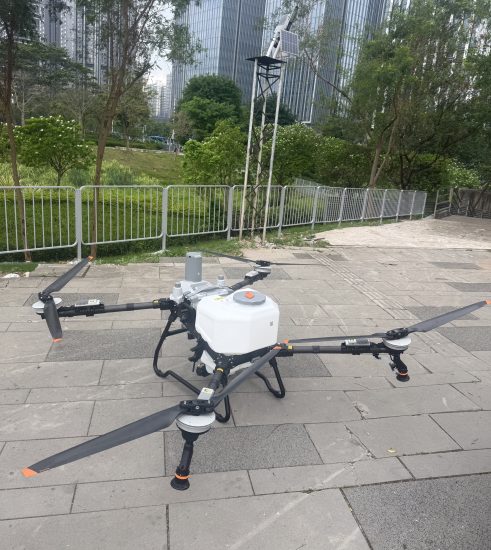



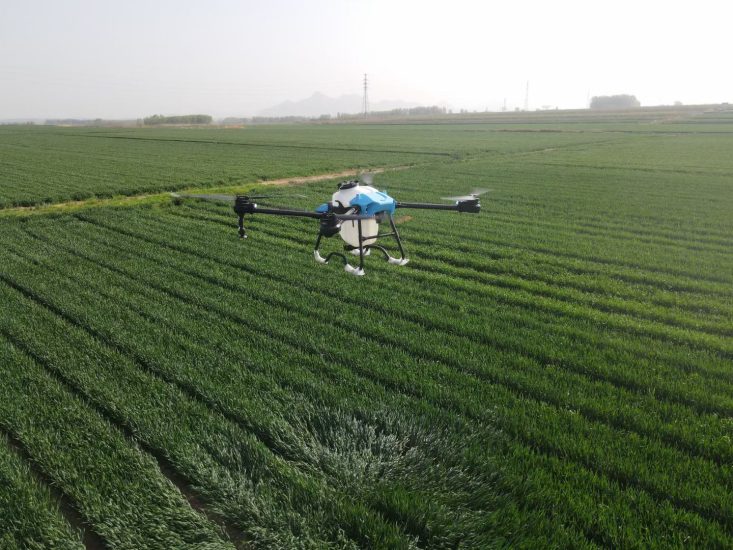
Uniform spraying is one of the most important requirements when using an agricultural spraying drone. A drone may have a large tank, powerful motors, and an advanced flight-control system, but poor flight parameters or incorrect spraying settings can still result in uneven application.
Uneven spraying may cause some areas to receive insufficient treatment while others receive excessive application. This can reduce crop-protection effectiveness, waste agricultural chemicals, and increase the risk of off-target exposure.
Achieving consistent spraying requires the entire system to work together, including the drone, pump, nozzles, flight speed, operating height, application rate, route planning, weather conditions, and operator skills.
This guide explains the key factors that influence spray uniformity and provides practical operating recommendations.
1. What Causes Uneven Agricultural Drone Spraying?
Uneven spraying can have many causes.
Common problems include:
-
Incorrect flight speed
-
Incorrect operating height
-
Poor nozzle selection
-
Blocked or damaged nozzles
-
Uneven pump flow
-
Incorrect application rate
-
Excessive wind
-
Poor route planning
-
Inconsistent flight paths
-
Uneven terrain
-
Incorrect spray width
-
Improper calibration
Identifying the cause is the first step toward improving spraying consistency.
2. Maintain a Consistent Flight Height
Flight height is an important factor affecting spray distribution.
If the drone flies too high, droplets have more time to move before reaching the crop. This can increase the influence of wind and may change the effective spray pattern.
If the drone flies too low, the spray pattern may not develop correctly and coverage can become uneven.
The appropriate operating height depends on:
-
Drone model
-
Nozzle configuration
-
Crop height
-
Crop density
-
Chemical product
-
Terrain
-
Weather conditions
Operators should follow the drone manufacturer’s recommended operating parameters and the pesticide product label.
3. Use an Appropriate Flight Speed
Flight speed has a direct relationship with application rate.
When the drone moves faster, the same amount of liquid is distributed over a larger area in the same amount of time.
When the drone slows down, application density can increase.
Therefore, flight speed should be coordinated with:
-
Pump flow
-
Nozzle flow
-
Spray width
-
Application rate
-
Crop requirements
Do not increase flight speed simply to improve productivity without checking the resulting application rate.
4. Keep the Spray Width Consistent
A drone’s effective spray width depends on its nozzle arrangement, operating height, droplet characteristics, and environmental conditions.
Operators should avoid assuming that the maximum advertised spray width is always the appropriate working width.
The effective width should be established through calibration and field testing.
When route planning is performed, the selected working width should match the actual spraying system.
5. Calibrate the Spraying System
Calibration should be performed before commercial spraying.
A basic calibration process includes:
-
Inspect the tank.
-
Check filters.
-
Inspect all pipes.
-
Inspect each nozzle.
-
Measure flow rate.
-
Confirm pump operation.
-
Set flight speed.
-
Set operating height.
-
Confirm spray width.
-
Verify application rate.
If any spraying component is replaced, calibration should be checked again.
6. Inspect Nozzles Before Every Operation
Nozzles are exposed to agricultural chemicals and may become blocked or worn.
A partially blocked nozzle can produce a different spray pattern from the other nozzles.
Before each operation, check for:
-
Blockages
-
Cracks
-
Wear
-
Uneven flow
-
Loose connections
-
Damaged components
Nozzles should be cleaned according to the manufacturer’s instructions.
Avoid using inappropriate tools that could damage the nozzle opening.
7. Monitor Pump Flow
The pump must deliver a stable flow to the spraying system.
An abnormal pump condition can cause variations in application rate.
Potential causes include:
-
Low battery voltage
-
Blocked filters
-
Air entering the system
-
Damaged pipes
-
Pump wear
-
Incorrect settings
Modern agricultural drones may use flow sensors and intelligent pump control to help monitor spraying performance.
If the measured flow differs significantly from the expected value, the operation should be checked before continuing.
8. Use the Correct Nozzle Configuration
Different agricultural applications may require different nozzle characteristics.
Nozzle selection should consider:
-
Target crop
-
Application method
-
Required application rate
-
Droplet characteristics
-
Pump pressure
-
Flight speed
-
Environmental conditions
A nozzle with a high flow rate is not automatically better.
The correct nozzle is the one that can deliver the required application consistently under the intended operating conditions.
9. Use Terrain-Following Functions Where Appropriate
Fields may contain slopes, uneven ground, hills, terraces, or changes in crop height.
If the drone maintains a relatively consistent distance from the crop canopy, the spraying system can operate more consistently.
Terrain-following functions can be particularly useful in:
-
Orchards
-
Hillside farms
-
Terraced fields
-
Uneven farmland
-
Crops with changing plant height
However, terrain-following technology does not eliminate the need for careful route planning and operator supervision.
10. Plan the Flight Route Before Spraying
Good route planning reduces unnecessary flight movements and helps maintain consistent coverage.
A typical route should consider:
-
Field boundaries
-
Obstacles
-
Trees
-
Buildings
-
Power lines
-
Water sources
-
Refill points
-
Takeoff and landing areas
-
No-spray zones
Automatic route planning can help maintain consistent passes, but operators should review the route before starting the operation.
11. Maintain Appropriate Overlap
Spray passes may need an appropriate degree of overlap to avoid untreated gaps.
However, excessive overlap can increase application in certain areas.
The correct overlap depends on:
-
Nozzle pattern
-
Spray width
-
Flight height
-
Wind
-
Crop characteristics
-
Drone configuration
Operators should establish the effective working width through calibration rather than relying only on theoretical specifications.
12. Pay Attention to Wind Conditions
Wind is one of the most important environmental factors affecting spraying.
Wind can move droplets away from the intended target and change the spray distribution.
Strong or unstable wind conditions can increase:
-
Drift
-
Uneven coverage
-
Off-target movement
-
Chemical loss
Operators should follow the pesticide label and local regulations when determining whether conditions are suitable for spraying.
Do not attempt to maintain maximum productivity at the expense of safe application conditions.
13. Avoid Spraying During Unsuitable Weather
Besides wind, other environmental factors can influence spraying performance.
These may include:
-
Rain
-
High temperature
-
Low humidity
-
Rapid weather changes
-
Strong turbulence
The acceptable operating conditions depend on the agricultural chemical and local requirements.
Always follow the product label and applicable agricultural safety regulations.
14. Adjust Parameters According to Crop Type
Different crops require different spraying strategies.
Open-Field Crops
Large fields generally allow longer straight flight paths.
The focus is often on consistent coverage and efficient route planning.
Orchards
Trees create a three-dimensional target.
Operators may need to adjust flight height, speed, route, and spraying configuration to suit the canopy.
Vineyards
Vineyard rows may require precise route planning and appropriate operating width.
Vegetables
Careful application-rate control may be important because some crops can be sensitive to excessive chemical application.
A single set of flight parameters should not automatically be used for every crop.
15. Use Consistent Flight Lines
Repeated manual control can result in variations in flight speed and route spacing.
Automatic flight planning can help maintain consistent paths.
However, operators should monitor the drone throughout the operation because field conditions can change.
Automation should support the operator rather than replace responsible supervision.
16. Keep the Battery in Good Condition
Battery performance can also affect spraying consistency.
When battery voltage decreases significantly, the drone may need to adjust its operating behavior.
A degraded battery may also reduce available flight time.
Operators should monitor:
-
Battery level
-
Battery temperature
-
Battery health
-
Voltage
-
Remaining flight time
Use batteries according to the manufacturer’s specifications and replace batteries that no longer meet the required performance or safety standards.
17. Keep the Spray Tank Properly Managed
The liquid level inside the tank changes during operation.
A well-designed agricultural drone should maintain stable spraying performance throughout the operating cycle.
Operators should monitor:
-
Remaining liquid
-
Pump performance
-
Flow rate
-
Low-liquid warnings
-
Tank and pipe condition
Avoid allowing the pump to operate without sufficient liquid if the manufacturer does not permit dry operation.
18. Perform a Test Before Large-Scale Spraying
A test operation is recommended before treating a large field.
A practical test can verify:
-
Flight height
-
Flight speed
-
Spray width
-
Flow rate
-
Nozzle performance
-
Application rate
-
Route spacing
If possible, inspect the treated area to determine whether coverage appears consistent.
This can prevent large-scale problems caused by incorrect settings.
19. Record Operating Parameters
Professional agricultural contractors can benefit from maintaining records.
Useful data includes:
-
Crop type
-
Field size
-
Chemical product
-
Application rate
-
Flight speed
-
Flight height
-
Spray width
-
Weather conditions
-
Battery usage
-
Operating time
Keeping records makes it easier to repeat successful settings and identify problems during future operations.
20. Recommended Pre-Flight Checklist
Before starting an agricultural spraying operation, check:
Drone
-
Motors
-
Propellers
-
Arms
-
Landing system
-
Flight controller
-
Navigation system
Battery
-
Charge level
-
Temperature
-
Physical condition
-
Battery health
Spraying System
-
Tank
-
Pump
-
Filters
-
Pipes
-
Flow sensor
-
Nozzles
Flight Settings
-
Flight speed
-
Operating height
-
Route
-
Spray width
-
Application rate
Environment
-
Wind
-
Rain
-
Temperature
-
Field obstacles
-
Nearby people or sensitive areas
A systematic checklist can reduce avoidable operating problems.
21. How to Improve Spraying Uniformity
For professional operations, the following approach is recommended:
Correct nozzle → Correct flow rate → Correct flight speed → Correct height → Correct route → Suitable weather
Every element contributes to the final spraying result.
If one parameter changes, other parameters may need to be adjusted.
For example, increasing flight speed without adjusting flow rate can change the application rate.
Similarly, increasing flight height may change the effective spray pattern.
22. Questions to Ask an Agricultural Drone Manufacturer
Before purchasing a drone, buyers should ask:
-
What is the recommended flight speed?
-
What is the recommended operating height?
-
What is the effective spray width?
-
Which nozzles are supplied?
-
What is the pump flow range?
-
Does the drone have automatic flow control?
-
Does it support terrain following?
-
Does it support automatic route planning?
-
How is spray uniformity tested?
-
What calibration procedure is recommended?
-
What spare nozzles are available?
-
What maintenance is required?
A manufacturer that provides detailed operating parameters and calibration instructions can make it easier for users to achieve consistent results.
Conclusion
Uniform spraying with an agricultural drone depends on the interaction of equipment, settings, environment, and operator practices.
The most important factors include nozzle selection, pump flow, flight speed, operating height, spray width, route planning, terrain following, battery condition, and weather.
Operators should calibrate the spraying system before use, inspect nozzles regularly, monitor flow performance, and adjust flight parameters according to the crop and application requirements.
The objective should not simply be to spray as quickly as possible. The goal is to achieve the required application consistently, safely, and efficiently.
For farmers, agricultural contractors, distributors, and professional drone operators, choosing a well-designed spraying system and following proper operating procedures can significantly improve application quality and overall field efficiency.
THE END


No comments yet