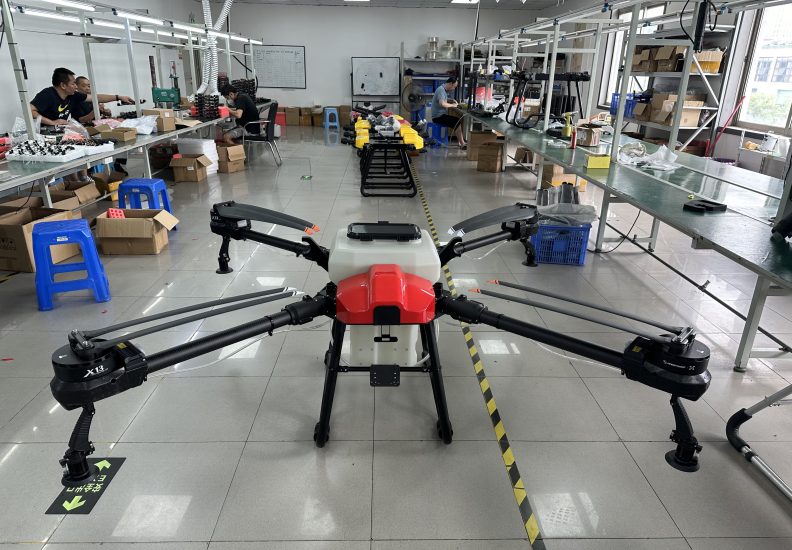


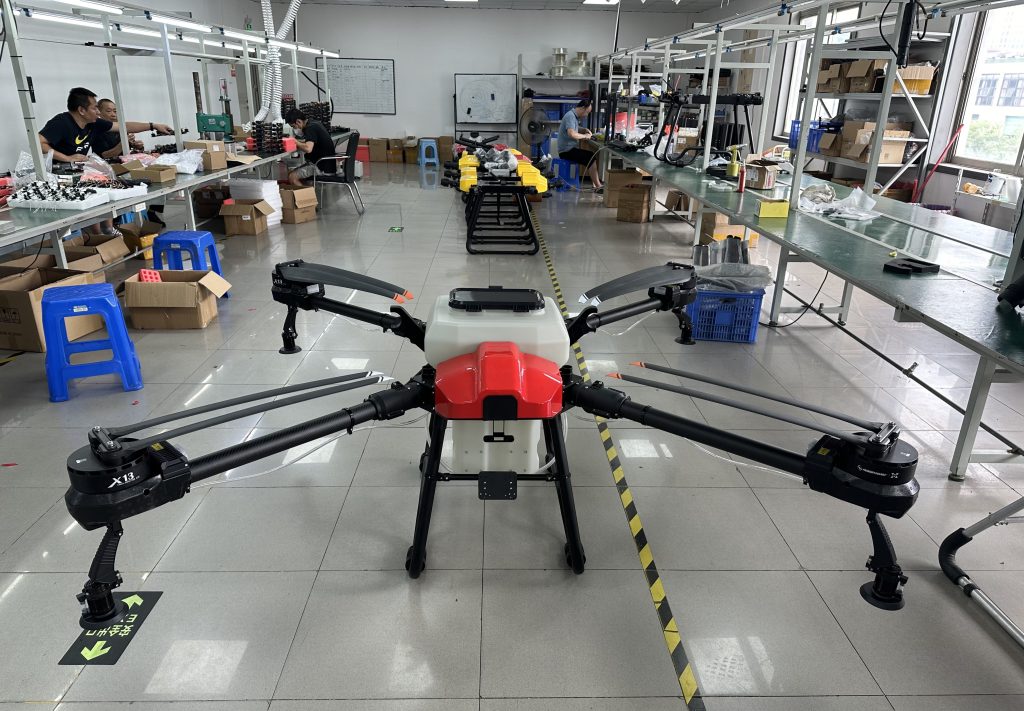
Agricultural spraying drones are becoming an increasingly practical solution for modern farms, agricultural contractors, crop protection companies, and distributors. Compared with traditional ground spraying equipment, drones can operate in fields with difficult terrain, reduce crop damage, improve spraying efficiency, and provide more flexible application options.
However, choosing the right agricultural spraying drone is not simply a matter of selecting the largest tank capacity or the newest model. Buyers need to evaluate payload capacity, flight time, spraying width, battery system, pump performance, terrain, crop type, operating area, maintenance requirements, spare parts, and after-sales support.
This guide explains the key factors to consider before purchasing an agricultural spraying drone for commercial farming or distribution.
1. Start With Your Actual Farming Requirements
The best agricultural spraying drone depends on how and where you plan to use it.
Before comparing models, identify:
-
The total farming area
-
Main crop types
-
Field size and shape
-
Terrain conditions
-
Required spraying frequency
-
Liquid application volume
-
Expected daily working area
-
Available operators
-
Local aviation and agricultural regulations
-
Battery charging facilities
-
Budget
For example, a small farm may not need a high-capacity drone designed for large commercial operations. A professional agricultural service company, on the other hand, may benefit from a larger payload and faster battery replacement system.
A good purchasing decision starts with the application rather than the product specification.
2. Choose the Right Payload Capacity
Payload capacity is one of the most important specifications when comparing agricultural spraying drones.
Common agricultural drone capacities include approximately 10L, 16L, 20L, 30L, 40L and larger configurations, depending on the model and manufacturer.
A larger tank can reduce the number of refills required during operation. This can be useful for large-scale farms where operational efficiency is a major consideration.
However, a larger payload does not automatically mean better performance.
A heavier drone may require:
-
More battery power
-
Longer charging or battery replacement cycles
-
Greater takeoff and landing space
-
More transportation capacity
-
More expensive batteries and components
Therefore, buyers should balance tank capacity with field size, spraying requirements, battery availability, and transportation conditions.
3. Consider Flight Time and Battery Capacity
Flight time directly affects operational efficiency.
A drone may have a large tank, but if the battery cannot support efficient operation, the theoretical capacity may not translate into higher productivity.
When comparing agricultural drones, check:
-
Battery voltage
-
Battery capacity
-
Battery weight
-
Typical flight time
-
Charging time
-
Battery cycle life
-
Intelligent battery management
-
Number of batteries included
-
Availability of replacement batteries
For commercial operators, having multiple batteries can be particularly important.
Instead of waiting for one battery to recharge, operators can rotate batteries between flights. This can significantly improve daily operating efficiency.
Buyers should therefore evaluate the entire battery system rather than looking only at the battery capacity printed on the specification sheet.
4. Check the Spraying System
The spraying system determines how effectively the drone distributes agricultural chemicals or other agricultural liquids.
Important components include:
-
Pumps
-
Nozzles
-
Flow meters
-
Spray pipes
-
Filters
-
Pressure control
-
Flow control systems
A good spraying system should provide stable and consistent liquid output.
The appropriate nozzle configuration also depends on the application. Different crops and agricultural chemicals may require different droplet sizes and application rates.
For this reason, buyers should ask the manufacturer whether the spraying system supports adjustable flow rates and replaceable nozzle configurations.
5. Evaluate Spraying Width and Working Efficiency
Spraying width affects how quickly the drone can cover a field.
A wider spraying width can potentially reduce the number of passes required, but actual field efficiency also depends on:
-
Flight speed
-
Terrain
-
Crop height
-
Wind conditions
-
Liquid dosage
-
Battery capacity
-
Refilling time
-
Battery replacement time
Manufacturers may provide theoretical working-area figures, but buyers should understand the difference between theoretical capacity and real-world operating efficiency.
When requesting a quotation, ask the supplier to provide realistic working-area estimates based on your crop type and operating conditions.
6. Think About the Crops You Need to Spray
Different crops require different spraying strategies.
Agricultural drones can be used for various applications, including:
-
Rice
-
Wheat
-
Corn
-
Soybeans
-
Cotton
-
Vegetables
-
Orchards
-
Tea plantations
-
Fruit trees
-
Other commercial crops
Flat farmland may be relatively straightforward for drone spraying.
Orchards and plantations can present different challenges because of tree height, canopy density, terrain, and required spray penetration.
If your business focuses on fruit trees or other specialized crops, ask the manufacturer whether the drone has been tested for those applications.
7. Consider Terrain and Operating Environment
Agricultural fields are not always flat and open.
Some farms are located in:
-
Mountains
-
Hills
-
Wet fields
-
Orchards
-
Narrow agricultural roads
-
Areas with limited vehicle access
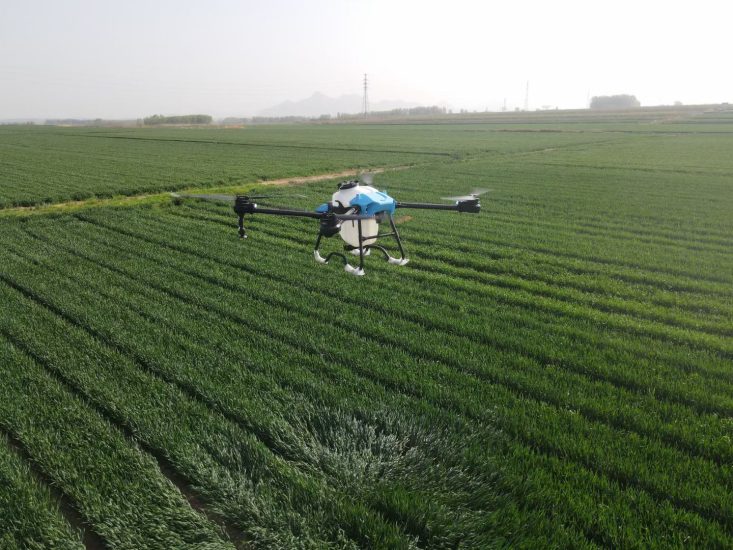
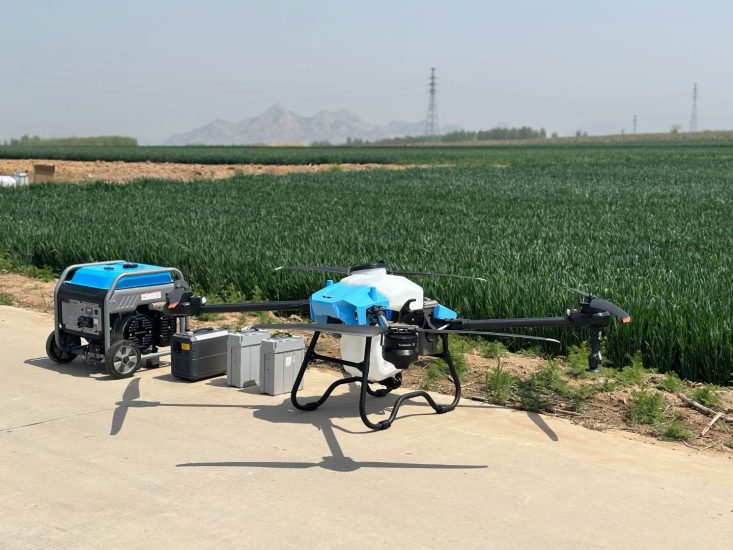
One advantage of spraying drones is their ability to reach areas where traditional agricultural machinery may have difficulty operating.
However, terrain also affects flight planning and safety.
Before purchasing, evaluate the drone’s navigation system, obstacle avoidance capabilities, positioning technology, return-to-home function, wind resistance, and remote-control range.
8. Look at Navigation and Flight Control Technology
Modern agricultural spraying drones normally rely on advanced positioning and flight-control systems.
When comparing models, buyers should ask about:
-
GNSS positioning
-
RTK positioning
-
Automatic flight planning
-
Route planning
-
Terrain following
-
Obstacle detection
-
Automatic return
-
Low-battery protection
-
Emergency landing functions
-
Remote-control range
These functions can reduce operator workload and improve consistency.
For commercial operations, an easy-to-use flight-planning system can be particularly valuable because operators may need to repeat similar spraying routes across large agricultural areas.
9. Check the Drone’s Wind Resistance
Wind is an important factor in agricultural drone operations.
Strong wind can affect:
-
Flight stability
-
Battery consumption
-
Spray distribution
-
Droplet drift
-
Operational safety
A manufacturer should provide realistic information about recommended operating conditions rather than relying only on marketing claims.
Buyers should ask for the manufacturer’s recommended maximum operating wind speed and understand that actual performance can vary depending on payload, altitude, temperature, and local conditions.
10. Consider Battery Charging and Replacement
For professional agricultural operations, battery management can become one of the largest operational factors.
Ask the supplier:
-
How many batteries are recommended per drone?
-
How long does each battery take to charge?
-
Is a fast charger available?
-
Can multiple batteries be charged simultaneously?
-
What is the expected battery cycle life?
-
Are replacement batteries readily available?
-
What happens if a battery fails?
A reliable battery supply chain is especially important for distributors and commercial agricultural service companies.
When purchasing from an overseas manufacturer, buyers should also consider battery shipping requirements because lithium batteries may be subject to specific transportation regulations.
11. Check Spare Parts Availability
Agricultural drones operate in demanding environments.
Common replacement components may include:
-
Propellers
-
Motors
-
Pumps
-
Nozzles
-
Filters
-
Landing gear
-
Batteries
-
Chargers
-
Spray components
-
Electronic modules
Before placing an order, ask the manufacturer how quickly spare parts can be supplied.
For distributors, it can be useful to purchase a spare-parts package together with the initial drone order.
This can reduce downtime and improve after-sales service for local customers.
12. Evaluate OEM and ODM Options
If you are a distributor, agricultural equipment company, or established brand, OEM and ODM services may be important.
A professional agricultural drone manufacturer may offer:
-
Custom logo
-
Custom packaging
-
User manual customization
-
Product appearance customization
-
Software or interface customization
-
Accessories
-
Spare-parts packages
-
Distributor support
However, OEM capability should be verified rather than assumed.
Ask the manufacturer about:
-
Minimum order quantity
-
Customization costs
-
Development time
-
Sample availability
-
Packaging requirements
-
Quality-control procedures
-
Intellectual property ownership
13. Don’t Choose a Manufacturer Based Only on Price
Price is important, but the cheapest agricultural drone may not provide the lowest total cost of ownership.
Consider the complete cost:
Drone + Batteries + Charger + Spare Parts + Shipping + Maintenance + Training + After-Sales Service
A lower-priced drone may become more expensive if replacement parts are difficult to obtain or technical support is unavailable.
For commercial users, reliability and serviceability can be more important than saving a small amount on the initial purchase price.
14. Verify the Manufacturer’s Production Capability
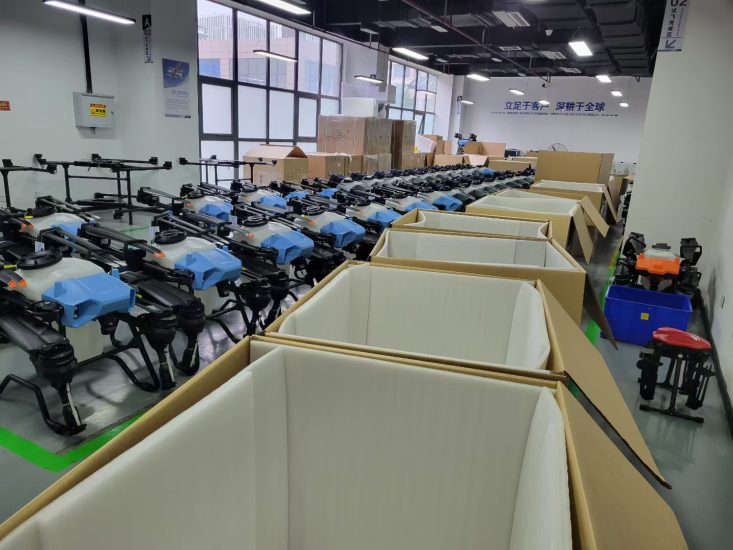
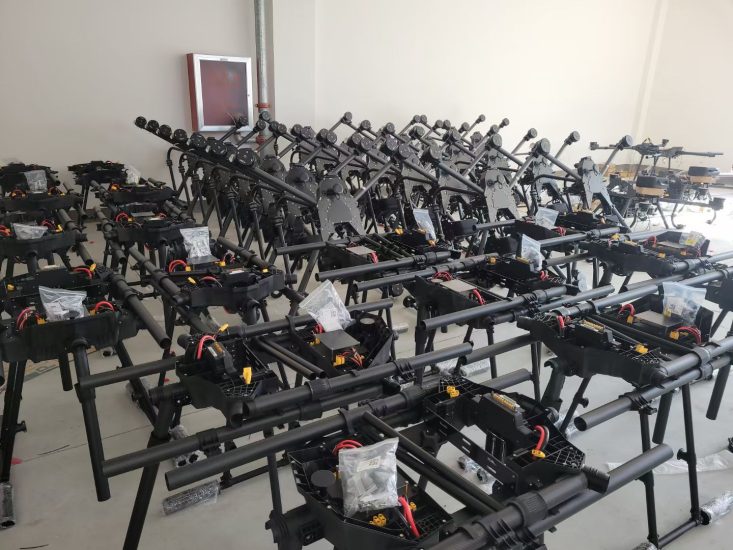
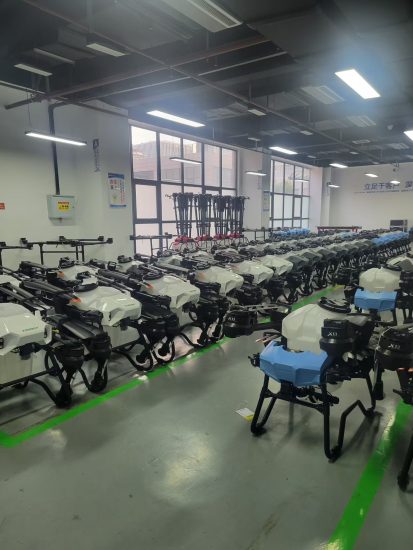
If you are purchasing directly from China, investigate the supplier before placing a large order.
Useful information includes:
-
Factory location
-
Production capacity
-
Quality-control process
-
Product testing
-
R&D capability
-
Export experience
-
Certifications
-
Product documentation
-
Spare-parts availability
-
Warranty policy
-
Technical support
You can also request factory photographs, production videos, product test videos, sample documentation, and references where appropriate.
A reliable supplier should be able to clearly explain its manufacturing and quality-control processes.
15. Ask About Training and After-Sales Support
Buying the drone is only the beginning.
Operators may need training covering:
-
Drone assembly
-
Flight operation
-
Mission planning
-
Spraying settings
-
Battery management
-
Routine maintenance
-
Troubleshooting
-
Safety procedures
A supplier that provides technical documentation and operator training can significantly reduce the learning curve.
For international buyers, remote technical support is also important.
Ask whether the supplier provides support through email, video calls, online meetings, or other communication channels.
16. Confirm Local Regulations Before Ordering
Agricultural drone regulations vary significantly between countries and regions.
Depending on the destination market, operators may need to comply with requirements related to:
-
Drone registration
-
Pilot qualifications
-
Operating zones
-
Agricultural chemical application
-
Radio frequency
-
Import documentation
-
Product certification
-
Insurance
-
Flight permissions
Therefore, buyers should check their local requirements before purchasing.
The manufacturer can provide product documentation, but the buyer is normally responsible for ensuring that the drone can legally be operated in the destination market.
17. Request a Detailed Quotation
Instead of asking only:
“What’s your drone price?”
provide the supplier with useful information.
For example:
-
Destination country
-
Drone capacity required
-
Intended crop
-
Estimated farming area
-
Quantity
-
OEM requirements
-
Battery quantity
-
Spare-parts requirements
-
Shipping destination
-
Required delivery time
A detailed inquiry allows the manufacturer to provide a more accurate quotation.
You can also request separate prices for:
-
Drone only
-
Drone + standard battery
-
Complete operating package
-
Spare-parts package
-
OEM package
-
Sample order
-
Bulk order
This makes supplier comparison much easier.
18. Questions to Ask an Agricultural Drone Manufacturer
Before placing an order, consider asking:
1. What is the recommended payload capacity for my application?
2. What is the typical flight time under normal operating conditions?
3. How many batteries are recommended for continuous operation?
4. What is the effective spraying width?
5. What is the recommended application rate?
6. Which crops has the drone been tested on?
7. What navigation and positioning systems are supported?
8. What spare parts are normally required?
9. What warranty is provided?
10. Do you offer OEM and ODM services?
11. Can you provide operator training?
12. Can you provide technical support after delivery?
13. What is the MOQ for distributors?
14. What documents are supplied with the shipment?
15. Can you provide a complete quotation including batteries, charger and spare parts?
19. Agricultural Drone Buyer Checklist
Before making your final decision, check the following:
Item |
What to Check |
|---|---|
Payload |
Suitable tank capacity |
Battery |
Capacity, charging time and cycle life |
Flight time |
Realistic operating time |
Spraying system |
Pump, nozzle and flow control |
Coverage |
Effective working width |
Navigation |
GNSS, RTK and route planning |
Safety |
Obstacle avoidance and return-to-home |
Terrain |
Suitable for your farming environment |
Spare parts |
Availability and delivery time |
OEM/ODM |
Customization capability |
Factory |
Production and quality-control capability |
Warranty |
Warranty terms |
Training |
Operator and technical training |
Regulations |
Destination-market requirements |
Price |
Total cost of ownership |
Support |
Long-term technical assistance |
20. How to Choose the Right Agricultural Drone
There is no single agricultural spraying drone that is ideal for every farm.
A small farm may prioritize affordability and simple operation. A commercial agricultural service provider may prioritize high payload capacity, fast battery replacement, large-area coverage, and durable components. A distributor may place greater emphasis on OEM capability, spare parts, training, warranty, and long-term supplier support.
The right choice should therefore be based on your crop, field size, terrain, spraying requirements, operating frequency, budget, and local regulations.
Most importantly, compare complete solutions rather than comparing only the drone price.
A reliable agricultural drone manufacturer should be able to provide detailed specifications, application guidance, spare parts, technical support, training, and a clear quotation based on your actual requirements.
FAQ
What size agricultural spraying drone should I buy?
The appropriate capacity depends on your farm size, crop type, spraying frequency, terrain, and required application rate. Larger drones can reduce refill frequency, while smaller drones may be easier to transport and operate.
Are agricultural spraying drones suitable for orchards?
Yes, agricultural drones can be used in many orchard applications, but the appropriate drone and spraying configuration depend on tree height, canopy density, terrain, and application requirements.
How many batteries do I need?
The required number depends on the operating schedule, battery charging time, flight time, and daily working area. Commercial operators generally need multiple batteries to maintain continuous operations.
Can I buy agricultural drones directly from China?
Yes. International buyers can purchase agricultural drones from Chinese manufacturers, but they should confirm product specifications, shipping requirements, import regulations, certifications, warranty terms, spare-parts availability, and technical support before ordering.
Can agricultural drone manufacturers provide OEM services?
Many manufacturers offer OEM or ODM services, but the available customization, MOQ, development time, packaging options, and costs vary between suppliers.
What should I request before placing a bulk order?
Request a detailed product specification, quotation, battery information, spare-parts list, warranty terms, technical documentation, shipping information, certifications where applicable, and sample or testing options when appropriate.
Final Recommendation
Choosing an agricultural spraying drone should be treated as a business investment rather than simply purchasing a piece of equipment.
The best supplier is not necessarily the one offering the lowest initial price. Look for a manufacturer that can provide reliable equipment, stable production, suitable batteries, spare parts, technical support, training, OEM/ODM services, and long-term cooperation.
If you are a farm owner, agricultural service provider, importer, or distributor looking for an agricultural spraying drone, prepare your application requirements first and request a detailed quotation based on your actual operating conditions. This will help you compare different models and select a solution that provides better efficiency and long-term value.
THE END


No comments yet