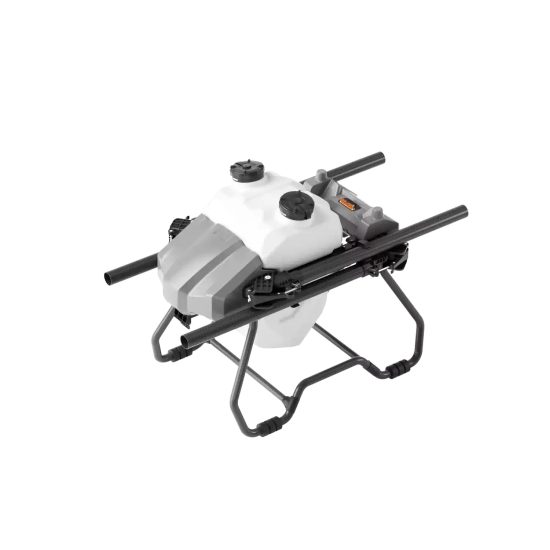



Choosing the right agricultural drone is an important decision for farmers, agricultural contractors, distributors, and farm service providers. With different payload capacities, flight times, spraying systems, battery configurations, and operating features available, selecting the wrong model can lead to higher operating costs and lower work efficiency.
The best agricultural drone is not necessarily the largest or most powerful model. The right choice depends on your farm size, crop type, terrain, spraying requirements, daily workload, and local operating conditions.
This guide explains the key factors buyers should consider before purchasing an agricultural drone.
1. Start with Your Farm Size and Daily Workload
The first step is to understand how much agricultural work the drone needs to complete each day.
A small farm may not require a large-capacity drone. A compact model can be easier to transport, operate, and maintain. For larger farms or professional spraying services, a higher-capacity drone may help reduce the number of refilling stops and improve daily productivity.
When comparing agricultural drones, consider:
- Total farm area
- Average daily spraying area
- Number of fields
- Distance between fields
- Water and chemical refill locations
- Number of operators available
For example, a farmer managing a small area may prioritize portability and simple operation. A professional agricultural service provider may place greater importance on payload capacity, fast battery replacement, long operating time, and continuous daily performance.
The right drone should match your actual workload instead of simply choosing the model with the largest tank.
2. Choose the Right Payload Capacity
Payload capacity is one of the most important factors when selecting a spraying drone.
Common agricultural drone capacities may include small, medium, and large tank configurations. The right capacity depends on the type of agricultural work and the size of the area being treated.
Smaller Capacity Drones
Smaller agricultural drones may be suitable for:
- Small farms
- Narrow fields
- Orchards
- Hilly areas
- Areas with difficult transportation conditions
Their main advantages can include easier transportation and greater flexibility.
Medium Capacity Drones
Medium-capacity drones are often suitable for general crop spraying operations. They can provide a balance between payload capacity, maneuverability, and operating efficiency.
They may be used for:
- Rice fields
- Wheat fields
- Corn
- Vegetables
- Fruit trees
- Other commercial crops
Larger Capacity Drones
Larger agricultural drones are generally designed for demanding agricultural operations and larger working areas.
They may help reduce the frequency of refilling and improve productivity during long working days. However, buyers should also consider the required battery capacity, transportation requirements, operator experience, and local regulations.
A larger tank does not automatically mean better performance. The entire drone system must be properly matched.
3. Consider the Type of Crops You Need to Spray
Different crops require different spraying methods.
For example, field crops may require broad-area spraying, while orchards may require more precise spraying between trees. Some crops may also require different spray volumes and operating heights.
Before buying an agricultural drone, consider:
- Crop height
- Plant density
- Field layout
- Required spraying volume
- Target spraying height
- Terrain conditions
A drone used mainly for large open fields may have different requirements from a drone used in orchards or mountainous agricultural areas.
Buyers should select a spraying system that matches their specific agricultural applications.
4. Check Spraying Efficiency and Spray System Design
The spraying system directly affects work quality.
Important features may include:
- Number of spray nozzles
- Spray width
- Pump performance
- Flow rate
- Droplet size control
- Spray consistency
- Compatibility with different agricultural liquids
A well-designed spraying system should help distribute the liquid evenly across the target area.
However, maximum spray width should not be the only factor considered. Actual spraying performance may also depend on:
- Flight altitude
- Flight speed
- Wind conditions
- Crop density
- Liquid formulation
- Nozzle configuration
A reliable agricultural drone should allow operators to adjust operating parameters according to different crops and field conditions.
5. Evaluate Flight Time and Battery Performance
Battery performance is essential for agricultural drone operations.
A drone with a short flight time may require frequent battery changes, which can reduce daily efficiency. Professional users should carefully evaluate the complete battery system rather than looking only at the battery capacity.
Important questions include:
- How long can the drone operate under a normal load?
- How long does the battery take to recharge?
- How many batteries are required for continuous operation?
- Is a fast charger available?
- Is the battery easy to replace?
- What is the expected battery service life?
For professional agricultural operations, having multiple batteries can help maintain continuous work.
The actual flight time may vary depending on payload, weather, flight speed, terrain, and operating conditions. Therefore, buyers should ask for realistic performance information instead of relying only on laboratory data.
6. Think About the Operating Environment
Agricultural drones may be used in very different environments.
Some farms are located in flat open areas, while others may include:
- Mountains
- Hills
- Orchards
- Wetlands
- Narrow fields
- Areas with strong winds
Environmental conditions can affect drone performance.
When selecting a drone, buyers should consider:
- Wind resistance
- Obstacle detection
- Terrain-following capability
- Positioning accuracy
- Remote control range
- Weather resistance
If the drone will be used in complex terrain, advanced positioning and obstacle avoidance functions may be especially important.
7. Check the Control and Automation Features
Modern agricultural drones can include a range of intelligent functions designed to simplify operation.
Depending on the model, features may include:
- Automatic route planning
- Field mapping
- Return-to-home functions
- Obstacle detection
- Terrain following
- Automatic spraying control
- Flight path recording
These functions can help reduce the workload for operators and improve repeatability.
For commercial agricultural service providers, automation can also help standardize operations across different fields.
However, buyers should ensure that the system is easy to learn and operate. A large number of functions is not useful if the operator cannot use them efficiently.
8. Consider Maintenance and Spare Parts
An agricultural drone is a working machine that may operate frequently in challenging outdoor environments. Regular maintenance is therefore important.
Before placing an order, buyers should ask about the availability of:
- Motors
- Propellers
- Spray pumps
- Nozzles
- Batteries
- Chargers
- Flight controllers
- Landing gear
- Protective components
A reliable spare-parts supply can help reduce downtime.
Buyers should also understand:
- Warranty terms
- Technical support
- Maintenance procedures
- Spare-parts delivery time
- Remote troubleshooting support
For distributors and agricultural service providers, after-sales support can be just as important as the initial purchase price.
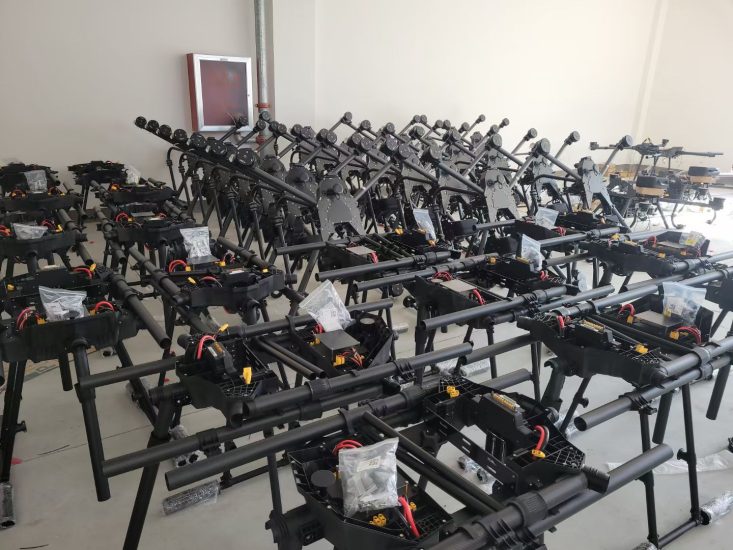
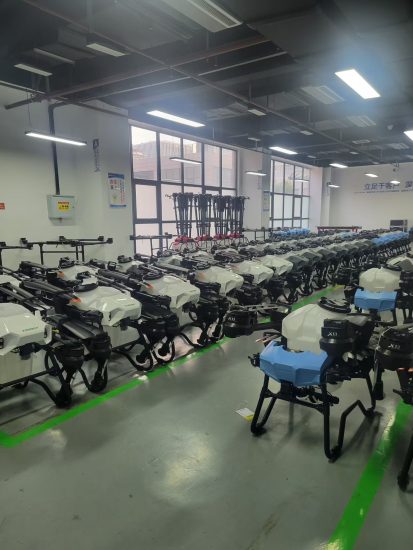
9. Check Whether OEM or Private Label Service Is Available
For distributors and agricultural equipment businesses, OEM and private-label services may be important.
A manufacturer may be able to provide support for:
- Custom logo placement
- Product appearance customization
- Packaging customization
- User manual customization
- Software language options
- Product configuration adjustments
Before discussing customization, buyers should clearly define their requirements, expected order quantity, target market, and delivery schedule.
OEM cooperation can be suitable for companies that want to develop their own agricultural drone product line.
10. Understand the Total Purchase Cost
The purchase price of the drone is only one part of the total investment.
Buyers should also consider:
- Drone body
- Batteries
- Charger
- Remote controller
- Spare parts
- Transportation
- Import costs
- Training
- Maintenance
- Replacement components
A lower initial price does not always mean a lower long-term cost.
For example, a drone with a lower purchase price but expensive batteries or difficult-to-find spare parts may become more expensive over time.
A better purchasing decision should consider the total cost of ownership.
11. Ask the Right Questions Before Ordering
Before purchasing an agricultural drone, buyers should provide detailed information to the supplier.
Useful information may include:
- Your country and operating region
- Main crop types
- Farm size
- Expected daily spraying area
- Required drone capacity
- Estimated order quantity
- OEM requirements
- Expected delivery schedule
You can also ask the supplier:
- What payload capacity is recommended for my application?
- What is the expected working efficiency?
- What accessories are included?
- What is the battery configuration?
- Are spare parts available?
- Is technical training provided?
- Can the product be customized?
- What is the estimated production and delivery time?
Providing detailed information usually helps the supplier recommend a more suitable configuration.
12. Which Agricultural Drone Is Right for You?
There is no single agricultural drone that is perfect for every farm.
The best choice depends on your actual application.
For Small Farms
Focus on:
- Compact design
- Easy transportation
- Simple operation
- Reasonable battery requirements
For Medium-Sized Farms
Focus on:
- Balanced payload capacity
- Efficient spraying performance
- Battery replacement efficiency
- Reliable control functions
For Large Farms and Agricultural Service Providers
Focus on:
- High working efficiency
- Larger payload capacity
- Multiple battery systems
- Fast charging
- Durable components
- Reliable technical support
For Distributors
Focus on:
- Product quality
- Stable supply
- OEM and private-label options
- Spare-parts availability
- Technical support
- Long-term cooperation
Final Buying Checklist
Before placing an order, make sure you have evaluated:
- [ ] Farm size
- [ ] Crop type
- [ ] Required payload capacity
- [ ] Daily working area
- [ ] Flight time
- [ ] Battery system
- [ ] Charging efficiency
- [ ] Spraying system
- [ ] Terrain conditions
- [ ] Safety functions
- [ ] Spare parts
- [ ] Warranty and technical support
- [ ] OEM requirements
- [ ] Total purchase cost
Request an Agricultural Drone Recommendation
Choosing the right agricultural drone requires more than comparing product prices. The most suitable model should match your farm size, crop type, working conditions, operating frequency, and future business plans.
If you are looking for an agricultural drone for farming, commercial spraying services, distribution, or OEM cooperation, prepare your basic requirements before contacting a supplier.
Share your target application, required capacity, estimated quantity, destination country, and customization requirements. A suitable agricultural drone configuration can then be recommended according to your actual needs.
Request a suitable agricultural drone solution and quotation based on your requirements.


No comments yet