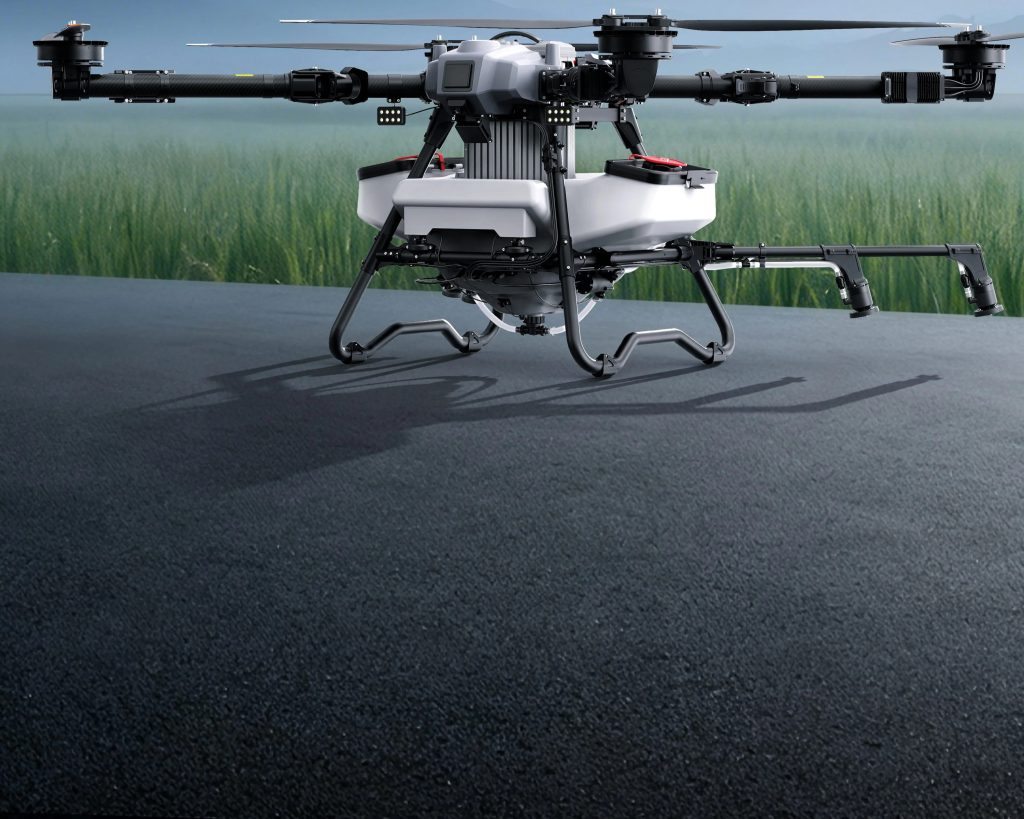
Choosing an orchard spraying drone is not simply about selecting the largest tank or the most powerful aircraft. Different fruit trees, orchard sizes, planting densities, terrain conditions, and spraying requirements can require very different drone configurations.
For farmers, orchard owners, agricultural contractors, and distributors, the right drone should provide a practical balance between payload capacity, spraying performance, flight time, maneuverability, safety, and operating cost.
Why Choosing the Right Orchard Spraying Drone Matters
Fruit orchards are more complicated than open agricultural fields.
Apple, citrus, mango, avocado, peach, pear, and other fruit trees can have different:
-
Tree heights
-
Canopy densities
-
Row spacing
-
Branch structures
-
Planting patterns
-
Terrain requirements
A drone that works efficiently in a flat citrus orchard may not be the best choice for a steep mountain orchard.
Before buying, it is important to understand the actual working environment.
1. Start With Your Orchard Size
The first question should be:
How large is the orchard?
A small orchard usually does not need the same equipment as a large commercial farm.
Small Orchards
For small orchards, a compact 5–10 L spraying drone may be sufficient.
Advantages include:
-
Lower initial investment
-
Easier transportation
-
Better maneuverability
-
Lower battery requirements
-
Easier operation in narrow areas
The main disadvantage is that the tank may need to be refilled more frequently.
Medium Orchards
For medium-sized commercial orchards, a 10–25 L drone can provide a good balance between capacity and maneuverability.
The buyer should compare:
-
Tank capacity
-
Flight time
-
Spray width
-
Battery life
-
Refilling time
-
Operating cost
Large Commercial Orchards
Large farms and professional spraying contractors may benefit from 25–40 L or larger systems.
The larger payload can reduce the number of refilling cycles and potentially increase daily productivity.
However, larger drones are usually more expensive and require greater battery capacity.
2. Match the Drone to the Fruit Tree
Different fruit trees have different canopy structures.
Apple Trees
Apple orchards often have relatively dense canopies.
Important considerations include:
-
Stable flight
-
Consistent spray distribution
-
Appropriate flight height
-
Suitable nozzle configuration
-
Accurate route planning
Citrus Trees
Citrus trees such as oranges, lemons, and grapefruits can have dense foliage.
A drone should provide stable spraying and good positioning around the tree canopy.
Terrain-following can be particularly useful if the orchard is located on hillsides.
Mango Trees
Mango trees can develop large and dense canopies.
For these orchards, buyers should pay attention to:
-
Flight stability
-
Canopy clearance
-
Spray coverage
-
Obstacle detection
-
Battery endurance
Avocado Trees
Avocado orchards can have irregular tree structures and are sometimes planted on slopes.
A drone with good positioning and terrain-following capabilities can be useful for these conditions.
3. Consider Orchard Row Spacing
Row spacing is often overlooked.
A drone designed for a large open field may not be ideal for a tightly planted orchard.
Before purchasing, measure:
-
Distance between rows
-
Average tree height
-
Canopy width
-
Orchard boundaries
-
Obstacles
If rows are narrow, maneuverability may be more important than simply choosing a larger tank.
4. Choose the Appropriate Tank Capacity
A larger tank means more liquid can be carried per flight.
However:
Larger tank ≠ automatically better drone.
A larger payload also increases aircraft weight and battery consumption.
A general guideline is:
Tank Capacity
|
Typical Application
|
5–10 L
|
Small orchards
|
10–16 L
|
Small/medium orchards
|
16–25 L
|
Medium commercial orchards
|
25–40 L
|
Large commercial orchards
|
40 L+
|
Professional large-scale operations
|
These are general reference ranges rather than strict rules.
The best capacity depends on the actual orchard and operating conditions.
5. Don’t Ignore Flight Time
Flight time is another important specification.
A drone may advertise a maximum flight time under ideal conditions, but actual spraying time can be shorter because the aircraft is carrying liquid.
Ask the manufacturer for:
Actual flight time under spraying load
rather than relying only on unloaded flight time.
Also ask:
-
Flight time with a full tank
-
Battery charging time
-
Recommended number of batteries
-
Battery replacement interval
-
Expected battery cycle life
These factors directly affect daily productivity.
6. Look at the Spraying System
The drone itself is only part of the system.
The spraying system determines how liquid is distributed.
Important specifications include:
-
Pump flow rate
-
Number of nozzles
-
Nozzle type
-
Spray width
-
Flow-control system
-
Filtration system
For dense fruit-tree canopies, the operator should select the spraying configuration according to the crop, product label, weather, and application requirements.
7. Terrain Matters
If your orchard is flat, the requirements may be relatively simple.
Mountain orchards are different.
A drone for sloped terrain should ideally have:
-
Reliable positioning
-
Terrain-following capability
-
Stable flight control
-
Obstacle sensing
-
Appropriate wind resistance
-
Reliable return-to-home functions
These features can make operations easier in areas where tractors and ground equipment have difficulty operating.
8. Obstacle Avoidance Is Important
Orchards can contain many obstacles.
Examples include:
-
Tree branches
-
Power lines
-
Utility poles
-
Buildings
-
Irrigation equipment
-
Fences
Obstacle-sensing technology can help reduce collision risks.
However, no sensor system should be considered completely fail-safe.
Operators should inspect the orchard before flying and maintain appropriate clearance from hazards.
9. Consider Battery and Charging Equipment
A professional orchard operation should consider the complete battery system.
For example:
Battery A → spraying
Battery B → charging
Battery C → ready
Having multiple batteries can reduce downtime.
For remote mountain orchards, the availability of electrical power should also be considered before choosing the equipment.
10. How Much Does an Orchard Spraying Drone Cost?
The price varies considerably depending on capacity and configuration.
A general budget range is:
Drone Capacity
|
Indicative Price Range
|
5–10 L
|
US$2,000–5,000
|
10–16 L
|
US$3,500–7,000
|
16–25 L
|
US$5,000–10,000
|
25–40 L
|
US$8,000–15,000+
|
Professional/customized
|
US$15,000–25,000+
|
These are indicative market budget ranges, not fixed quotations.
The actual price can depend on:
-
Battery quantity
-
Charger
-
Remote controller
-
Sensors
-
Spray system
-
Spare parts
-
OEM customization
-
Packaging
-
Shipping
-
Import duties
-
Local certification
For international buyers, it is important to request a complete quotation that clearly identifies the included configuration.
11. Calculate Cost Per Acre
The purchase price alone does not determine whether a drone is economical.
A better approach is to calculate:
Equipment depreciation + battery cost + electricity + maintenance + labor + transportation
Then divide the total by the actual spraying area.
For example, if a farm spends US$6,000 per year operating and maintaining the drone and sprays 3,000 acres:
US$6,000 ÷ 3,000 = US$2 per acre
This is only an example. Actual costs will vary according to local conditions.
12. Ask for Real Field-Test Data
Before purchasing, do not rely only on advertising specifications.
Ask the manufacturer for actual testing data covering:
-
Orchard type
-
Tree height
-
Canopy density
-
Flight speed
-
Spray width
-
Application rate
-
Battery duration
-
Area covered per hour
-
Refilling time
-
Terrain conditions
Field data from a similar orchard is much more useful than theoretical maximum specifications.
13. Questions to Ask Before Buying
Before placing an order, ask the supplier:
-
What tank capacity is recommended for my orchard?
-
What is the actual flight time with a full payload?
-
What is the effective spray width?
-
What is the pump flow rate?
-
Which nozzle options are available?
-
Does the drone support terrain following?
-
What obstacle-sensing technology is included?
-
How many batteries are included?
-
How long does one battery take to charge?
-
What spare parts are available?
-
What is the warranty period?
-
Is operator training provided?
-
Can OEM customization be provided?
-
Can you provide real orchard field-test results?
-
What is the complete export price and configuration?
FAQ
What size orchard spraying drone is best for a small farm?
A 5–10 L drone can be suitable for many small orchards, particularly when maneuverability and easy transportation are important.
What drone size is suitable for a large commercial orchard?
A 25–40 L or larger system may be more suitable for large operations, especially when reducing refilling time is important.
Is a larger orchard spraying drone always better?
No. Larger drones carry more liquid but can be heavier, more expensive, and more demanding in terms of batteries and transportation.
What is the best drone for mountain orchards?
Look for a model with reliable positioning, terrain-following capability, stable flight control, obstacle awareness, and adequate battery performance.
How much does an orchard spraying drone cost?
Depending on capacity and configuration, a general equipment budget can range from approximately US$2,000 to more than US$25,000.
Can one drone spray different fruit trees?
Yes, one drone can potentially be used for different orchard crops, but flight parameters, nozzle configuration, application rate, and operating procedures may need to be adjusted for each crop.
Conclusion
Choosing the best orchard spraying drone starts with the orchard—not the drone.
First evaluate your fruit tree type, orchard size, row spacing, canopy density, terrain, daily workload, and spraying requirements.
Then compare tank capacity, flight time, spraying technology, terrain following, obstacle sensing, battery systems, maintenance costs, and after-sales support.
For small orchards, compact 5–10 L systems may provide better flexibility. Medium farms may benefit from 10–25 L drones, while large commercial operations can consider 25–40 L or larger professional systems.
Most importantly, ask the manufacturer for real-world orchard test data and a complete equipment quotation before making a purchase.
The best orchard spraying drone is not necessarily the biggest or most expensive model. It is the one that provides the right combination of coverage, productivity, reliability, safety, and operating cost for your specific orchard.
THE END
Support it if you like it







No comments yet