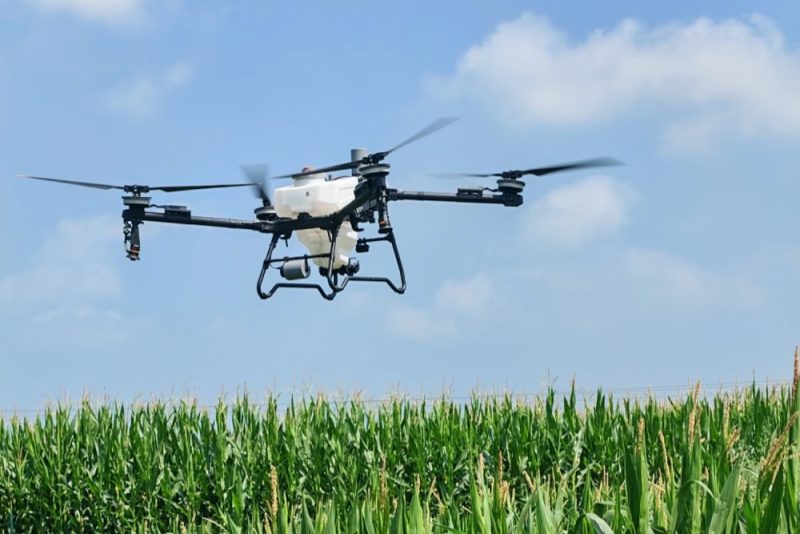



If you are planning to purchase agricultural spraying drones from China, one of the first questions is usually: How much does an agricultural spraying drone cost?
There is no single price that applies to every agricultural drone. The final cost depends on the drone’s payload capacity, spraying system, battery configuration, flight-control technology, radar, remote controller, charger, spare parts, customization requirements, order quantity, and shipping method.
For international buyers, understanding these cost factors is important because the cheapest quotation is not necessarily the most economical option.
This guide explains the main factors that affect agricultural spraying drone prices in China and how buyers can compare different manufacturers more accurately.
1. Typical Agricultural Spraying Drone Price Factors
Agricultural spraying drones in China can range from relatively simple entry-level models to advanced commercial UAV systems.
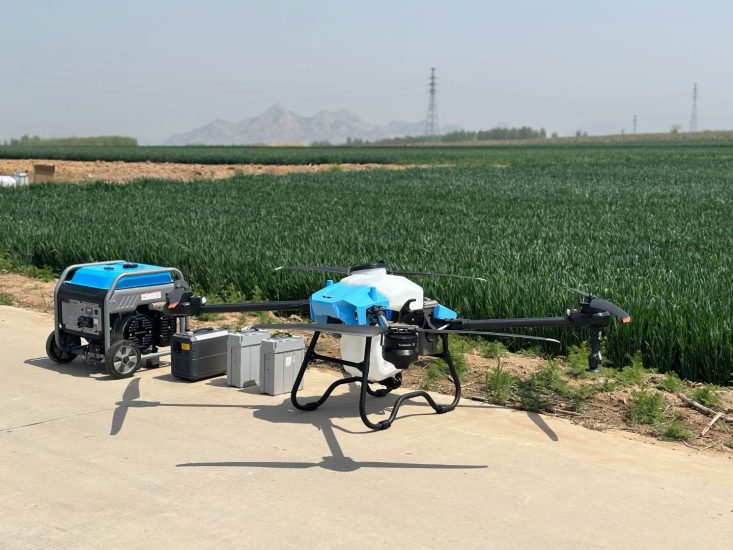
A buyer may encounter substantial price differences between two drones that appear similar in photographs.
The main factors include:
- Tank capacity
- Maximum payload
- Flight-control system
- Motor and propeller configuration
- Battery capacity
- Number of batteries
- Charger
- Pump system
- Flow meter
- Nozzles
- Radar
- Positioning system
- Remote controller
- Obstacle avoidance
- Terrain-following functions
- Spare parts
- Packaging
- OEM customization
- Certification requirements
- Order quantity
Therefore, asking only for the “price of a 30L agricultural drone” is usually not enough to make a meaningful comparison.
You need to compare the complete configuration.
2. Why Agricultural Drone Prices Vary Between Chinese Suppliers
China has a large agricultural UAV manufacturing industry.
However, manufacturers do not necessarily use the same components or provide the same configuration.
For example, two 30L spraying drones may have different:
- Battery capacities
- Motors
- Pumps
- Radar systems
- Flight controllers
- Remote controllers
- Spray widths
- Flow rates
- Safety systems
One supplier may quote a lower price because some accessories are excluded from the standard package.
Another manufacturer may offer a higher initial quotation but include additional batteries, a more powerful charger, better radar, or a larger spare-parts package.
This is why buyers should request a detailed quotation and configuration sheet rather than comparing unit prices alone.
3. Does a Larger Agricultural Drone Always Cost More?
Generally, larger-capacity agricultural drones require more powerful components and therefore tend to cost more.
However, capacity is only one part of the price.
A larger drone may require:
- Larger batteries
- More powerful motors
- Stronger frame structures
- Higher-capacity pumps
- More nozzles
- Larger chargers
- More advanced control systems
For example, a commercial buyer comparing 20L, 30L, and 40L drones should evaluate not only tank capacity but also operating efficiency.
The correct question is:
How much work can the drone complete per hour under actual field conditions?
A more expensive drone may be more economical if it can cover a larger area with fewer battery changes and higher operating efficiency.
4. 10L–20L Agricultural Spraying Drones
Smaller agricultural spraying drones can be suitable for:
- Small farms
- Orchards
- Agricultural service companies
- Demonstration projects
- New distributors
- Training
- Small-scale spraying operations
Their advantages may include:
- Lower initial investment
- Easier transportation
- Lower battery requirements
- Easier operation
- Lower spare-parts cost
However, smaller drones may have lower payload capacity and may require more frequent refilling.
For commercial operators covering large areas, a larger-capacity drone may provide better productivity.
5. 20L–30L Agricultural Spraying Drones
The 20L to 30L category is often attractive to commercial agricultural operators and distributors because it provides a balance between payload capacity, maneuverability, and operating efficiency.
When evaluating a 30L agricultural spraying drone, buyers should check:
- Maximum recommended payload
- Actual flight time with a full tank
- Battery capacity
- Pump performance
- Spray width
- Flow rate
- Number of nozzles
- Radar configuration
- Charging time
- Recommended battery quantity
Do not rely solely on the advertised tank capacity.
A 30L tank does not mean that the drone should always fly with 30L of liquid.
The manufacturer should specify the recommended operating payload under actual conditions.
6. 40L and Larger Agricultural Spraying Drones
Larger agricultural drones are generally designed for demanding commercial applications.
Potential advantages include:
- Larger payload
- Longer spraying cycles
- Higher field efficiency
- Fewer refilling operations
- Greater productivity for large farms
However, they may also require:
- More powerful batteries
- Larger charging systems
- More transportation space
- Higher operator training requirements
- More expensive replacement components
Before buying a large agricultural drone, calculate the total operating cost rather than looking only at the purchase price.
7. Battery Cost Is an Important Part of the Investment
Many first-time buyers focus on the drone itself and overlook battery costs.
Agricultural drones can consume significant battery capacity during commercial operations.
A complete purchasing plan may include:
- Drone
- Flight batteries
- Charger
- Charging accessories
- Spare batteries
- Battery storage equipment
If you buy only one battery, your drone may spend a significant amount of time waiting for charging.
For professional operations, the manufacturer should recommend an appropriate number of batteries based on the expected working schedule.
Ask the supplier:
How many batteries are recommended for one drone during continuous operation?
Also ask about:
- Battery cycle life
- Charging time
- Battery warranty
- Replacement price
- Storage requirements
- Battery management system
8. The Spraying System Can Affect the Price
Not all spraying systems are identical.
Important components include:
- Pumps
- Nozzles
- Flow meters
- Spray pipes
- Valves
- Filters
- Control systems
A professional spraying system should provide stable flow control across different operating conditions.
For some agricultural applications, precise flow control can be more important than simply having a large tank.
When comparing manufacturers, ask for the technical specifications of the spraying system rather than accepting a generic description such as “high-pressure spraying system.”
9. Radar and Navigation Systems
Modern agricultural drones may use multiple sensors and positioning technologies.
Depending on the model, these can include:
- GPS
- RTK positioning
- Obstacle-detection radar
- Terrain-following sensors
- Altitude sensors
These systems can affect both the purchase price and operating capabilities.
Buyers should determine which features are genuinely required for their target market.
For example, a distributor selling drones for orchard applications may have different requirements from a company serving large flat agricultural fields.
10. Remote Controller and Software
The remote controller is another component that can affect the total price.
A professional agricultural UAV controller may provide:
- Large display
- Flight planning
- Route management
- Battery monitoring
- Spray-rate control
- Mapping
- Positioning information
- Safety alerts
- Data recording
Software functions should also be evaluated.
If you are purchasing drones for commercial use, ask whether the software is included in the quoted price or whether additional fees apply.
11. Spare Parts Should Be Included in Your Cost Calculation
A commercial drone operation needs spare parts.
Common replacement items may include:
- Propellers
- Motors
- Pumps
- Nozzles
- Filters
- Spray components
- Landing components
- Batteries
- Chargers
- Electronic modules
For distributors, purchasing a spare-parts package together with the initial order can be useful.
The manufacturer can recommend which components are most likely to require replacement.
This can reduce downtime and improve after-sales service in your local market.
12. OEM Agricultural Drone Pricing
If you want to sell agricultural drones under your own brand, the cost structure will be different from buying standard products.
OEM costs may include:
- Logo printing
- Product labels
- Custom packaging
- User manuals
- Customized colors
- Remote-controller branding
- Product stickers
- Software customization
- Product modifications
- Special accessories
Some manufacturers may have a relatively low OEM MOQ, while others may require a larger order.
Before starting an OEM project, ask for a complete cost breakdown.
You should also clarify whether customization requires a separate development fee.
13. ODM Projects Usually Require More Investment
ODM is different from simple OEM branding.
With OEM, you may purchase an existing drone and customize branding or selected components.
With ODM, the manufacturer may help develop or modify the product itself.
ODM projects can involve:
- Mechanical design
- Electronic development
- Software development
- Prototype production
- Testing
- Tooling
- Certification
- Field testing
The investment can therefore be significantly higher.
For a new distributor, starting with an existing proven model and adding basic OEM customization may be more practical than immediately developing a completely new drone.
14. How Order Quantity Affects Agricultural Drone Pricing
Manufacturing costs can decrease as order volume increases.
A supplier may provide different prices for:
- 1 sample unit
- 5 units
- 10 units
- 50 units
- 100 units
- Larger OEM orders
However, buyers should not assume that placing a very large order automatically produces the best business result.
Before increasing quantity, test the product in the target market.
A sample order can help you evaluate:
- Product performance
- Customer feedback
- Local regulations
- Spare-parts demand
- After-sales requirements
- Actual operating efficiency
Then you can negotiate a larger order with better information.
15. Shipping Costs From China
The factory quotation is only part of your landed cost.
International buyers should consider:
Product cost + packaging + inland transportation + export handling + freight + insurance + customs clearance + import taxes + local delivery
The exact cost depends on the destination country and transportation method.
Agricultural drones may also contain lithium batteries, which can affect transportation arrangements.
Before purchasing, tell the manufacturer:
- Destination country
- Destination city
- Quantity
- Drone model
- Battery quantity
- Required delivery method
Then request a suitable logistics quotation.
16. Why Battery Shipping Requires Extra Attention
Lithium batteries may have transportation requirements that differ from ordinary cargo.
Depending on the battery and destination, buyers may need appropriate documentation, packaging, labeling, and transportation arrangements.
Do not assume that any logistics company can handle the shipment in the same way as normal electronic products.
An experienced agricultural drone exporter should be able to provide the relevant product and battery documentation needed for international logistics.
Always confirm transportation requirements before placing a large order.
17. How to Compare Three Agricultural Drone Quotations
Suppose three Chinese manufacturers provide quotations for similar-capacity drones.
Do not immediately select the lowest price.
Create a comparison table:
| Item | Supplier A | Supplier B | Supplier C |
|---|---|---|---|
| Tank capacity | Check | Check | Check |
| Recommended payload | Check | Check | Check |
| Flight time | Check | Check | Check |
| Battery | Check | Check | Check |
| Charger | Check | Check | Check |
| Pump | Check | Check | Check |
| Flow meter | Check | Check | Check |
| Radar | Check | Check | Check |
| Remote controller | Check | Check | Check |
| Spare parts | Check | Check | Check |
| Warranty | Check | Check | Check |
| OEM | Check | Check | Check |
| Lead time | Check | Check | Check |
| Shipping | Check | Check | Check |
This makes it easier to identify differences that are hidden behind the headline price.
18. Questions to Ask Before Buying
Before requesting a final quotation, send the manufacturer a clear list of requirements.
For example:
Product requirement
- Intended crop
- Farm size
- Required payload
- Expected operating hours
- Spraying requirements
- Target country
Commercial requirement
- Initial order quantity
- Future annual volume
- OEM requirements
- Target delivery date
Technical requirement
- Battery configuration
- Charger
- Navigation system
- Radar
- Remote controller
- Spare parts
This allows the manufacturer to recommend an appropriate configuration instead of sending a generic price list.
19. How to Reduce Agricultural Drone Purchasing Costs
There are several ways to control the total investment without simply choosing the cheapest drone.
Choose the correct capacity
Do not purchase a larger drone than your application requires.
Standardize components
Using the same drone model across your distribution network can simplify spare-parts management.
Negotiate complete packages
Ask manufacturers to quote the drone, batteries, chargers, accessories, and spare parts together.
Test before bulk purchasing
A sample can prevent much larger losses caused by an unsuitable product.
Plan spare parts
Buying critical spare parts together with the initial shipment can reduce future shipping costs.
Discuss OEM early
If you want your own brand, discuss customization before production starts.
20. What Is the Best Agricultural Drone for the Money?
The “best value” agricultural drone is not necessarily the cheapest model.
A better measurement is:
Total Cost ÷ Expected Working Output
You should consider:
- Purchase price
- Working efficiency
- Battery life
- Maintenance
- Spare parts
- Downtime
- Operator requirements
- Product lifespan
- Warranty
- Technical support
For example, a drone with a slightly higher purchase price may provide better long-term value if it has reliable components, better flight stability, easier maintenance, and stronger factory support.
21. How to Find a Reliable Agricultural Drone Manufacturer in China
Price should be only one part of your supplier evaluation.
A reliable manufacturer should be able to demonstrate:
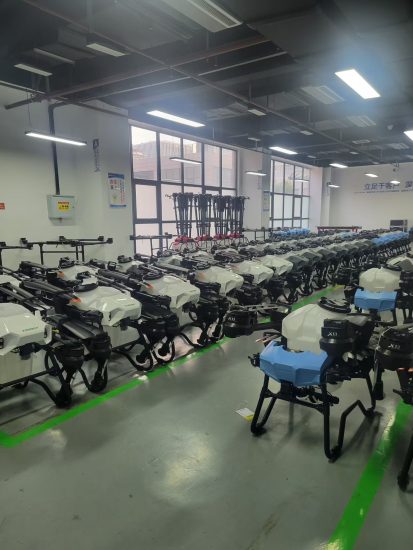
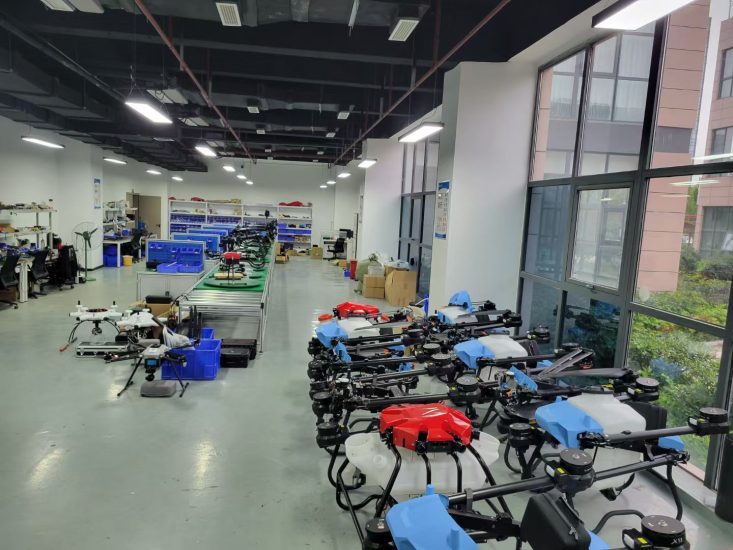
- Actual manufacturing capability
- Stable product specifications
- Quality-control procedures
- Technical expertise
- Product testing
- Spare-parts supply
- OEM/ODM support
- Export experience
- Documentation
- Warranty
- After-sales service
Ask for detailed specifications, test a sample, verify the manufacturer, and compare complete quotations.
This approach is much safer than choosing a supplier based only on the lowest online price.
Conclusion
So, how much does an agricultural spraying drone cost in China?
The answer depends on the complete configuration and intended application.
Tank capacity, battery system, spraying equipment, navigation technology, radar, controller, spare parts, OEM requirements, order quantity, and shipping arrangements can all influence the final investment.
For international buyers, the most important step is to compare complete solutions rather than headline prices.
Before ordering, define your target market, crop application, required payload, expected quantity, customization requirements, and delivery destination. Then request a detailed quotation from a manufacturer that can provide technical documentation, product testing, spare parts, warranty, and long-term support.
For distributors and agricultural service companies, a reliable Chinese agricultural drone manufacturer can become more than a product supplier. With the right technical support and OEM cooperation, the manufacturer can become a long-term supply-chain partner for developing an agricultural UAV business.


No comments yet