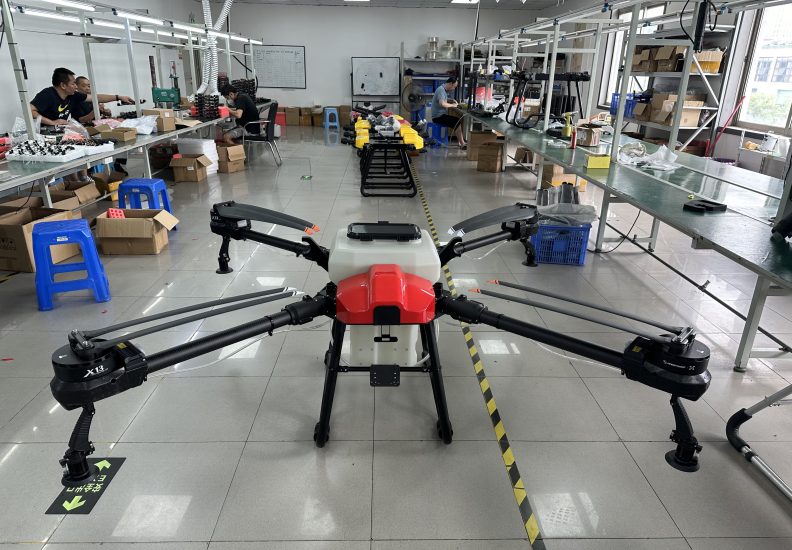


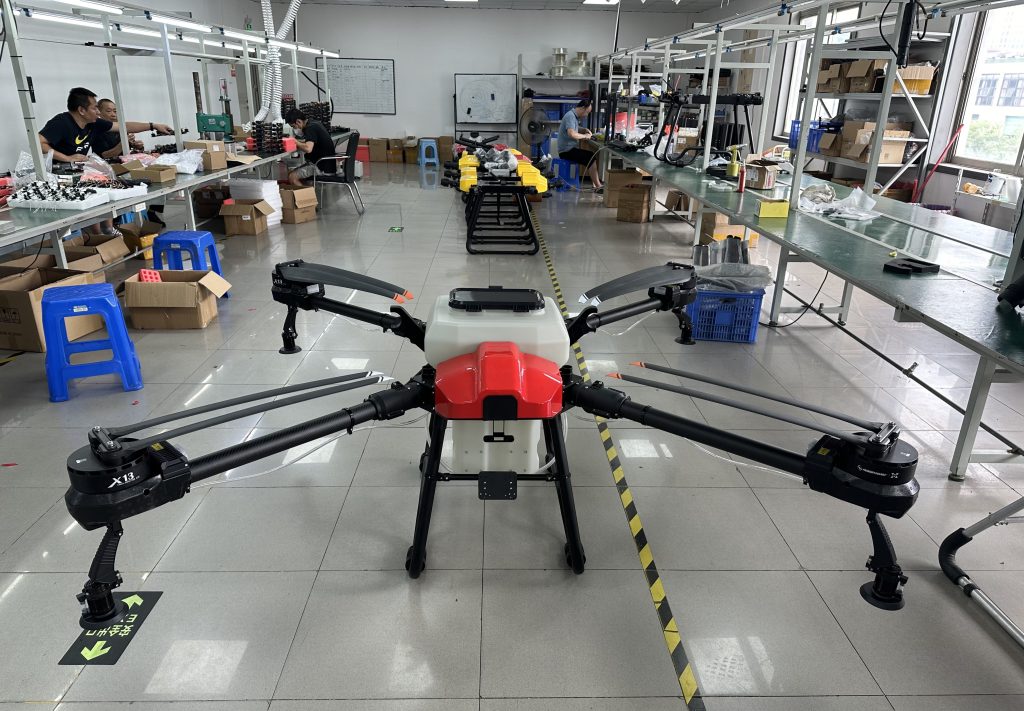
For international buyers, one of the first questions when sourcing an agricultural spraying drone from China is simple: How much does an agricultural spraying drone cost?
The answer is not a single fixed number. Agricultural drone prices vary considerably depending on tank capacity, spraying system, flight-control technology, battery configuration, charger, payload, sensors, automation functions, customization, order quantity, and after-sales services.
A low-priced drone may not necessarily provide the lowest total cost. Conversely, a more expensive model may offer better productivity, battery management, spraying accuracy, spare-parts support, and long-term operating value.
This guide explains the main factors that determine agricultural spraying drone prices in China and how international buyers can calculate the real purchasing cost.
1. What Determines the Price of an Agricultural Spraying Drone?
The factory price is influenced by the complete configuration of the drone.
The main factors include:
-
Tank capacity
-
Maximum payload
-
Motor and propulsion system
-
Flight controller
-
Navigation system
-
Spraying pump
-
Nozzle system
-
Battery capacity
-
Number of batteries
-
Charger
-
Obstacle-detection sensors
-
Remote controller
-
Mapping and route-planning functions
-
Spare parts
-
Packaging
-
OEM customization
-
Order quantity
-
Technical support
Therefore, two agricultural spraying drones that look similar in photographs can have significantly different prices.
2. Tank Capacity Affects the Overall Cost
Tank capacity is one of the most visible differences between agricultural spraying drones.
A small-capacity drone may be suitable for:
-
Small farms
-
Trial operations
-
Specialized crops
-
Limited-access fields
Larger-capacity models are generally intended for higher-volume agricultural operations.
However, increasing tank capacity also means that the drone must carry more liquid, which can increase the requirements for:
-
Motors
-
Propellers
-
Battery capacity
-
Frame strength
-
Flight-control systems
Therefore, buyers should select tank capacity according to actual agricultural requirements rather than simply choosing the largest available model.
3. Battery Configuration Has a Major Impact on Cost
The battery is one of the most important components in the total purchase price.
An agricultural drone may require one or more high-capacity batteries for normal operations.
When comparing quotations, check:
-
Battery capacity
-
Battery voltage
-
Battery quantity
-
Battery weight
-
Charging time
-
Expected service life
-
Battery management system
-
Warranty
-
Replacement price
A supplier quotation that appears inexpensive may become considerably more expensive after adding the required batteries and chargers.
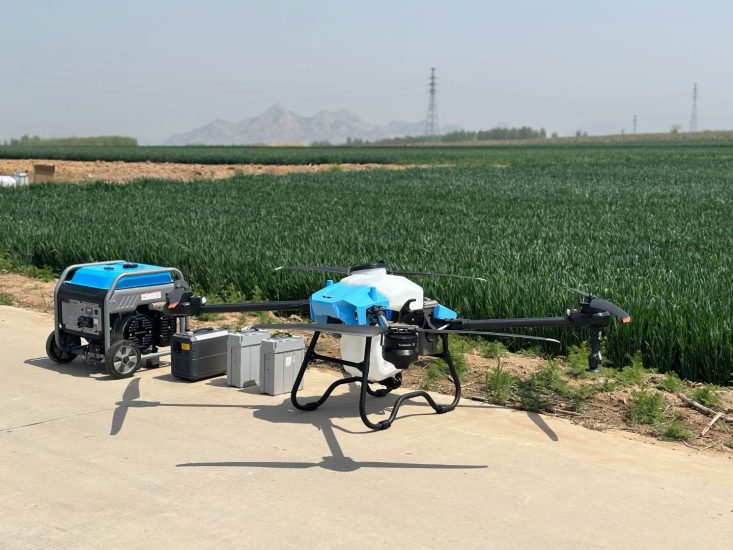
For this reason, always request the price of a complete operating package, not only the drone body.
4. The Charger Should Be Included in Your Calculation
The charger can significantly affect the purchasing cost, especially for professional agricultural operations.
Different configurations may include:
-
Standard charger
-
Fast charger
-
Intelligent charger
-
Multi-battery charger
-
High-power charging system
A professional operator may need multiple batteries and efficient charging to minimize downtime between spraying operations.
When comparing suppliers, ask whether the quotation includes the charger and how many batteries can be charged at the same time.
5. Spraying System Quality Influences Price
The spraying system is critical because the main purpose of an agricultural spraying drone is to apply agricultural liquids efficiently.
The system may include:
-
Pump
-
Nozzles
-
Filters
-
Pipes
-
Flow-control system
-
Pressure-control system
-
Tank
-
Spray boom or spray outlets
Higher-quality components may increase the initial price but can provide advantages in reliability and maintenance.
Ask suppliers for detailed information about:
-
Pump flow rate
-
Number of nozzles
-
Nozzle type
-
Flow-control method
-
Filter design
-
Replacement-part prices
Do not compare spraying drones only by tank capacity.
6. Flight-Control Technology Can Change the Price
Different drones have different levels of automation.
Basic models may provide essential manual flight and spraying functions.
More advanced models may include:
-
Automatic route planning
-
GPS positioning
-
Automatic return-to-home
-
Terrain following
-
Obstacle detection
-
Automatic altitude control
-
Route recording
-
Variable spraying control
-
Field mapping
-
Remote monitoring
These technologies can increase the cost of the aircraft.
However, automation may also reduce operator workload and improve operational efficiency, depending on the farming environment.
7. Sensors and Obstacle Detection
Sensors are another factor that can affect price.
Depending on the configuration, agricultural drones may use sensors for:
-
Obstacle detection
-
Altitude measurement
-
Positioning
-
Terrain detection
-
Navigation assistance
If you operate in orchards, near buildings, or in areas with significant obstacles, sensor configuration may be more important than it is for large, open fields.
Buyers should therefore pay for the functions they actually need rather than adding every available option.
8. Remote Controller Configuration
The remote controller is an essential part of the operating system.
Depending on the model, it may provide:
-
Integrated display
-
Touchscreen
-
Real-time flight information
-
Battery monitoring
-
Route planning
-
Spraying control
-
Map display
-
Warning notifications
Ask whether the controller is included in the quoted price.
Also confirm whether the software interface is available in the language required by your operators.
9. The Number of Batteries You Buy Matters
One battery may not be sufficient for commercial operations.
If you need continuous spraying, additional batteries may be necessary.
For example, an operating package could include:
-
Drone
-
Remote controller
-
Several batteries
-
Charger
-
Spare propellers
-
Spare nozzles
-
Filters
-
Pump components
The price of this complete package can be much higher than the advertised price of the drone alone.
Therefore, compare suppliers based on the same configuration.
10. Factory Price vs. Final Landed Cost
A Chinese factory quotation is not necessarily the final cost for an overseas buyer.
Your final landed cost may include:
Factory Price + Packaging + Domestic Transportation + International Freight + Insurance + Import Duties + Taxes + Local Fees
Depending on the transaction terms, some costs may already be included in the supplier’s quotation.
This is why buyers should confirm the Incoterm before comparing prices.
Common commercial terms may include:
-
EXW
-
FOB
-
CIF
-
DAP
-
DDP
The exact responsibilities for freight, insurance, customs clearance, and taxes depend on the agreed trade term.
11. Shipping Batteries Requires Additional Attention
Agricultural drone batteries may contain lithium-ion cells.
International transportation of lithium batteries can involve specific packaging and documentation requirements, particularly for air transportation.
Before ordering, ask the supplier:
-
How are batteries packaged?
-
What battery documentation is available?
-
Can the supplier support international battery transportation?
-
Which shipping methods are available?
-
Is special packaging required?
Do not assume that the transportation cost of the drone and the transportation cost of the batteries are identical.
12. OEM and Private-Label Customization Adds Cost
If you want to sell agricultural spraying drones under your own brand, customization can affect the final price.
Possible customization includes:
-
Logo
-
Product labels
-
Packaging
-
User manuals
-
Product colors
-
Spare-parts packaging
-
Remote-controller branding
The manufacturer may also have a minimum order quantity for customized production.
Before requesting an OEM quotation, prepare your requirements clearly.
13. Order Quantity Can Affect the Unit Price
Manufacturers normally quote different prices for different order quantities.
For example, a sample order may have a higher unit cost than a production order because of:
-
Assembly costs
-
Testing costs
-
Packaging
-
Administrative costs
-
Customization
-
Production efficiency
If you plan to purchase multiple units, ask the supplier to provide tiered pricing.
For example:
Quantity |
Unit Price |
Configuration |
|---|---|---|
1 unit |
Quotation |
Standard |
5 units |
Quotation |
Standard |
10 units |
Quotation |
Standard |
50 units |
Quotation |
Standard/OEM |
This makes it easier to understand how volume affects the purchasing cost.
14. Don’t Compare Different Configurations
One of the most common mistakes when comparing Chinese suppliers is comparing different configurations.
Supplier A may quote:
-
Drone only
-
One battery
-
Standard charger
Supplier B may quote:
-
Drone
-
Multiple batteries
-
Fast charger
-
Spare parts
-
Advanced sensors
Supplier B will naturally appear more expensive.
The correct approach is to create a standardized RFQ.
Ask every manufacturer to quote exactly the same configuration.
15. Ask for a Complete Quotation
A professional quotation should clearly identify what is included.
Ask the supplier to specify:
Drone
-
Model
-
Tank capacity
-
Payload
-
Weight
-
Main specifications
Battery
-
Quantity
-
Capacity
-
Voltage
-
Warranty
Charger
-
Quantity
-
Charging capacity
-
Input requirements
Spare Parts
-
Propellers
-
Nozzles
-
Filters
-
Pumps
-
Other recommended components
Commercial Terms
-
Unit price
-
MOQ
-
Lead time
-
Incoterm
-
Payment terms
-
Warranty
This prevents unexpected costs later.
16. Calculate Total Cost of Ownership
The initial purchase price is only part of the economics.
For commercial operations, consider:
Purchase Cost + Batteries + Maintenance + Spare Parts + Labor + Charging + Transportation + Downtime
For example, a drone with inexpensive batteries but short battery life may have a higher long-term cost than a more expensive model with better battery durability.
Similarly, a cheaper pump may require more frequent replacement.
The correct question is therefore not:
Which drone has the lowest price?
A better question is:
Which drone provides the best operating value for my agricultural application?
17. Productivity Is More Important Than Purchase Price Alone
For professional users, productivity can have a major effect on the economics of the equipment.
Consider:
-
Area covered per operating cycle
-
Tank refill time
-
Battery replacement time
-
Charging time
-
Spraying speed
-
Required spray volume
-
Number of operators
-
Field accessibility
A drone with a higher purchase price may make economic sense if it significantly reduces operating time and labor requirements.
However, productivity claims should always be verified under realistic field conditions.
18. Check Warranty and After-Sales Costs
A low purchase price does not provide much value if technical support is poor.
Before buying, ask:
-
What is the warranty period?
-
Which components are covered?
-
Are batteries covered?
-
Are chargers covered?
-
How are warranty claims handled?
-
Who pays shipping for replacement components?
-
Is remote technical support available?
-
How quickly can spare parts be supplied?
These factors should be included when comparing suppliers.
19. Spare Parts Are Part of the Real Cost
Before purchasing, request a spare-parts price list.
Important components may include:
-
Propellers
-
Motors
-
Pumps
-
Nozzles
-
Filters
-
Pipes
-
Batteries
-
Chargers
-
Electronic components
If you operate in another country, consider maintaining a local stock of commonly needed spare parts.
For distributors, spare-parts availability can be an important factor in customer satisfaction.
20. Why Very Low Prices Require Extra Verification
If one supplier’s quotation is dramatically lower than comparable manufacturers, investigate the reason.
Possible explanations include:
-
Smaller battery
-
Lower payload
-
Simpler spraying system
-
Fewer sensors
-
Different controller
-
Fewer included accessories
-
Lower-quality components
-
Drone-only quotation
A low price is not necessarily a problem, but the configuration must be compared carefully.
Ask the supplier to provide a complete specification sheet and itemized quotation.
21. How to Request an Agricultural Drone Quotation
A good RFQ can make price comparison much easier.
You can provide information such as:
Product: Agricultural Spraying Drone
Application: Crop spraying
Required tank capacity: [Your requirement]
Required battery quantity: [Your requirement]
Destination country: [Country]
Quantity: [Number of units]
Required customization: [Yes/No]
Shipping term: [EXW/FOB/CIF/DAP/DDP]
Required documents: [List]
Then ask the manufacturer to provide:
-
Product specification
-
Unit price
-
Battery price
-
Charger price
-
Spare-parts price
-
OEM cost
-
Packaging details
-
Lead time
-
Warranty
-
Shipping quotation
This creates a more accurate comparison.
22. Questions to Ask Before Accepting the Price
Before making payment, ask:
-
Does the quotation include the remote controller?
-
How many batteries are included?
-
Is the charger included?
-
Are spare parts included?
-
What is the warranty period?
-
What is the battery warranty?
-
What is the production lead time?
-
What is the package size and weight?
-
Which Incoterm is being quoted?
-
What documents will be provided?
-
What is the spare-parts price?
-
Is technical training included?
-
Is OEM customization available?
-
Can the drone be tested before shipment?
Getting these answers in writing can prevent misunderstandings.
Frequently Asked Questions
How much does an agricultural spraying drone cost in China?
There is no single price because agricultural drones vary significantly in tank capacity, payload, battery system, spraying technology, sensors, controller, automation, and accessories. Buyers should request a quotation based on a specific configuration.
Does the price include batteries?
Not always. Some suppliers quote the aircraft separately from batteries and chargers. Always confirm the exact contents of the quotation.
Are larger agricultural drones always more expensive?
Generally, larger-capacity systems can require more powerful motors, batteries, structural components, and spraying equipment, which can increase the price. However, the final cost depends on the complete configuration.
Should I buy the cheapest drone?
Not necessarily. The lowest initial price may result in higher long-term costs if the drone has poor battery durability, limited spare-parts availability, weak technical support, or lower productivity.
How can I get an accurate quotation from a Chinese manufacturer?
Provide the manufacturer with your required tank capacity, application, battery quantity, destination country, order quantity, customization requirements, and preferred shipping terms. Ask for a complete itemized quotation.
Is OEM customization expensive?
The cost depends on the type and quantity of customization. Simple logo or packaging customization may be relatively straightforward, while extensive product or software changes can require additional development and production costs.
Conclusion
The cost of an agricultural spraying drone in China depends on much more than the aircraft itself.
When comparing suppliers, consider the complete package:
Drone + Spraying System + Batteries + Charger + Controller + Spare Parts + Shipping + Taxes + After-Sales Support
A professional buyer should compare identical configurations and evaluate total cost of ownership rather than choosing the lowest advertised factory price.
The best purchasing decision is the one that balances product performance, reliability, operating efficiency, battery costs, spare-parts availability, technical support, and total landed cost.
Before placing a large order, request detailed specifications, compare multiple manufacturers, test a sample where practical, and confirm all commercial and technical terms in writing. This approach can significantly reduce sourcing risks when purchasing agricultural spraying drones from China.
THE END


No comments yet