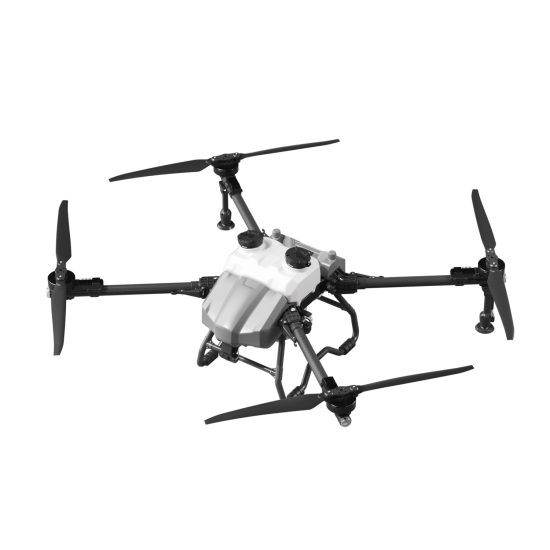


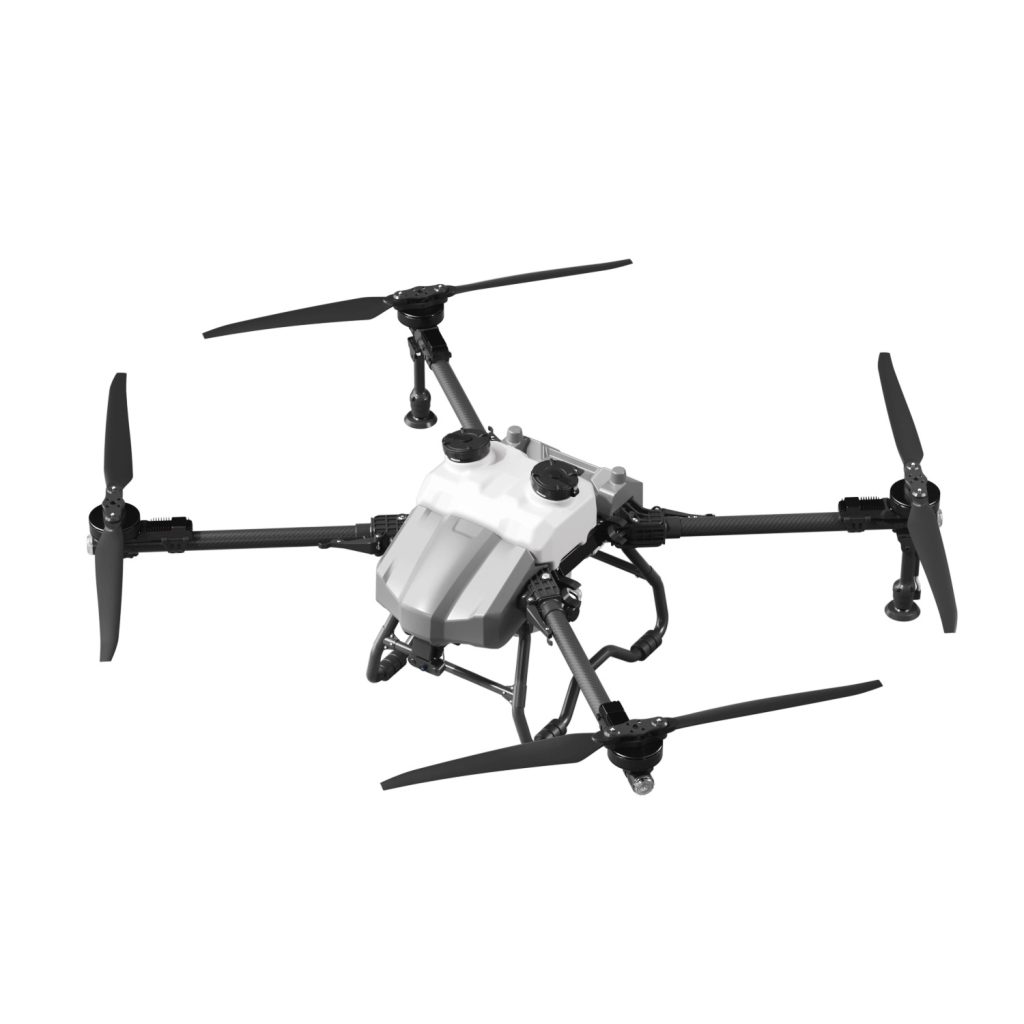
Agricultural drones have transformed modern farming by providing faster and more precise crop protection solutions. One of the most common questions farmers, agricultural cooperatives, and distributors ask is:
How much area can an agricultural drone cover per hour?
The answer depends on several factors, including drone payload, spray width, flight speed, battery performance, and field conditions. Understanding these factors can help maximize productivity and improve return on investment.
Average Coverage of Agricultural Drones
Different drone sizes offer different working capacities.
20L Agricultural Drone
Typical coverage:
- 8-15 hectares per hour
Suitable for:
- Vegetable farms
- Orchards
- Small rice fields
30L-40L Agricultural Drone
Typical coverage:
- 15-25 hectares per hour
Suitable for:
- Wheat farms
- Corn fields
- Medium-sized farms
50L-70L Agricultural Drone
Typical coverage:
- 25-40 hectares per hour
Suitable for:
- Large commercial farms
- Agricultural cooperatives
- Crop protection service companies
High-capacity drones reduce refill frequency and improve daily productivity.
Factors Affecting Working Efficiency
Payload Capacity
Larger tanks allow longer operation times and fewer interruptions.
Benefits include:
- Reduced downtime.
- Increased spraying efficiency.
- Lower labor costs.
Flight Speed
Higher speed can improve productivity, but excessive speed may affect spraying quality.
Maintaining a balance between speed and droplet coverage is important for achieving optimal results.
Spray Width
A wider spray width allows more land to be covered in each flight path.
Modern agricultural drones can provide:
- Uniform coverage.
- Reduced overlap.
- Improved efficiency.
Battery Performance
Battery life directly impacts operating hours.
To increase productivity:
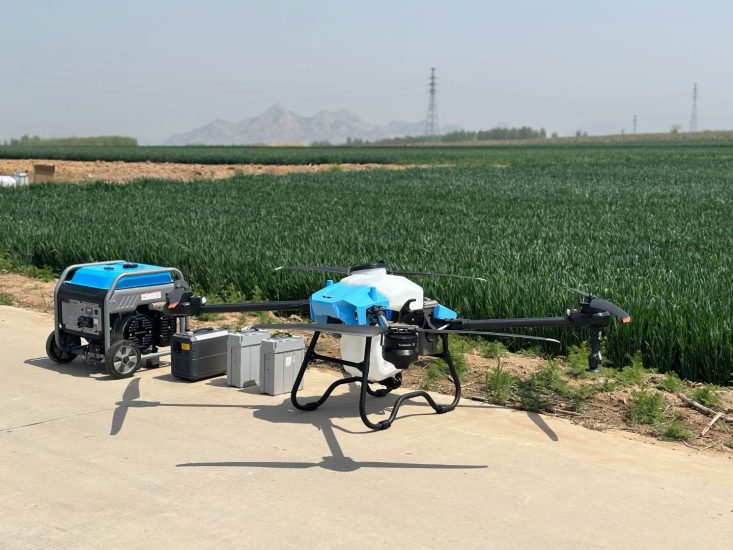
- Use multiple battery sets.
- Employ fast chargers.
- Replace batteries quickly during operation.
Continuous operation significantly increases daily coverage.
Terrain and Crop Type
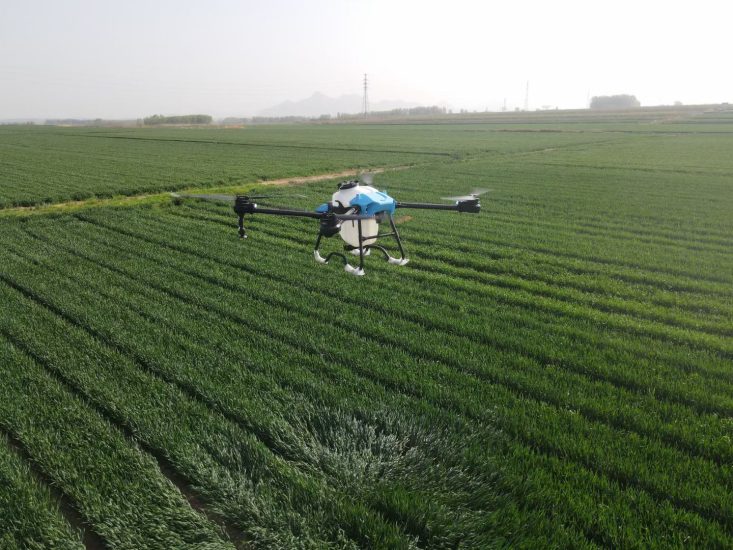
Flat fields allow higher efficiency, while orchards and hilly terrain may require slower speeds and more precise flight paths.
Crop density also influences spray requirements.
How to Improve Agricultural Drone Efficiency
Use Intelligent Flight Planning
Automatic route planning helps:
- Minimize missed areas.
- Reduce overlapping.
- Save chemicals.
- Increase operating speed.
Smart flight systems also reduce operator fatigue.
Choose RTK Positioning Technology
RTK systems provide centimeter-level accuracy, allowing drones to follow precise routes and improve spraying consistency.
Advantages include:
- Better coverage.
- Reduced waste.
- Improved productivity.
Reduce Refill Time
Using large-capacity tanks and efficient mixing systems helps minimize interruptions.
Many professional users prepare:
- Multiple batteries.
- Additional charging stations.
- Backup liquid tanks.
This allows continuous operation throughout the day.
Maintain the Spray System
Regular maintenance ensures:
- Stable flow rate.
- Uniform droplet size.
- Better crop coverage.
Operators should inspect:
- Nozzles.
- Pumps.
- Filters.
- Hoses.
Preventive maintenance helps maintain high efficiency.
Use Multi-Function Agricultural Drones
Modern agricultural drones support:
- Pesticide spraying.
- Fertilizer spreading.
- Seed broadcasting.
One machine can perform multiple tasks, improving equipment utilization and reducing investment costs.
Which Users Need High-Efficiency Agricultural Drones?
High-productivity drones are ideal for:
- Large farms.
- Agricultural cooperatives.
- Crop protection service companies.
- Government projects.
- Agricultural equipment distributors.
These users benefit from reduced labor costs and increased operational efficiency.
Why High-Capacity Agricultural Drones Are Worth the Investment
Compared with manual spraying and traditional machinery, agricultural drones provide:
- Faster operation.
- Lower water consumption.
- Reduced chemical waste.
- Better crop protection.
- Higher yields.
- Lower labor requirements.
For commercial farming operations, high-efficiency drones deliver significant long-term value.
Looking for High-Performance Agricultural Drone Solutions?
Whether you are a farm owner, distributor, or agricultural service provider, selecting the right drone can greatly improve productivity.
We provide:
- High-capacity agricultural drones.
- Spraying and fertilizer spreading systems.
- Seed broadcasting solutions.
- OEM and ODM customization.
- Technical support and spare parts supply.
- Global distribution cooperation.
Contact us today to receive professional recommendations and competitive factory prices for your agricultural drone projects.
FAQ
How many hectares can an agricultural drone cover per hour?
Depending on payload and operating conditions, agricultural drones typically cover 8 to 40 hectares per hour.
What affects agricultural drone efficiency?
Major factors include payload capacity, spray width, battery performance, flight speed, and field conditions.
Can RTK technology improve spraying efficiency?
Yes. RTK positioning provides more accurate flight paths and reduces overlap and chemical waste.
Do larger drones cover more land?
Yes. Larger payload drones require fewer refills and can significantly increase daily productivity.
Can agricultural drones spread fertilizer and seeds?
Yes. Many multi-function drones support spraying, fertilizer spreading, and seed broadcasting.
Do you provide OEM and custom agricultural drones?
Yes. OEM and ODM services are available for distributors, dealers, and agricultural projects worldwide.


No comments yet