



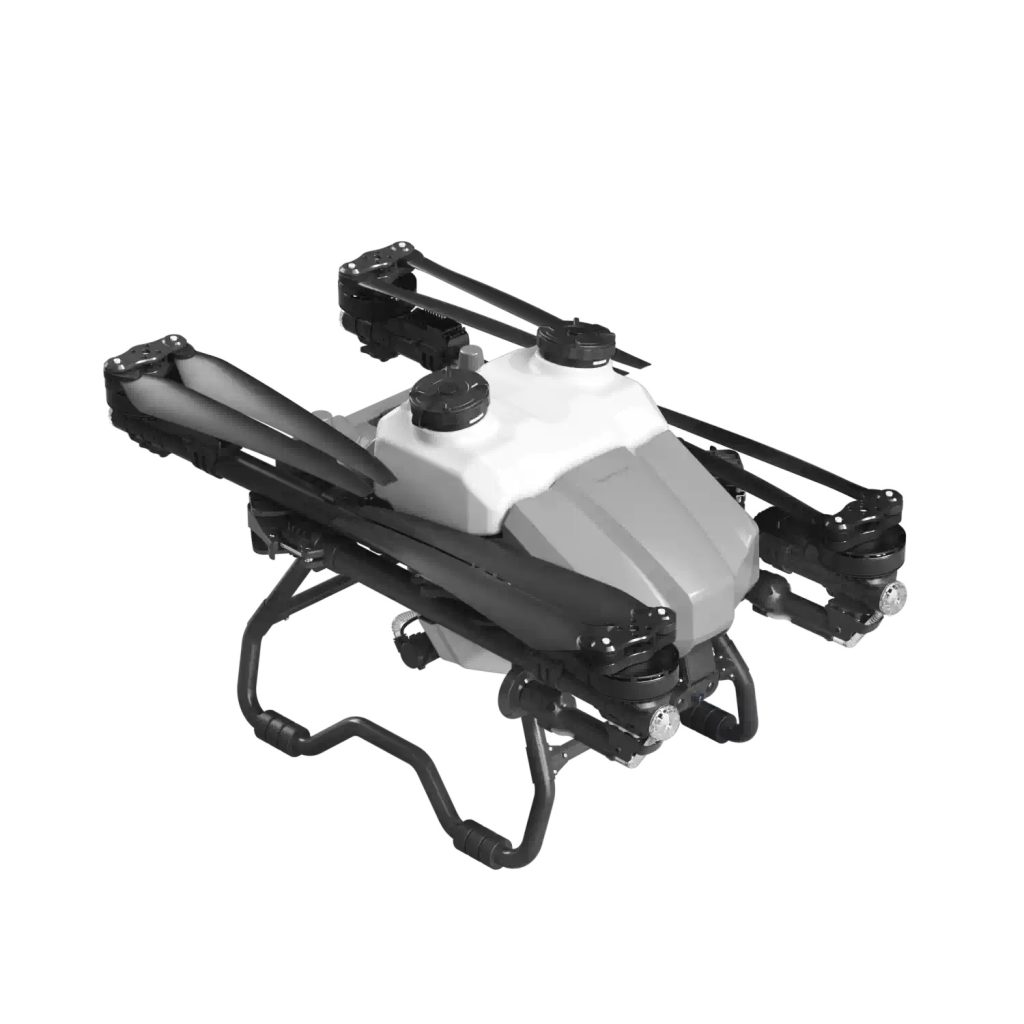
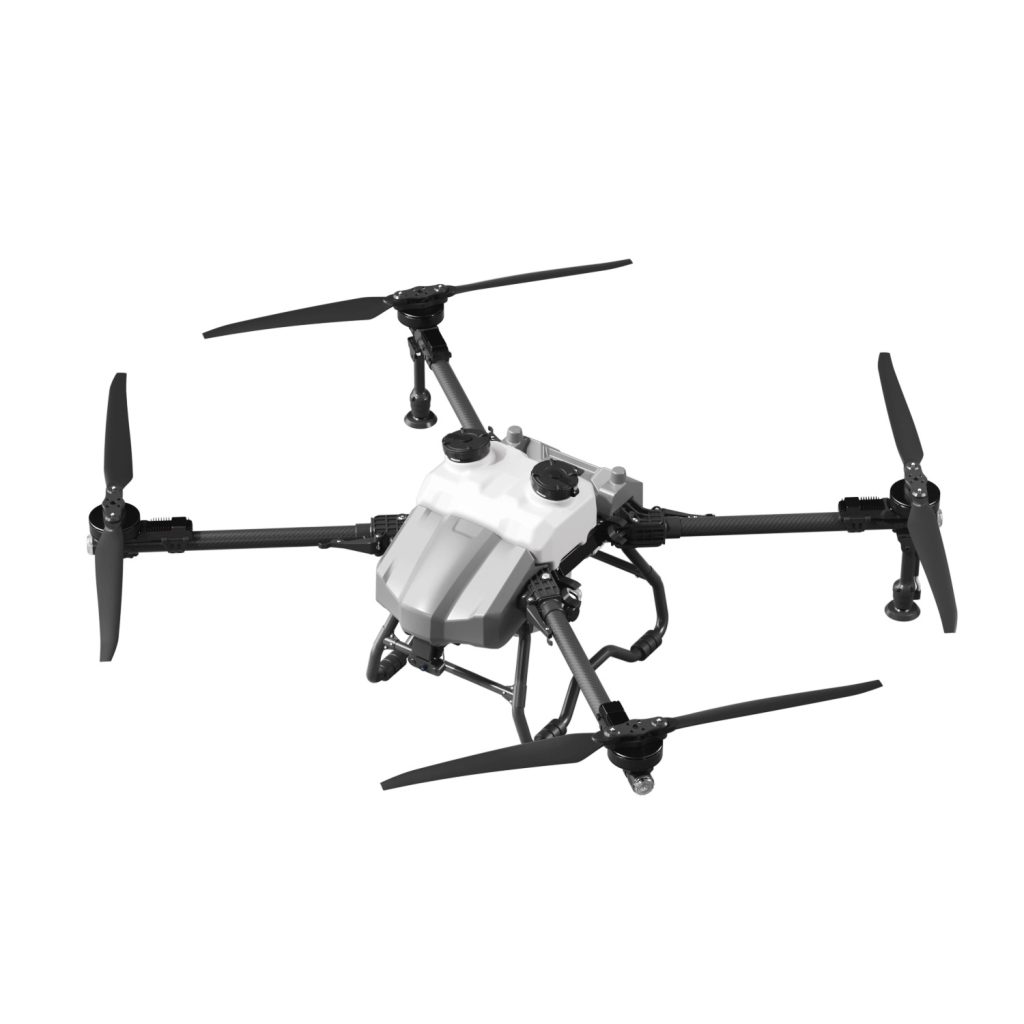

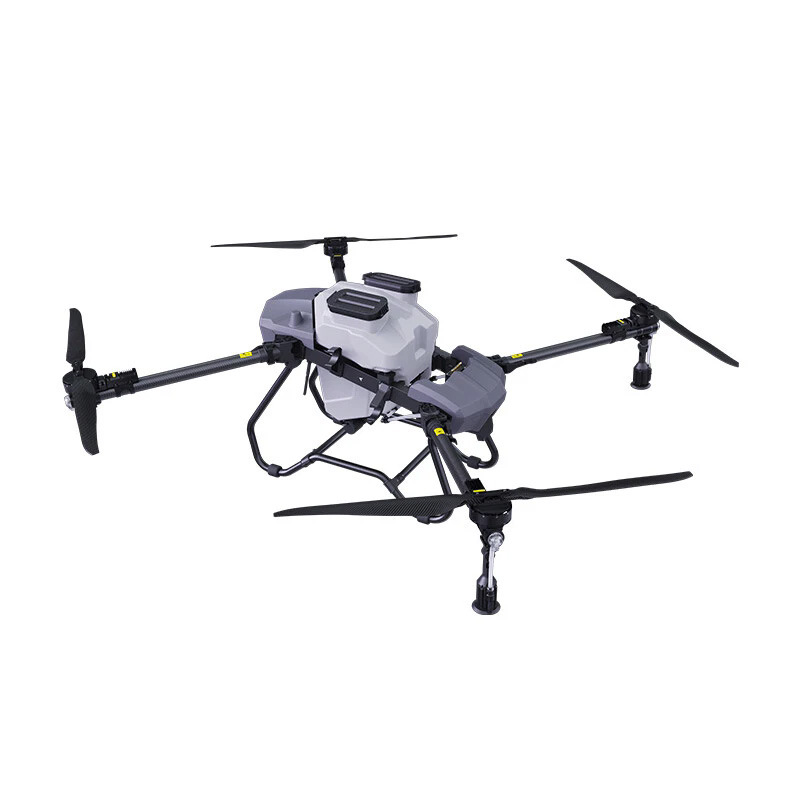
In the evolving landscape of precision agriculture, the 30-liter (30L) payload has emerged as the “golden standard” for medium-to-large scale farming operations. It offers a perfect balance between physical size and operational capacity. However, a critical debate persists among agronomists and fleet managers: Should you prioritize maximum payload capacity or extended battery endurance?
The answer is not absolute. It heavily depends on the topography of your land. An operator managing thousands of flat acres in the Great Plains has entirely different economic drivers than a farmer navigating steep, terraced hillsides in Southeast Asia or Latin America.
This analysis breaks down the economic and operational trade-offs between heavy payload and long endurance configurations for 30L spraying drones across these two distinct terrains.
1. The Core Trade-Off: Physics 101 for Drone Operators
Before diving into geography, we must address the laws of physics. To increase payload, you need larger motors and wider propellers. To increase endurance (flight time), you need bigger batteries.
Here is the catch: Batteries are heavy.
If you max out a 30L tank and fill it with dense liquid fertilizer, adding a massive battery to extend flight time by 5 minutes might push the drone beyond its safe takeoff weight. Conversely, if you prioritize a lightweight, high-capacity battery for long endurance, you might lack the raw thrust power needed for stable flight in strong crosswinds or at high altitudes.
This forces buyers into a strategic decision: Raw Power (Payload Focus) vs. Efficiency (Endurance Focus).
2. Scenario A: The Flat Plains (High Efficiency, Low Wind Resistance)
Topography: Flat or gently rolling terrain (<5° incline). Large, consolidated fields.
In the plains, the primary economic goal is maximum coverage per hour. The terrain is predictable, and pilots can fly multiple drones simultaneously from a centralized location.
The Winning Strategy: Prioritize Endurance
In flat fields, you rarely need aggressive throttle control. The drone flies straight lines at a consistent altitude. Therefore, a long-endurance setup (optimized lightweight frame + high-capacity battery) delivers the best ROI.
Economic Breakdown (Plains):
-
Reduced Pilot Fatigue: With longer flight times (e.g., 18–22 minutes per battery), a pilot can manage 3 to 4 drones in a rotation. This drastically lowers your labor cost per acre.
-
Charging Infrastructure ROI: Fewer battery swaps mean less wear and tear on connectors and charging ports. Over a 3-year lifespan, this saves hundreds of dollars in maintenance.
-
The “Refill Bottleneck”: On flat terrain, the economic limit is rarely the drone’s battery—it is the speed of the ground crew refilling the tank. If you have a highly efficient ground team, a long-endurance drone ensures the aircraft is never waiting on the humans.
Plains Verdict: Choose a 30L drone tuned for aerodynamic efficiency and battery capacity. Sacrifice a little takeoff power for the ability to stay in the air longer.
3. Scenario B: The Hills and Mountains (High Power, Short Bursts)
Topography: Steep slopes (>15° incline), terraced fields, orchards, and obstacles like trees or power lines.
In rugged terrain, the rules of economics change entirely. Here, the biggest threats to your ROI are safety risks, inconsistent spray patterns, and slow operational speed.
The Winning Strategy: Prioritize Heavy Payload & Thrust-to-Weight Ratio
On a hillside, a drone cannot simply fly a straight line. It must constantly ascend, descend, and adjust its pitch to maintain an optimal distance from the crops (terrain following). This requires massive amounts of instantaneous power. A long-endurance drone with a heavy battery will struggle to climb steep grades, leaving it vulnerable to downdrafts or losing altitude behind ridges.
Economic Breakdown (Hills):
-
Spraying Precision = Yield Protection: Hills create microclimates. If a drone flies too fast or too high due to lack of power, the pesticide droplets will miss the target or drift into neighboring ecosystems. A high-thrust drone maintains precise altitude, ensuring chemicals land exactly where they generate revenue.
-
Survivability in Turbulent Air: Hot air rising from sun-baked valleys creates severe updrafts. A powerful, heavy-payload drone punches through this turbulence. The economic value of preventing a single crash (which could cost $5,000–$10,000) pays for the entire drone.
-
Operational Reality: In the hills, flight times will naturally be shorter (10–14 minutes) because the motors are working harder. Trying to force long endurance in the mountains actually increases the risk of mid-air emergencies.
Hills Verdict: Choose a 30L drone built like a tank. Maximize motor thrust and structural integrity. Accept shorter flight times as the necessary cost of doing business safely in complex terrain.
4. Comparative Summary: Making the Right Investment
To help you decide, use this quick comparison table based on your operational environment:
| Feature | Plains Configuration (Endurance Focus) | Hills Configuration (Payload/Power Focus) |
|---|---|---|
| Battery Strategy | Maximize capacity (e.g., 30,000mAh+) | Optimize for discharge rate (High C-rating) |
| Motor Specs | Standard KV for efficiency | Low KV / High Torque for steep climbs |
| Pilot Requirement | 1 Pilot managing multiple drones | 1 Pilot dedicated to a single drone |
| Primary Cost Driver | Ground crew refill speed | Rotor blade and motor maintenance |
| Biggest Risk | Downtime during charging | Crash due to insufficient thrust |
5. Final Thoughts: The Hybrid Approach
While the dichotomy between Plains and Hills is useful for analysis, the reality is that many large agricultural businesses operate across diverse geographies.
If you are purchasing a fleet of 30L drones, the most robust economic strategy is portfolio diversification. Invest 70% of your budget into terrain-specific drones (Endurance for Plains, Heavy-Lift for Hills) and keep 30% as flexible “hybrid” units that can be quickly reconfigured with different batteries or propellers based on the day’s assignment.
Ultimately, the most expensive drone is the one that cannot complete the job safely. By matching your hardware’s physics to your land’s topography, you ensure that every dollar spent on aerial application translates directly into healthier crops and higher yields.
THE END







No comments yet