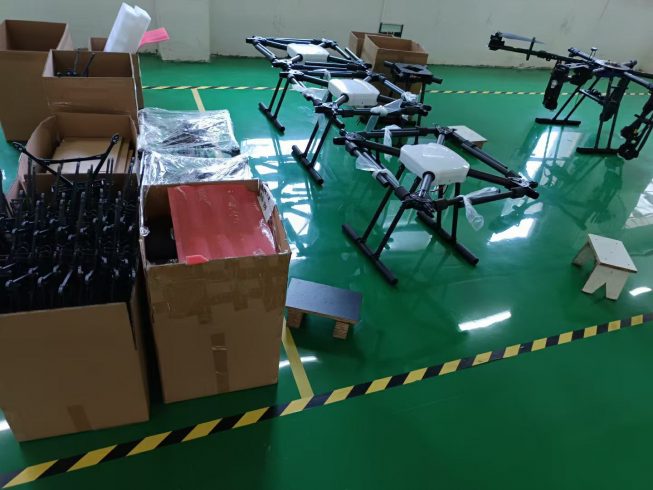


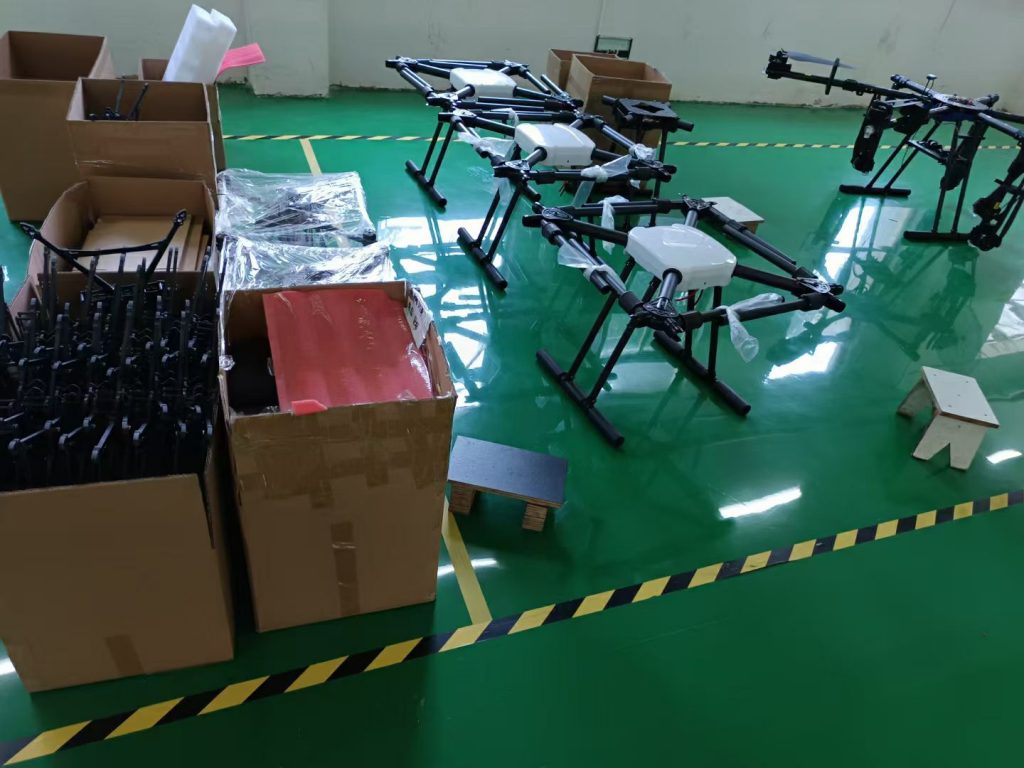
Agriculture, the backbone of human civilization, is undergoing its most radical transformation since the Green Revolution. At the heart of this shift are farming drones—unmanned aerial vehicles (UAVs) equipped with cutting-edge sensors, AI, and automation—that have evolved from niche gadgets to indispensable tools for modern farmers. Unlike traditional farming equipment, drones operate from the air, offering unmatched speed, precision, and scalability to address the industry’s biggest challenges: labor shortages, climate volatility, resource scarcity, and the need to feed a projected 10 billion people by 2050.
This article explores how farming drones are redefining every stage of crop and livestock production, from monitoring plant health to optimizing harvests—and why they’re key to building a more sustainable, productive, and equitable food system.
What Are Farming Drones? Beyond Spraying to End-to-End Precision
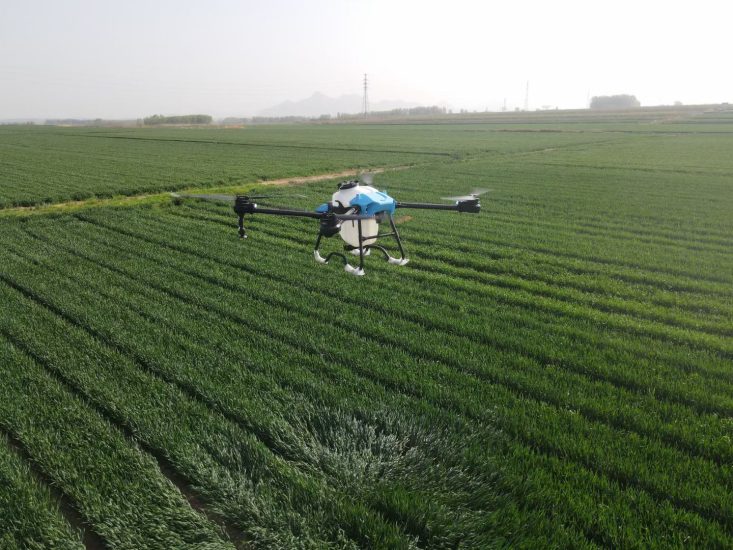
Farming drones are not a single technology but a versatile ecosystem of UAVs tailored to specific agricultural tasks. While plant protection (spraying pesticides/fertilizers) remains their most well-known use, modern drones perform a wide range of jobs:
-
Monitoring: Scanning fields to assess crop health, detect pests, or predict yields.
-
Seeding/Planting: Dropping seeds into prepared soil with pinpoint accuracy.
-
Livestock Management: Tracking herds, checking animal health, or distributing feed.
-
Post-Harvest Analysis: Evaluating yield quality or identifying areas for improvement.
Powered by technologies like multispectral imaging, RTK-GPS, and swarm intelligence, these drones turn raw field data into actionable insights—turning “guesswork farming” into data-driven precision agriculture.
Core Applications: How Farming Drones Solve Real-World Problems
To understand their impact, let’s break down the most transformative uses of farming drones across the agricultural value chain.
1. Crop Monitoring: The “Early Warning System” for Farms
Before drones, farmers relied on manual inspections or satellite imagery to check crop health—an inefficient, time-consuming process prone to human error. Today, drones equipped with multispectral or hyperspectral cameras capture data across hundreds of light wavelengths, revealing subtle signs of stress invisible to the naked eye.
How It Works:
Healthy plants reflect more near-infrared (NIR) light and less red light than stressed ones (due to pests, diseases, drought, or nutrient deficiencies). Drones process this data using algorithms like the Normalized Difference Vegetation Index (NDVI)—a widely used metric for quantifying plant health. AI-powered platforms then generate color-coded “health maps” that pinpoint problem areas (e.g., a patch of wheat with fungal rust or a cornfield with nitrogen deficiency).
Real-World Impact:
-
In Kenya, smallholder maize farmers use drone monitoring to detect fall armyworm infestations early, reducing crop losses by 50%.
-
California vineyards leverage NDVI maps to adjust irrigation and fertilizer use, cutting water consumption by 30% while boosting grape sugar content.
Satellite imagery, by contrast, updates every 3–5 days and lacks the resolution (often 10–30 meters per pixel) needed for small fields or hilly terrain. Drones, however, can capture centimeter-level detail and fly on demand—enabling farmers to act fast.
2. Targeted Spraying & Fertilization: Less Chemicals, More Yield
Over 2 million tons of pesticides are used globally each year, but up to 50% go to waste due to over-application or drift. Farming drones solve this with variable-rate technology (VRT) and precision spraying systems.
How It Works:
-
Sensors First: Drones use multispectral data to identify exactly which areas need treatment (e.g., only the 10% of a soybean field infected with soybean cyst nematode).
-
Smart Spraying: High-efficiency centrifugal nozzles atomize liquid into micro-droplets (50–200 microns)—10x smaller than traditional sprayers—ensuring even coverage without drift. VRT adjusts spray volume in real time: heavy in infected zones, light in healthy ones.
-
Drift Reduction: Downward-facing fans create a “curtain” of air that pushes droplets straight down onto crops, minimizing runoff into waterways.
Benefits:
-
Cost Savings: Farmers reduce chemical use by 30–60% and labor costs by 70% (no need for manual sprayers).
-
Environmental Protection: A 2022 study in Science Advances found drone-sprayed fields had 45% less pesticide residue in nearby streams than conventional methods.
-
Safety: Eliminates farmer exposure to toxic chemicals—critical in regions where pesticide poisoning kills 200,000 people annually.
In India, where rice farmers spend 3 billion yearly on pesticides, drones have cut costs by 1 billion while increasing yields by 15%—a win for both farmers and the planet.
3. Precision Seeding & Planting: Rethinking How Crops Take Root
Traditional seeders plant in straight rows, wasting space and resources in uneven terrain. Farming drones take a different approach: drill-free, precision planting that adapts to the land.
How It Works:
-
Terrain Mapping: Drones first create 3D maps of fields using LiDAR or photogrammetry to identify slopes, rocks, or waterlogged areas.
-
Variable-Rate Seeding: Seed pods are released at precise intervals—more in fertile zones, fewer in poor ones—based on the 3D map. Some drones even “micro-dose” seeds with fertilizer, reducing waste.
-
No-Till Compatibility: Drones work in fields that haven’t been plowed, preserving soil health and reducing erosion.
Real-World Impact:
-
In Brazil’s soybean belt, drones have planted 1 million acres/year, reducing soil disturbance by 90% compared to tillage.
-
Australian wheat farmers use drone planting to target areas damaged by wildfires, cutting reseeding time from months to days.
This method isn’t just efficient—it’s regenerative. By minimizing soil disruption, drones help build organic matter and sequester carbon, aligning with global climate goals.
4. Livestock Management: Herding from the Sky
Farming drones aren’t just for crops—they’re revolutionizing livestock farming too. Equipped with thermal cameras and AI-powered animal recognition, drones can monitor herds, track health, and even prevent predation.
How It Works:
-
Herd Tracking: Drones use GPS tags or visual recognition to count animals and locate strays in vast pastures (e.g., 10,000-acre ranches in Texas).
-
Health Checks: Thermal cameras detect feverish animals (e.g., a cow with mastitis) by identifying abnormal heat signatures. AI can also spot limps or changes in movement.
-
Feed Distribution: Larger drones carry feed buckets to remote areas, saving farmers hours of driving.
Case Study:
In South Africa’s Karoo region, sheep farmers use drones to combat jackal predation. Drones with loudspeakers scare predators away, reducing lamb losses by 60%—without harming wildlife.
5. Post-Harvest Analysis: Maximizing Profits
After harvest, drones help farmers evaluate yield quality and plan for next season. Multispectral cameras can assess factors like:
-
Grain Moisture: Critical for storing crops without mold.
-
Fruit Ripeness: Identifying which apples or oranges are ready for market.
-
Yield Estimation: Generating accurate harvest forecasts to negotiate better prices with buyers.
In the U.S. Midwest, corn farmers use drone data to calculate exact yields per acre, enabling them to optimize insurance claims and input budgets for the next year.
The Tech Behind the Magic: What Makes Farming Drones Work?
Farming drones are a testament to convergence—combining hardware, software, and AI to solve complex problems. Here are the key technologies enabling their success:
1. Sensors & Imaging: The Drone’s “Senses”
-
Multispectral Cameras: Capture 4–10 light bands (visible + NIR) to assess plant health.
-
Hyperspectral Cameras: Capture 100+ bands for ultra-detailed analysis (e.g., detecting specific nutrient deficiencies).
-
LiDAR: Uses laser pulses to create 3D maps of fields, critical for terrain-adaptive tasks like planting.
-
Thermal Cameras: Detect heat signatures for livestock health or irrigation issues.
2. Navigation & Autonomy: Flying Without a Pilot
-
RTK-GPS: Provides centimeter-level accuracy, ensuring drones follow pre-planned flight paths and avoid collisions.
-
Vision-Based Navigation: Downward-facing cameras let drones “see” obstacles (trees, power lines) and adjust in real time.
-
Swarm Intelligence: Fleets of drones coordinate via AI to divide work—e.g., 10 drones spraying 1,000 acres in a single day.
3. Data Analytics & Integration: Turning Data into Action
Drones generate terabytes of data—but it’s useless without analysis. Cloud platforms like DJI Agras or PrecisionHawk process this data into:
-
Health maps
-
Yield forecasts
-
Input recommendations (e.g., “Add 50 lbs of nitrogen per acre here”)
Many platforms integrate with farm management software (FMS) to create a digital twin of the farm—letting farmers simulate decisions (e.g., “What if I plant soybeans here instead of corn?”) before acting.
Real-World Impact: Who Benefits Most?
Farming drones aren’t just for industrial-scale farms—they’re democratizing technology for smallholder farmers too:
1. Smallholder Farms: Closing the Gap
In sub-Saharan Africa, 80% of farmers work on plots smaller than 2 hectares. Drones-as-a-Service (DaaS) models let them access drones for 5–10 per acre—affordable for even low-income farmers. In Malawi, a DaaS provider called AeroCenta helps smallholders monitor maize fields, reducing losses by 40% and increasing incomes by 25%.
2. Large-Scale Farms: Scaling Efficiency
In the U.S., farms with over 1,000 acres use drones to cut labor costs and boost yields. A Nebraska corn farmer told Farm Journal: “With drones, I can monitor 500 acres in 2 hours—something that used to take 3 days. And my spray costs are down 50%.”
3. Specialty Crops: Orchards & Vineyards
Orchards (apples, oranges) and vineyards have irregular terrain—perfect for drones. In Spain’s Valencia orange groves, drones spray only the lower canopy (where pests hide), reducing chemical use by 40% and improving fruit quality.
Challenges: What’s Holding Back Adoption?
Despite their potential, farming drones face barriers:
1. Cost & Accessibility
High-end drones with multispectral cameras cost 10,000–50,000—out of reach for many smallholders. DaaS models help, but financing remains a challenge.
2. Regulatory Hurdles
Airspace regulations vary widely:
-
U.S. (FAA): Requires Part 107 certification for commercial drone use.
-
EU (EASA): Imposes strict limits on flight altitude (120m max) and payload.
-
India: Recently relaxed rules but still requires permits for large fleets.
3. Technical Skills Gap
Many farmers lack training to operate or maintain drones. Companies like DJI and SenseFly offer certifications, but scaling this is difficult.
4. Battery & Payload Limits
Most drones have a 20–30 minute flight time and carry 5–20 liters of liquid. Solid-state batteries and hydrogen fuel cells could extend this, but commercial viability is still years away.
The Future: What’s Next for Farming Drones?
The next decade will see farming drones become even more intelligent, autonomous, and integrated:
1. Full Autonomy: Drones That Think for Themselves
AI will enable drones to make real-time decisions:
-
Adjust spray parameters mid-flight if rain is detected.
-
Switch from monitoring to spraying if a pest outbreak is found.
-
Coordinate with ground robots (e.g., robotic weeders) for end-to-end tasks.
2. Integration with IoT & Smart Farms
Drones will work with soil sensors, weather stations, and farm robots to create fully automated systems. For example:
-
Soil sensors detect low nitrogen—drone sprays only that area.
-
Weather forecasts predict drought—drones activate precision irrigation.
3. Specialized Drones for Niche Tasks
We’ll see drones designed for specific jobs:
-
Pollination Drones: For bee colonies decimated by colony collapse disorder.
-
Vertical Farming Drones: Monitoring leafy greens in indoor farms.
-
Livestock Vaccination Drones: Delivering vaccines to remote herds.
4. Sustainability Focus
Drones will play a key role in reducing agriculture’s carbon footprint:
-
Optimizing fertilizer use cuts nitrous oxide emissions (a potent greenhouse gas).
-
Precision spraying reduces chemical runoff, protecting aquatic ecosystems.
Conclusion: Farming Drones Are the Future of Food
Farming drones are more than tools—they’re a catalyst for a new agricultural revolution. By combining precision, speed, and sustainability, they address the industry’s biggest challenges: feeding a growing population, reducing environmental harm, and empowering farmers—whether they manage 1 acre or 10,000.
As one Iowa farmer put it: “Drones don’t just make farming easier—they make it smarter. I’m not just growing corn anymore; I’m growing data that feeds the world.”
The sky’s the limit for farming drones—and for the future of agriculture.
THE END


No comments yet