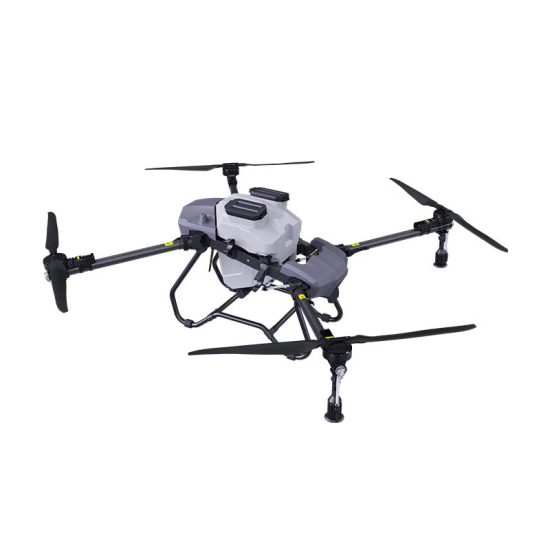


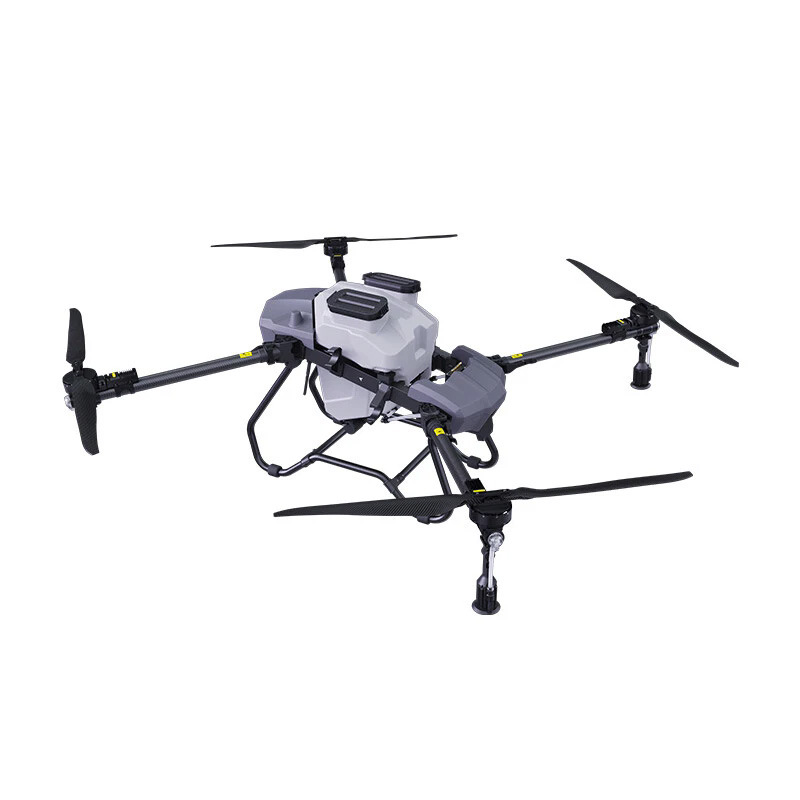
Buying a drone is not simply a matter of choosing the model with the longest flight time or the highest camera resolution. The right drone depends on what you want to do, where you plan to operate it, how often it will be used, and what performance you expect from the equipment.
Whether you are looking for an agricultural drone, industrial inspection drone, surveying drone, camera drone, or a customized commercial UAV, choosing the right specifications before purchase can help reduce operating costs and avoid performance problems.
This guide explains the most important factors to consider before buying a drone.
1. Start by Defining Your Main Application
The first question is simple: What will the drone be used for?
Different applications require completely different designs, payload capacities, flight systems, and accessories. A drone designed for aerial photography may not be suitable for agricultural spraying. Similarly, a lightweight consumer drone may not meet the requirements of industrial inspection or commercial operations.
Common drone applications include:
- Agricultural spraying and spreading
- Crop monitoring and field mapping
- Aerial photography and video
- Land surveying and mapping
- Construction site inspection
- Infrastructure inspection
- Emergency response
- Environmental monitoring
- Security and surveillance
- Delivery and logistics testing
- Research and development
Before contacting a drone supplier, prepare a basic description of your intended use. This allows the supplier to recommend a more suitable configuration instead of offering a standard model that may not meet your requirements.
For example, an agricultural customer may need to provide information about farm size, crop type, terrain, spraying requirements, and local operating conditions. A mapping customer may need to focus on camera type, positioning accuracy, flight stability, and data-processing compatibility.
The clearer the application, the easier it is to select the right drone.
2. Choose the Right Drone Type
Drones come in different configurations. The best choice depends on the balance between stability, flight time, payload capacity, portability, and operating environment.
Multirotor Drones
Multirotor drones are widely used because they can take off and land vertically. They are suitable for many commercial applications and are relatively easy to operate.
Common configurations include:
- Quadcopters
- Hexacopters
- Octocopters
Multirotor drones are often used for photography, inspection, agriculture, mapping, and industrial operations.
Their main advantages include:
- Vertical takeoff and landing
- Excellent hovering capability
- Flexible operation in limited spaces
- Easy control at low altitude
- Good suitability for precision operations
For many commercial users, a multirotor drone is the most practical starting point.
Fixed-Wing Drones
Fixed-wing drones are designed for longer-distance flight and larger-area coverage. They generally require more space for takeoff and landing compared with multirotor drones.
They can be suitable for:
- Large-area surveying
- Geographic mapping
- Environmental monitoring
- Long-distance observation
If your main objective is covering a large area efficiently, a fixed-wing design may be more appropriate.
Hybrid VTOL Drones
Hybrid VTOL drones combine vertical takeoff capabilities with fixed-wing flight performance.
They can take off vertically and then transition to forward flight. This design can provide longer flight distances while maintaining greater flexibility in operating locations.
However, hybrid systems may involve more complex control systems and higher technical requirements.
3. Consider Flight Time Carefully
Flight time is one of the most important specifications when choosing a drone.
However, the advertised maximum flight time is usually measured under ideal test conditions. Actual flight time may be affected by:
- Payload weight
- Wind speed
- Temperature
- Battery age
- Flight speed
- Takeoff and landing frequency
- Operating altitude
For example, a drone may have a maximum flight time of 30 minutes without a payload, but the actual operating time may be shorter when carrying equipment or materials.
When comparing different models, do not only ask:
“How long can the drone fly?”
A better question is:
“How long can the drone perform my actual task under real operating conditions?”
This is especially important for agricultural drones and industrial drones.
4. Check Payload Capacity
Payload capacity determines how much equipment or material the drone can safely carry.
For different applications, the payload may include:
- Cameras
- Sensors
- Thermal imaging equipment
- LiDAR systems
- Spraying systems
- Spreading systems
- Batteries
- Delivery containers
- Other customized equipment
A drone should not be operated continuously at its maximum theoretical payload without considering safety and flight performance.
A heavier payload may reduce:
- Flight time
- Climbing speed
- Flight stability
- Operating range
- Battery efficiency
When selecting a drone, it is important to leave a reasonable performance margin between the maximum payload and the actual working payload.
For agricultural applications, users should also consider the difference between liquid payload and solid material payload. The density of different materials can affect the total weight and operating performance.
5. Select the Right Battery System
The battery is one of the most important components of a commercial drone.
A high-quality battery system can directly influence:
- Flight time
- Charging efficiency
- Operating safety
- Battery life
- Maintenance costs
When choosing a drone battery, consider:
Battery Capacity
A higher-capacity battery may provide longer flight time, but it may also increase weight.
The battery should be matched to the drone’s motors, electronic systems, and expected payload.
Charging Time
For commercial operations, charging speed is very important.
If the drone is used continuously throughout the day, a slow charging system may reduce productivity.
Many professional users consider:
- Fast charging
- Multiple batteries
- Spare battery systems
- Intelligent battery monitoring
- Temperature protection
A complete battery solution is often more important than simply choosing the battery with the largest capacity.
Battery Management
A smart battery system can monitor:
- Voltage
- Temperature
- Remaining capacity
- Charging status
- Battery health
This information helps operators reduce the risk of unexpected power problems.
6. Evaluate the Control Range
The required control range depends on the application.
For short-distance operations, a standard control system may be sufficient. For large agricultural fields, surveying projects, or industrial inspection, a longer and more stable communication range may be necessary.
The actual control range may be affected by:
- Buildings
- Trees
- Mountains
- Electrical interference
- Weather conditions
- Antenna position
It is important to distinguish between the theoretical maximum range and the reliable working range.
When discussing your requirements with a supplier, explain the actual operating environment. A drone that performs well in an open field may have different performance in a city or mountainous region.
7. Consider Camera and Sensor Requirements
Not every drone needs a high-resolution camera.
The right camera or sensor depends on the task.
Standard RGB Cameras
Suitable for:
- Photography
- Video recording
- General inspection
- Marketing content
Thermal Cameras
Useful for:
- Electrical inspection
- Equipment monitoring
- Search and rescue
- Heat-loss detection
- Industrial applications
Multispectral Cameras
Commonly used for:
- Crop analysis
- Vegetation monitoring
- Agricultural research
LiDAR Systems
Suitable for:
- 3D mapping
- Terrain analysis
- Forestry
- Construction surveying
Choosing the right sensor is often more important than simply choosing the drone with the highest camera resolution.
8. Pay Attention to Flight Stability
A drone should remain stable in different operating conditions.
Flight stability can be affected by:
- Motor performance
- Propeller design
- Flight controller
- GPS positioning
- Wind resistance
- Payload distribution
For professional applications, stable flight is essential.
A stable drone can help improve:
- Image quality
- Mapping accuracy
- Spraying uniformity
- Operational safety
- User confidence
If you plan to operate the drone in windy or difficult environments, ask the supplier about tested wind resistance and real-world operating conditions.
9. Check Ease of Operation
A technically advanced drone is not always the best choice if it is difficult to operate.
Before purchasing, consider:
- Remote controller design
- User interface
- Automatic flight functions
- Route planning
- Return-to-home functions
- Obstacle avoidance
- Emergency landing functions
- Training requirements
For businesses with multiple operators, simple operation can significantly reduce training costs.
A good commercial drone should provide a balance between advanced functions and practical usability.
10. Consider Maintenance and Spare Parts
A drone is a working tool. Regular maintenance is part of long-term ownership.
Before purchasing, ask about the availability of:
- Motors
- Propellers
- Batteries
- Chargers
- Landing gear
- Electronic components
- Spraying components
- Remote controllers
A reliable supply of spare parts can help reduce downtime.
You should also understand:
- Recommended maintenance intervals
- Warranty coverage
- Technical support
- Repair procedures
- Replacement part availability
The purchase price is only one part of the total cost of ownership.
A drone with a lower initial price may become more expensive if spare parts are difficult to obtain or technical support is limited.
11. Think About Local Regulations
Drone regulations vary from country to country.
Before purchasing, users should check local requirements related to:
- Drone registration
- Pilot qualifications
- Flight restrictions
- Operating altitude
- Commercial use
- Insurance
- Import requirements
A drone that is suitable for one market may require additional approval or configuration in another country.
If you are purchasing drones for commercial use, it is recommended to confirm the relevant requirements before placing a large order.
A professional supplier should be able to provide basic technical documents and product information to support the import and compliance process.
12. Decide Between Standard and Customized Drones
Many buyers ask whether they should purchase a standard drone or request a customized configuration.
Standard Drone
A standard model may be suitable when:
- You need fast delivery
- Your application is common
- You want a tested configuration
- You are purchasing a small quantity
Customized Drone
Customization may be useful when:
- You need a special payload
- You require a specific battery configuration
- You want a private-label product
- You need a customized software interface
- You have special operating requirements
- You are developing a new commercial solution
OEM and ODM cooperation can allow businesses to develop products according to their own market requirements.
However, customization may require additional development time, testing, and minimum order quantities.
13. Compare the Total Cost, Not Just the Purchase Price
When comparing drone suppliers, many buyers focus only on the unit price.
However, the total cost may include:
- Drone body
- Batteries
- Chargers
- Remote controller
- Payload equipment
- Spare parts
- Shipping
- Import costs
- Training
- Maintenance
- Software
- After-sales service
A low purchase price does not always mean a lower total cost.
For commercial users, productivity and reliability may be more important than the lowest initial price.
A drone that can complete more work per day may provide better long-term value.
14. What Information Should You Send to a Drone Supplier?
To receive an accurate quotation, prepare the following information:
- Intended application
- Country of operation
- Required quantity
- Expected payload
- Required flight time
- Operating environment
- Camera or sensor requirements
- Battery requirements
- Branding or customization requirements
- Target delivery schedule
For agricultural drone buyers, you can also provide:
- Farm size
- Crop type
- Spraying area
- Liquid or solid payload requirements
- Expected daily working area
The more detailed your requirements are, the more accurately a supplier can recommend a suitable solution.
15. A Simple Drone Selection Checklist
Before placing an order, ask yourself:
Application
What is the primary purpose of the drone?
Payload
How much equipment or material must it carry?
Flight Time
How long must it operate during each mission?
Environment
Will it operate in cities, mountains, farms, forests, or open areas?
Battery
How many batteries are required for daily operations?
Control
What communication range is necessary?
Sensors
Do you need a standard camera, thermal camera, multispectral camera, or another sensor?
Maintenance
Are spare parts and technical support available?
Regulations
Can the drone legally be operated in your target market?
Customization
Do you need OEM branding or a customized configuration?
Answering these questions can make the purchasing process much easier.
Frequently Asked Questions
What is the best drone for a beginner?
The best drone for a beginner is usually one that is easy to operate, stable, reliable, and supported by clear user instructions. The right choice depends on the intended application and budget.
How do I choose a drone for agricultural spraying?
Consider tank capacity, spraying width, flight time, battery charging speed, terrain, operating efficiency, and the availability of replacement components.
Is a longer flight time always better?
Not necessarily. A longer flight time is useful, but the drone must also provide sufficient payload capacity, stability, safety, and operating efficiency.
Should I buy a standard drone or a customized drone?
A standard drone may be suitable for common applications and faster delivery. Customization may be more suitable for businesses with specific technical, branding, or operational requirements.
What should I ask a drone supplier before ordering?
Ask about technical specifications, payload capacity, actual flight time, battery performance, spare parts, warranty, technical support, customization options, packaging, and delivery arrangements.
How can I compare different drone suppliers?
Compare more than price. Evaluate product quality, technical capabilities, testing procedures, spare parts availability, customization ability, communication efficiency, and after-sales support.
Conclusion
Choosing the right drone requires more than comparing prices and specifications. The best drone is the one that matches your actual application, operating environment, payload requirements, flight time, battery system, control needs, and long-term business goals.
Before purchasing, clearly define your requirements and communicate them to a professional drone supplier. A detailed requirement list can help you receive a more accurate recommendation and quotation.
Whether you need a drone for agriculture, mapping, inspection, photography, research, or a customized commercial project, selecting the right configuration from the beginning can improve operational efficiency, reduce unnecessary costs, and support long-term business growth.
If you are looking for a suitable drone solution, you can send your application requirements, target market, required specifications, and expected quantity to a professional supplier for technical recommendations and a customized quotation.


No comments yet