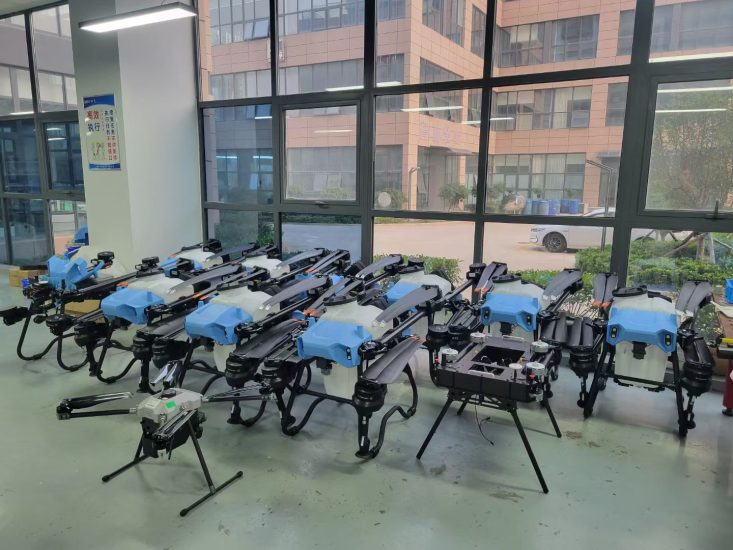


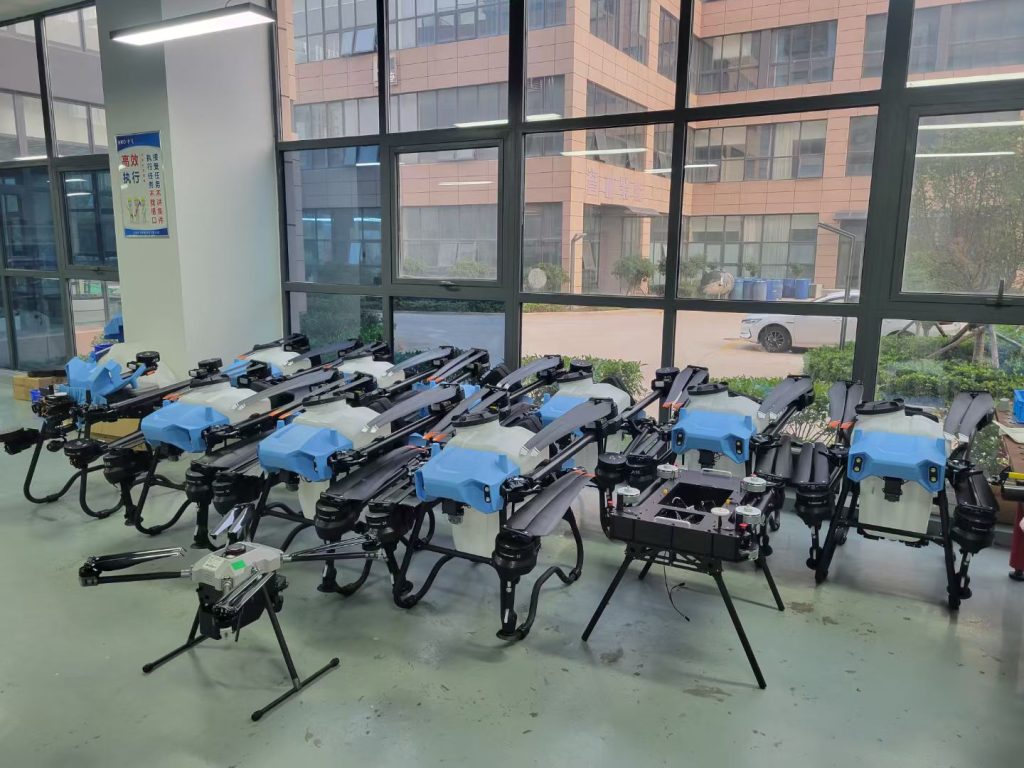
Agricultural production is entering a new stage in which digital technology is becoming an important part of everyday farming operations. From soil preparation and crop planting to irrigation, harvesting, storage, and distribution, digital tools are helping producers collect information, improve decision-making, reduce resource waste, and respond more efficiently to changing market and environmental conditions.
Digital agriculture does not simply mean putting computers or sensors on a farm. Its real value comes from connecting field conditions, production activities, equipment, weather information, crop data, and supply-chain processes into a more coordinated production system. When these elements work together, farmers and agricultural businesses can make decisions based on measurable information rather than relying entirely on experience and manual observation.
What Is Digital Agricultural Production?
Digital agricultural production refers to the use of technologies such as sensors, satellite positioning, remote monitoring, agricultural machinery automation, cloud-based data systems, artificial intelligence, and mobile applications to improve farming activities.
Traditional agriculture often depends heavily on periodic inspections. A farmer may walk through a field to determine whether crops need water, fertilizer, pest control, or additional attention. While practical experience remains extremely valuable, digital tools can provide continuous information that is difficult to obtain through manual observation alone.
For example, soil sensors can monitor moisture and temperature at different locations. Weather stations can provide local information about rainfall, wind, humidity, and temperature. Cameras can monitor crop growth and identify visible changes. Equipment systems can record operating hours, fuel consumption, working areas, and maintenance information.
The result is a more measurable production environment.
From Experience-Based Farming to Data-Assisted Decisions
Agricultural experience remains an essential part of production. Farmers understand local soil conditions, seasonal patterns, crop characteristics, and practical field management. Digital technology does not need to replace this knowledge.
Instead, it can strengthen it.
A farmer can combine years of practical experience with real-time information from the field. If soil moisture falls below a predefined level, irrigation can be evaluated before plants experience serious water stress. If weather data indicates a high probability of heavy rainfall, irrigation or fertilizer application can be adjusted accordingly.
This approach changes the role of data from simple record-keeping into a decision-support resource.
The objective is not to collect as much data as possible. The objective is to collect useful data and convert it into practical actions.
Precision Irrigation and Water Management
Water management is one of the most important areas where digital technology can create measurable benefits.
Agricultural water demand can vary according to crop type, soil characteristics, weather conditions, plant growth stage, and field location. Applying the same amount of water across an entire field may therefore result in over-irrigation in some areas and insufficient irrigation in others.
Digital monitoring can help identify these differences.
Soil moisture sensors can measure water conditions at selected depths. Weather information can help estimate evaporation and rainfall. Automated irrigation systems can then adjust watering schedules according to actual field conditions.
In larger agricultural operations, different irrigation zones can be managed separately. This makes it possible to provide more appropriate amounts of water to different parts of a farm.
Better irrigation management can contribute to:
- Reduced water waste
- More consistent crop conditions
- Lower pumping and energy costs
- Improved irrigation scheduling
- Better protection against water stress
- More efficient use of available water resources
The exact results depend on crop type, climate, soil, equipment, and management practices, so digital irrigation should be designed around local production conditions rather than applied as a universal formula.
Digital Soil Management
Soil is one of the most important assets in agricultural production, but its condition can vary significantly within the same farm.
Digital soil monitoring can help producers understand changes in moisture, temperature, electrical conductivity, nutrient conditions, and other indicators. Soil sampling combined with digital mapping can also create a more detailed picture of field variability.
Instead of treating an entire field as one uniform area, producers can divide it into management zones.
Different zones may receive different amounts of fertilizer, irrigation, or other treatments according to their specific requirements. This approach can improve input efficiency while reducing unnecessary application.
Digital soil records also make it easier to compare conditions across different growing seasons. Over time, producers can build a historical database that supports long-term soil management decisions.
Smarter Crop Monitoring
Crop monitoring traditionally requires regular field visits. However, large farms can contain hundreds or thousands of hectares, making frequent manual inspection difficult.
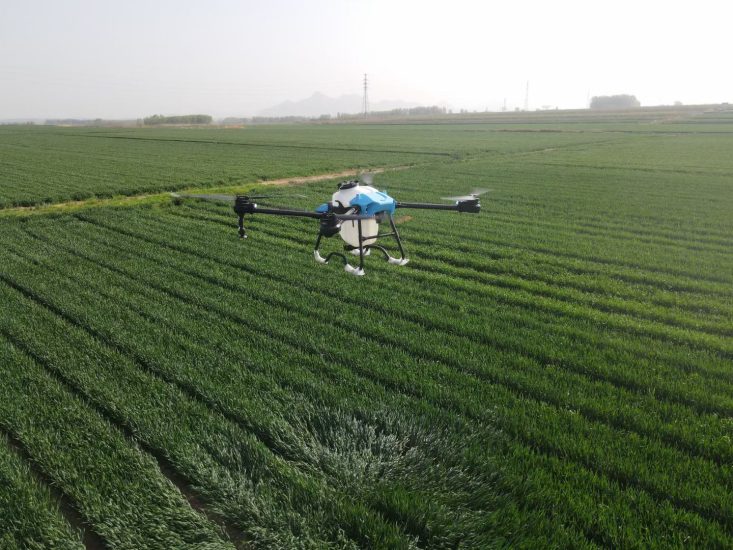
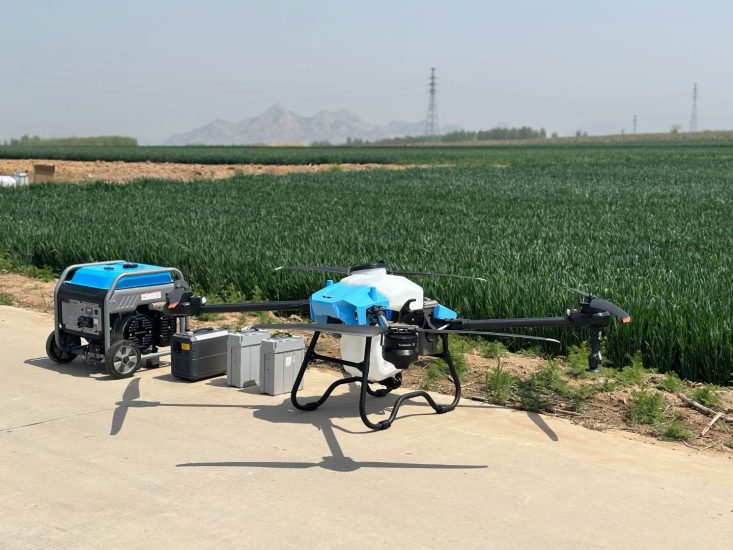
Remote sensing, cameras, drones, satellite imagery, and field sensors can extend the ability of agricultural teams to observe crops.
Digital monitoring can help identify:
- Uneven crop growth
- Areas affected by water stress
- Signs of nutrient deficiencies
- Potential pest or disease problems
- Storm or weather damage
- Changes in plant density
- Harvest readiness
The purpose is not necessarily to automate every decision. Instead, digital monitoring can help agricultural workers identify areas that deserve closer inspection.
This can make field inspections more targeted and efficient.
Artificial Intelligence in Agriculture
Artificial intelligence is increasingly being applied to agricultural data analysis.
Large amounts of agricultural information can be difficult to interpret manually. AI systems can analyze historical production records, weather conditions, soil information, crop images, equipment data, and other inputs to identify patterns.
For example, image analysis may help detect visible abnormalities in leaves. Predictive models may estimate irrigation requirements or identify periods when certain production risks are elevated.
However, AI should be treated as a decision-support technology rather than an independent authority.
Agricultural conditions are complex. A prediction that works well in one region may perform differently in another because of changes in soil, climate, crop varieties, farming practices, or data quality.
Reliable agricultural AI therefore requires appropriate local data, regular validation, and human oversight.
Connected Agricultural Machinery
Modern agricultural machinery is becoming increasingly connected.
Tractors, harvesters, planters, sprayers, irrigation equipment, and other machines can generate operational information. Positioning systems can record working routes, while onboard systems can monitor operating conditions and machine performance.
Connected machinery can help agricultural managers understand:
- Where equipment has operated
- How much land has been covered
- Fuel or energy consumption
- Machine operating hours
- Maintenance requirements
- Work efficiency
- Potential equipment problems
This information can improve equipment scheduling and maintenance planning.
For large agricultural operations, better machine coordination can also reduce unnecessary travel across fields and improve the utilization of expensive equipment.
Digital Pest and Disease Management
Pests and crop diseases can cause significant production losses when problems are detected too late.
Digital monitoring can provide earlier indications of potential problems.
Field sensors, weather data, crop images, and historical records can be combined to identify conditions that may increase the risk of certain pests or diseases.
For example, temperature and humidity patterns may provide useful information about environmental conditions associated with disease development. Image-based monitoring can identify unusual changes in plant appearance that require physical inspection.
Early detection can give producers more time to investigate the cause and select an appropriate response.
This can support more targeted crop protection and reduce unnecessary treatment.
Digital Farm Records
Accurate records are fundamental to modern agricultural management.
A digital farm management system can record planting dates, crop varieties, fertilizer applications, irrigation activities, pesticide applications, field inspections, harvest volumes, equipment use, and other production information.
Digital records have several advantages over scattered paper records.
Information can be searched more easily, historical activities can be compared, and production teams can share relevant information more efficiently.
For agricultural businesses supplying professional buyers, detailed production records can also help demonstrate how products were produced and handled.
Improving Agricultural Supply Chains
Digital transformation should not stop at the farm gate.
Agricultural products move through multiple stages after harvest, including collection, grading, packaging, storage, transportation, and distribution.
Digital systems can connect these processes.
Production data can be associated with harvest batches. Warehouse systems can record quantities and storage conditions. Transportation records can provide information about shipment status and delivery schedules.
This creates a more connected agricultural supply chain.
For buyers, better information can improve purchasing decisions. For producers, it can provide better visibility into inventory and demand.
Cold Chain Monitoring
For fresh fruits, vegetables, meat, dairy products, and other temperature-sensitive agricultural goods, storage and transportation conditions are critical.
Digital temperature and humidity monitoring can record conditions throughout storage and transportation.
If temperatures move outside an established operating range, the responsible team can investigate the situation more quickly.
Continuous monitoring can also create historical records that help identify recurring problems in cold-chain operations.
The objective is not simply to collect temperature readings. The more important goal is to connect monitoring information with operational procedures so that abnormal conditions can lead to timely action.
Digital Traceability
Consumers and professional buyers increasingly want greater transparency about agricultural products.
Digital traceability systems can connect products with production batches, processing activities, storage information, and transportation records.
A traceability system may record information such as:
- Production location
- Crop or livestock category
- Production date
- Harvest date
- Processing information
- Batch number
- Storage conditions
- Transportation records
Such information can make agricultural supply chains easier to investigate when quality issues occur.
Traceability also supports more organized quality management because businesses can identify where a particular batch came from and which processes it passed through.
Digital Market Information
Agricultural production is strongly influenced by market demand.
If producers only focus on production without understanding market conditions, they may face problems such as oversupply, insufficient inventory, unsuitable product specifications, or poor timing.
Digital market information can provide useful signals about purchasing activity, price movements, consumer demand, seasonal trends, and international trade conditions.
When production planning is connected with market information, agricultural businesses can make more informed decisions about crop selection, planting schedules, inventory, and sales planning.
Market data does not eliminate agricultural uncertainty, but it can improve the information available when decisions are made.
Supporting Small and Medium-Sized Farms
Digital agriculture is not limited to large farms.
Smaller producers can begin with relatively simple tools such as mobile farm-management applications, weather monitoring, digital record systems, basic soil sensors, and online marketplaces.
A gradual approach is often more practical than attempting to digitize every process at once.
A farm might first digitize production records. After that, it may introduce soil monitoring or automated irrigation. Later, machinery data, inventory management, traceability, and market information can be connected.
This step-by-step approach allows producers to evaluate the practical value of each technology before making larger investments.
The Importance of Data Quality
Digital agriculture depends heavily on data quality.
Incorrect sensor readings, incomplete production records, poor network connections, inconsistent data formats, and improperly calibrated equipment can reduce the usefulness of digital systems.
For this reason, agricultural digitization requires more than purchasing equipment.
Sensors need to be installed correctly. Data needs to be checked. Equipment needs maintenance. Employees need training. Digital systems need clear operating procedures.
Reliable data is the foundation of reliable digital decision-making.
Protecting Agricultural Data
As farms become more connected, agricultural data becomes increasingly valuable.
Production volumes, crop plans, farm locations, equipment information, supplier records, customer information, and operational data should be protected appropriately.
Agricultural businesses should consider access controls, secure authentication, regular backups, data permissions, software updates, and appropriate data-sharing policies.
Data should also be collected for clear operational purposes rather than simply accumulating information without a defined use.
Digital Technology and Sustainable Production
Digital agriculture can support more efficient use of natural resources.
Precision irrigation can help manage water. Targeted fertilizer application can reduce unnecessary input use. Better equipment planning can reduce fuel consumption. Digital crop monitoring can help identify problems earlier.
These technologies can contribute to more efficient production, but digitalization itself does not automatically make agriculture sustainable.
The environmental effect depends on how technologies are designed and used, the energy they consume, the production practices they support, and the local agricultural environment.
Sustainability therefore requires both technological improvement and responsible management.
Building a Practical Digital Agriculture System
A successful digital agriculture system should begin with actual production problems.
Before purchasing technology, agricultural businesses should ask several practical questions:
- What production problem needs to be solved?
- What information is currently unavailable?
- How will the information be collected?
- Who will use the information?
- What decision will the data support?
- What measurable result should improve?
- How much will implementation and maintenance cost?
These questions help prevent technology from becoming an expensive layer without practical value.
A useful digital system should make agricultural work easier, more measurable, and more responsive.
The Future of Digitally Empowered Agriculture
The future of agriculture will likely involve greater integration between physical production and digital information.
Sensors will continue to become smaller and more affordable. Agricultural machinery will become more connected. Remote monitoring will cover larger production areas. Data analysis will become more accessible. AI-assisted decision tools will continue to develop.
At the same time, human knowledge will remain important.
Agriculture is influenced by biological processes, weather, soil, water, economics, infrastructure, and local working conditions. Technology can provide better information, but successful production still requires practical knowledge and responsible management.
The most useful model is therefore not agriculture controlled entirely by technology. It is agriculture in which technology strengthens human decision-making.
Conclusion
Digitally empowering agricultural production means creating a closer connection between information and action.
From soil monitoring and precision irrigation to crop observation, machinery management, traceability, storage, logistics, and market analysis, digital tools can help agricultural producers understand their operations in greater detail.
The real value of digital agriculture is not the number of devices installed or the amount of data collected. Its value comes from whether the information helps producers use resources more efficiently, identify problems earlier, improve production consistency, reduce unnecessary costs, and respond to changing market conditions.
As agricultural systems become increasingly connected, digital technology will become an important part of modern production. Farms and agricultural businesses that build practical, reliable, and scalable digital systems can create a stronger foundation for efficient production and long-term agricultural development.


No comments yet