

Battery performance is one of the most important factors when selecting an agricultural spraying drone.
An agricultural drone needs sufficient electrical power to operate its motors, flight control system, navigation equipment, and spraying system.
For commercial farming operations, battery capacity, charging time, operating temperature, and battery replacement arrangements can directly affect daily work efficiency.
Whether you are purchasing a 20L, 50L, or 85L agricultural drone, understanding its battery system is essential before making a purchasing decision.
MSOEN provides agricultural drone product information for international buyers looking for suitable equipment for commercial farming and crop protection applications.
1. What Type of Battery Does an Agricultural Drone Use?
Most professional agricultural multirotor drones use rechargeable lithium-based battery systems.
These batteries are designed to provide the electrical power required for flight and agricultural spraying operations.
Depending on the drone model, battery specifications may include:
- Battery chemistry
- Nominal voltage
- Rated capacity
- Energy capacity in Wh
- Maximum discharge current
- Charging requirements
- Operating temperature range
- Battery cycle life
The exact specifications vary according to the aircraft design and battery configuration.
Buyers should always request the official battery datasheet for the selected drone model.
2. Why Is Battery Capacity Important?
Battery capacity determines how much electrical energy a battery can store.
It is commonly expressed in ampere-hours (Ah), while total energy capacity is expressed in watt-hours (Wh).
The relationship is:
Energy (Wh) = Voltage (V) × Capacity (Ah)
For example, a battery rated at 50V and 30Ah has a nominal energy capacity of 1,500Wh.
However, battery capacity alone does not determine actual flight time.
Other factors include:
- Aircraft weight
- Spraying liquid payload
- Motor efficiency
- Flight speed
- Wind conditions
- Battery temperature
- Operating altitude
- Flight route
A larger battery may provide more energy, but it can also increase aircraft weight.
The battery and aircraft must therefore be designed as a compatible system.
3. How Long Can an Agricultural Drone Fly?
Agricultural drone flight time varies significantly according to aircraft configuration and working conditions.
A drone carrying a full spraying tank generally consumes more power than an aircraft flying without liquid payload.
Important factors affecting flight time include:
Payload Weight
A heavier payload requires more lifting power.
For this reason, buyers should request flight-time data under different payload conditions.
Battery Condition
Battery age, charging history, temperature, and maintenance can influence available capacity and performance.
Weather Conditions
Strong winds, high temperatures, and other environmental factors can affect power consumption.
Flight Speed and Route
Frequent acceleration, turning, hovering, and changes in altitude may affect battery consumption.
When comparing agricultural drones, ask for tested flight-time information rather than relying only on maximum advertised figures.
4. Agricultural Drone Battery Charging Time
Charging time depends on battery capacity, charger output, charging temperature, and the battery management system.
Before purchasing an agricultural drone, confirm the following:
- Compatible charger model
- Charger input voltage
- Charger output power
- Recommended charging temperature
- Typical charging duration
- Battery cooling requirements
- Charging safety features
A suitable charging arrangement can help operators maintain a more efficient working schedule.
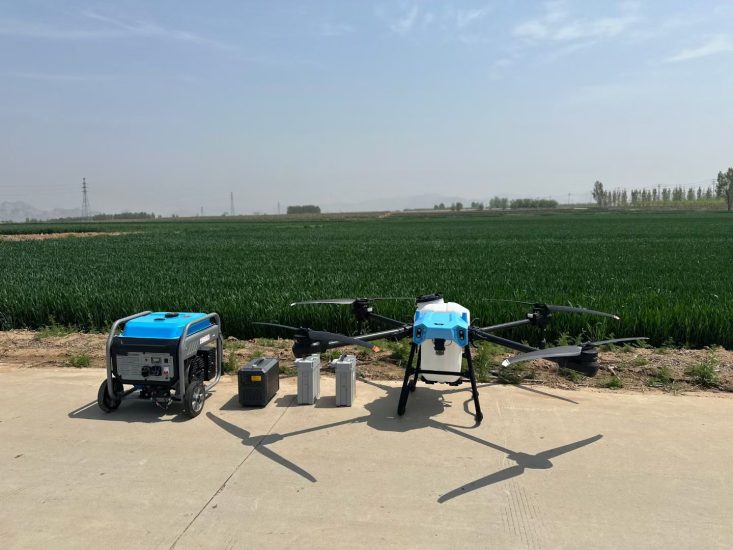
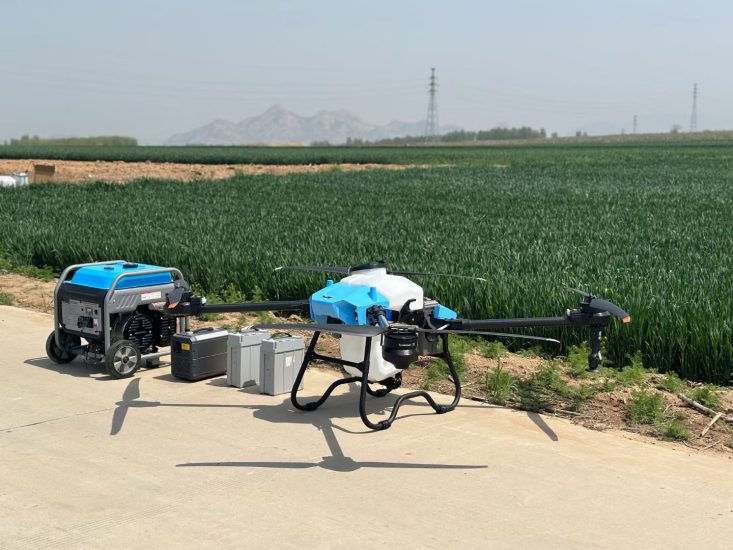
For commercial agricultural operations, buyers may also consider purchasing additional compatible batteries and charging equipment.
Always follow the manufacturer’s charging instructions.
5. How Many Batteries Do You Need?
The required battery quantity depends on the daily operating schedule and the charging arrangement.
For commercial agricultural spraying, operators should consider:
- Expected daily working hours
- Flight time per battery
- Battery replacement time
- Charging duration
- Available charging equipment
- Transportation and storage conditions
Having additional compatible batteries may help reduce interruptions during operations.
However, buyers should confirm the battery compatibility and supported quantity with the supplier before ordering.
6. Agricultural Drone Battery Maintenance
Proper battery maintenance helps protect equipment and support reliable operation.
Avoid Overcharging and Over-Discharging
Use the recommended charger and follow the battery manufacturer’s charging limits.
Monitor Battery Temperature
Avoid charging or operating batteries outside their specified temperature range.
Inspect Battery Condition
Regularly check battery connectors, cables, casing, and visible signs of damage.
Store Batteries Properly
Follow the manufacturer’s storage recommendations for charge level, temperature, and storage duration.
Keep Battery Contacts Clean
Ensure that connectors are clean and dry before installation and operation.
Monitor Battery Health
Use the supported battery management system to check voltage, temperature, and battery status where available.
Damaged, swollen, or abnormal batteries should not be used.
7. How to Choose the Right Battery for a 20L, 50L, or 85L Agricultural Drone
Different agricultural drone models may require different battery configurations.
20L Agricultural Drone
Buyers should evaluate the battery capacity, weight, charging system, and expected flight time under the intended spraying payload.
50L Agricultural Drone
A higher-capacity aircraft requires careful consideration of battery energy, discharge capability, and operating efficiency.
85L Agricultural Drone
For larger agricultural drones, battery compatibility and the relationship between battery weight and aircraft payload become especially important.
Never assume that batteries are interchangeable between different models.
Always confirm the approved battery specifications for the exact aircraft.
8. Agricultural Drone Battery Safety During Transportation
Lithium batteries are subject to special transportation requirements.
International buyers importing agricultural drones should confirm the battery shipping arrangements before placing an order.
Important information may include:
- Battery type and chemistry
- Rated capacity
- Watt-hour rating
- Battery quantity
- UN38.3 test documentation
- Safety Data Sheet (SDS), where applicable
- Packaging requirements
- Applicable dangerous goods transport documentation
Air freight and sea freight may have different acceptance requirements.
Buyers should provide accurate battery information to their freight forwarder before arranging shipment.
9. Common Agricultural Drone Battery Problems
Reduced Flight Time
Possible causes include battery aging, excessive payload, low temperatures, or inefficient operating conditions.
Battery Overheating
High temperatures, excessive discharge, or charging outside recommended conditions may cause overheating.
Charging Failure
Potential causes include charger problems, connector damage, or battery protection system activation.
Unbalanced Battery Cells
Cell voltage imbalance may affect battery performance and safety.
Sudden Battery Voltage Drop
A damaged or aged battery may experience abnormal voltage drops under load.
If a battery shows abnormal behavior, stop using it and follow the manufacturer’s inspection and replacement procedures.
10. Frequently Asked Questions
Q1: What type of battery is used in agricultural drones?
Professional agricultural drones commonly use rechargeable lithium-based battery systems. The exact chemistry and specifications depend on the aircraft model.
Q2: What determines agricultural drone flight time?
Flight time depends on battery capacity, aircraft weight, spraying payload, weather, flight speed, and operating conditions.
Q3: How long does an agricultural drone battery take to charge?
Charging time varies by battery capacity, charger output, battery temperature, and charging system. Request the tested charging time for the exact battery model.
Q4: Can I purchase additional agricultural drone batteries?
Additional batteries may be available depending on the aircraft model and battery compatibility.
Q5: Can agricultural drone batteries be shipped internationally?
International transportation may be possible, but lithium batteries must comply with applicable transport regulations and carrier acceptance requirements.
Q6: Can one battery be used for different agricultural drone models?
Not necessarily. Voltage, connectors, dimensions, discharge capability, and battery management systems may differ. Always confirm compatibility.
Q7: How should agricultural drone batteries be stored?
Follow the manufacturer’s recommended storage charge level, temperature range, and inspection procedures.
11. Contact MSOEN for Agricultural Drone Battery Information
Are you sourcing agricultural drones and need more information about battery capacity, charging equipment, and operating performance?
MSOEN welcomes inquiries from international buyers, agricultural equipment distributors, farming businesses, and commercial spraying service providers.
Contact us to discuss:
- 20L agricultural drone battery configurations
- 50L agricultural drone battery configurations
- 85L agricultural drone battery configurations
- Battery capacity and charging equipment
- Additional battery packages
- Replacement battery requirements
- Product specifications
- International purchasing arrangements
Please provide your preferred drone model, destination country, and required battery quantity when requesting a quotation.


No comments yet