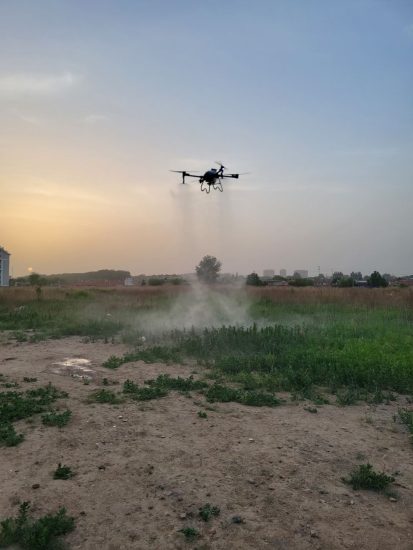


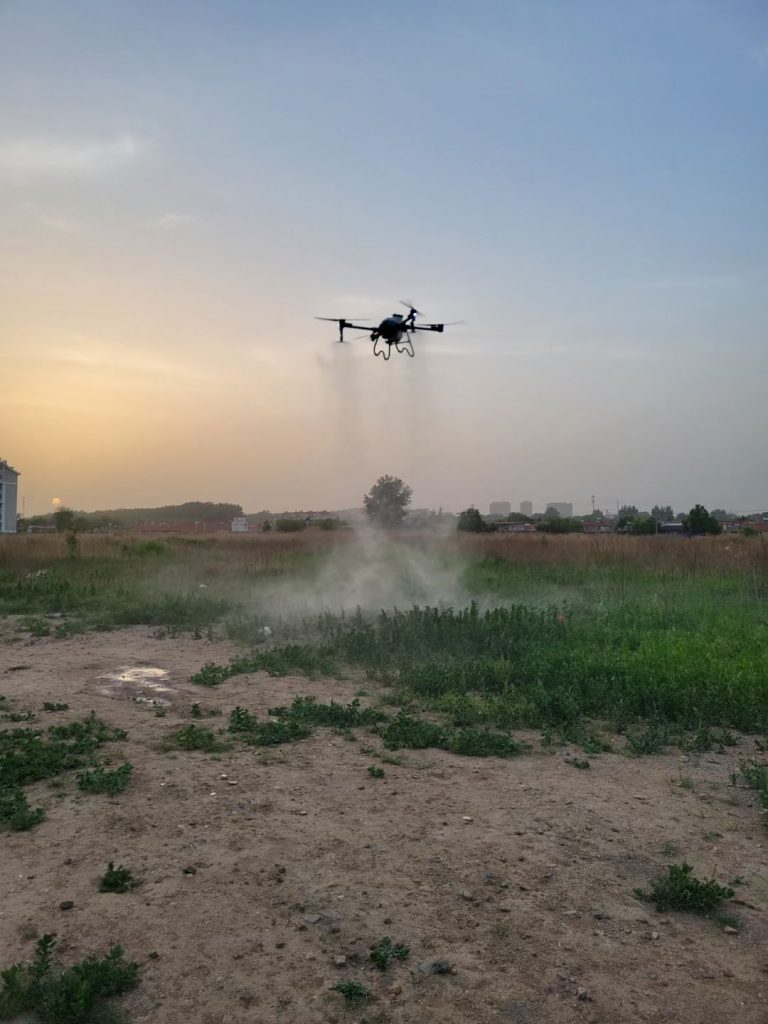
30L Agricultural Spraying Drone for Large Farms: Applications and Buying Guide
A 30L agricultural spraying drone is designed for operations where a higher liquid payload can help reduce the number of refilling cycles during field work. For large farms, agricultural contractors, and professional crop-management operations, this can become an important consideration when planning daily spraying activities.
However, a 30-liter tank alone does not determine whether a drone is suitable for large-scale agricultural work. Payload, battery endurance, spraying performance, flight planning, refill logistics, terrain, and maintenance all influence actual productivity.
What Is a 30L Agricultural Spraying Drone?
A 30L agricultural spraying drone is an unmanned aerial platform designed to carry a nominal liquid payload of approximately 30 liters.
Compared with smaller-capacity aircraft, the larger tank allows more liquid to be carried during each flight.
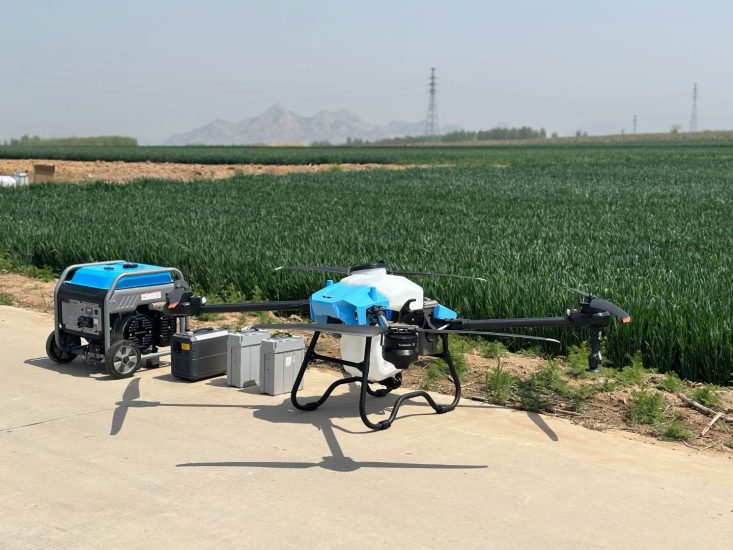
A typical system can include:
- Aircraft platform
- 30L liquid tank
- Pump system
- Spray nozzles
- Flow-control components
- Flight controller
- Positioning system
- Rechargeable battery
- Remote controller
- Charging equipment
- Safety and monitoring functions
The exact configuration varies according to the aircraft and intended application.
Why Use a 30L Configuration?
The main reason to consider a 30L system is operational efficiency.
When an agricultural operation covers a large area, frequent refilling can consume a considerable amount of working time. Increasing tank capacity can reduce the number of refill cycles required for a given application volume.
A larger payload can also be useful for professional agricultural service providers that need to move between multiple fields during the same working day.
Potential advantages include:
- Higher liquid capacity per flight
- Fewer refill cycles
- Greater suitability for larger fields
- Reduced interruptions during spraying
- More efficient use of field-operation time
- Potential suitability for commercial agricultural services
These advantages need to be considered together with the additional power requirements of carrying a larger payload.
Large Payload Requires a Balanced Aircraft
A 30L payload places greater demands on the complete aircraft system.
The motors, propellers, battery, frame, landing system, pump, and flight controller all need to work together.
When evaluating a 30L drone, buyers should ask about:
- Maximum takeoff weight
- Recommended working payload
- Motor configuration
- Battery capacity
- Flight time with payload
- Maximum operating speed
- Pump capacity
- Spray width
A large tank is useful only when the aircraft can carry the payload safely and maintain stable flight throughout the intended operation.
How Much Area Can a 30L Drone Spray?
Coverage depends heavily on application rate.
A simple theoretical calculation is:
Coverage area = Tank capacity ÷ Application rate
For example, at an application rate of 10 liters per hectare, a 30-liter tank contains enough liquid for approximately 3 hectares under ideal calculation conditions.
At a higher application rate, the covered area will be smaller.
Actual coverage can also be affected by:
- Flight speed
- Spray width
- Field shape
- Turning distance
- Terrain
- Wind
- Refill time
- Battery replacement
- Route efficiency
Therefore, buyers should ask manufacturers for practical operating data rather than relying on tank capacity alone.
Battery Performance Becomes More Important
A fully loaded 30L drone can require considerably more energy than a lightly loaded aircraft.
Battery performance should therefore be evaluated under realistic operating conditions.
Important factors include:
Battery Capacity
Higher capacity can provide more energy for each flight, but battery weight also contributes to the total aircraft weight.
Charging Time
Fast charging can reduce downtime between operations, provided that the charging system is appropriate for the battery.
Battery Quantity
Commercial operators may need several battery sets to maintain a continuous workflow.
Battery Life
The expected number of charge cycles and replacement cost should be included in long-term operating calculations.
Operating Temperature
Battery performance can vary with environmental temperature, making climate conditions relevant to buyers operating in different regions.
Designing an Efficient Refill Workflow
The advantage of a 30L tank can be reduced if the ground-support process is slow.
A practical operation may involve:
- Landing or returning to the designated service area
- Replacing the battery
- Refilling the tank
- Checking the spraying system
- Uploading or confirming the next flight route
- Returning to operation
If refilling and battery replacement are carefully organized, the aircraft can spend more time flying and less time waiting.
For large farms, the refill area should ideally be positioned so that the drone does not need to travel a long distance between operating sections.
30L Drones for Different Agricultural Applications
Large Open Fields
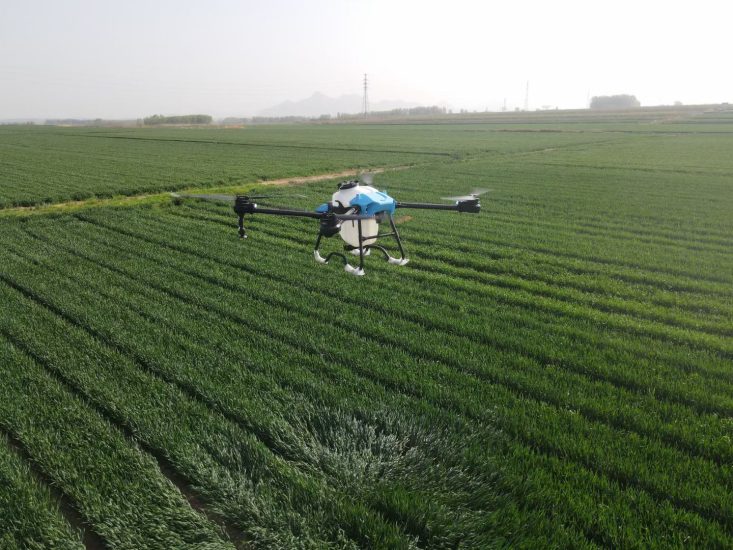
Large fields are one of the situations where a higher-capacity aircraft can be particularly useful.
Longer routes and fewer interruptions can simplify field operations.
Rice Fields
Wet-field environments can make ground access difficult. An aerial spraying system can provide another method of applying agricultural treatments without requiring heavy equipment to travel directly through the crop.
Orchards
A 30L aircraft can potentially be used for orchard operations, but payload capacity is only one consideration.
Tree height, canopy density, terrain, flight altitude, airflow, and obstacle avoidance all need to be evaluated.
Commercial Spraying Services
Agricultural contractors may operate across multiple farms and require equipment that can handle frequent daily operations.
For these users, battery logistics, spare parts, maintenance, and transport can be just as important as tank capacity.
Spray Width and Flight Speed
A larger tank does not automatically increase field productivity.
The spraying width and flight speed also influence the amount of land that can be covered.
For example, a drone with a narrow spray pattern may require more flight passes than a system with a wider effective application area.
However, wider coverage must still maintain the required application consistency.
Buyers should therefore consider the relationship between:
Tank capacity + spray width + flight speed + application rate + battery endurance
rather than evaluating each specification separately.
Flight Planning for Large Fields
Large agricultural areas require efficient route planning.
A well-designed flight route can reduce unnecessary travel and improve battery utilization.
Important considerations include:
- Field boundaries
- Obstacles
- No-fly areas
- Turning points
- Battery limitations
- Refill locations
- Terrain
- Wind conditions
Automatic route-planning functions can simplify repetitive operations, but the operator remains responsible for reviewing the route and ensuring that the planned flight is appropriate for the operating environment.
Maintenance of a 30L Spraying Drone
A larger spraying system may handle substantial volumes of agricultural liquid, making maintenance particularly important.
After operations, operators should follow appropriate cleaning procedures for:
- Tank
- Pump
- Filters
- Pipes
- Valves
- Nozzles
- Connectors
The aircraft itself should also be inspected regularly.
Routine checks can include:
- Motors
- Propellers
- Arms
- Landing gear
- Battery connectors
- Sensors
- Positioning equipment
Preventive maintenance can help identify problems before they interrupt scheduled agricultural work.
Transportation Requirements
A 30L agricultural drone is larger than many smaller spraying platforms, so transportation should be considered before purchasing.
Buyers should determine how the aircraft, batteries, charger, controller, spare parts, and other equipment will be transported between locations.
For agricultural contractors, transportation becomes particularly important when the equipment needs to travel between multiple farms.
A suitable transport and storage system can reduce setup time and protect the equipment during movement.
Regulatory Requirements
Agricultural drones are subject to aviation and agricultural regulations that vary by country and region.
Depending on the destination market, buyers may need to consider:
- Drone registration
- Pilot or operator requirements
- Flight restrictions
- Radio-frequency requirements
- Insurance
- Agricultural chemical regulations
- Operating permissions
- Import requirements
International buyers should confirm the applicable rules before importing or operating a 30L agricultural drone.
What Should Commercial Buyers Ask?
Before purchasing a 30L system, request detailed technical information.
Important questions include:
- What is the maximum takeoff weight?
- What is the recommended working payload?
- What is the actual tank capacity?
- What is the flight time with a working payload?
- What is the effective spray width?
- What is the pump flow rate?
- How is the spray rate controlled?
- What battery capacity is required?
- How long does charging take?
- How many batteries are recommended?
- What positioning system is included?
- What obstacle-detection functions are available?
- Which spare parts are recommended?
- What maintenance is required?
- Can the configuration be customized?
Getting these details in writing makes it easier to compare equipment based on actual operating requirements.
OEM and ODM Opportunities
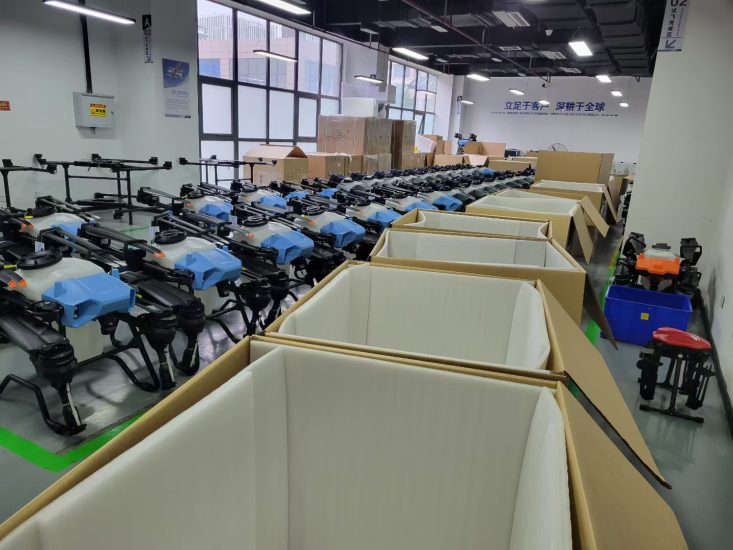
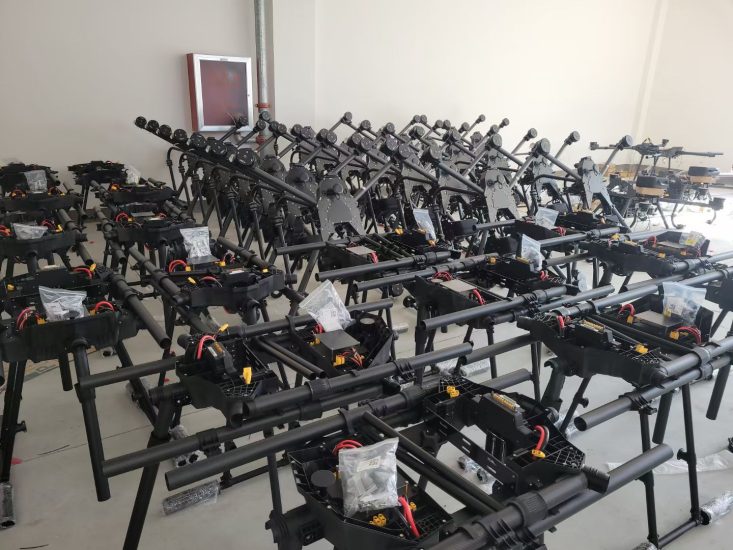
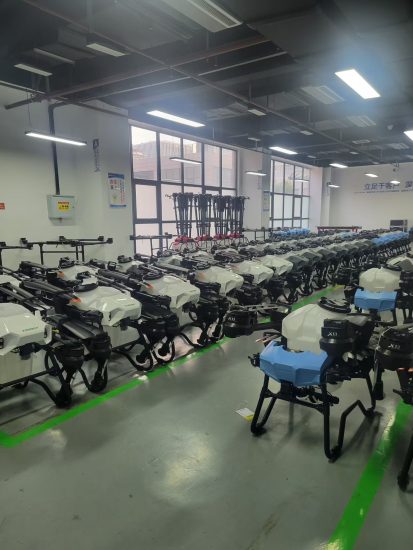
A 30L agricultural drone may also be suitable for distributors and agricultural equipment businesses looking for customized products.
OEM or ODM projects can potentially involve:
- Brand identity
- Product appearance
- Packaging
- Tank configuration
- Battery system
- Spraying system
- Controller configuration
- Accessories
- Documentation
Customization should be planned around the target market, required certifications, production quantity, and intended application.
A manufacturer should also clarify which components can be modified and which components need to remain within an established technical platform.
Frequently Asked Questions
Is a 30L agricultural drone suitable for large farms?
A 30L configuration can be suitable for certain large-scale agricultural operations, particularly where reducing refill frequency is important. Actual suitability depends on field conditions and the complete operating system.
Does a 30L drone cover 30 hectares per flight?
No. Tank capacity and land coverage are different measurements. Coverage depends primarily on the required application rate, along with spray width and operating conditions.
Is a 30L drone better for commercial spraying?
It can be useful for commercial operations that require higher liquid capacity, but buyers should evaluate battery logistics, refill procedures, transport, maintenance, and operating productivity together.
How many batteries are required?
There is no universal number. The required quantity depends on flight time, charging time, operating hours, and the desired workflow.
Can a 30L agricultural drone be customized?
Depending on the manufacturer and project, OEM and ODM customization may be available for selected hardware, branding, packaging, spraying components, and other requirements.
Selecting a 30L Agricultural Spraying Drone
A 30L agricultural spraying drone is a high-capacity aerial application platform intended for operations where payload and workflow efficiency are important.
The most useful purchasing decision comes from matching the aircraft to the actual operation.
Farm size, crop type, application rate, battery endurance, spray width, terrain, refill infrastructure, maintenance, transportation, regulations, and after-sales support should all be considered before placing an order.
MSOEN provides agricultural UAV solutions for different operating requirements and can discuss 30L configurations, spraying systems, battery options, customization, and OEM/ODM manufacturing for commercial buyers.


No comments yet