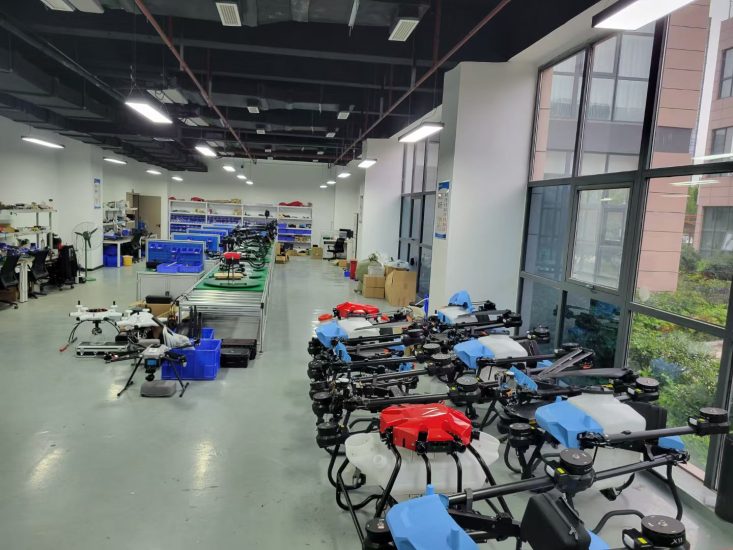


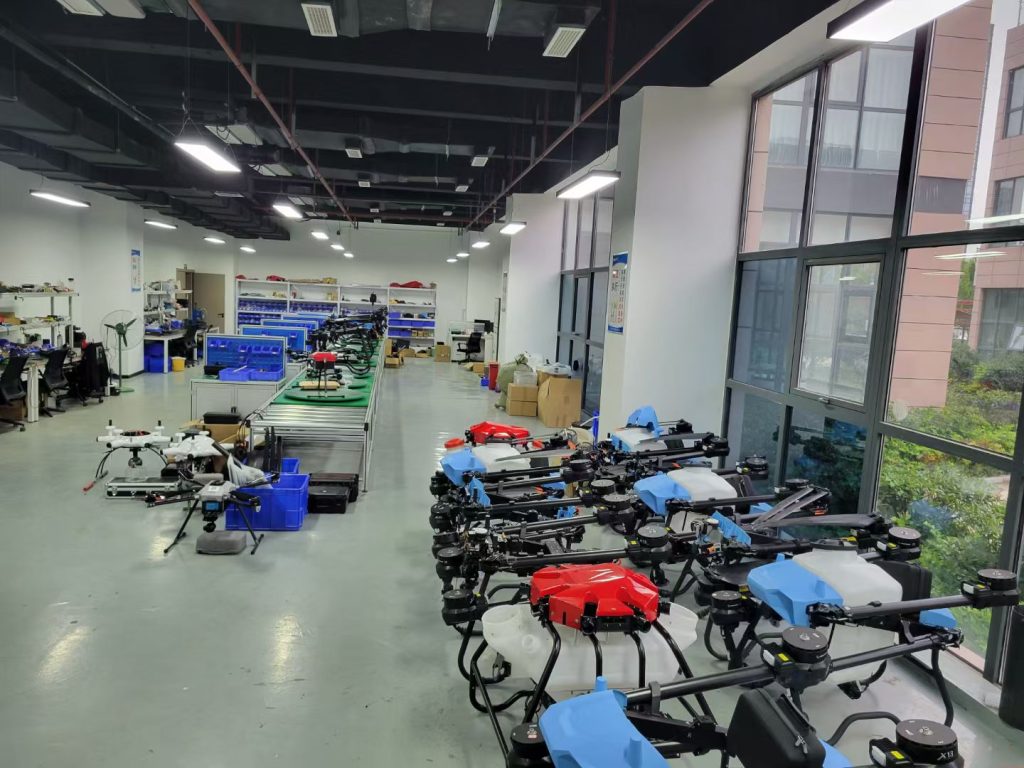
Rice farming requires regular crop management throughout different growing stages. From early crop development to mature rice fields, farmers need effective ways to apply fertilizers, pesticides, and other agricultural treatments.
Traditional spraying methods can require considerable manual labor, particularly when managing large rice-growing areas. Agricultural spraying drones provide another option for farmers and agricultural service providers looking to improve field operations.
A rice spraying drone can help operators cover agricultural fields without requiring workers to walk directly through wet or muddy farmland.
However, choosing the right agricultural drone for rice farming involves more than selecting a large water tank. Buyers should consider spraying performance, flight stability, battery capacity, terrain conditions, operating efficiency, and maintenance requirements.
This guide explains the main factors to consider when purchasing an agricultural spraying drone for rice farming.
1. Why Use Agricultural Spraying Drones for Rice Farming?
Rice fields often have environmental conditions that make conventional spraying operations challenging.
Common challenges include:
- Wet and muddy field surfaces
- Difficult access to certain farming areas
- Large areas requiring regular crop treatment
- Seasonal labor shortages
- Uneven field boundaries
- Different crop growth stages
- The need for timely spraying operations
Agricultural spraying drones can help address some of these challenges.
Reduced ground contact
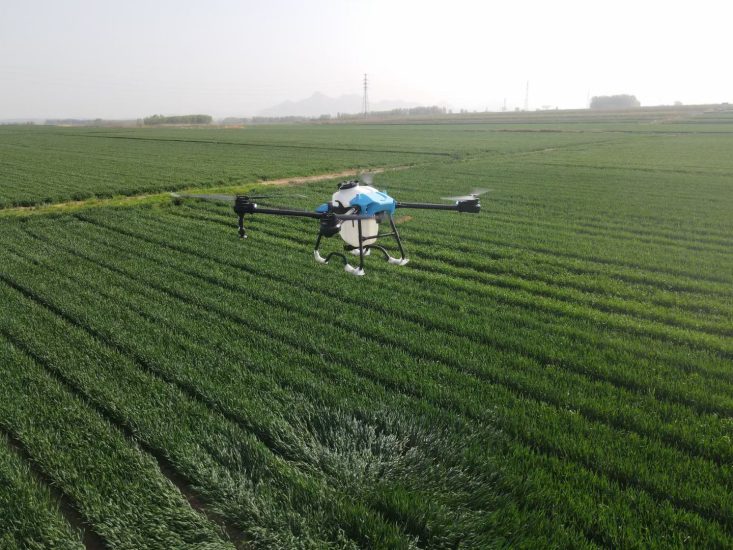
Drones can spray crops from above without requiring operators to walk through every section of a rice field.
Access to wet farmland
Aerial spraying can be useful when fields are flooded or too muddy for ground-based machinery.
Flexible field operations
Operators can plan flight routes according to field boundaries and crop conditions.
Reduced manual spraying work
A drone can reduce the need for workers to carry traditional spraying equipment across large fields.
Actual benefits depend on farm size, equipment configuration, operator skills, weather, and application methods.
2. Choosing the Right Tank Capacity for Rice Fields
Tank capacity is one of the first specifications buyers consider.
Agricultural spraying drones are available in different capacities, including smaller models for specialized operations and larger models for commercial farming.
A 50L agricultural spraying drone may be suitable for agricultural service providers and large farming operations that require greater liquid-carrying capacity.
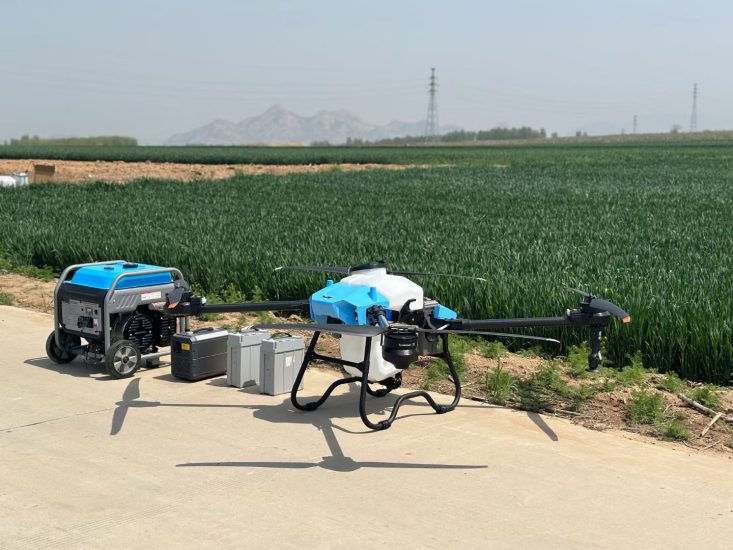
The MSOEN M50 is a 50L agricultural spraying drone designed for commercial agricultural applications.
When selecting tank capacity, consider:
- Total rice field area
- Required application volume per hectare
- Number of available batteries
- Water and chemical refilling arrangements
- Daily working schedule
- Transport and storage requirements
A larger tank does not automatically guarantee higher field productivity.
The actual working area per flight depends on the application rate, flight speed, spray width, and field conditions.
Buyers should compare complete operating performance rather than tank capacity alone.
3. Spraying System Requirements for Rice Farming
The spraying system directly affects application quality.
Rice farming applications may require different spray configurations depending on crop growth stages, target pests, treatment products, and local agricultural practices.
Important components include:
Spraying nozzles
Nozzle selection affects droplet size, distribution, and application characteristics.
Water pumps
The pump system should provide a suitable and stable liquid flow rate for the intended operation.
Flow control
Adjustable flow settings help operators manage application rates according to the spraying plan.
Filters
Filters help protect the spraying system from particles that may block nozzles.
Pipes and connections
Liquid-delivery components should be durable, easy to inspect, and simple to maintain.
Before purchasing, ask the manufacturer for nozzle specifications, pump flow rates, and the available spraying configurations.
The selected setup should be appropriate for the intended agricultural chemicals and application requirements.
4. Flight Height, Spray Width and Application Efficiency
Flight parameters are important when operating agricultural drones over rice fields.
Three factors deserve particular attention.
Flight Height
The operating height affects spray distribution and the interaction between airflow and crop canopies.
The appropriate height depends on crop growth stage, nozzle configuration, weather, and application requirements.
Spray Width
Spray width determines how much ground can be covered during each flight path.
The M50 product information lists an approximate spraying width of 6–10 meters, depending on configuration and operating conditions.
Flight Speed
Flight speed affects the amount of liquid applied over a given area.
Operators should follow the manufacturer’s recommended operating parameters and applicable agricultural application guidelines.
Do not assume that the widest spray width or fastest flight speed will always produce the best spraying results.
5. Can Agricultural Drones Operate in Flooded Rice Fields?
Flooded rice fields are one of the environments where agricultural spraying drones can be particularly useful.
Traditional ground equipment may have difficulty accessing muddy or water-covered farmland.
Aerial spraying allows operators to manage applications without driving machinery directly through the field.
However, flooded fields still present operating challenges.
Operators should consider:
- Wind conditions
- Field boundaries
- Power lines and nearby obstacles
- Trees and buildings
- GPS positioning quality
- Water and chemical refilling locations
- Safe takeoff and landing areas
Flight routes should be planned carefully, especially in areas with irregular field shapes or nearby infrastructure.
Operators should also comply with local drone flight regulations and agricultural chemical requirements.
6. Battery Capacity and Charging Solutions for Rice Spraying Operations
Battery management is important for commercial rice spraying operations.
Agricultural drones carry substantial payloads, so battery performance can change according to tank load and operating conditions.
When selecting a drone for rice farming, buyers should check:
- Battery voltage
- Battery capacity
- Battery weight
- Charging time
- Charger compatibility
- Number of batteries included
- Replacement battery availability
For commercial operations, having multiple compatible batteries can help operators maintain a more organized flight schedule.
A suitable fast-charging system can also reduce unnecessary waiting time.
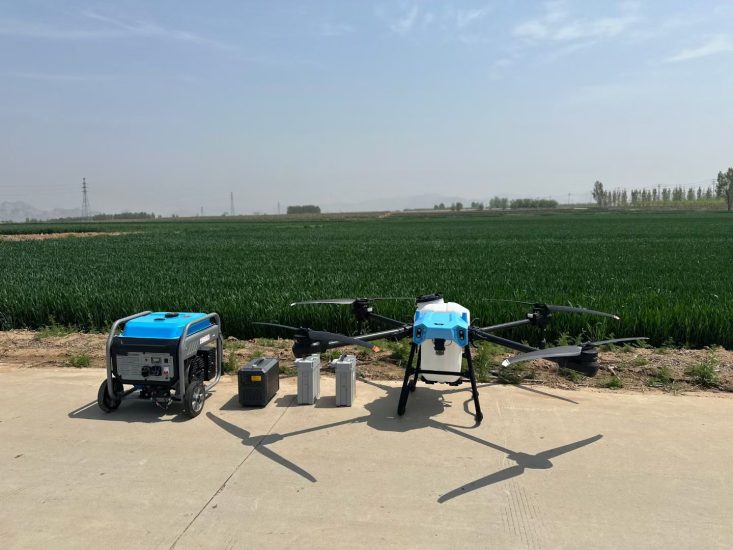
The MSOEN M50 supports 14S/18S smart battery configurations depending on the selected system, with a dual-channel fast charger listed in its product information.
Always confirm the exact battery package and charger specifications before purchasing.
7. GPS, RTK and Automatic Flight Planning
Modern agricultural spraying drones may include positioning and flight-planning technologies that help operators manage field operations.
Important functions include:
GPS Positioning
GPS supports aircraft positioning and navigation.
Automatic Flight Routes
Operators can plan flight paths based on the field boundaries and intended application.
RTK Positioning
RTK is an optional positioning technology that can improve positioning accuracy when the required correction service and equipment are available.
Terrain Following
Terrain-following functions can help the drone maintain an appropriate relative height over changing ground conditions.
Obstacle Detection
Obstacle detection systems can help identify certain objects during flight, depending on sensor capabilities and operating conditions.
For rice fields, automatic route planning can be useful when managing large and regularly shaped agricultural areas.
Buyers should confirm which functions are standard and which require optional equipment.
8. Choosing Between Different Agricultural Drone Capacities
Different farming businesses have different equipment requirements.
| Drone Capacity | Potential Application |
|---|---|
| 10L–20L | Smaller farms and specialized operations |
| 30L | Medium-sized agricultural operations |
| 50L | Commercial spraying and larger farms |
| 70L–100L | Specialized high-capacity agricultural applications |
These are general purchasing categories, not fixed farm-size recommendations.
The best capacity depends on the spraying rate, crop conditions, transport arrangements, battery performance, and available operators.
For buyers managing large rice-growing areas or providing agricultural spraying services to multiple farms, a 50L model may be worth considering.
9. What Should Rice Farming Businesses Check Before Buying?
Before selecting an agricultural spraying drone, buyers should prepare a clear equipment specification.
Use this checklist:
| Purchasing Item | What to Confirm |
|---|---|
| Tank capacity | Required liquid capacity |
| Spraying system | Pump, nozzle and flow specifications |
| Spray width | Actual working conditions |
| Flight time | With specified payload |
| Battery package | Quantity and specifications |
| Charger | Compatible charging system |
| GPS | Positioning functions |
| RTK | Availability and additional cost |
| Radar | Terrain following and obstacle detection |
| Remote controller | Model and operating functions |
| Spare parts | Availability and pricing |
| Warranty | Coverage and service conditions |
| Training | User guidance and technical support |
International buyers should also confirm import requirements, battery transportation arrangements, and local operating regulations.
10. Why Consider the MSOEN M50 for Rice Farming?
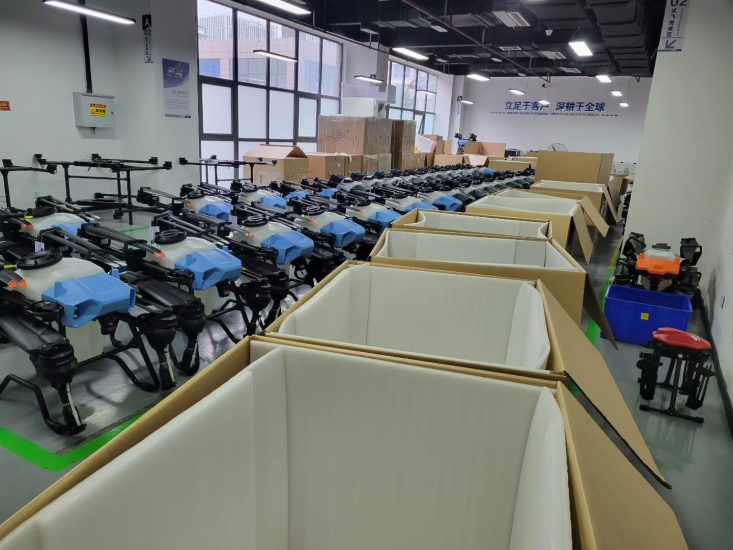
MSOEN provides agricultural and industrial drone solutions for international buyers, distributors, and agricultural businesses.
The M50 is a 50L agricultural spraying drone designed for commercial crop spraying applications.
Its product configuration includes:
- 50L spraying tank
- Agricultural spraying system
- Carbon fiber propellers
- GPS positioning
- K++ V2 flight controller
- Joyance H12 remote controller
- Terrain-following and obstacle-avoidance equipment
- 14S/18S smart battery configurations, depending on the selected system
- Dual-channel fast charger listed in product information
Optional equipment and exact specifications should be confirmed for the selected configuration.
For rice farming businesses, the appropriate setup should be selected according to field size, crop conditions, spraying requirements, and local operating standards.
MSOEN also supports OEM and ODM cooperation for customers interested in developing agricultural drone products under their own brands.
Explore our Agricultural Drone Products for more information.
11. Frequently Asked Questions
Q1: Can agricultural spraying drones be used in rice fields?
Yes. Agricultural spraying drones can be used for rice crop protection and other suitable agricultural applications. The spraying configuration should match the crop stage and application requirements.
Q2: Are 50L agricultural drones suitable for large rice farms?
A 50L agricultural drone may be suitable for commercial rice farming and agricultural service businesses. Actual suitability depends on field size, application rate, battery performance, and operational conditions.
Q3: Can spraying drones operate over flooded rice fields?
Yes. Aerial spraying can be useful in flooded fields because the aircraft does not need to travel over muddy ground. Operators must still consider wind, obstacles, field boundaries, and safe flight conditions.
Q4: How much area can a 50L agricultural drone spray per flight?
The coverage area depends on the application volume per hectare, spraying flow rate, flight speed, and other operating conditions. Buyers should request tested operating data from the manufacturer.
Q5: What spray nozzles are suitable for rice farming?
The appropriate nozzle depends on the intended agricultural treatment, droplet requirements, chemical formulation, and local application standards. Consult the equipment manufacturer and qualified agricultural specialists.
Q6: Does the MSOEN M50 support RTK?
RTK is listed as an optional configuration. Buyers should confirm the equipment requirements and available positioning services before ordering.
Q7: Can I purchase a 50L agricultural drone for distribution in my country?
International distributors can discuss product supply and OEM/ODM cooperation with MSOEN. Local registration, import regulations, and drone operating requirements should be checked before establishing a distribution business.
12. Request a 50L Agricultural Spraying Drone Quotation
Are you looking for an agricultural spraying drone for rice farming, commercial crop protection, or agricultural service operations?
MSOEN can help you review available 50L agricultural drone configurations and discuss suitable equipment packages.
When requesting a quotation, please provide:
- Destination country
- Required drone quantity
- Preferred tank capacity
- Battery quantity
- Required spraying configuration
- Standard or OEM customized products
Contact MSOEN to discuss your agricultural spraying drone requirements.


No comments yet