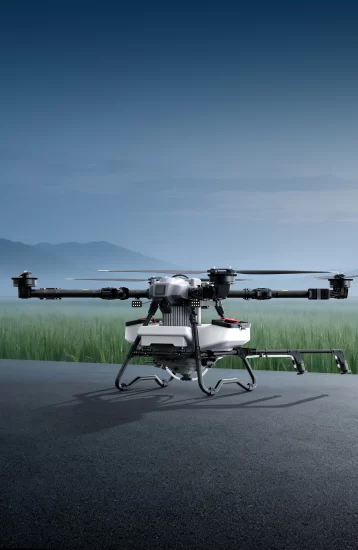


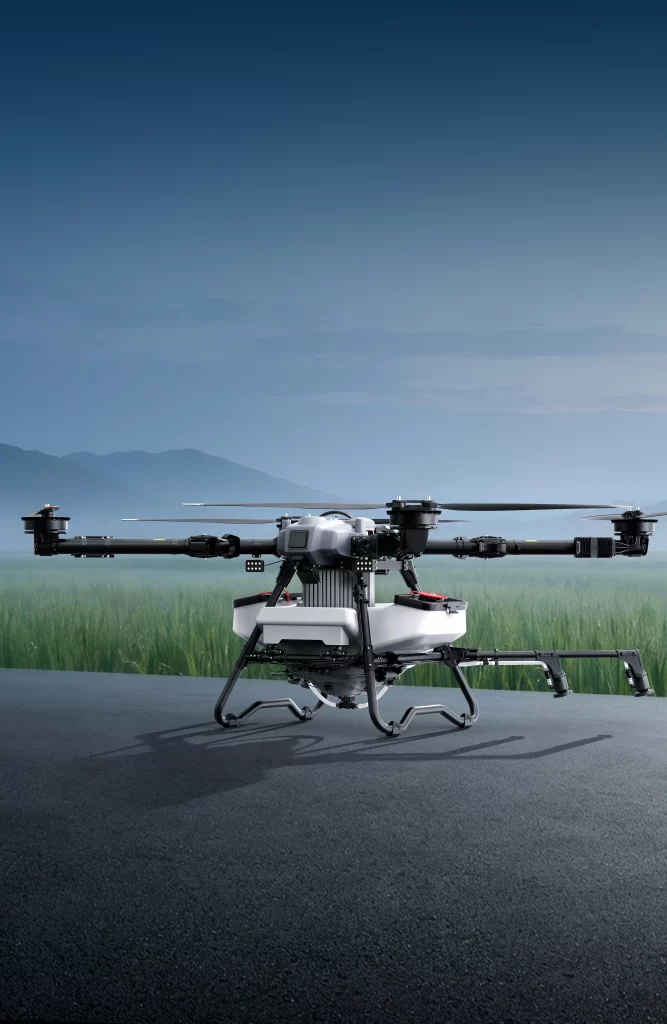
Procuring an agricultural spraying drone from a Chinese manufacturer and deploying it commercially in New Zealand is not a single transaction—it is a multi-stage project spanning international logistics, customs clearance, civil aviation certification, agrichemical regulation, and pilot competency. Each stage is governed by a distinct New Zealand regulator: the Customs Service controls border entry, the Civil Aviation Authority (CAA) controls whether the aircraft may lawfully fly, and the Ministry for Primary Industries (MPI) controls what you may legally release into the environment.
This article provides a detailed, end-to-end workflow for importers, farm operators, and agribusiness contractors who intend to source a spraying UAV from China and operate it in New Zealand. It assumes a commercial operation: the drone will be used to apply agrichemicals to land for hire or for the operator’s own farming business.
📌 The foundational principle: In New Zealand, the aerial application of agrichemicals is expressly excluded from Part 101. Even if your drone weighs less than 25 kg fully loaded, you must hold a Part 102 Unmanned Aircraft Operator Certificate (UAOC) to perform this activity.
1. Pre-Procurement: Specifying the Right Aircraft for New Zealand Compliance
1.1 The 25 kg Threshold and Its Consequences
Under CAA rules, a drone with a gross mass (including batteries, fuel, and chemical payload) of greater than 25 kg always requires Part 102 certification, irrespective of the activity. Most Chinese-manufactured agricultural spraying drones with 20–40 litre tanks exceed this threshold when fully loaded.
Even for sub-25 kg spraying drones, Part 102 is still mandatory because aerial agrichemical application is prohibited under Part 101. Therefore, every spraying drone you import from China will require Part 102 coverage.
1.2 Technical Specifications to Lock Down Before Manufacture
When placing your order, specify and obtain documentary evidence for:
| Parameter | Why It Matters |
|---|---|
| Maximum takeoff weight (MTOW) | Determines CAA classification and the rigour of the exposition’s airworthiness procedures. |
| Tank capacity and material | Must be chemically compatible with the agrichemicals you intend to use; MSDS documentation for tank/hose/seal materials will be required. |
| Nozzle type and flow rate | Must permit compliance with spray drift management rules under MPI and regional council plans. |
| RTK GPS accuracy | Strongly recommended for precision; some councils effectively expect it near sensitive areas. |
| Fail-safe behaviours | Emergency stop, payload release, return-to-home, and geofencing capabilities must be documented. |
| Flight log export format | CAA and MPI both require record-keeping; logs must be exportable and retrievable in a format you control. |
| Component traceability | CAA inspectors expect to verify motors, ESCs, and flight controller identity. Unmarked or undocumented components are a red flag. |
1.3 Documentation to Obtain from the Chinese Manufacturer
Before the drone leaves the factory, secure the following in English:
-
Certificate of Conformity declaring the drone meets the manufacturer’s published specifications
-
Full technical manual including maintenance schedules, wiring diagrams, and component-level specifications
-
Materials Safety Data Sheets (MSDS) for every component that contacts chemicals
-
Software/firmware documentation—version history, fail-safe logic, and confirmation that the flight control software functions without dependence on China-only servers or cloud services
-
Commercial invoice and packing list with accurate descriptions and valuations
-
UN 38.3 test summary for each lithium battery
1.4 Radio Spectrum Compliance
New Zealand’s radio spectrum is managed by Radio Spectrum Management (RSM) under the Ministry of Business, Innovation and Employment. Agricultural drones typically operate on 2.4 GHz and 5.8 GHz for control links.
Confirm with your supplier that the radio modules:
-
Operate within New Zealand’s legal power limits
-
Are frequency-configurable to New Zealand-legal channels
-
Hold FCC/CE markings as evidence of emissions compliance
Non-compliant transmitters may be seized at the border or require an RSM licence to operate.
2. International Logistics: The Dangerous Goods Challenge
2.1 Lithium Battery Transport
Spraying drones use high-capacity lithium-polymer batteries, classified as Dangerous Goods Class 9 for transport. This is the single most common cause of import delays and shipment returns.
Requirements:
-
Batteries must be UN 38.3 certified
-
Proper DG documentation per IATA (air freight) or IMO (sea freight) regulations
-
Correct UN packaging and labelling
-
Accuratete dangerous goods declaration by the freight forwarder
Incorrect DG documentation routinely results in entire shipments being returned to origin—adding 3–6 weeks and significant cost to your timeline.
2.2 Shipping Mode Selection
| Mode | Transit Time | Relative Cost | DG Handling |
|---|---|---|---|
| Air freight | 5–10 days | High | Stringent; preferred for batteries |
| Sea freight | 25–35 days | Low | More flexible; longer lead time |
Given the dangerous goods complexity, many importers choose air freight for the initial drone-and-battery shipment, despite the higher cost, to reduce the risk of battery-related delays.
2.3 Freight Forwarder Selection
Engage a freight forwarder with demonstrated experience in DG Class 9 lithium battery shipments on the China–New Zealand lane. Verify their track record before booking. A forwarder unfamiliar with current IATA/IMO lithium battery provisions can cause shipment rejection at origin.
3. Customs Clearance: Border Entry
3.1 HS Classification
Agricultural spraying drones are classified under Heading 8806 (“Unmanned aircraft”) of the Harmonized System. The specific subheading depends on maximum takeoff weight:
-
8806.22: Unmanned aircraft, MTOW > 250 g but ≤ 7 kg
-
8806.23: Unmanned aircraft, MTOW > 7 kg but ≤ 25 kg
-
8806.24: Unmanned aircraft, MTOW > 25 kg but ≤ 150 kg
-
8806.29: Unmanned aircraft, MTOW > 150 kg
Agricultural spraying drones typically fall into the 8806.23, 8806.24, or 8806.29 range depending on tank capacity and battery weight. Spare parts and ground control stations may fall under different classifications and should be declared separately.
Indicative tariff intelligence suggests that New Zealand’s MFN duty rate for unmanned aircraft under 8806 is 0%, but this should be confirmed with a licensed customs broker at the time of import, as tariff schedules evolve.
3.2 Goods and Services Tax (GST)
GST in New Zealand is 15%. It applies to the customs value plus any applicable duty and freight (CIF value). If you are a GST-registered business importing the drone for taxable supplies (e.g., providing spraying services), you can reclaim the GST via your regular GST return—but you must pay it at the border first.
3.3 Required Documents
-
Commercial invoice (detailing drone, batteries, spare parts, and ground station separately)
-
Packing list
-
Bill of lading or air waybill
-
Certificate of origin (recommended to support valuation)
-
Dangerous goods documentation for batteries
-
Any permits or certificates requested by border agencies
3.4 The Critical Distinction: “Cleared” ≠ “Legal to Fly”
Customs clearance gives you physical possession. It does not authorise a single spraying flight. The CAA Part 102 certification and aircraft inspection must be satisfied separately.
4. CAA Part 102 Certification: The Core Compliance Gate
4.1 The Unmanned Aircraft Operator Certificate (UAOC)
The UAOC is issued to an organisation (company, partnership, or sole trader business), not to an individual. It certifies that the operator has:
-
Identified the hazards and risks of the proposed operation
-
Developed documented procedures to mitigate those risks (the Exposition)
-
Nominated a responsible person for the operation
-
Established maintenance and continued airworthiness procedures
-
Defined personnel licensing and training requirements
4.2 The Exposition: Your Most Important Document
The Exposition is a formal operations manual required under Part 102. It must address, at minimum:
-
Hazard register specific to agricultural spraying (chemical drift, payload release failure, overflight of people, environmental contamination)
-
Risk mitigation procedures (buffer zones, weather minima, emergency response, spill containment)
-
Aircraft specifications and initial airworthiness procedures
-
Maintenance schedules and component replacement criteria
-
Personnel competency requirements
-
Operating procedures (minimum distances, weather limits, record-keeping)
-
Procedures for establishing initial airworthiness of imported aircraft
💡 Timing reality: CAA currently takes 8–10 months to approve a new UAOC application. Because the CAA bills by the hour for review time and processes applications in queue order, submit the exposition first—before or concurrent with the drone order. All other certifications can run in parallel during this wait.
4.3 CAA Inspection of Imported Drones
This is the provision most specific to cross-border importers: if you import an agricultural/spray drone from overseas, the CAA will require that it is inspected before it is flown.
The inspection verifies that the physical aircraft matches the specifications in your exposition, that safety-critical systems function as documented, and that build quality and component traceability meet CAA expectations. A drone with undocumented flight controllers, no maintenance manuals, or unverifiable components is highly likely to be rejected.
4.4 Adding the Aircraft to Your Operations Specifications
Your UAOC includes an Operations Specifications document listing approved aircraft. Each imported drone must be individually listed and inspected before it can be flown commercially. Importing additional units later requires amending the Operations Specifications via a separate CAA application.
4.5 Interim Solution: Operating Under an Existing UAOC
To generate revenue during the 8–10 month CAA wait, it is perfectly legitimate to operate under an established operator’s UAOC. Many new entrants take this path, transitioning to their own certificate once approved.
5. Pilot Qualifications: The Four Certificates
Every pilot operating a Chinese-imported agricultural spraying drone under a Part 102 UAOC must hold:
5.1 Part 102 Professional Pilot Certificate
The personal flying qualification covering theory and practical flight test, including ATTI mode flying (with GPS and optical positioning disabled) to prove capability if positioning fails mid-operation.
5.2 Pilot Chemical Certificate
Specifically designed for aerial application. A standard Growsafe Approved Handler or Registered Chemical Applicator (RCA) certificate alone is not sufficient for aerial application. However, if you already hold a Growsafe RCA, you may be exempt from portions of the Pilot Chemical Certificate—seek advice before enrolling. The Pilot Chemical Certificate covers:
-
How spray behaviour from a drone differs from ground-based application
-
Drift dynamics and management
-
Safe chemical handling in the air
5.3 Operational Competency Assessment (OCA)
A practical sign-off assessed against the specific procedures in the UAOC you operate under. Cannot occur until the UAOC is in place.
5.4 Agricultural UAV Rating
A spray and spreading-specific endorsement covering practical ag drone operation, flight planning for application, calibration, spray coverage, and product placement precision. After the provisional Agricultural Rating, a full rating follows a probationary period of 30 supervised flights and/or 6 months.
Timeline: Completed sequentially, the full pilot qualification pathway typically takes 10–12 months and costs approximately NZD $13,424 (excl. GST) to reach the provisional Agricultural Rating.
6. MPI Compliance: The Agrichemical Dimension
6.1 The ACVM Act Framework
Under the Agricultural Compounds and Veterinary Medicines (ACVM) Act 1997, every agrichemical product used in New Zealand must be authorised (registered, exempt, or approved for special circumstances). The Act’s purpose is to prevent or manage risks to public health, trade in primary produce, animal welfare, and agricultural security.
Critically: the label is the law. You may only use an agrichemical:
-
For the crop and pest specified on the label
-
At the application rate specified
-
With the buffer zones specified
-
Using application methods the label permits
Before importing your drone, verify that the agrichemicals you intend to spray are approved for aerial application and that their labels permit drone-based delivery.
6.2 Hazardous Substances Notice: Ecotoxic Agrichemicals
The Hazardous Substances (Hazardous Property Controls) Notice 2017 imposes an additional layer: the aerial application of highly ecotoxic agrichemicals (class 9.1A, 9.2A, 9.3A, or 9.4A pesticides and certain plant growth regulators) by unmanned aircraft must be performed by a person operating under the authority of, and in accordance with, a valid Part 102 UAOC.
This means that for many common agricultural chemicals, the Part 102 certificate is not merely an aviation requirement—it is a statutory prerequisite under hazardous substances law.
6.3 Record-Keeping Obligations
Operators must maintain detailed records of every spraying operation:
-
Date, time, and location
-
Product name and batch number
-
Application rate and total volume
-
Weather conditions
-
Name of the applicator
Records must be retained for a minimum of three years and made available to MPI on request.
6.4 Regional Council Rules
Sixteen regional councils enforce their own agrichemical discharge rules under the Resource Management Act. Key examples:
-
Canterbury: Strict rules near waterways; resource consent may be required for certain applications
-
Auckland: Specific buffer zones near residential areas and ecological sites
-
Waikato: Rules on spraying near roads and public spaces
Many councils now recognise drone spraying as a lower-drift alternative, but you must demonstrate compliance with local plans. Contact your regional council before your first commercial flight.
7. Insurance and Liability
7.1 Aviation Liability Insurance
Standard farm policies exclude aviation liabilities. You need specialist aviation insurance covering:
-
Third-party liability: Damage to other people’s property or persons
-
Environmental liability: Chemical drift onto neighbouring properties or waterways
-
Hull insurance: Coverage for the drone itself against crash, theft, or damage
7.2 Public Liability for Spraying Services
If offering spraying services to third parties, ensure your public liability policy explicitly covers aerial agrichemical application. Insurers often treat this as high-risk and may exclude it without a specific endorsement. Operating without appropriate coverage exposes the operator to substantial financial risk in the event of a drift incident.
8. The Complete Import-to-Operation Timeline
| Phase | Duration | Key Milestones |
|---|---|---|
| 1. Pre-order specification | 2–4 weeks | Lock down MTOW, obtain documentation commitments, confirm radio compliance |
| 2. Exposition writing | 4–6 weeks | Concurrent with steps 3–5; submit to CAA early |
| 3. Order & manufacture | 2–6 weeks | Production to agreed specifications |
| 4. International shipping | 2–5 weeks | DG-compliant battery transport |
| 5. Customs clearance | 1–2 weeks | Broker submission, GST payment |
| 6. CAA UAOC review | 8–10 months | Application in CAA queue |
| 7. Pilot certifications | 2–3 months | Part 102 Pilot Cert, Chemical Cert, OCA, Ag Rating (concurrent where possible) |
| 8. CAA aircraft inspection | 2–4 weeks | Physical inspection; add to Operations Specifications |
| 9. MPI/Council compliance setup | 1–2 weeks | Verify product labels, establish records, council consultation |
| 10. First legal commercial flight | — | Full compliance achieved |
Total realistic timeline: 12–15 months from initial order to first legal commercial spray.
9. Common Pitfalls in Cross-Border Agricultural Drone Procurement
9.1 “I’ll Just Fly Under Part 101”
Not legal. Part 101 expressly prohibits aerial agrichemical application. Operating without Part 102 is an offense under the Civil Aviation Act with penalties including fines, equipment confiscation, and prosecution.
9.2 Buying Without Verifying CAA Acceptability
Not every spray-capable drone is CAA-inspectable. Drones with undocumented flight controllers, no English maintenance manuals, poor build quality, or unverifiable components are highly likely to be rejected during inspection. Before purchasing, ask the manufacturer for references of previous New Zealand Part 102 certifications.
9.3 Ignoring Battery Shipping Regulations
Lithium batteries are Dangerous Goods. Incorrect DG documentation results in shipment returns, costing 3–6 weeks plus freight. Verify your supplier’s DG compliance credentials before ordering.
9.4 Underestimating the Part 102 Timeline
8–10 months for CAA to approve a new UAOC. Ordering in October expecting to spray in November is unrealistic. Plan at least 12 months ahead.
9.5 Software Connectivity Assumptions
Confirm that:
-
The drone’s software is fully available in English
-
It functions without access to China-only servers
-
Flight logs can be exported in a format you control and retain
Cloud-dependent systems routing through overseas servers may create compliance and data sovereignty concerns.
9.6 Assuming the Label Allows Aerial Application
Just because an agrichemical is registered in New Zealand does not mean its label permits aerial application. Verify label compliance before importing the drone, as it affects your entire operating model.
10. Strategic Recommendations
10.1 Initiate the UAOC Application Before Ordering
Because of the 8–10 month CAA queue, begin exposition writing before you place the drone order. You can specify the exact make and model once the purchase is finalised. This parallel processing saves months.
10.2 Engage Expert Help for the Exposition
The exposition is the single most critical document. A poorly prepared one triggers multiple CAA review cycles, each billed hourly. Engaging an experienced exposition writer substantially reduces rework risk.
10.3 Build the Safety Case for Your Imported Aircraft
Your exposition must make a compelling safety case around:
-
Component traceability and quality assurance
-
Maintenance sustainability (spare parts availability)
-
Software integrity and fail-safe behaviours
-
Calibration and chemical application precision
-
Emergency procedures specific to the aircraft’s design
10.4 Operate Under an Existing UAOC Initially
To generate revenue during the CAA wait, operate under an established operator’s UAOC. This is legitimate and common, allowing you to build flight hours and client relationships while your certificate is processed.
10.5 Maintain Dual Compliance Vigilance
CAA Part 102 certifies the operation; MPI ACVM certifies the product. A fully certified Part 102 operation spraying a non-authorised agrichemical is still illegal. Both chains must be continuously satisfied.
10.6 Prepare for BVLOS Evolution
Current agricultural spraying typically requires visual line of sight. BVLOS operations require specific CAA approval and demand rigorous risk management, redundant communications, and fail-safe procedures. As your operation scales, build this safety case early.
11. The Regulatory Architecture at a Glance
| Layer | Regulator | Key Instrument | What It Controls |
|---|---|---|---|
| Aviation | CAA | Part 102 UAOC | Whether the drone may lawfully fly for spraying |
| Aircraft airworthiness | CAA | Initial airworthiness inspection | Whether this specific imported drone is fit to fly |
| Pilot competency | CAA | Part 102 Pilot Cert, Chemical Cert, OCA, Ag Rating | Who may fly the drone |
| Agrichemical use | MPI | ACVM Act 1997 | What chemical may be sprayed and how |
| Hazardous substances | EPA / WorkSafe | HSNO 2017 Notice | Aerial application of ecotoxic agrichemicals |
| Environmental discharge | Regional Councils | Resource Management Act plans | Where and under what conditions spraying may occur |
| Border entry | Customs | HS 8806 classification | Physical import of the drone |
| Radio spectrum | RSM (MBIE) | Radio spectrum licences | Legal operation of control and telemetry links |
12. Future Regulatory Trajectory
The New Zealand government has signalled interest in reducing unnecessary regulatory burden for drone operators. The creation of Part 107 (regulatory sandboxes for advanced aviation) and the transfer of some technical requirements from Part 101 into more agile Transport Instruments suggest a direction toward:
-
Faster rule updates that track technology
-
Greater flexibility for lower-risk operations
-
More explicit pathways for high-risk operations like agricultural spraying
-
Potential future frameworks that could streamline certification for proven, lower-risk agricultural drone operations
However, agricultural spraying itself remains firmly in the Part 102 high-risk category. The fundamental requirement—a UAOC, a CAA-inspected aircraft, a qualified pilot, and ACVM-compliant agrichemicals—is not going away. Importers must plan for the full regulatory chain.
Conclusion
Cross-border procurement of an agricultural spraying drone from China to New Zealand is a viable and often economically compelling project, but it must be approached as a structured programme, not a simple purchase. The drone’s physical entry through Customs is merely the first gate. The substantive compliance work lies in:
-
Specifying the right aircraft with documentation the CAA can inspect and accept
-
Writing a robust exposition that makes a thorough safety case
-
Obtaining the UAOC through the 8–10 month CAA review process
-
Passing the CAA physical inspection of your imported drone
-
Securing the four pilot certificates for every operator
-
Complying with MPI/ACVM for every agrichemical sprayed
-
Satisfying regional council rules for your operating geography
-
Maintaining appropriate insurance for aviation and chemical liabilities
The operators who succeed are those who start early, document thoroughly, engage expert help where needed, and respect the multi-regulator architecture. A Chinese-sourced spraying drone can become a productive, compliant, and profitable part of a New Zealand agricultural operation—but only when every gate in the chain is systematically satisfied.
Start with three actions today:
-
Identify your target drone model and request full English technical documentation from the manufacturer
-
Initiate exposition writing for your Part 102 UAOC application—this is the critical-path item
-
Verify agrichemical label compliance for the products you intend to spray
With disciplined project management and respect for the regulatory framework, your investment in a Chinese agricultural spraying drone will deliver precision application, reduced chemical use, and genuine efficiency gains for years to come.
THE END


No comments yet