

The Philippines is one of Southeast Asia’s most important agricultural countries, with farming playing a significant role in national food security and rural employment. Major agricultural products include rice, corn, bananas, coconuts, sugarcane, pineapples, mangoes, coffee, cacao, vegetables, and various tropical fruits. As labor shortages, increasing production costs, and the need for sustainable farming practices continue to grow, agricultural drone technology has become an effective solution for improving farm productivity.
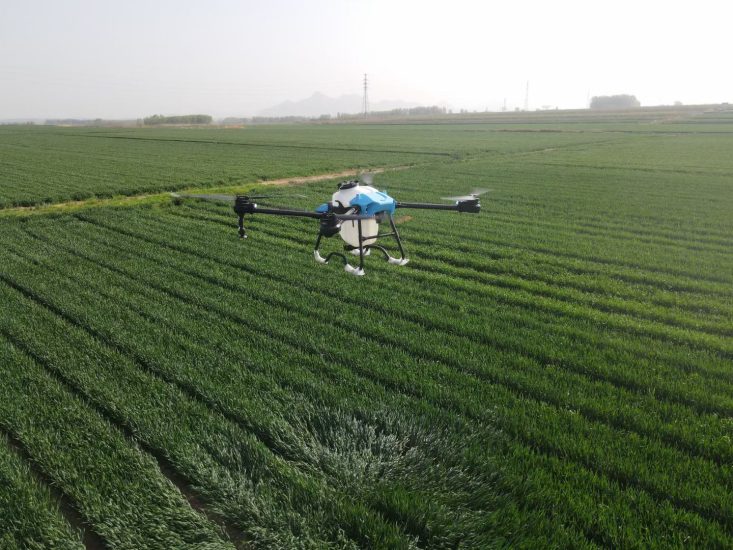
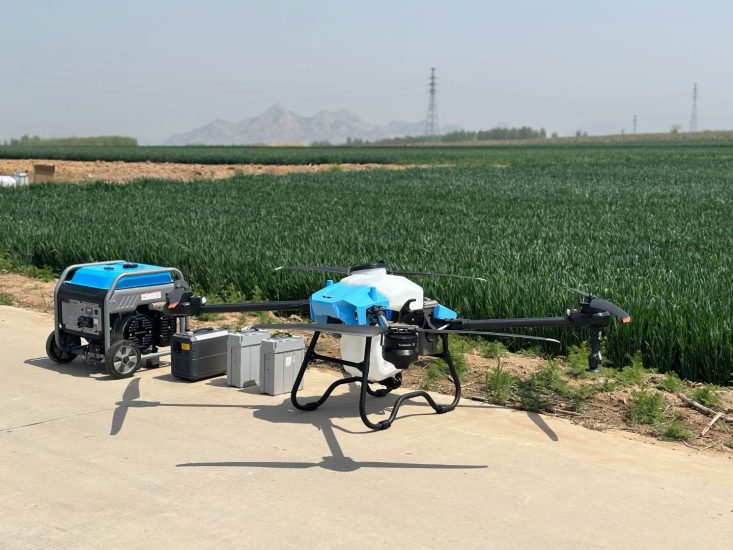
Crop spraying drones allow farmers to apply pesticides, herbicides, fungicides, and liquid fertilizers quickly and accurately. Compared with manual spraying or traditional ground equipment, agricultural drones reduce labor requirements, improve spraying consistency, minimize chemical waste, and help protect operators from direct exposure to agricultural chemicals.
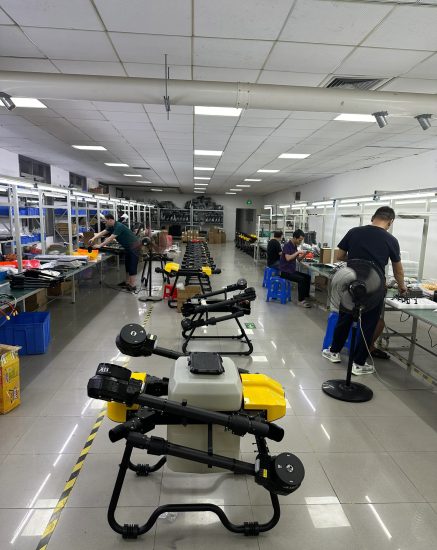
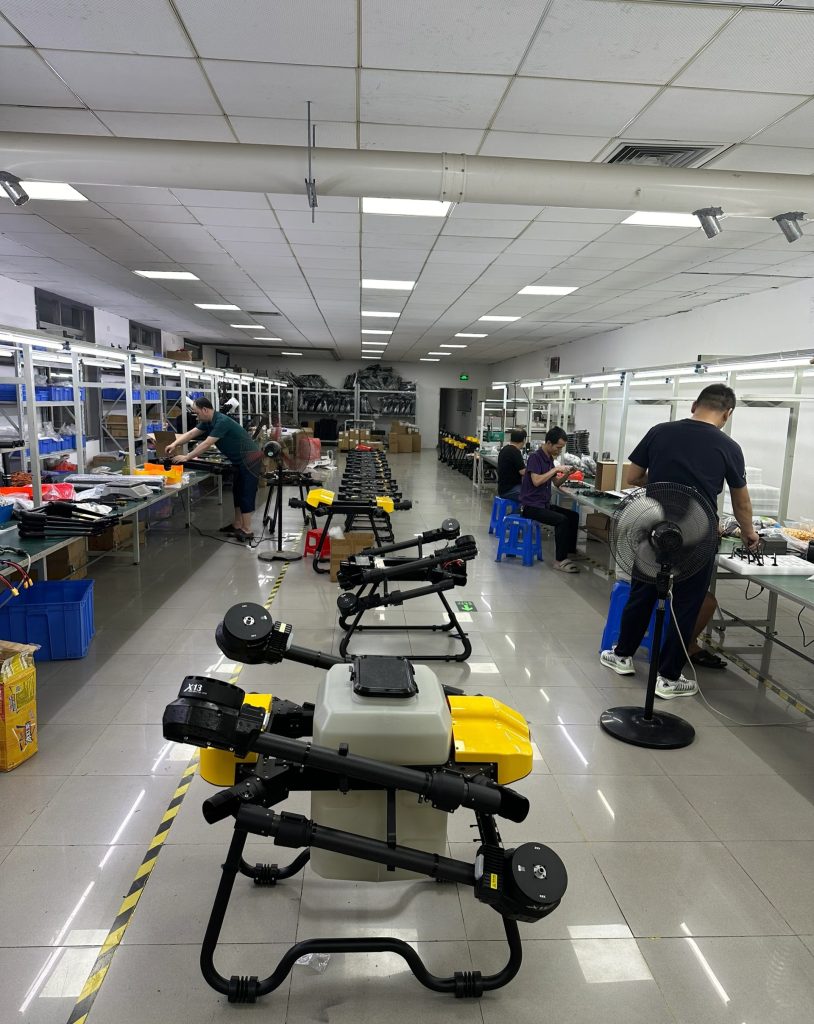
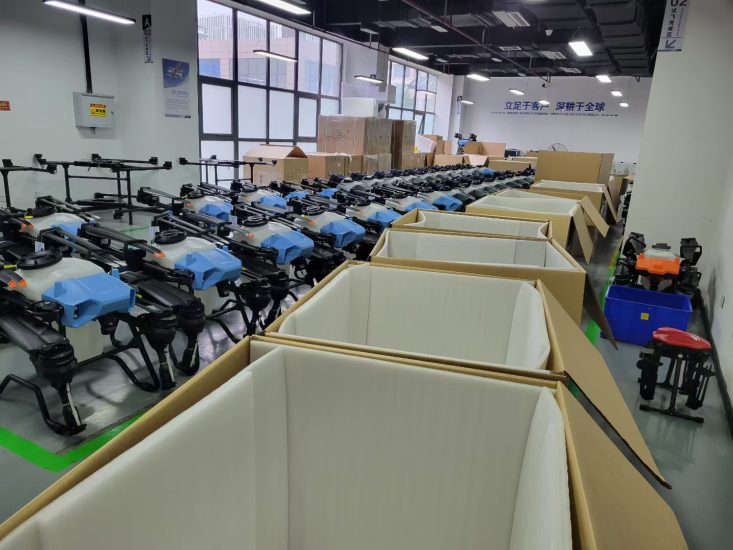
China has become the world’s leading manufacturing hub for agricultural drones. Chinese manufacturers provide advanced UAV technology, competitive factory pricing, OEM and ODM manufacturing, strict quality control, and comprehensive after-sales support. As a result, many importers, distributors, agricultural cooperatives, and commercial farms in the Philippines source their agricultural drones from China.
This comprehensive guide explains why the Philippines is an attractive market for crop spraying drones, how to select a reliable Chinese manufacturer, and what factors buyers should evaluate before importing.
Why the Philippines Is a Promising Market for Agricultural Drones
Agriculture contributes significantly to the Philippine economy. The country’s tropical climate allows year-round crop production, creating continuous demand for efficient crop protection technologies.
Agricultural spraying drones are widely used in:
- Rice farms
- Corn fields
- Banana plantations
- Coconut plantations
- Sugarcane farms
- Pineapple plantations
- Mango orchards
- Coffee farms
- Cacao plantations
- Vegetable production
Many farms are located in mountainous or uneven terrain where tractors and traditional sprayers are difficult to operate. Agricultural drones provide an efficient alternative by flying directly above crops and delivering accurate spraying coverage.
Why Import Agricultural Drones from China?
China has developed one of the world’s most advanced agricultural drone manufacturing industries through continuous investment in research, engineering, and intelligent flight technology.
Chinese suppliers offer numerous advantages:
- Competitive factory-direct pricing
- Advanced autonomous flight systems
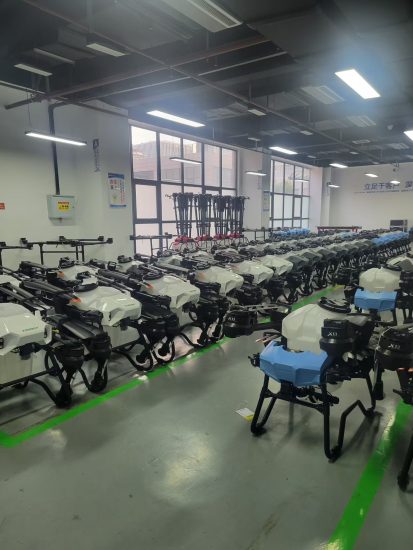
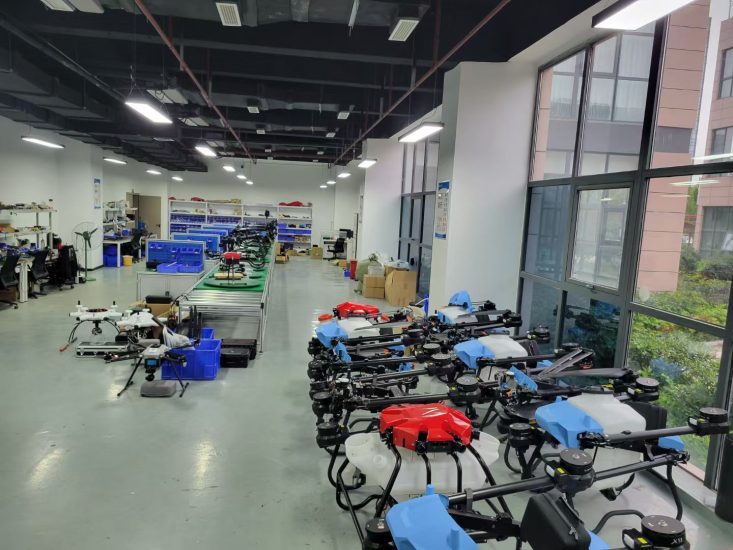
- High manufacturing capacity
- Precision spraying technology
- Continuous product innovation
- Reliable product quality
- OEM & ODM manufacturing
- Stable spare parts supply
- Professional technical support
- Rich international export experience
These advantages enable Philippine distributors to offer high-quality agricultural drones while maintaining competitive pricing in the local market.
Recommended Drone Models
Professional manufacturers usually offer several payload options for different farming requirements.
20L Agricultural Drone
The 20-liter model is suitable for:
- Vegetable farms
- Coffee plantations
- Small rice farms
- Fruit orchards
- Family farms
Advantages include:
- Compact structure
- Easy transportation
- Lower maintenance costs
- Excellent spraying precision
- High operational flexibility
30L Agricultural Drone
The 30-liter model is one of the most popular choices for commercial farming.
Recommended for:
- Medium-sized rice farms
- Corn fields
- Banana plantations
- Agricultural spraying contractors
Benefits include:
- Greater spraying efficiency
- Longer operating time
- Reduced refill frequency
- Excellent cost-performance ratio
50L Agricultural Drone
The 50-liter model is designed for large-scale agricultural operations.
Suitable for:
- Large sugarcane plantations
- Coconut plantations
- Commercial farms
- Government agricultural projects
- Professional spraying service providers
Advantages include:
- High payload capacity
- Large daily field coverage
- Reduced labor costs
- Increased operational efficiency
Advanced Agricultural Drone Technologies
Modern crop spraying drones combine intelligent technologies that improve efficiency, accuracy, and operational safety.
Intelligent Flight Control
Professional agricultural drones typically include:
- GPS navigation
- RTK centimeter-level positioning
- Automatic route planning
- Autonomous waypoint missions
- Terrain-following radar
- Automatic takeoff and landing
- Return-to-home function
These intelligent flight systems improve spraying consistency while reducing pilot workload.
Precision Spraying System
Professional spraying equipment includes:
- High-flow pumps
- Precision nozzles
- Adjustable spray volume
- Uniform droplet atomization
- Anti-drip valves
This technology improves pesticide utilization and reduces chemical waste.
Intelligent Obstacle Avoidance
Modern agricultural drones use radar and vision sensors to detect:
- Trees
- Utility poles
- Buildings
- Power lines
- Irrigation systems
- Uneven terrain
Obstacle avoidance technology increases flight safety, particularly in orchards and plantation environments.
Smart Battery Technology
Professional agricultural drones use intelligent lithium battery systems featuring:
- Fast charging capability
- Battery health monitoring
- Temperature protection
- Long service life
- Quick battery replacement
Multiple battery sets allow continuous spraying operations throughout the working day.
Multiple Agricultural Applications
Agricultural drones are not limited to pesticide spraying.
Crop Protection
Suitable for applying:
- Herbicides
- Fungicides
- Insecticides
- Plant growth regulators
- Liquid fertilizers
Fertilizer Spreading
Optional spreading systems can distribute:
- Granular fertilizers
- Rice seeds
- Corn seeds
- Grass seeds
- Soil conditioners
Crop Monitoring
Optional camera systems support:
- Crop health monitoring
- Disease detection
- Plant growth analysis
- Plantation inspection
- Precision farming management
Quality Control
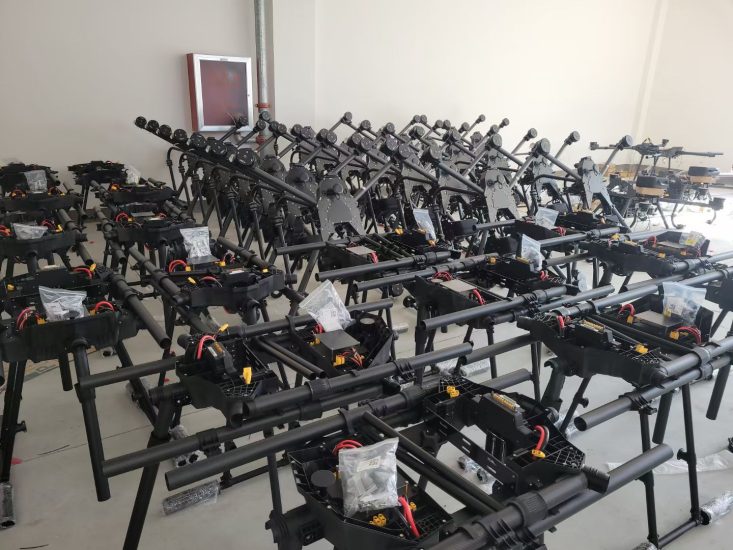
Professional Chinese manufacturers implement comprehensive quality control throughout the production process.
Testing generally includes:
- Raw material inspection
- Electronic component testing
- Aircraft assembly inspection
- Flight testing
- Spraying calibration
- Waterproof testing
- Battery safety testing
- Final product inspection
Strict quality management helps ensure long-term reliability under demanding agricultural conditions.
International Certifications
Before importing agricultural drones, Philippine buyers should verify international certifications.
Common certifications include:
- CE
- FCC
- RoHS
- ISO 9001
- UN38.3
- MSDS
Importers should also ensure compliance with Philippine aviation regulations, telecommunications requirements, lithium battery transportation standards, and customs procedures.
OEM & ODM Manufacturing Services
Professional Chinese manufacturers provide complete OEM and ODM solutions.
Customization options include:
Private Branding
- Company logo
- Product labels
- Battery branding
- Remote controller branding
Customized Appearance
- Product colors
- Decals
- Packaging design
Customized Documentation
- English user manuals
- Product catalogs
- Installation guides
- Maintenance manuals
Software Customization
- Startup logo
- Mobile application branding
- User interface customization
OEM manufacturing enables Philippine distributors to establish their own agricultural drone brands while remaining competitive.
Shipping from China to the Philippines
Agricultural drones can be delivered through multiple transportation methods.
Sea Freight
Suitable for:
- Bulk purchases
- Wholesale distribution
- Lower transportation costs
Air Freight
Suitable for:
- Sample orders
- Urgent deliveries
- Faster market entry
Professional suppliers can recommend the most suitable shipping solution based on project requirements.
Export Documentation
Reliable manufacturers generally provide:
- Commercial Invoice
- Packing List
- Bill of Lading or Air Waybill
- Certificate of Origin (if required)
- CE Certificate
- UN38.3 Battery Report
- MSDS
- User Manual
Complete export documentation helps facilitate customs clearance and reduce delays.
How to Choose the Right Agricultural Drone Supplier
Before placing an order, buyers should ask:
- Are you a manufacturer or trading company?
- How many years have you been producing agricultural drones?
- Which countries have you exported to?
- What certifications do your products hold?
- Do you provide OEM and ODM services?
- What warranty do you offer?
- Can spare parts be supplied quickly?
- Is technical training available?
- What after-sales support is included?
Choosing a supplier with strong manufacturing capability, international certifications, export experience, and responsive technical support significantly reduces purchasing risks.
Future Development of Agricultural Drones in the Philippines
The Philippine government and agricultural sector continue promoting precision agriculture to improve food production and sustainability.
Future trends include:
- Artificial intelligence-assisted flight
- Autonomous spraying missions
- Variable-rate spraying
- Cloud fleet management
- Smart agriculture platforms
- Improved battery technology
- Advanced radar obstacle avoidance
- Precision crop analytics
- Sustainable farming solutions
These technologies will help farmers increase productivity while reducing operating costs and environmental impact.
Conclusion
The Philippines is rapidly embracing precision agriculture, creating increasing demand for reliable crop spraying drones. By working with an experienced China Crop Spraying Drone Supplier, Philippine importers, distributors, and agricultural businesses can benefit from advanced UAV technology, factory-direct pricing, flexible OEM and ODM manufacturing, dependable product quality, and comprehensive technical support.
Selecting a manufacturer with strong research and development capabilities, international certifications, strict quality management, and extensive export experience will help build a successful long-term partnership while providing efficient agricultural drone solutions for the Philippine farming industry.
Frequently Asked Questions (FAQ)
1. Which agricultural drone is suitable for farms in the Philippines?
20L drones are ideal for orchards, vegetable farms, and small rice fields. 30L models are suitable for medium-sized commercial farms, while 50L drones are recommended for large sugarcane plantations, coconut farms, and agricultural service companies.
2. Can Chinese manufacturers provide OEM and ODM services?
Yes. Professional manufacturers offer private-label production, customized packaging, logo printing, software branding, multilingual user manuals, and complete OEM/ODM manufacturing services.
3. Which certifications should Philippine buyers request?
Buyers should request CE, FCC, RoHS, ISO 9001, UN38.3, and MSDS, while also ensuring compliance with Philippine import regulations and local drone operation requirements.
4. Can crop spraying drones spread fertilizer?
Yes. Many agricultural drones support both liquid spraying and granular spreading systems, allowing them to apply pesticides, fertilizers, seeds, and soil conditioners with interchangeable equipment.
5. How long does shipping from China to the Philippines take?
Air freight generally takes 3–7 days, while sea freight usually requires 5–12 days, depending on the departure port, destination, customs clearance, and shipping schedule.


No comments yet