


Traditional farming equipment such as tractors and manual spraying systems often struggle to cover large farmland areas efficiently. Labor shortages, rising operational costs, and environmental challenges are pushing the agricultural industry toward automation. As a result, many large farms are turning to high-capacity agricultural drones designed for precision farming.
Modern agricultural drones can perform multiple tasks including crop monitoring, pesticide spraying, fertilizer distribution, and aerial mapping. With advanced sensors, GPS navigation, and autonomous flight capabilities, these UAV systems allow farmers to manage thousands of acres more effectively.
This comprehensive guide explores the best agricultural drones for large farms in 2026, key features to consider when selecting a farming UAV, and how advanced drone platforms such as those developed by MSOEN support modern smart agriculture.
Why Large Farms Are Adopting Agricultural Drones
Large-scale farms face unique challenges. Managing hundreds or even thousands of acres requires significant resources, labor, and time. Agricultural drones provide a modern solution by automating many routine farming operations.
Increased Field Coverage
Agricultural drones can cover large areas of farmland quickly. A single UAV can survey or spray dozens of acres in a short period, making it possible to manage large farms more efficiently.
Reduced Labor Costs
Many farming regions are experiencing labor shortages. Autonomous drone systems reduce the need for manual fieldwork, allowing farmers to operate with smaller teams while maintaining productivity.
Precision Crop Management
Modern drones collect detailed data about crop health, soil conditions, and irrigation levels. This information allows farmers to apply treatments only where needed, improving yields and reducing waste.
Faster Decision Making
Aerial imagery and sensor data help farmers detect problems early. Crop diseases, nutrient deficiencies, or irrigation issues can be identified before they spread across the entire field.
Key Features of the Best Agricultural Drone for Large Farms
Not all drones are suitable for large agricultural operations. Farms covering hundreds or thousands of acres require UAV systems with specialized capabilities.
🚁 High Payload Capacity
Large farms often require drones capable of carrying significant volumes of pesticides or fertilizers. High payload capacity allows farmers to complete spraying operations more efficiently.
Industrial agricultural drones typically support payloads between 20 kg and 60 kg, depending on the drone configuration.
🛰️ Autonomous Flight Planning
Modern agricultural drones use GPS and mapping software to create automated flight routes.
Farmers can program the drone to follow precise paths across the field, ensuring consistent spraying coverage and efficient operations.
🌾 Precision Spraying Technology
The best agricultural drones include advanced spraying systems that distribute liquids evenly across crops.
Precision spraying offers several advantages:
- reduced chemical waste
- improved crop coverage
- lower environmental impact
📡 Real-Time Data Transmission
Agricultural drones equipped with real-time data transmission systems allow operators to monitor operations from a ground control station.
Farm managers can track flight status, spraying progress, and crop monitoring data instantly.
🔋 Long Flight Endurance
Large farms require drones with long flight times. Efficient battery systems and lightweight drone structures help extend operational endurance.
Some professional farming drones can operate continuously with swappable battery systems, allowing uninterrupted work throughout the day.
Carbon Fiber Agricultural Drones for Large Farms
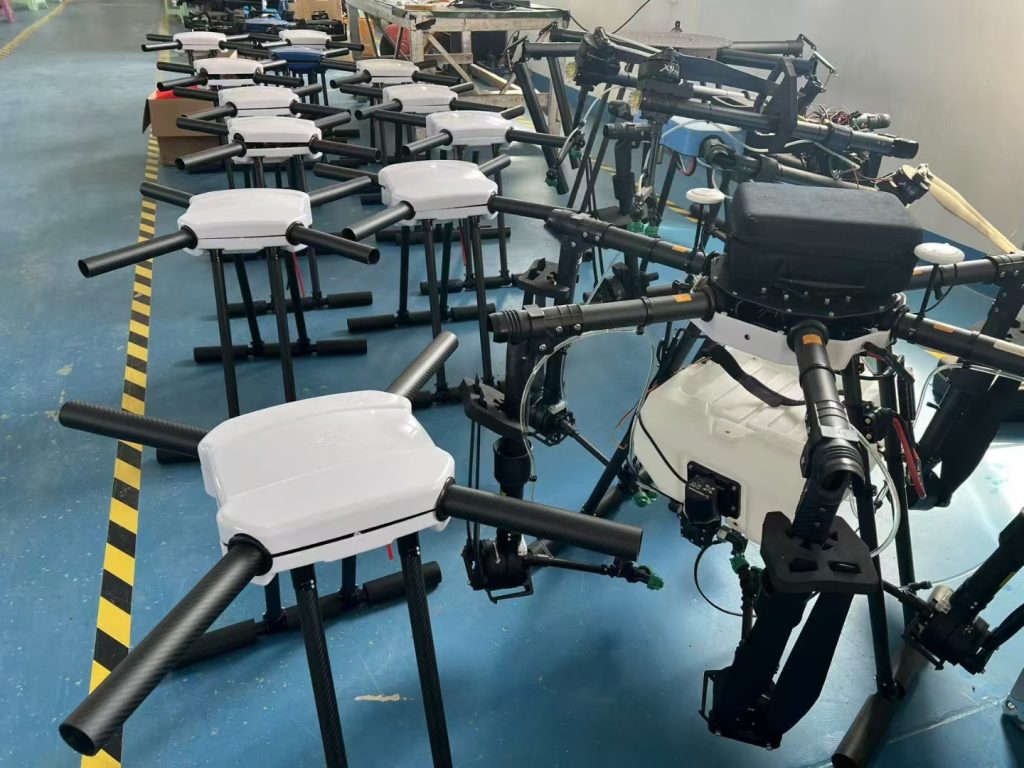
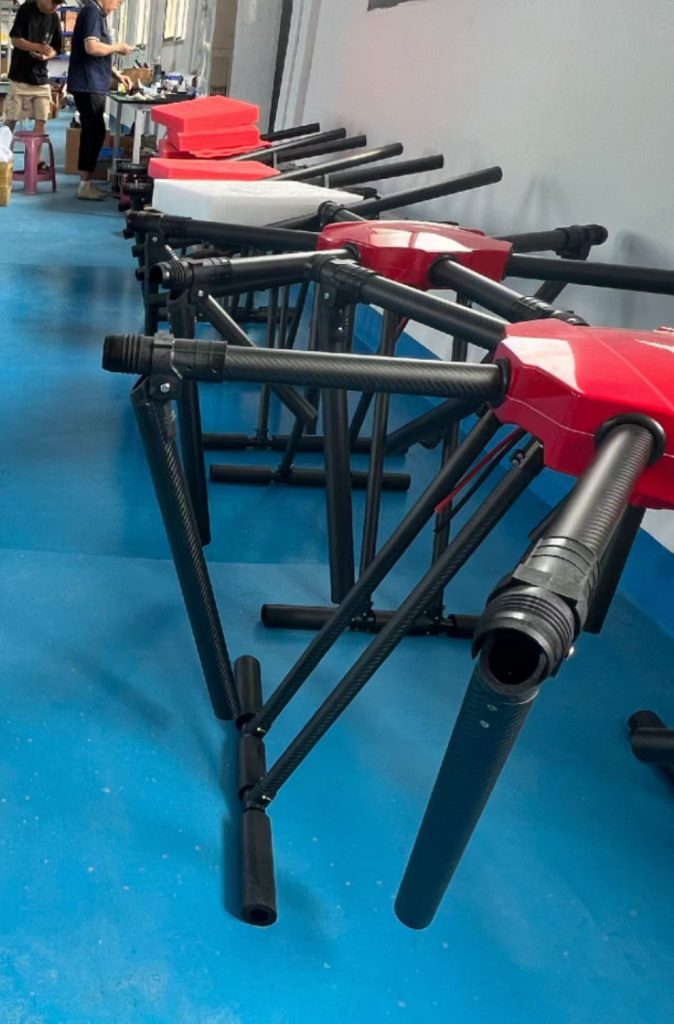
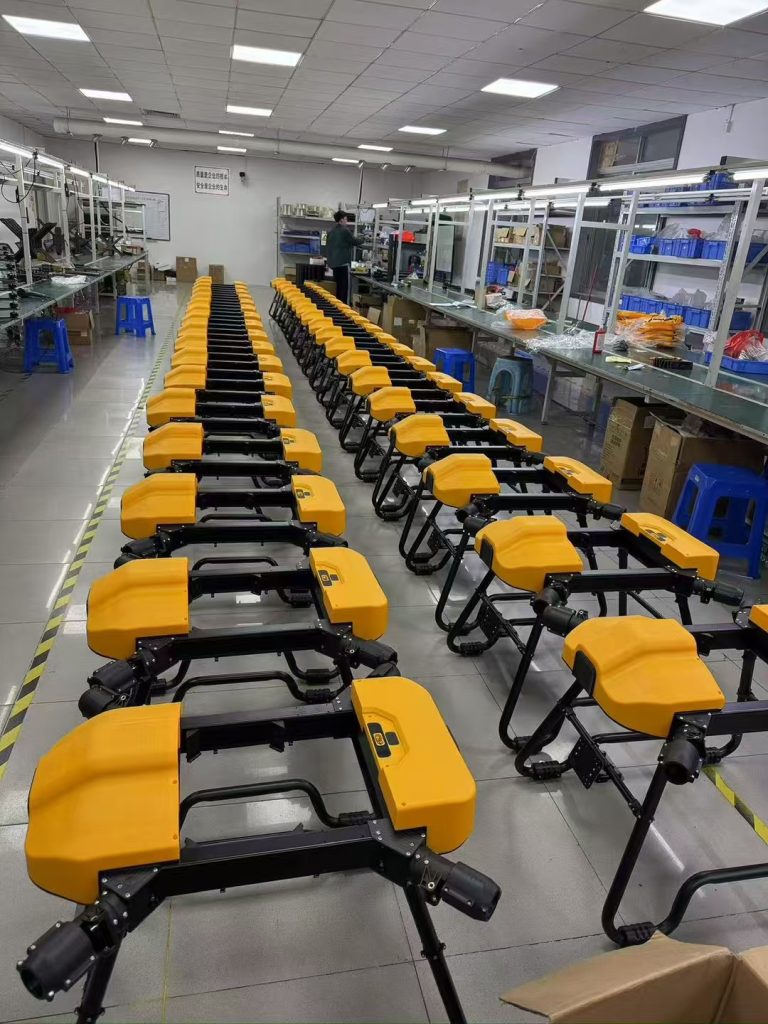
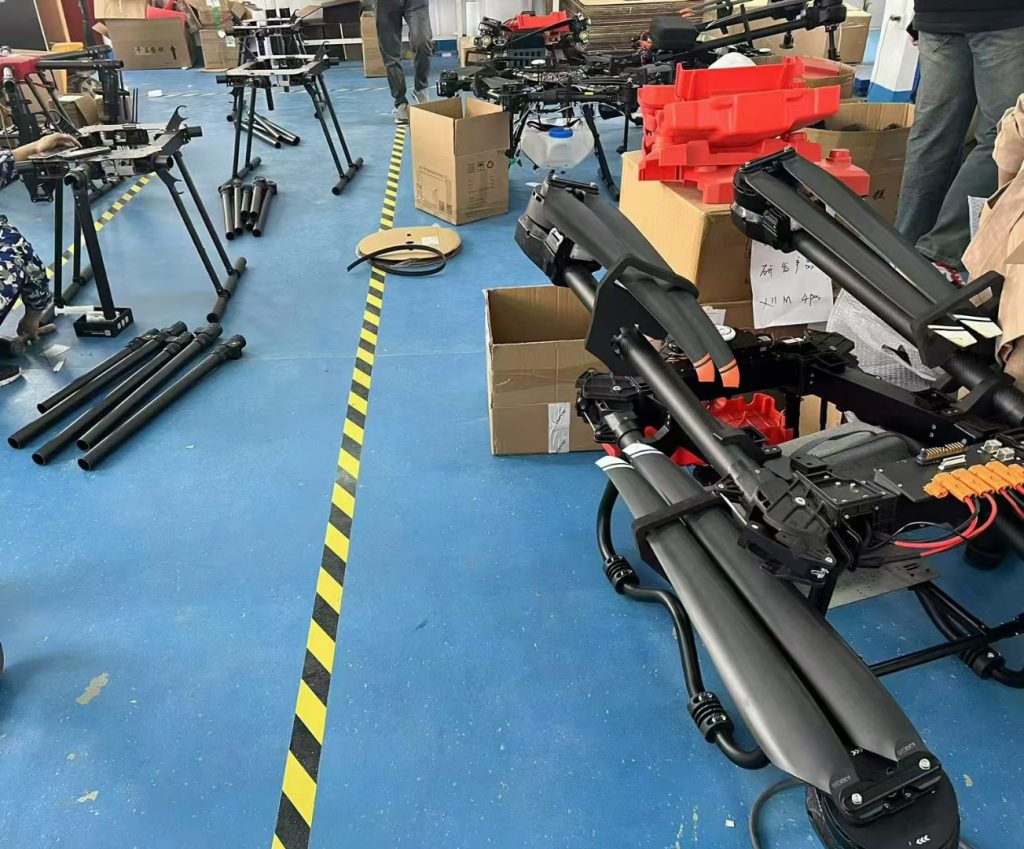
One of the most important design elements of professional agricultural drones is the drone frame material. Many modern UAV manufacturers use carbon fiber structures because of their performance advantages.
Lightweight Design
Carbon fiber is significantly lighter than traditional metals such as aluminum. This reduces overall drone weight and improves flight efficiency.
High Structural Strength
Despite being lightweight, carbon fiber is extremely strong. It provides excellent structural stability even when the drone carries heavy spraying tanks.
Vibration Resistance
Agricultural drones rely on stable flight to ensure accurate spraying and sensor performance. Carbon fiber frames reduce vibration and improve operational precision.
Durability in Harsh Environments
Farming environments expose drones to dust, moisture, and chemical sprays. Carbon fiber materials resist corrosion and maintain structural integrity over long periods.
Autonomous Farming Drone Solutions from MSOEN
As agricultural automation becomes more widespread, many large farms and agricultural technology companies are searching for reliable drone manufacturers.
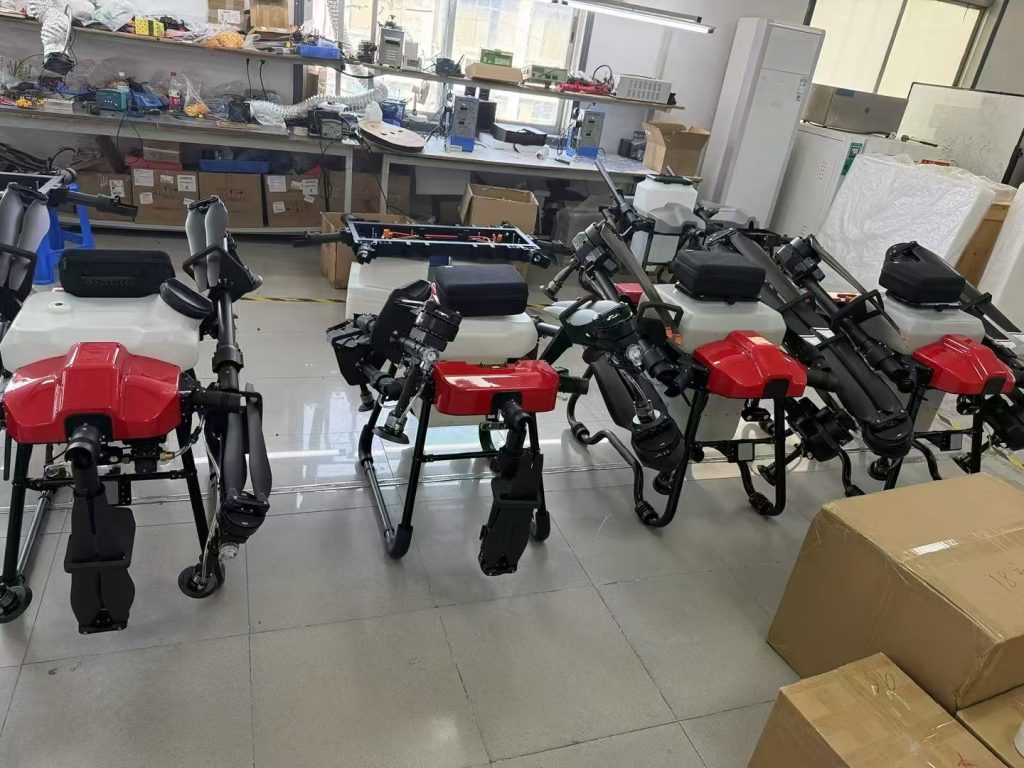
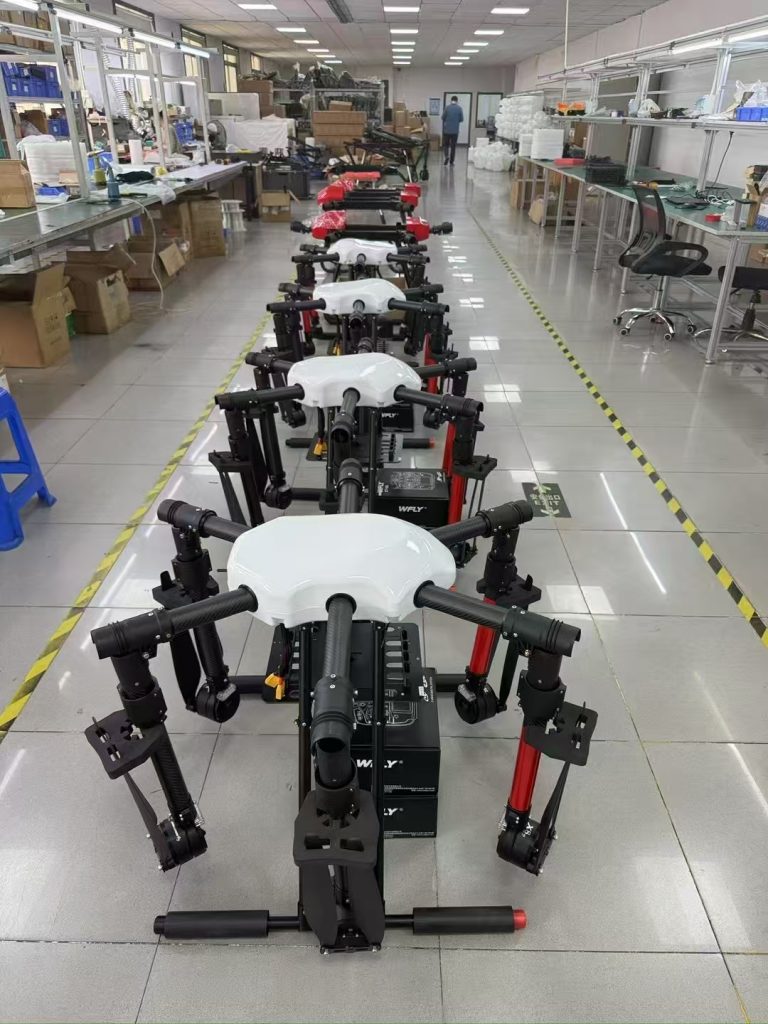
MSOEN develops professional UAV platforms designed specifically for agricultural operations and precision farming projects.
MSOEN agricultural drone systems support a wide range of farming applications including:
- crop spraying
- fertilizer spreading
- field mapping
- crop health monitoring
- precision agriculture analysis
These UAV platforms are engineered with high-strength carbon fiber structures, intelligent flight control systems, and modular payload configurations.
Large farms benefit from the flexibility of MSOEN drone platforms because they can be customized to meet different agricultural requirements.
Agricultural Drone Applications on Large Farms
Agricultural drones are transforming the way large farms operate.
🌱 Crop Spraying
Autonomous drones can spray pesticides and fertilizers across large fields quickly and evenly. This improves crop protection and reduces manual labor.
📊 Crop Monitoring
Drones equipped with multispectral cameras can analyze plant health and identify areas affected by disease or nutrient deficiencies.
🗺️ Field Mapping
High-resolution aerial images collected by drones allow farmers to create detailed field maps for better farm management.
💧 Irrigation Management
Drone data helps farmers monitor soil moisture levels and optimize irrigation schedules.
Choosing the Right Agricultural Drone Supplier
Selecting the right UAV supplier is essential for successful agricultural drone operations.
When evaluating drone manufacturers, farms and agricultural companies should consider several factors.
Engineering Experience
Manufacturers with strong UAV engineering expertise can provide reliable drone platforms and technical support.
Customization Capabilities
Large farms often have unique operational needs. A manufacturer capable of customizing drone systems provides greater flexibility.
Product Quality
High-quality materials, reliable electronics, and thorough testing processes ensure long-term drone performance.
Technical Support
Agricultural drone operations may require ongoing technical assistance, training, and software updates.
Working with a professional UAV manufacturer ensures smoother operations and better long-term results.
The Future of Agricultural Drones in 2026 and Beyond
The agricultural drone industry is expected to continue growing rapidly in the coming years.
New technologies will further enhance the capabilities of farming UAV systems.
Future developments may include:
- AI-powered crop analysis
- fully autonomous farming fleets
- drone swarm crop management
- advanced multispectral imaging
- integrated farm management platforms
These innovations will help farmers increase yields, reduce environmental impact, and manage resources more efficiently.
How Agricultural Drones Improve Sustainability
Sustainability is becoming an important focus in modern agriculture.
Drone technology supports environmentally responsible farming by reducing chemical usage and improving resource efficiency.
Precision spraying reduces over-application of pesticides and fertilizers, while drone-based crop monitoring helps farmers respond quickly to problems.
By using drones to optimize agricultural processes, farms can improve productivity while protecting soil health and surrounding ecosystems.
Frequently Asked Questions (FAQ)
What size farm benefits most from agricultural drones?
Agricultural drones are especially beneficial for medium to large farms that cover dozens or hundreds of acres. Large farms gain the most efficiency improvements from automated spraying and aerial monitoring.
How much area can an agricultural drone cover in one flight?
Coverage depends on the drone model and spraying system. Professional agricultural drones can typically cover 10–30 acres per flight, depending on payload capacity and battery performance.
Are agricultural drones difficult to operate?
Most modern farming drones use autonomous flight planning systems. Once the field map and mission are programmed, the drone can operate automatically with minimal manual control.
Can agricultural drones reduce pesticide use?
Yes. Precision spraying technology allows drones to apply pesticides only where needed. This reduces chemical waste and improves environmental sustainability.
How do farms choose the best agricultural drone?
Farmers should evaluate several factors including payload capacity, flight endurance, spraying efficiency, durability, and technical support from the manufacturer.
Can agricultural drones be customized for specific crops?
Yes. Many professional UAV manufacturers offer customizable drone platforms that allow different spraying systems, sensors, and payload configurations depending on crop type and farming conditions.
Conclusion
Agricultural drones are becoming one of the most valuable tools for large farms in 2026. By combining autonomous flight systems, precision spraying technology, and advanced data collection capabilities, these UAV platforms allow farmers to manage crops more efficiently and sustainably.
As farming operations continue to scale, reliable drone technology will play a crucial role in improving productivity and reducing operational costs.
Agricultural companies, farm operators, and distributors interested in advanced UAV solutions can explore professional agricultural drone platforms designed for modern precision farming. Working with an experienced UAV manufacturer ensures access to reliable technology, customization options, and long-term support for smart agriculture operations.







No comments yet