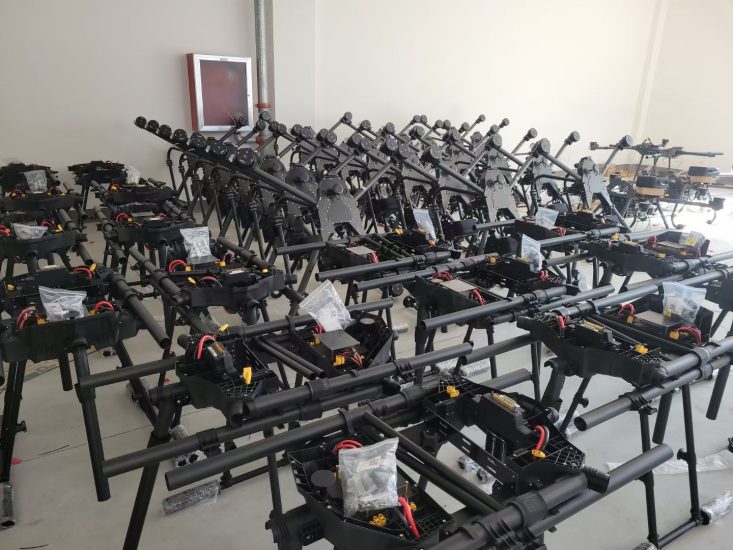


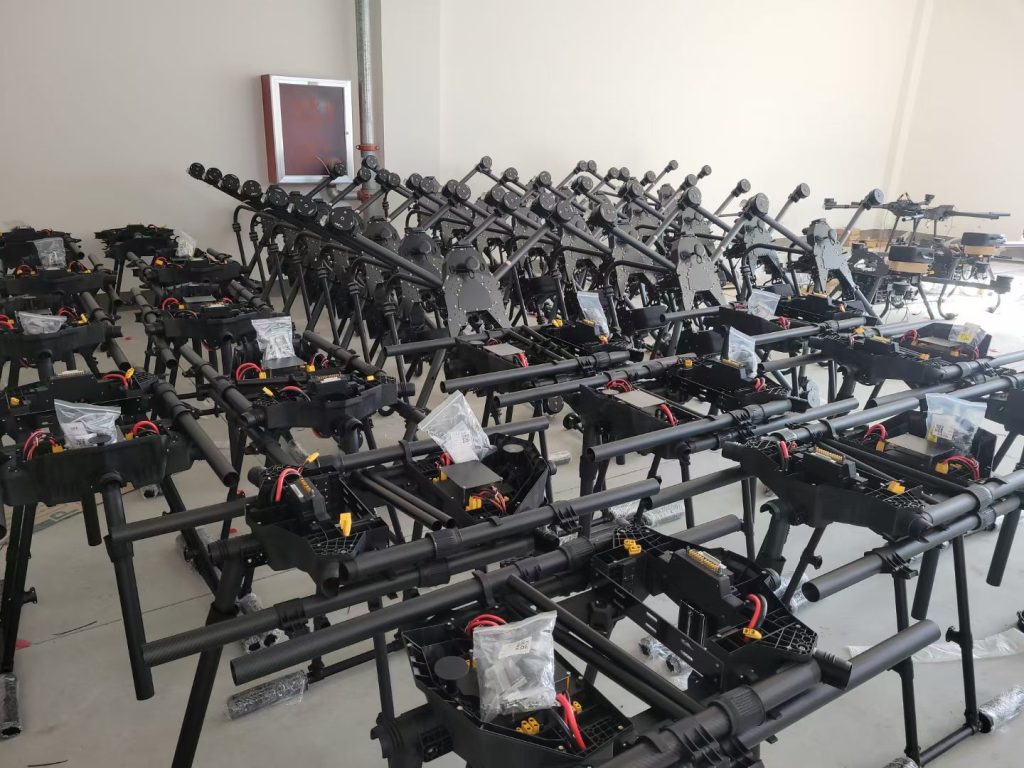
Brazil is one of the world’s major agricultural markets. Large-scale farming, commercial crop production and agricultural service businesses create opportunities for modern equipment, including agricultural spraying drones.
For Brazilian importers, distributors and agricultural equipment companies, purchasing agricultural drones directly from China can be an option worth evaluating. Chinese manufacturers offer different drone capacities, spraying configurations, battery systems and OEM customization possibilities.
However, importing an agricultural drone involves more than finding a suitable price. Buyers should consider product specifications, shipping arrangements, customs clearance, Brazilian regulatory requirements, spare parts and technical support.
This guide explains the main steps involved in importing agricultural drones from China to Brazil and what buyers should confirm before placing an order.
1. Understand the Brazilian Agricultural Drone Market
Before contacting a Chinese manufacturer, identify the customers and applications you want to serve.
Potential customer groups include:
-
Large farms and agricultural producers
-
Agricultural spraying service companies
-
Agricultural machinery distributors
-
Farm equipment retailers
-
Agricultural technology companies
-
Regional equipment dealers
Different customers may require different drone capacities and configurations.
For example, a large farming operation may prioritize tank capacity, battery turnaround time and operational efficiency. A distributor may place more importance on product reliability, spare parts availability, training materials and long-term supplier support.
Understanding your target customers will help you select the right product instead of choosing a drone based only on its advertised capacity.
2. Choose the Right Agricultural Spraying Drone
Agricultural spraying drones are available in different capacities and configurations. Buyers should compare the complete equipment specifications before making a purchasing decision.
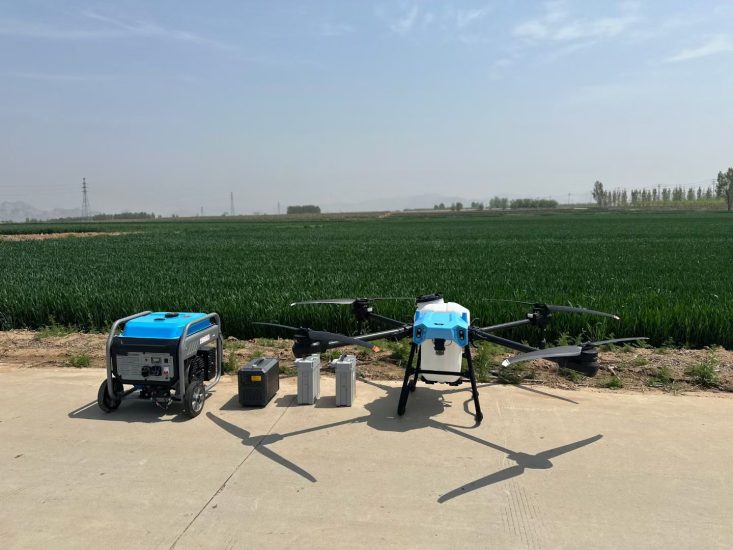
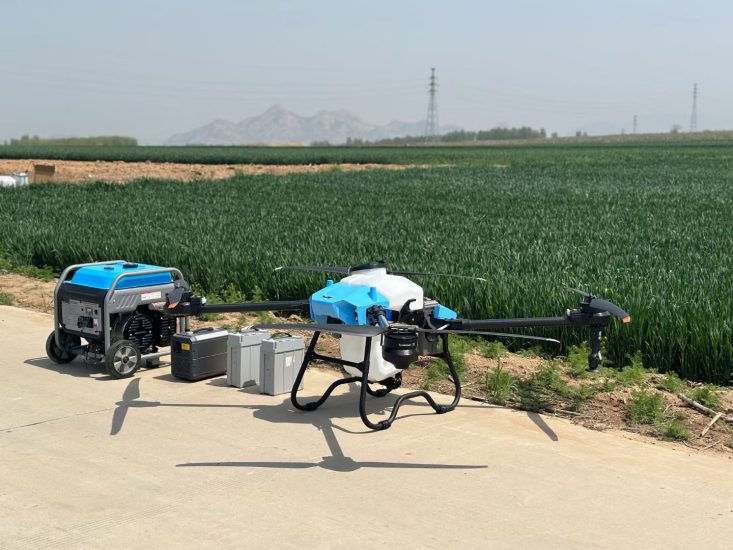
Consider a 50L Agricultural Spraying Drone
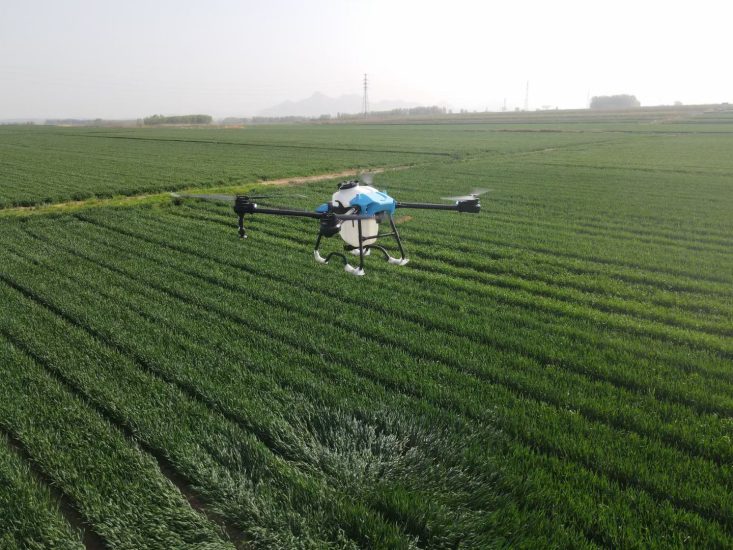
A 50L agricultural spraying drone may be suitable for customers looking for a larger-capacity spraying platform.
When evaluating a 50L model, check the following:
-
Maximum tank capacity
-
Spraying pump and nozzle configuration
-
Spray flow rate and control system
-
Motor and propeller specifications
-
Flight controller and navigation system
-
Battery voltage and capacity
-
Charger compatibility
-
Optional radar or terrain-following equipment
-
Remote controller and operating interface
Do not evaluate a drone based on tank capacity alone. Actual field performance depends on crop conditions, terrain, weather, spray settings, flight planning and operator experience.
Check the Complete Package
A quotation should clearly explain what is included.
For example, ask whether the package includes:
-
Agricultural drone body
-
Spraying tank and spraying system
-
Remote controller
-
Flight batteries
-
Battery charger
-
Propellers and spare components
-
Radar or other optional equipment
-
User manual and technical documentation
If you need two batteries or a particular radar configuration, request written confirmation. Do not assume these items are included in every standard package.
3. Find a Reliable Agricultural Drone Manufacturer in China
Choosing the right supplier is one of the most important steps when importing agricultural drones.
Before placing an order, evaluate the manufacturer carefully.
Questions to Ask Your Supplier
-
Are you the manufacturer or a trading company?
-
What agricultural drone models do you currently supply?
-
Can you provide detailed product specifications?
-
What battery and charger configurations are available?
-
Can you provide product photos and operating videos?
-
Are spare parts available for future orders?
-
Do you support OEM branding and customized colors?
-
Can you provide the technical documents required by the importer?
-
What warranty and after-sales support do you offer?
Ask for a detailed quotation rather than relying on a short message containing only the model name and price.
A professional supplier should be able to explain the product configuration and identify which items are standard and which are optional.
4. Understand Brazilian Import and Customs Requirements
Importing agricultural drones into Brazil requires proper customs preparation.
Brazilian importers should work with a qualified customs broker or import specialist to confirm the applicable procedures before the goods leave China.
Depending on the product classification and import arrangement, the process may involve:
-
Commercial invoice
-
Packing list
-
Air waybill or bill of lading
-
Product description and technical specifications
-
Import declaration through the applicable Brazilian system
-
Applicable customs and tax procedures
-
Any required administrative authorization or product-specific documentation
Brazil uses import declaration procedures including DI, DSI and DUIMP, depending on the applicable circumstances and current system requirements.
Confirm the Correct Product Classification
Do not select an HS code simply because another supplier used it for a similar drone.
The importer should confirm the appropriate Brazilian NCM classification based on the actual product, its functions, components and applicable customs interpretation.
Also check whether the complete drone, remote controller, batteries, charger and accessories require separate classification or documentation.
The final tax calculation may depend on the product classification, customs value, freight, insurance and applicable Brazilian tax rules.
For this reason, avoid relying on a generic online tax estimate when calculating the landed cost.
5. Understand ANAC, ANATEL, DECEA and MAPA Requirements
This is an important part of importing agricultural spraying drones into Brazil.
Import clearance and permission to operate a drone are different matters. A drone being imported does not automatically mean it is ready for commercial agricultural operation.
Buyers should confirm the following regulatory areas.
ANAC: Civil Aviation Requirements
ANAC is responsible for civil aviation rules concerning unmanned aircraft in Brazil.
Brazil published RBAC No. 100 in June 2026, establishing general requirements for civil unmanned aircraft operations and organizing operations according to their risk category.
The applicable requirements should be checked against the drone’s characteristics and intended operation, rather than relying only on its weight.
Before ordering, ask the supplier for accurate information about:
-
Maximum takeoff weight
-
Aircraft model and manufacturer
-
Serial number identification
-
Intended operating configuration
-
Flight control and safety features
-
Technical documentation
The Brazilian importer or operator should confirm the applicable registration, authorization and operational requirements with ANAC.
ANATEL: Radio Equipment Homologation
Agricultural drones normally use radio communication systems, such as remote controllers and wireless communication equipment.
ANATEL regulates telecommunications equipment in Brazil.
Before importing or commercializing a drone system, the buyer should confirm whether the radio equipment requires ANATEL homologation and which procedure applies.
ANATEL explains that telecommunications products generally cannot be used or commercialized in Brazil without the required homologation.
The procedure may differ depending on whether the equipment is being imported for personal use or for commercial distribution.
Do not assume that a radio certification issued in China or another country automatically replaces Brazilian ANATEL requirements.
DECEA: Airspace Authorization
DECEA is responsible for managing access to Brazilian airspace.
Drone operators may need to register their aircraft and operator information in the relevant systems and request flight authorization through SARPAS.
According to DECEA guidance, agricultural operations are not automatically exempt from airspace authorization simply because they take place in rural areas.
The operator should check the location, altitude, operating conditions and applicable authorization requirements before flying.
MAPA: Agricultural Drone Operator Registration
For agricultural spraying operations, MAPA requirements are particularly important.
MAPA states that operators using remotely piloted aircraft for agricultural aviation activities must obtain registration through SIPEAGRO.
Depending on the operator’s category and activity, requirements may include:
-
Proper aircraft regularity under the applicable ANAC rules
-
Agricultural application training requirements
-
CAAR or equivalent qualifications where applicable
-
Technical responsibility requirements for relevant legal entities
-
Supporting company and operator documentation
The importer should understand that buying a drone from China does not automatically provide the Brazilian operator with permission to conduct agricultural spraying services.
Important: Regulatory requirements can change. Brazilian importers should confirm the latest rules directly with ANAC, ANATEL, DECEA and MAPA, as well as their customs broker, before shipment and before commercial operation.
6. Choose the Right Shipping Method from China to Brazil
After confirming the product and import requirements, the next step is arranging transportation.
The appropriate shipping method depends on the shipment size, urgency, battery configuration, cargo classification and destination.
Air Freight
Air freight may be suitable for:
-
Samples
-
Remote controllers
-
Selected spare parts
-
Small equipment shipments
-
Urgent replacement components
However, agricultural drone batteries are usually lithium batteries. Their transport is subject to applicable dangerous goods requirements.
The freight forwarder and airline may request battery specifications, safety documentation and other transport documents before accepting the shipment.
Sea Freight
Sea freight may be worth considering for:
-
Complete agricultural drone sets
-
Multiple units
-
Larger commercial orders
-
Bulk spare parts
-
Distributor inventory
For a full agricultural drone shipment, buyers should compare the total shipping cost and delivery arrangement rather than looking only at the ocean freight rate.
Information Needed for a Shipping Quotation
Provide your Chinese supplier or freight forwarder with:
-
Product name and model
-
Number of units
-
Package dimensions
-
Gross weight
-
Battery quantity and specifications
-
Pickup location in China
-
Destination city or port in Brazil
-
Preferred shipping method
The shipping quotation should clearly state what services and destination charges are included.
7. Prepare Battery and Dangerous Goods Documentation
Agricultural drones often use high-capacity lithium batteries.
Battery transportation requires special attention, especially for air freight.
Before shipment, confirm:
-
Battery chemistry
-
Battery capacity and voltage
-
Watt-hour rating
-
Number of batteries
-
UN 38.3 test summary, where applicable
-
Safety data sheet, if required
-
Packaging and labeling requirements
-
Carrier acceptance conditions
The supplier should provide accurate battery information.
Never describe a shipment as ordinary general cargo if its battery configuration requires dangerous goods handling.
The final transport arrangement should be confirmed with the airline, shipping line or qualified freight forwarder.
8. Calculate the Total Import Cost
The purchase price is only one part of the total investment.
Brazilian importers should calculate the full landed cost before confirming an order.
Consider the following cost categories:
Cost item |
What to check |
|---|---|
Product price |
Drone model and complete configuration |
Accessories |
Batteries, chargers, radar and spare parts |
China inland transport |
Factory to export warehouse or port |
Export handling |
Applicable origin charges |
International freight |
Air or sea transportation |
Cargo insurance |
Coverage and insured value |
Brazilian customs |
Applicable clearance charges |
Import taxes |
Based on the correct classification and customs calculation |
Local delivery |
Port or airport to final destination |
Ask your customs broker to estimate the applicable taxes and fees using the actual product details and import structure.
A low factory price does not necessarily mean a low final landed cost.
9. Consider OEM and Private Label Cooperation
For Brazilian distributors and agricultural equipment brands, OEM cooperation may be worth exploring.
A Chinese manufacturer may be able to discuss customization options such as:
-
Company logo
-
Brand name
-
Product color
-
Packaging
-
User manuals
-
Selected accessories
-
Customized commercial documentation
Before confirming an OEM order, discuss the following:
-
Available customization options
-
Minimum order requirements, if any
-
Logo and packaging artwork
-
Production lead time
-
Product configuration
-
Quality inspection arrangements
-
Spare parts and warranty terms
For long-term cooperation, make sure the product specifications and branding requirements are documented in the purchase agreement.
10. Plan Spare Parts and After-Sales Support
Agricultural drones are working equipment. For distributors and professional users, after-sales support can be as important as the initial purchase price.
Consider preparing a spare parts plan for:
-
Propellers
-
Motors
-
Electronic speed controllers
-
Spraying pumps
-
Nozzles and filters
-
Landing gear
-
Batteries
-
Chargers
-
Remote controller accessories
The appropriate spare parts depend on the exact drone model and configuration.
Before placing an order, ask your supplier which components can be supplied separately and how technical support is provided.
A distributor with a clear maintenance and spare parts plan may be better positioned to serve local agricultural customers.
11. Why Consider MSOEN as Your China Agricultural Drone Supplier?
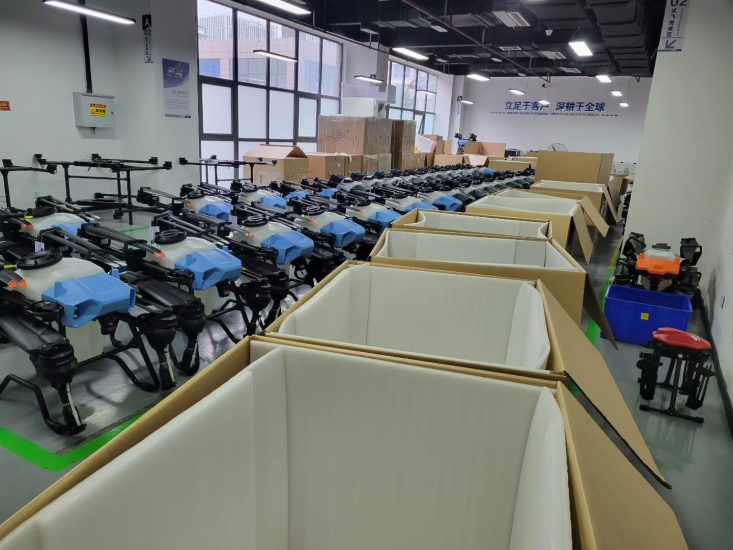
MSOEN focuses on agricultural and industrial drone solutions and works with international buyers looking for equipment from China.
For Brazilian importers and distributors, we can discuss agricultural spraying drone models, product configurations and potential OEM cooperation.
Our agricultural drone product range includes solutions for buyers evaluating different spraying capacities and equipment requirements.
For customers considering a 50L agricultural spraying drone, the configuration can be discussed according to the intended application and purchasing requirements.
Before ordering, buyers are encouraged to confirm:
-
Product model and specifications
-
Battery and charger configuration
-
Included accessories
-
Optional equipment
-
Spare parts requirements
-
Packaging and shipping details
We welcome inquiries from agricultural equipment distributors, importers and professional buyers in Brazil.
Explore our Agricultural Drones or contact our team to discuss your requirements.
12. Checklist Before Importing Agricultural Drones to Brazil
Before confirming your purchase, review the following checklist:
-
[ ] Select the appropriate agricultural drone model.
-
[ ] Confirm tank capacity and spraying configuration.
-
[ ] Confirm battery quantity and charger specifications.
-
[ ] Request a complete packing list.
-
[ ] Obtain product technical specifications.
-
[ ] Confirm radio equipment and ANATEL requirements.
-
[ ] Check applicable ANAC aircraft and operational requirements.
-
[ ] Confirm DECEA airspace authorization procedures.
-
[ ] Check MAPA registration requirements for agricultural operators.
-
[ ] Confirm the correct NCM classification with your customs broker.
-
[ ] Estimate Brazilian import taxes and customs charges.
-
[ ] Confirm lithium battery shipping requirements.
-
[ ] Arrange international freight and insurance.
-
[ ] Plan spare parts and after-sales support.
Completing these checks before shipment can help reduce unexpected costs and delays.
Frequently Asked Questions
1. Can I import agricultural drones from China to Brazil?
Brazilian importers can arrange the import of agricultural drones from China, subject to applicable Brazilian customs procedures and any product-specific requirements. The importer should confirm the correct product classification, documentation and applicable administrative controls before shipment.
2. Does ANAC issue an import license for agricultural drones?
ANAC states that it does not issue licenses or authorizations for the import of unmanned aircraft. Import procedures fall under Brazilian customs authorities. ANAC’s responsibilities relate to aircraft design, registration and operation.
3. Do agricultural drones need ANATEL homologation in Brazil?
Radio communication equipment may require ANATEL homologation before use or commercialization in Brazil. The applicable procedure should be confirmed for the specific drone and remote control system.
4. Do agricultural drone operators need MAPA registration?
MAPA states that operators using remotely piloted aircraft for agricultural aviation activities must obtain the applicable registration through SIPEAGRO. Buyers should check the requirements for their specific operator category.
5. Can I import a 50L agricultural spraying drone from China?
A 50L agricultural spraying drone can be evaluated as an import option. Before ordering, confirm its technical specifications, complete package, battery configuration, shipping requirements and Brazilian regulatory suitability.
6. Can I buy agricultural drones with two batteries?
Battery configurations depend on the model and supplier quotation. Buyers should specify the required battery quantity and confirm it in the commercial invoice and packing list.
7. Can I become an agricultural drone distributor in Brazil?
If you operate an agricultural equipment business or plan to develop a distribution network, you can contact a Chinese manufacturer to discuss product supply, OEM options, spare parts and cooperation arrangements.
8. How can I get a quotation for shipping agricultural drones to Brazil?
Provide the product model, quantity, package dimensions, gross weight, battery details and destination city or port. These details help the supplier or freight forwarder evaluate the available transportation options.
Contact MSOEN for Agricultural Drone Supply from China
Are you an agricultural equipment importer, distributor or agricultural service provider in Brazil?
MSOEN welcomes inquiries about agricultural spraying drones, 50L drone configurations, OEM cooperation and spare parts.
Send us your target model, required quantity and preferred configuration. Our team can discuss suitable product options and provide further information.
THE END


No comments yet