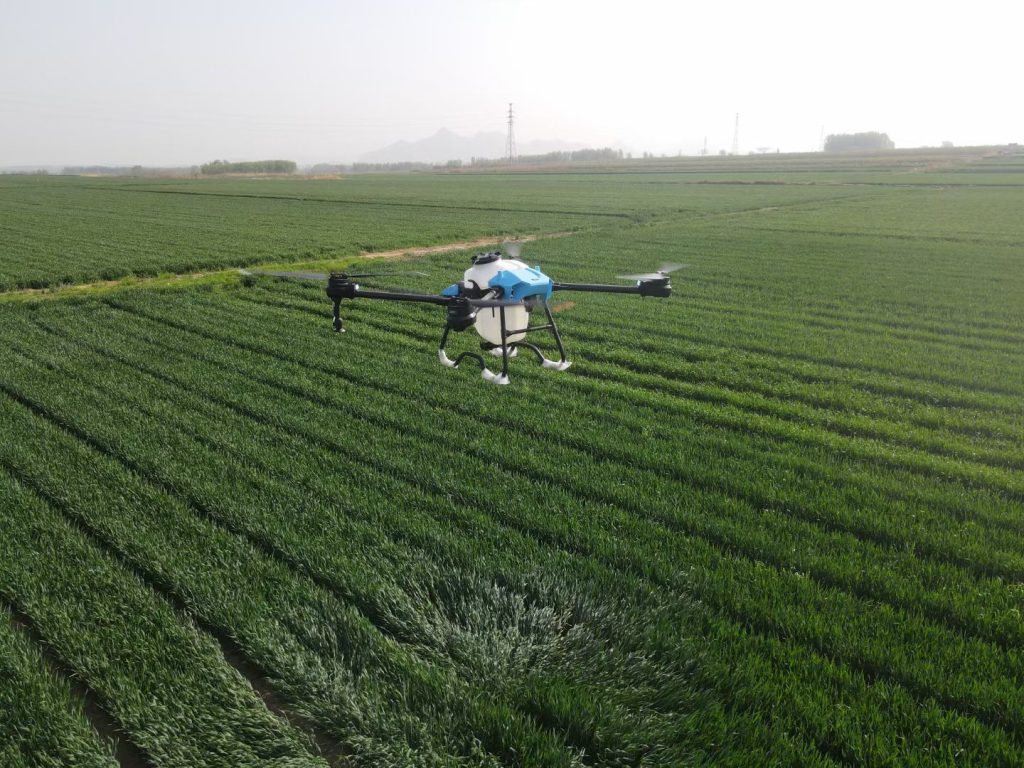
Agricultural drone technology is developing rapidly, and many international distributors, agricultural equipment companies, and established brands are looking for customized drone solutions instead of selling standard products under the manufacturer’s original brand.
This is where OEM and ODM agricultural drone manufacturing becomes important.
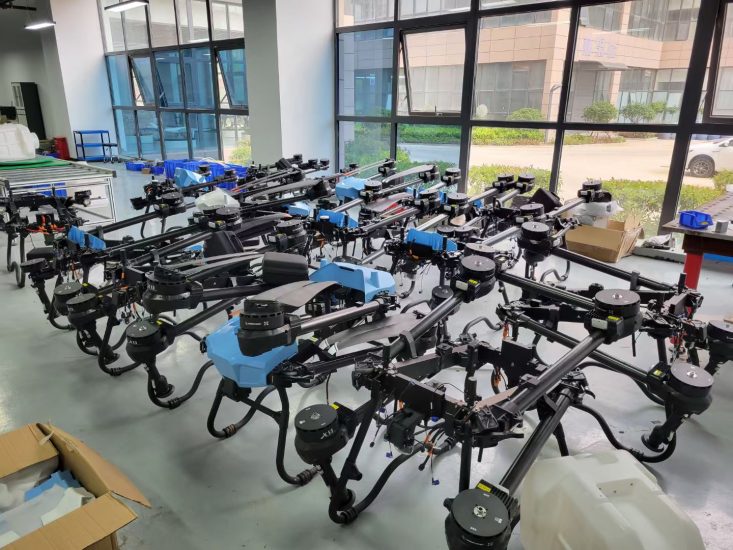
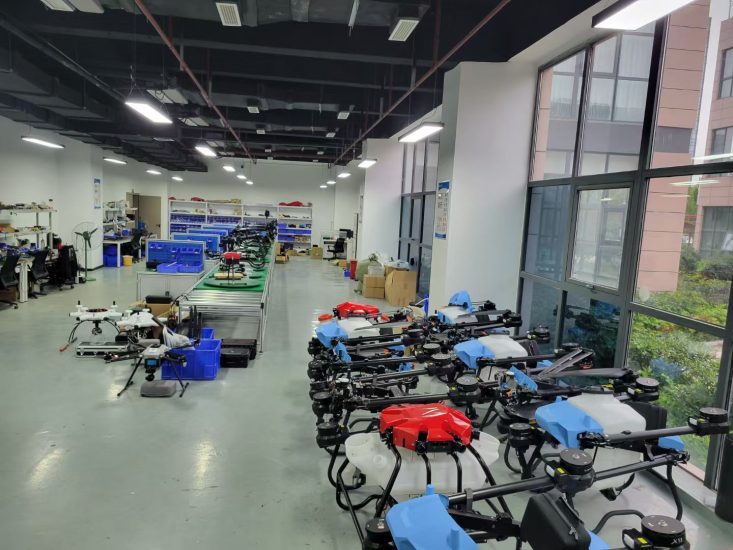
Chinese agricultural drone manufacturers can provide different levels of customization, ranging from simple logo and packaging changes to more advanced modifications of hardware, software, spraying systems, batteries, and product design.
However, OEM and ODM projects require careful planning. Buyers need to understand customization options, MOQ, development costs, testing, production lead time, intellectual property, quality control, and after-sales support before placing an order.
What Is Agricultural Drone OEM?
OEM stands for Original Equipment Manufacturer.
In an OEM arrangement, the manufacturer produces agricultural drones according to the buyer’s requirements while the buyer sells the finished product under its own brand.
Typical OEM services may include:
-
Brand logo
-
Product labels
-
Custom packaging
-
User manuals
-
Product colors
-
Remote-controller branding
-
Serial-number systems
-
Product name
-
Marketing materials
For distributors that already have an established agricultural equipment brand, OEM manufacturing can provide a faster way to enter the agricultural drone market.
What Is Agricultural Drone ODM?
ODM stands for Original Design Manufacturer.
ODM generally involves a deeper level of cooperation.
Instead of simply changing the brand, the manufacturer may help develop or modify the product according to the buyer’s requirements.
Potential ODM projects can involve:
-
Aircraft structure
-
Payload configuration
-
Battery system
-
Spraying system
-
Spreading system
-
Flight controller
-
Remote controller
-
Software
-
Sensors
-
Product appearance
The exact level of ODM capability varies from manufacturer to manufacturer.
OEM vs. ODM Agricultural Drones
Feature
|
OEM
|
ODM
|
Custom Logo
|
Yes
|
Yes
|
Packaging
|
Yes
|
Yes
|
Manuals
|
Yes
|
Yes
|
Product Color
|
Usually
|
Usually
|
Existing Product
|
Usually
|
May be modified
|
Hardware Changes
|
Limited
|
More extensive
|
Software Changes
|
Possible
|
More extensive
|
Product Development
|
Limited
|
Higher
|
Development Cost
|
Lower
|
Higher
|
Lead Time
|
Usually shorter
|
Usually longer
|
Suitable For
|
Distributors
|
Brands and specialized projects
|
The right model depends on the buyer’s business strategy and technical requirements.
Why Choose OEM Agricultural Drone Manufacturing?
OEM can provide several advantages for international businesses.
1. Build Your Own Brand
Instead of selling a generic agricultural drone, distributors can create a recognizable brand.
A customized product can include:
-
Brand logo
-
Custom colors
-
Custom packaging
-
Custom manuals
-
Branded remote controller
-
Product identification
This can help create a more consistent customer experience.
2. Enter the Market Faster
Developing an agricultural drone completely from scratch can require substantial investment.
Working with an experienced manufacturer allows a company to start with an existing platform and customize selected elements.
This can reduce development time compared with designing an entirely new aircraft.
3. Reduce Manufacturing Investment
Building your own drone factory requires:
-
Production equipment
-
Engineers
-
Assembly workers
-
Testing facilities
-
Supply-chain management
-
Quality-control systems
-
Inventory
-
Warehousing
OEM manufacturing can reduce the initial investment required to launch a private-label agricultural drone product line.
4. Offer Multiple Models
A distributor may want several models for different customers.
For example:
-
10L agricultural drone
-
20L agricultural drone
-
30L agricultural drone
-
40L agricultural drone
-
50KG agricultural drone
An OEM program can allow the distributor to build a product portfolio using different existing platforms.
What Can Be Customized?
The available options depend on the manufacturer’s technical capabilities.
1. Logo
The simplest form of customization is usually branding.
The manufacturer’s logo can be replaced or supplemented with the buyer’s brand.
Logo placement may include:
-
Aircraft body
-
Battery
-
Remote controller
-
Packaging
-
User manual
2. Product Color
Some customers request specific colors to match their corporate identity.
Color customization may involve:
-
Aircraft frame
-
Arms
-
Protective components
-
Packaging
Minimum order requirements may apply.
3. Packaging
Customized packaging can make a significant difference for distributors.
Possible options include:
-
Custom carton
-
Wooden crate
-
Printed packaging
-
Product labels
-
Barcode
-
QR code
-
Brand documentation
For international transportation, packaging must also protect the aircraft and batteries from damage.
4. User Manuals
An OEM manufacturer can potentially provide customized manuals containing:
-
Brand name
-
Product model
-
Operating instructions
-
Safety information
-
Maintenance instructions
-
Troubleshooting
-
Warranty information
For international markets, multilingual manuals may also be useful.
5. Battery Configuration
Depending on the aircraft platform, battery configuration may be customizable.
Potential requirements include:
-
Battery capacity
-
Battery voltage
-
Battery communication
-
Charger
-
Charging system
-
Number of batteries
Battery modifications should be evaluated carefully because they can affect aircraft weight, flight time, charging requirements, and safety.
6. Spraying System
Professional agricultural drone buyers may require different spraying configurations.
Customization may involve:
-
Pump
-
Nozzle
-
Flow rate
-
Spray width
-
Pipe arrangement
-
Liquid tank
-
Spray-control system
The configuration should be selected according to the target crop and application.
7. Spreading System
Some agricultural drones can support interchangeable spreading equipment.
Potential customization includes:
-
Hopper
-
Spreading disc
-
Flow-control system
-
Spreading width
-
Material delivery system
This allows the same aircraft platform to support different agricultural applications.
8. Flight Software
Advanced OEM or ODM projects may include software customization.
Possible areas include:
-
Flight planning
-
Route management
-
Spraying parameters
-
Field mapping
-
User interface
-
Data management
Software customization generally requires greater technical cooperation between the buyer and manufacturer.
How Much Does Agricultural Drone OEM Cost?
There is no single OEM price because customization levels vary.
The total project cost may include:
Product cost + customization cost + development cost + tooling + packaging + testing + certification + production
A basic private-label project may require relatively little development.
A customized aircraft platform can require significantly more engineering work.
Before signing a contract, ask the manufacturer to separate:
-
Unit price
-
Development fee
-
Tooling fee
-
Sample fee
-
Packaging fee
-
Certification cost
-
Testing cost
This makes the project budget easier to control.
What Is the MOQ for Agricultural Drone OEM?
MOQ means Minimum Order Quantity.
OEM manufacturers may have different MOQs depending on the type of customization.
For example:
Customization
|
Typical MOQ Consideration
|
Logo
|
Lower MOQ may be possible
|
Packaging
|
Medium MOQ
|
Color
|
Medium MOQ
|
Custom hardware
|
Higher MOQ
|
Custom software
|
Project-based
|
New product design
|
Project-based
|
There is no universal MOQ.
Always ask the manufacturer for a project-specific MOQ.
How Long Does Agricultural Drone OEM Take?
Lead time depends on the level of customization.
A basic branding project can usually be completed faster than a complete hardware redesign.
The process may include:
Requirement confirmation → Design → Sample → Testing → Modification → Approval → Mass production
For an advanced ODM project, development and testing can take considerably longer.
Buyers should establish a realistic timeline before announcing a product launch date.
Agricultural Drone OEM Quality Control
OEM customers should not assume that a customized product automatically has the same quality as a standard product.
Quality control should be clearly defined.
Important checkpoints include:
-
Incoming component inspection
-
Assembly inspection
-
Electrical testing
-
Motor testing
-
Flight-controller testing
-
Battery testing
-
Spraying-system testing
-
Flight testing
-
Final inspection
-
Packaging inspection
For large orders, buyers may also arrange third-party inspection before shipment.
Product Testing
Agricultural drones should be tested under realistic operating conditions.
Testing can include:
Flight Testing
-
Takeoff
-
Hover
-
Forward flight
-
Turning
-
Landing
-
Return-to-home
Spraying Testing
-
Pump operation
-
Flow rate
-
Nozzle performance
-
Spray width
-
Leakage inspection
Battery Testing
-
Charging
-
Discharging
-
Communication
-
Temperature monitoring
-
Operating time
Safety Testing
-
Low battery
-
Signal loss
-
Emergency stop
-
Return-to-home
-
Sensor functions
Testing requirements should be agreed upon before mass production.
Intellectual Property and OEM Contracts
OEM and ODM projects should clearly define intellectual-property ownership.
Important contract topics include:
-
Product design ownership
-
Software ownership
-
Logo rights
-
Product molds
-
Customized components
-
Technical drawings
-
Confidentiality
-
Exclusive distribution
-
Geographic rights
If the buyer invests significantly in product development, these issues should be discussed before production begins.
For complex projects, obtaining professional legal advice can be appropriate.
Agricultural Drone OEM Certification
Certification requirements vary by destination market.
Depending on the country and product configuration, requirements may involve:
-
Drone regulations
-
Radio equipment
-
Battery transportation
-
Electromagnetic compatibility
-
Product safety
-
Import requirements
The manufacturer can provide technical documentation, but the buyer should verify the specific legal requirements in the target market.
Do not assume that a certification used in one country automatically allows the product to be sold or operated in another.
Choosing an OEM Agricultural Drone Manufacturer
When evaluating an OEM partner, consider:
Manufacturing Capability
Can the factory produce the required quantity consistently?
Engineering Capability
Can the manufacturer modify hardware or software when necessary?
Quality Control
Does the company have a documented inspection and testing process?
Production Capacity
Can it handle both initial orders and future growth?
Spare Parts
Can replacement components be supplied for several years?
Technical Support
Can the manufacturer provide remote troubleshooting and training?
Export Experience
Does the supplier understand international packaging and shipping requirements?
Communication
Can the technical team communicate clearly about specifications and changes?
These factors are often more important than the initial quotation.
OEM Agricultural Drone Buyer Checklist
Before starting an OEM project, prepare:
-
Brand name
-
Logo
-
Target market
-
Target customers
-
Required drone capacity
-
Payload
-
Spraying requirements
-
Spreading requirements
-
Battery requirements
-
Controller requirements
-
Software requirements
-
Packaging requirements
-
Manual language
-
Certification requirements
-
Estimated annual quantity
-
Target price
-
Expected launch date
The more detailed the initial specification, the easier it is for the manufacturer to provide an accurate proposal.
Example OEM Project Workflow
A typical agricultural drone OEM project may follow this process:
1. Requirement Analysis
The buyer explains the target market and technical requirements.
2. Product Selection
The manufacturer recommends a suitable existing drone platform.
3. Configuration
The buyer selects payload, spraying system, battery, controller, and other options.
4. Branding
Logo, colors, packaging, and documentation are finalized.
5. Prototype
The manufacturer produces an OEM sample.
6. Testing
The buyer evaluates flight and agricultural performance.
7. Modification
Any problems or requested changes are addressed.
8. Final Approval
The buyer approves the production specification.
9. Mass Production
The manufacturer produces the agreed quantity.
10. Inspection and Shipment
Finished drones are inspected and prepared for international transportation.
Common OEM Mistakes
Mistake 1: Focusing Only on the Logo
OEM is more than putting a logo on a drone.
Product performance and after-sales support are more important for long-term brand development.
Mistake 2: Not Defining Specifications
All technical specifications should be documented.
Mistake 3: Changing Requirements During Production
Frequent changes can increase costs and delay delivery.
Mistake 4: Ignoring Spare Parts
A branded agricultural drone still needs long-term spare-parts support.
Mistake 5: Not Testing Samples
Always test the final OEM configuration before mass production whenever practical.
Mistake 6: Ignoring Local Regulations
The target market may have specific requirements for drones and radio equipment.
FAQ
What is agricultural drone OEM?
Agricultural drone OEM allows a company to sell drones manufactured by another company under its own brand, often with customized logos, packaging, documentation, or selected product configurations.
What is agricultural drone ODM?
ODM generally involves deeper product development or modification, where the manufacturer helps design or modify the agricultural drone according to the buyer’s requirements.
Can I put my own logo on an agricultural drone?
Yes, many manufacturers can provide private-label branding, subject to their MOQ and production requirements.
Can the drone hardware be customized?
Depending on the manufacturer, some hardware components such as batteries, spraying systems, tanks, frames, controllers, or other components may be customized.
Can agricultural drone software be customized?
Some manufacturers support software customization, but this usually requires technical development and may involve additional costs.
What is the minimum order quantity for OEM?
There is no universal MOQ. Simple logo customization may have a lower MOQ, while hardware or product-development projects usually require larger quantities or project-specific agreements.
How much does agricultural drone OEM cost?
The cost depends on the base drone, customization level, development work, packaging, testing, tooling, certification, and order quantity.
How long does OEM production take?
Basic private-label orders are generally faster than advanced ODM projects. The actual lead time should be confirmed after the specifications and customization requirements are finalized.
Can OEM agricultural drones be exported?
Yes, but the buyer must ensure that the product meets the import, aviation, radio, battery, and other applicable requirements of the destination market.
Should I test an OEM sample?
Yes. Testing a representative sample before mass production can help identify technical or quality issues before a large order is manufactured.
Conclusion
Agricultural drone OEM and ODM manufacturing can provide international distributors, agricultural equipment brands, and farming businesses with a flexible way to develop customized products.
However, successful OEM cooperation requires more than selecting a low-cost supplier.
Buyers should carefully evaluate manufacturing capability, engineering resources, product quality, customization options, MOQ, development costs, testing procedures, intellectual-property arrangements, certification requirements, spare parts, and after-sales support.
For international buyers sourcing agricultural drones from China, a clearly defined OEM specification and structured development process can reduce risks and create a stronger foundation for long-term business growth.
The best OEM partner is not necessarily the manufacturer offering the lowest unit price. It is the manufacturer that can consistently deliver the required quality, performance, customization, production capacity, technical support, and supply-chain reliability.
THE END
Support it if you like it







No comments yet