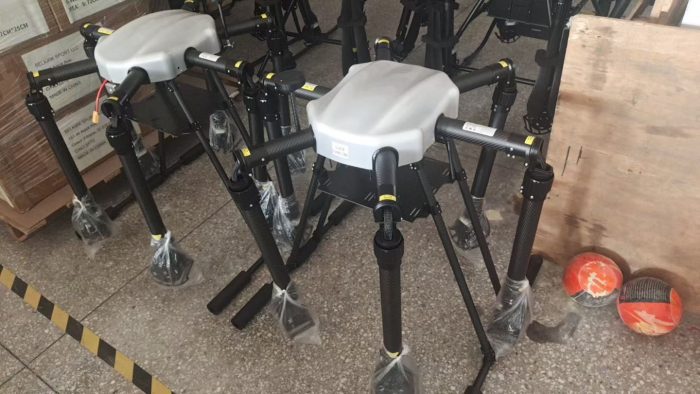


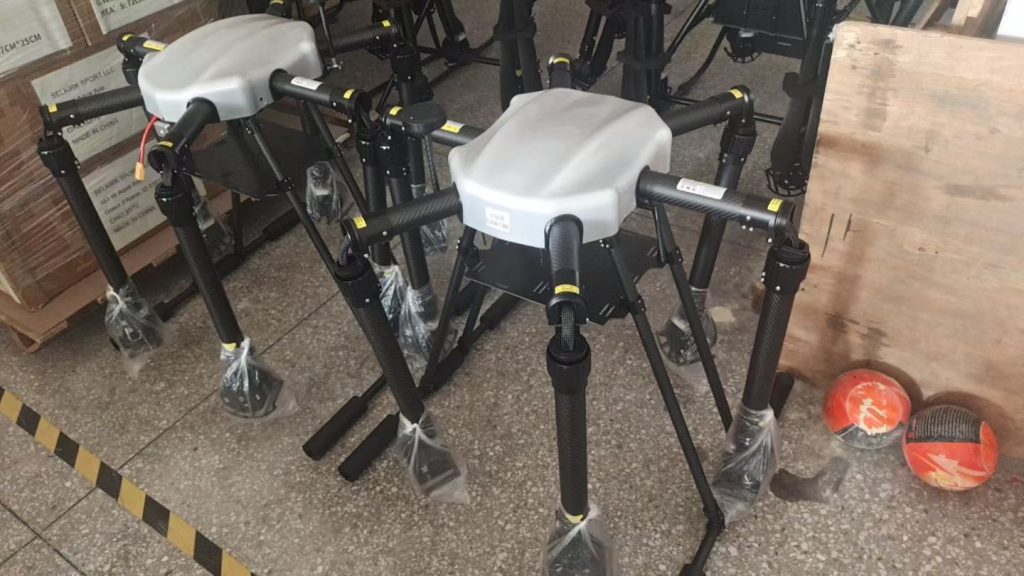
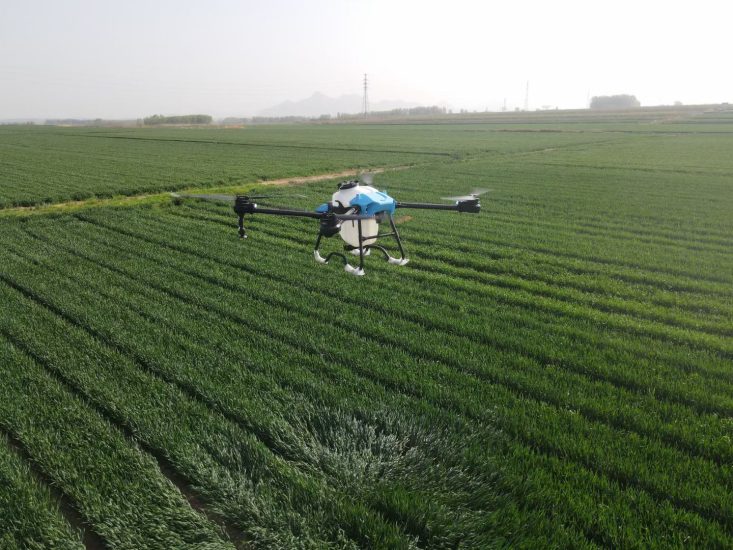
Agriculture is undergoing a transformation unlike anything seen before. As global food demand increases and labor availability becomes more unpredictable, farmers everywhere are turning to intelligent equipment to improve productivity, reduce costs, and protect crops more effectively. Among the most revolutionary innovations is the agricultural spraying drone—an efficient, precise, and highly adaptable tool that replaces manual spraying and traditional machinery with a smarter and safer approach.
For farms facing rising labor costs, uneven terrain, or unpredictable weather patterns, spraying drones provide a modern solution that is not only efficient but also environmentally responsible. As a manufacturer specializing in agricultural spraying drones, this article explores how the technology works, the advantages it offers, and why more farms around the world now consider drones essential for future farming.
1. How Agricultural Spraying Drones Work
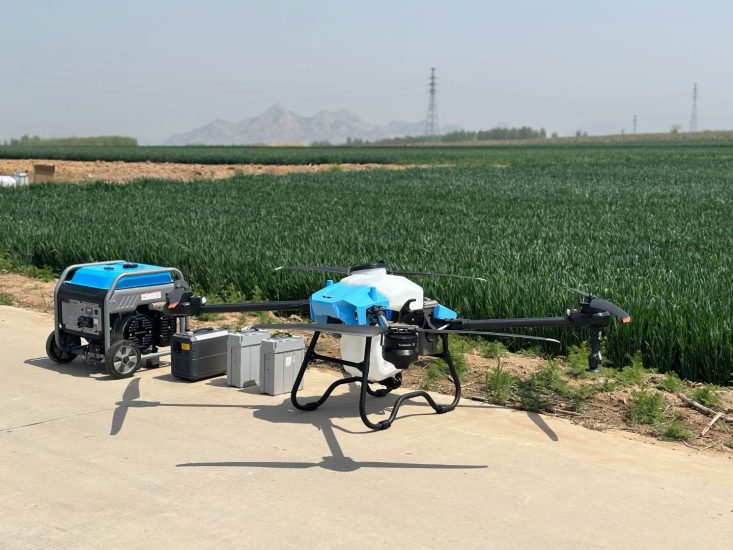
Agricultural spraying drones integrate imaging, sensors, and automated controls to deliver precise spraying performance without requiring manual labor or ground vehicles. A typical spraying drone consists of:
- High-capacity tank for pesticide, fertilizer, or foliar nutrients
- Atomized nozzles for fine, uniform droplet distribution
- Brushless motors to ensure powerful lift with heavy payloads
- GPS + RTK navigation for centimeter-level accuracy
- Intelligent flight controller to plan routes and avoid obstacles
- Real-time monitoring system to maintain stable performance
Once the mission area is mapped, the drone autonomously sprays along predetermined routes, ensuring consistent coverage while minimizing chemical waste.
2. Precision Farming Through Smart Application
Precision farming focuses on applying inputs—including pesticides, herbicides, and nutrients—exactly where needed, and in the right amount. Spraying drones are particularly effective for this purpose.
A. Reduced Chemical Usage
The atomization technology and precise positioning allow the drone to target high-risk areas, reducing drift and saving up to 30% chemicals compared to manual spraying.
B. Uniform Coverage
Algorithms calculate flight speed, altitude, and spray volume automatically, ensuring each square meter receives the same application.
C. Low-Altitude Spraying
Drones fly at 2–4 meters above the crop canopy, which increases droplet penetration while reducing drift from wind.
D. Real-Time Adjustments
Wind sensors and flow meters allow the drone to adapt spraying volume instantly for maximum efficiency.
3. Productivity Benefits for Large and Small Farms
Spraying drones are not only for large-scale commercial operations. Small and medium-sized farms also benefit greatly from their flexibility and affordability.
✔ Higher Productivity
A single drone can cover 20–40 hectares per day, depending on tank size and terrain.
✔ No Terrain Limitations
Hills, orchards, terraces, and waterlogged fields—areas difficult for tractors—become easy to manage.
✔ Reduced Labor Dependency
Farmers no longer need large spraying teams or dangerous manual work with backpack sprayers.
✔ Faster Response to Pests
When pests appear suddenly, drones can be deployed immediately—timely spraying prevents crop loss.
4. Safety and Environmental Advantages
Traditional spraying methods expose workers to pesticides and often result in uneven coverage. Drones significantly improve safety:
- Workers remain at a safe distance
- Drones deliver precise doses to reduce waste
- Less drift protects nearby communities and ecosystems
- Reusable batteries and electric motors reduce emissions
Environmentally conscious farms favor drone spraying because it supports sustainable agricultural practices.
5. Key Features of a Professional Spraying Drone
As a specialized manufacturer, modern spraying drones are designed to meet real farming needs:
1. Large Payload Capacity
10L, 16L, 20L, 30L, and even 50L models provide options for farms of different sizes.
2. Foldable Structure
Easy transportation and compact storage.
3. AI Route Planning
Automatic detection of boundaries, missed areas, and overlap zones.
4. Radar or LiDAR for Obstacle Avoidance
Ensures safe operation near trees, poles, and uneven terrain.
5. Strong Wind Resistance
Stable flight in windy agricultural fields ensures reliable performance.
6. Multi-Function Capability
Some drones not only spray but also support:
- Seeding
- Spreading fertilizer
- Terrain mapping
- Field monitoring
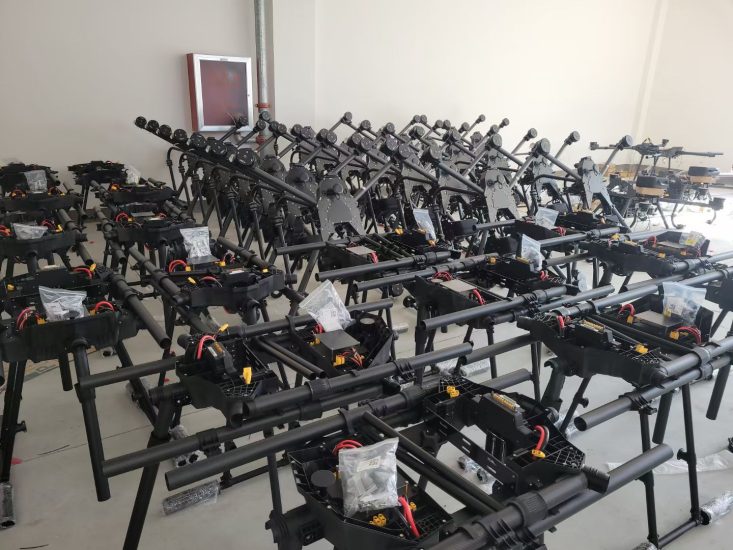
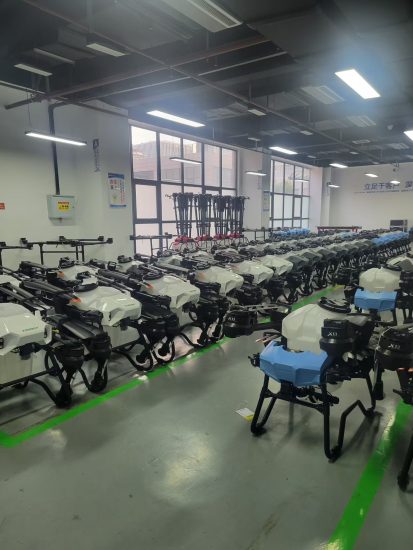
6. Customization Options for Global Distributors
To support distributors worldwide, drones can be customized based on local regulations and market preferences:
- Custom logo and branding
- Different tank capacities
- Instruction manuals in multiple languages
- Spare parts kits for long-term service
- Flight software tailored to local farms
- Battery upgrades for extended missions
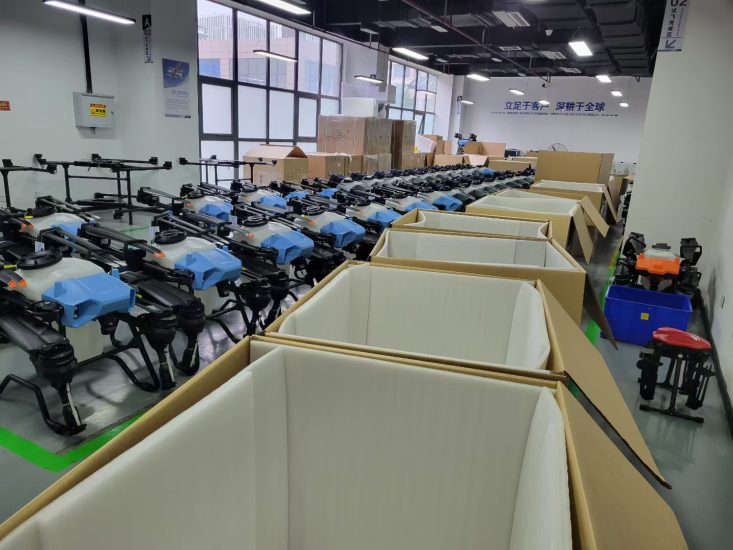
OEM and ODM services help retailers create competitive product lines without building their own manufacturing facilities.
7. The Future of Drone-Based Agriculture
Drone spraying technology will continue advancing with:
- AI-based autonomous decision-making
- Cloud data sharing for farm management
- Multispectral cameras for plant-health analysis
- Automatic refill and battery-swapping stations
The future farm will depend heavily on drone fleets working together—reducing costs, protecting crops, and maximizing yield with scientific precision.
⭐ Jacob H.
👤 Avatar: Man with brown hair and glasses
🇺🇸 USA
📅 January 14, 2025
“The drone performs excellently. Coverage is even and the battery lasts longer than expected.”
⭐ Carlos M.
👤 Avatar: Man with short beard
🇲🇽 Mexico
📅 January 12, 2025
“Very reliable for corn and vegetable fields. Saves us several workers every spraying cycle.”
⭐ Ibrahim A.
👤 Avatar: Middle-aged man wearing a cap
🇸🇦 Saudi Arabia
📅 January 10, 2025
“High performance in desert farms. The drone handles windy conditions with no issues.”
⭐ Lucas P.
👤 Avatar: Farmer wearing sunglasses
🇧🇷 Brazil
📅 January 9, 2025
“Our spraying time was cut in half. Excellent build quality and strong motors.”
⭐ Hayato S.
👤 Avatar: Japanese man with neat haircut
🇯🇵 Japan
📅 January 8, 2025
“The drone’s precision is impressive. Perfect for rice paddies and hillside fields.”
⭐ Sophia T.
👤 Avatar: Young woman with ponytail
🇬🇧 United Kingdom
📅 January 7, 2025
“Very efficient and easy to operate. Our team learned the controls in just one day.”
⭐ Jean-Claude R.
👤 Avatar: Elderly man with a mustache
🇫🇷 France
📅 January 6, 2025
“The drone significantly reduced chemical use. Excellent investment.”
⭐ Samuel D.
👤 Avatar: African man smiling
🇳🇬 Nigeria
📅 January 5, 2025
“Perfect for large cassava and maize farms. The tank capacity is ideal.”
⭐ Ivan K.
👤 Avatar: Man with winter jacket
🇷🇺 Russia
📅 January 3, 2025
“Works well even in colder climates. The flight stability is impressive.”
⭐ Mateo G.
👤 Avatar: Teen farmer with hat
🇦🇷 Argentina
📅 January 2, 2025
“Easy maintenance and great customer support. Highly recommended.”
⭐ Thabo N.
👤 Avatar: African woman smiling brightly
🇿🇦 South Africa
📅 January 1, 2025
“Our sugarcane fields are much easier to manage thanks to this drone.”
⭐ Andre R.
👤 Avatar: Man with cap and beard
🇵🇹 Portugal
📅 December 30, 2024
“Accurate spraying and strong battery performance. Worth every dollar.”
⭐ Ahmad M.
👤 Avatar: Young man with black beard
🇪🇬 Egypt
📅 December 28, 2024
“Great for vegetable crops. The AI flight planning is very helpful.”
⭐ Panya W.
👤 Avatar: Smiling Thai farmer
🇹🇭 Thailand
📅 December 27, 2024
“The drone works perfectly for our rice fields. Very stable and powerful.”
⭐ Khaled O.
👤 Avatar: Older man wearing traditional clothing
🇦🇪 UAE
📅 December 26, 2024
“Using it for palm farms. Excellent penetration and precision.”


No comments yet