


Uneven spraying is one of the most common problems faced by agricultural drone operators. When pesticide or fertilizer distribution is inconsistent, crops may receive too much chemical in one area and too little in another. This can reduce crop protection efficiency, increase costs, and affect yield quality.
For farmers, agricultural service providers, and distributors, understanding why uneven spraying happens and how to fix it can improve productivity and reduce waste.
This guide explains the common causes of uneven spraying and practical solutions to improve agricultural drone spraying accuracy.
Why Uneven Spraying Is a Serious Problem
Poor spraying consistency can create multiple farming problems, including:
-
Crop disease due to insufficient pesticide coverage
-
Chemical waste caused by over-spraying
-
Higher operating costs
-
Lower farming efficiency
-
Reduced crop quality and yield
In precision agriculture, even coverage is important for maximizing spraying effectiveness.
Common Reasons Why Agricultural Drones Spray Unevenly
1. Incorrect Flight Speed
Drone flight speed directly affects spraying performance.
If the drone flies too fast:
-
Spray droplets may not fully cover crops
-
Coverage becomes inconsistent
-
Pesticides may drift away
If the drone flies too slowly:
-
Excessive spraying may occur
-
Chemical usage increases
-
Crop damage may happen in sensitive areas
How to fix it:
Choose an appropriate flight speed according to crop density, nozzle performance, and spraying requirements. Stable and consistent speed often delivers better spraying results.
2. Incorrect Flight Height
Flying too high or too low can affect spray distribution.
Problems caused by excessive flight height:
-
Wind drift increases
-
Reduced spraying accuracy
-
Uneven chemical coverage
Problems caused by low flight height:
-
Over-concentrated spraying
-
Crop damage risks
-
Reduced coverage area
How to fix it:
Maintain a stable operating height suitable for the crop type and spraying target.
For example:
-
Rice and wheat fields often require stable low-altitude spraying
-
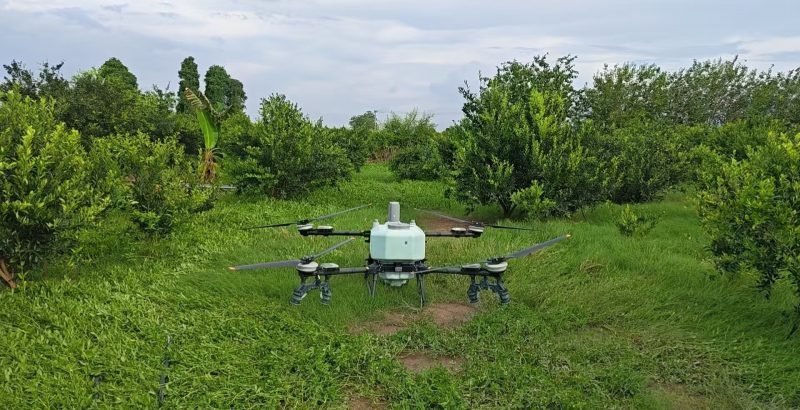
Orchards may require flexible height adjustment depending on tree density
3. Poor Nozzle Performance
Nozzles are critical components in agricultural drone spraying systems.
Common nozzle issues include:
-
Blocked nozzles
-
Worn spray heads
-
Uneven droplet size
-
Incorrect nozzle settings
Signs of nozzle problems:
-
Uneven liquid output
-
Visible spray differences between sides
-
Poor chemical penetration
How to fix it:
Regularly inspect and clean nozzles. Replace damaged spray components when necessary.
Routine maintenance helps improve spraying consistency.
4. Wind Conditions Affect Spraying Accuracy
Weather conditions strongly influence drone spraying performance.
Strong wind may cause:
-
Spray drift
-
Chemical loss
-
Uneven crop coverage
How to fix it:
Avoid spraying during strong wind periods.
Early morning or late afternoon often provides more stable conditions for spraying operations.
5. Battery Power Instability
Many operators ignore battery influence on spraying quality.
Weak or unstable batteries may cause:
-
Reduced flight stability
-
Inconsistent spraying speed
-
Irregular pressure performance
How to fix it:
Use reliable agricultural drone batteries with stable power output and monitor battery condition regularly.
A healthy battery system improves overall spraying consistency.
6. Improper Spray Route Planning
Poor route planning can result in overlapping or missed spraying areas.
Common route problems:
-
Gaps between spray paths
-
Excess overlap
-
Irregular flight patterns
How to fix it:
Use intelligent flight planning and maintain consistent spacing between spraying routes.
Automated route planning improves spraying precision and efficiency.
7. Incorrect Chemical Mixture
Improper pesticide dilution may also affect spraying results.
Problems include:
-
Poor atomization
-
Uneven droplet formation
-
Nozzle blockage
How to fix it:
Follow recommended pesticide mixing instructions and ensure liquids are filtered properly before spraying.
Best Practices to Improve Agricultural Drone Spraying Accuracy
To achieve more consistent spraying performance:
-
Perform routine nozzle inspection
-
Maintain stable flight speed
-
Operate at appropriate flight height
-
Monitor battery performance
-
Avoid strong wind conditions
-
Use intelligent route planning
-
Clean spraying systems regularly
Regular maintenance and proper operation significantly improve spraying quality.
When Should You Upgrade Your Agricultural Drone?
If uneven spraying continues despite maintenance, your drone system may need improvement.
Signs you may need an upgrade:
-
Frequent spraying inconsistency
-
Low spraying efficiency
-
Poor battery performance
-
High maintenance frequency
-
Inaccurate flight stability
Modern agricultural drones with precision spraying systems, intelligent route planning, and stable power management can improve field performance.
Final Thoughts
Uneven agricultural drone spraying is usually caused by operational settings, nozzle problems, wind conditions, battery instability, or poor maintenance. Identifying the cause early can reduce pesticide waste, improve crop protection, and increase farming efficiency.
A properly maintained agricultural drone combined with correct spraying practices delivers more accurate and reliable results over time.
FAQ
Why is my agricultural drone spraying unevenly?
Common reasons include poor nozzle performance, incorrect flight speed, wind interference, unstable battery power, or improper spray route planning.
Can weather affect agricultural drone spraying?
Yes. Strong wind can reduce spraying accuracy and cause chemical drift, making coverage uneven.
How often should drone nozzles be cleaned?
Nozzles should be inspected and cleaned regularly, especially during heavy spraying seasons or after using thick chemical mixtures.
Does battery condition affect spraying performance?
Yes. Weak batteries may reduce flight stability and spraying consistency, affecting overall coverage.
How can I improve spraying accuracy?
Use proper flight height, stable speed, clean nozzles, suitable weather conditions, and intelligent route planning.
Can OEM agricultural drones improve spraying performance?
Yes. Customized agricultural drones can be configured for specific crops, spraying systems, tank sizes, and farming environments.
Related Articles
-
How to Choose the Right Agricultural Drone for Your Farm Size and Crops?
-
How to Extend Agricultural Drone Battery Life and Reduce Downtime?
-
What Maintenance Does an Agricultural Drone Need for Long-Term Use?
-
Can OEM/ODM Agricultural Drones Be Customized for Local Farming Needs?
Need help improving spraying performance? Contact Msoen for professional agricultural drone solutions, OEM/ODM customization, and technical support.
THE END


No comments yet