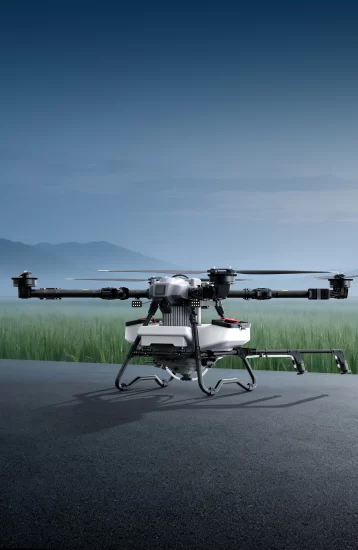


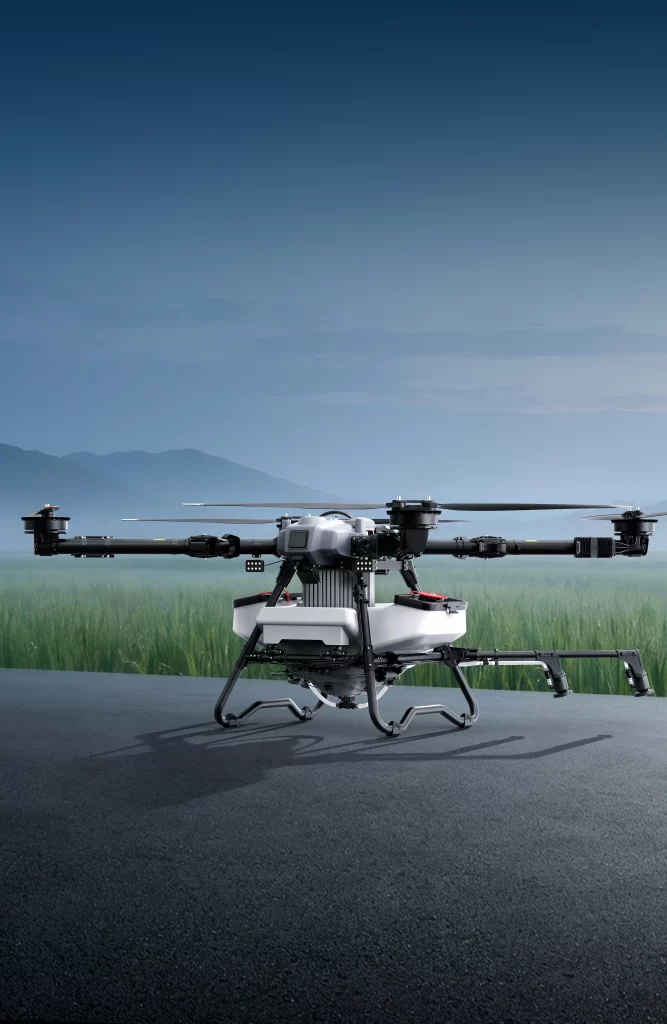
Missed spraying is one of the common problems in orchard pest and disease management. When some leaves, branches, or parts of the canopy receive insufficient spray, the effectiveness of a treatment can be reduced.
Orchard spraying drones can help improve operational consistency, but choosing the right drone and using the correct flight and spraying parameters are essential.
Why Does Missed Spraying Happen in Orchards?
Unlike flat farmland, fruit trees have three-dimensional canopies.
Leaves may be concentrated on the outside of the tree, while branches and inner leaves are partially hidden.
Common causes of missed spraying include:
- Dense tree canopies
- Incorrect flight altitude
- Excessive flight speed
- Incorrect spray width
- Inappropriate nozzle selection
- Insufficient spray flow
- Uneven tree spacing
- Strong wind
- Poor flight-path planning
- Operator errors
Simply increasing pesticide volume does not necessarily solve the problem.
The objective should be to achieve appropriate and consistent coverage while following the pesticide label and local agricultural regulations.
How Can a Spraying Drone Improve Coverage?
An agricultural spraying drone can follow a planned flight route instead of requiring an operator to manually walk between every row.
Depending on the drone and orchard, useful functions can include:
- Automatic route planning
- Precise positioning
- Constant flight speed
- Adjustable spraying rate
- Terrain following
- Obstacle detection
- Automatic altitude control
These features can make spraying more consistent.
However, drone technology cannot completely eliminate missed areas. Dense canopies, wind, tree structure, and incorrect settings can still affect spray deposition.
1. Maintain the Correct Flight Altitude
Flying too high can cause spray droplets to drift away from the target.
Flying too low can reduce coverage and increase the risk of contacting branches.
The ideal altitude depends on:
- Tree height
- Canopy shape
- Drone spray system
- Nozzle configuration
- Wind conditions
- Orchard spacing
The operator should follow the drone manufacturer’s recommendations and the pesticide label.
2. Control Flight Speed
Flight speed has a direct relationship with spray coverage.
If the drone flies too quickly, there may not be enough time for the spray system to deliver the required amount of liquid over the target area.
If it flies too slowly, productivity can decrease and the application rate may become excessive if the flow rate is not adjusted.
A good spraying system should coordinate:
Flight speed + spray flow + spray width
For automated spraying, variable-rate flow control can help maintain a more consistent application rate when operating conditions change.
3. Choose the Correct Nozzles
Nozzle selection is extremely important.
Different nozzles can produce different spray patterns and droplet characteristics.
The appropriate choice depends on:
- Crop type
- Canopy density
- Application requirements
- Weather conditions
- Pesticide label
- Required application rate
Buyers should ask manufacturers whether different nozzle configurations are available.
4. Consider Canopy Density
A young orchard with relatively open foliage is very different from a mature orchard with dense leaves.
For dense canopies, the operator should pay close attention to spray distribution.
Instead of assuming that a higher liquid volume will solve the problem, it is better to optimize:
- Flight height
- Flight speed
- Spray flow
- Nozzle configuration
- Flight route
- Operating conditions
Field testing is the best way to determine whether coverage is adequate.
5. Orchard Row Spacing Matters
Tree spacing can vary significantly between farms.
For example, a narrow orchard may require a different flight route from a large commercial orchard with wide rows.
Before purchasing a drone, measure:
- Row spacing
- Average tree height
- Canopy width
- Orchard area
- Slope
- Obstacles
This information can help the supplier recommend a more appropriate aircraft and spraying configuration.
6. Wind Can Cause Uneven Coverage
Wind is another major factor.
Even if the drone follows the correct route, strong wind can move droplets away from the intended target.
This can lead to:
- Uneven deposition
- Increased drift
- Reduced coverage
- Environmental concerns
- Unnecessary chemical loss
Spraying should therefore only be conducted under conditions permitted by the pesticide label and local regulations.
Operators should monitor wind conditions throughout the operation rather than assuming that conditions remain constant.
7. Terrain Following Can Help on Sloped Orchards
Mountain and hillside orchards can create significant changes in elevation.
If a drone maintains a fixed altitude relative to the takeoff point, the distance between the aircraft and the trees can change as the terrain rises and falls.
Terrain-following technology can help maintain a more consistent relative height.
This can improve operational consistency, although the actual performance depends on the drone’s sensors, software, terrain, and operating conditions.
8. Obstacle Detection Is Important
Orchards contain many potential obstacles.
These can include:
- Branches
- Tree trunks
- Utility poles
- Wires
- Buildings
- Irrigation equipment
A drone equipped with appropriate obstacle-sensing technology can help identify potential hazards.
However, obstacle avoidance systems are not perfect.
Operators should always inspect the orchard before the first flight and identify dangerous obstacles.
9. Use a Planned Flight Route
Manual flying can create inconsistent spacing between flight paths.
Automatic route planning can help the drone follow a predetermined pattern.
A typical orchard route may be designed according to:
Orchard boundary → tree rows → turning points → return route
The exact route should be adapted to the orchard layout.
The operator should also check the route before starting the spraying operation.
How Much Does an Orchard Spraying Drone Cost?
Price depends on tank capacity, spraying technology, sensors, batteries, flight-control systems, and manufacturer configuration.
A general equipment budget can be approximately:
| Capacity | Indicative Price Range |
|---|---|
| 5–10 L | US$2,000–5,000 |
| 10–16 L | US$3,500–7,000 |
| 16–25 L | US$5,000–10,000 |
| 25–40 L | US$8,000–15,000+ |
| Customized professional systems | US$15,000–25,000+ |
These are indicative ranges rather than fixed quotations. The actual price can change depending on batteries, chargers, remote controller, spare parts, sensors, OEM configuration, shipping, taxes, certifications, and destination country.
How to Test Whether Coverage Is Good Enough
Before spraying an entire orchard, conduct a small field test.
One practical method is to use water-sensitive test cards or another appropriate coverage assessment method.
Place test cards at different positions within the canopy, such as:
- Upper canopy
- Outer canopy
- Middle canopy
- Lower canopy
- Inner canopy
After a test flight, inspect the cards to determine whether the spray is reaching the intended areas.
This is more reliable than judging coverage simply by looking at the drone from the ground.
What Should Buyers Ask a Manufacturer?
Before purchasing an orchard spraying drone, ask:
- What is the recommended flight altitude?
- What is the recommended flight speed?
- What is the spray width?
- What is the pump flow rate?
- Which nozzles are available?
- Can the spray flow automatically adjust with flight speed?
- Does the drone support terrain following?
- Does it have obstacle detection?
- Can the flight route be programmed for orchard rows?
- What is the battery endurance under actual spraying conditions?
- How long does battery replacement take?
- Can the manufacturer provide orchard test data?
- Can the drone be tested with different fruit-tree canopies?
- What spare parts are available?
- What training and after-sales service are provided?
FAQ
Can orchard spraying drones completely eliminate missed spraying?
No. Drones can improve flight consistency and operational efficiency, but coverage still depends on canopy density, weather, nozzle configuration, flight parameters, and the specific spraying system.
Does increasing pesticide volume solve missed spraying?
Not necessarily. Increasing application volume without proper calibration can create excessive application and environmental risks. The application should follow the pesticide label and local regulations.
What causes the most missed spraying?
Common factors include dense canopies, incorrect flight height, excessive flight speed, poor nozzle selection, wind, and incorrect flight-path planning.
Are drones suitable for mountain orchards?
They can be particularly useful where ground equipment has difficulty accessing slopes. Terrain-following and reliable positioning are important features for these applications.
How can I test spray coverage?
Conduct a small test area first and use appropriate coverage assessment methods, such as water-sensitive cards, at different positions within the canopy.
Conclusion
Improving orchard spraying coverage requires more than simply purchasing a larger agricultural drone.
The operator needs to coordinate flight altitude, speed, spray flow, nozzle selection, route planning, weather conditions, and canopy structure.
For dense or mountainous orchards, features such as terrain following, accurate positioning, and obstacle sensing can provide additional value.
Most importantly, buyers should request real orchard test data from the manufacturer instead of relying only on theoretical specifications.
A properly selected and calibrated orchard spraying drone can help reduce inconsistent spraying operations, improve efficiency, and make difficult orchard areas easier to manage.


No comments yet