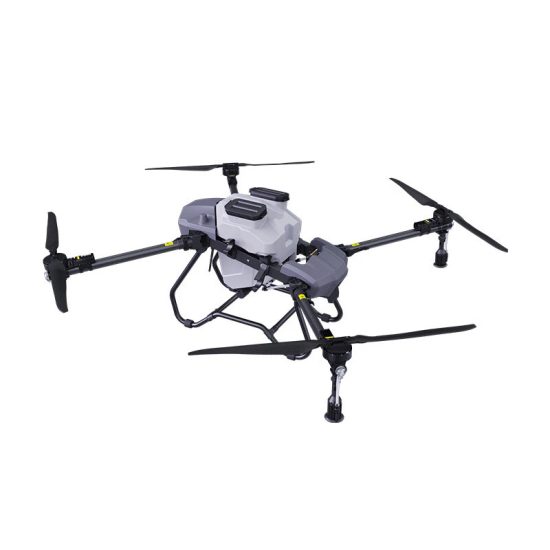


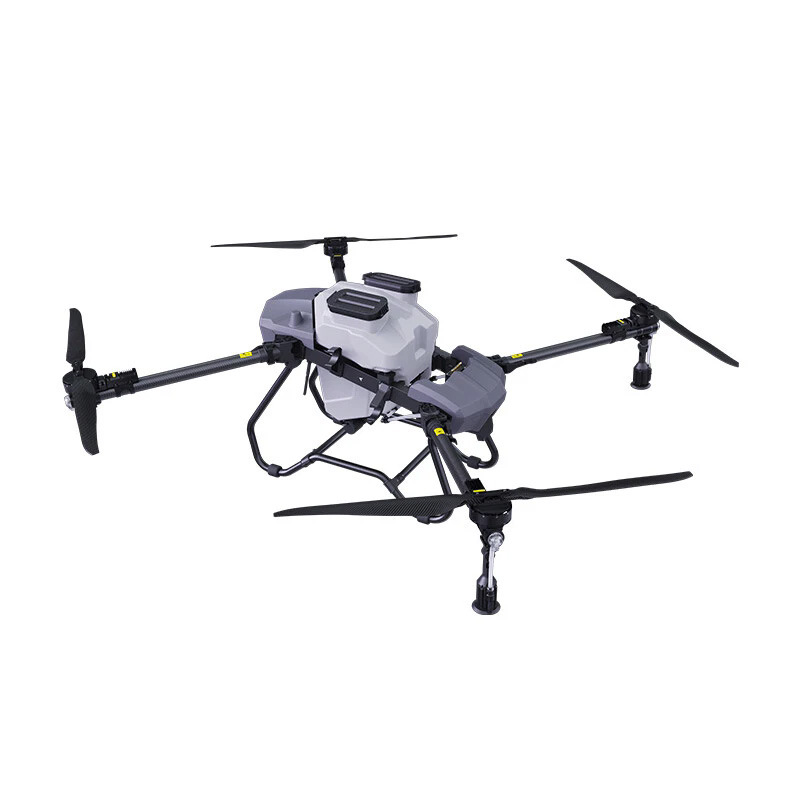
Buying a professional farming drone is a major investment for farms, agricultural contractors, distributors, and agribusiness companies. A drone may look powerful in specifications, but real farming performance depends on much more than payload size or price.
Many buyers focus only on tank capacity and overlook important factors such as battery workflow, spraying efficiency, spare parts availability, terrain adaptability, and long-term operating cost.
Before making a purchase decision, understanding how a drone performs in real agricultural environments can help avoid expensive mistakes.
Define Your Farming Needs First
Before comparing models, buyers should first understand their operational requirements.
Questions to consider include:
- What crops will be sprayed?
- How large is the farm area?
- Is the land flat, mountainous, or mixed terrain?
- How often will spraying be performed?
- Will the drone be used for pesticide spraying, fertilizer spreading, or both?
For example, a rice farm has different operational requirements than an orchard or tea plantation.
Professional drone selection should match real agricultural needs instead of simply choosing the largest machine available.
Payload Capacity Is Important — But Not Everything
Payload capacity often attracts attention because larger tanks suggest higher productivity.
However, bigger is not always better.
A larger payload also means:
- Heavier takeoff weight
- Higher battery consumption
- More transportation difficulty
- Greater maintenance demands
In some farming conditions, medium-capacity drones may deliver better daily efficiency because they balance productivity with easier operation.
Instead of asking, “What is the biggest drone?” buyers should ask:
“What drone gives the best operational efficiency for my farm?”
Understand Battery Workflow
Battery performance is one of the most overlooked buying factors.
A professional farming drone is only productive if it can operate continuously.
Important questions include:
- How long does one battery last during actual field spraying?
- How many batteries are recommended for daily operation?
- Is fast charging available?
- How quickly can batteries be replaced in the field?
Sometimes a well-designed battery management system improves productivity more than a larger tank size.
Downtime between flights directly affects operational efficiency.
Evaluate Spraying System Quality
Spraying quality matters more than marketing claims.
A professional agricultural drone should provide:
- Stable flow control
- Consistent droplet distribution
- Adjustable spraying settings
- Reliable pump performance
- Uniform coverage across different crops
Poor spraying performance may lead to:
- Uneven application
- Chemical waste
- Reduced pest control efficiency
- Repeat operations and higher cost
When possible, buyers should evaluate real spraying results instead of relying only on technical specifications.
Terrain Adaptability Matters
Not all farms operate under ideal conditions.
Real agricultural environments may include:
- Hills and slopes
- Rice paddies
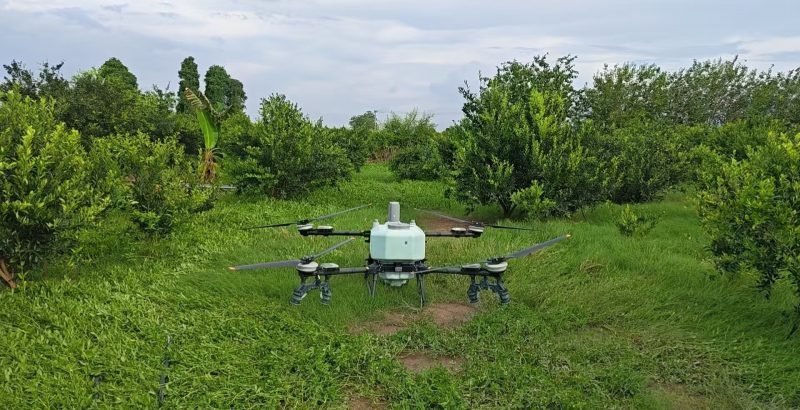
- Dense orchards
- Uneven farmland
Professional farming drones should adapt to terrain changes.
Features such as terrain following and stable flight control can improve spraying consistency and operational safety.
For orchard or mountain agriculture, terrain performance becomes especially important.
Consider Maintenance and Spare Parts Support
Every agricultural drone experiences wear during seasonal operations.
Professional buyers should always ask:
- Are spare parts easy to obtain?
- Is remote technical support available?
- How quickly can repairs be handled?
- Is operator training provided?
- What warranty support exists?
During peak spraying seasons, downtime can become expensive.
Reliable support often matters more than a lower purchase price.
Think About Long-Term Operating Costs
The purchase price is only part of the investment.
Long-term ownership cost includes:
- Batteries
- Maintenance
- Spare parts
- Training
- Repair support
- Operational downtime
Sometimes a lower-cost drone becomes more expensive over time because of poor reliability or limited support.
Professional buyers evaluate total cost of ownership rather than only upfront price.
Should You Choose OEM Manufacturing?
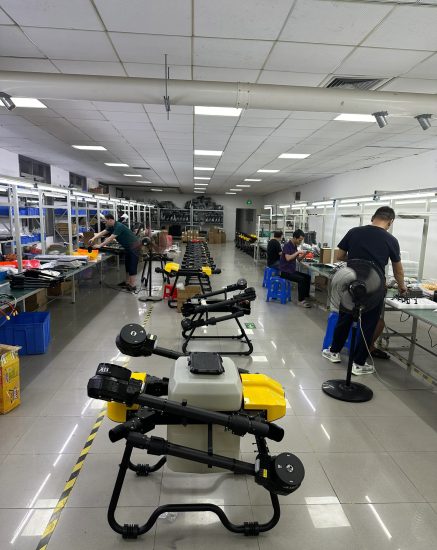
For distributors, agricultural suppliers, or businesses planning to build a private brand, OEM farming drone manufacturing may be an option.
OEM solutions can provide:
- Custom branding
- Product specification adjustment
- Market-focused configurations
- Local distribution opportunities
Businesses entering agricultural drone markets often choose OEM partnerships to build brand identity while reducing product development time.
Safety and Ease of Operation
Ease of operation directly affects productivity.
Professional farming drones should offer:
- Stable flight performance
- Reliable route planning
- Easy calibration
- User-friendly software systems
- Operator training support
Complex systems may increase training cost and reduce field efficiency.
Practical usability matters just as much as performance.
Buying Based on Real Farming Value
A professional farming drone should be viewed as a productivity investment rather than simply equipment.
The right system improves:
- Spraying efficiency
- Labor productivity
- Chemical precision
- Time management
- Long-term operating consistency
The best purchase decision depends on how well a drone fits actual farming conditions, operational goals, and long-term business planning.
FAQ
What is the most important factor when buying a farming drone?
There is no single factor. Farm size, crop type, terrain, spraying needs, battery system, and after-sales support all matter.
Is a larger payload drone always better?
Not always. Larger drones may increase efficiency in large farms but also increase battery demand and operating complexity.
How many batteries should a professional farming drone have?
This depends on workload, farm size, and charging setup. Continuous operation often requires multiple batteries.
Should I focus on price or performance?
Professional buyers usually consider total operational value rather than only purchase cost.
Is OEM agricultural drone manufacturing suitable for distributors?
Yes. OEM solutions can help distributors and agricultural businesses launch branded products with customized specifications and business flexibility.


No comments yet