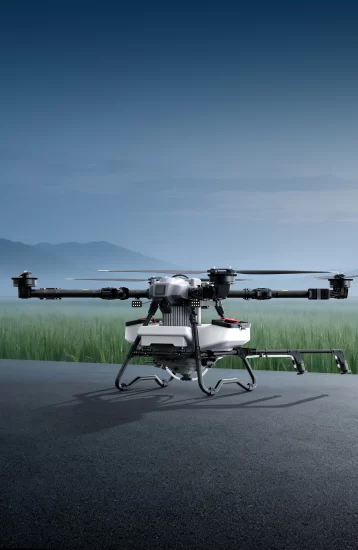


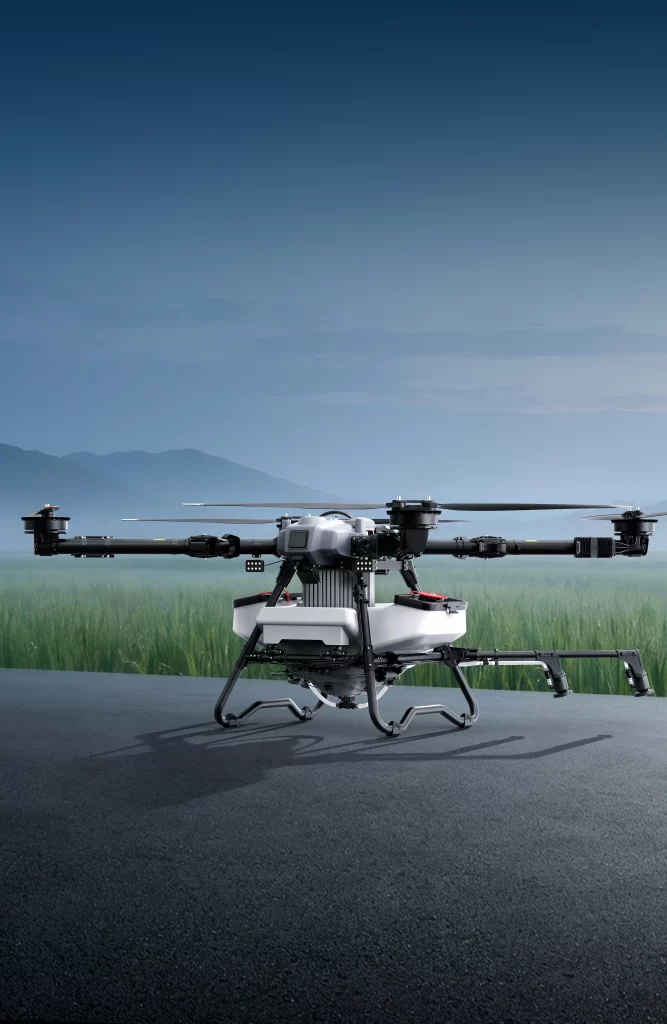


One of the most important questions farmers and agricultural spraying contractors ask before purchasing an agricultural drone is:
How many acres can an agricultural drone spray per hour?
The answer depends on much more than the drone’s tank capacity. Flight speed, spray width, application rate, field shape, battery endurance, refill time, weather conditions, crop type, and operator experience can all affect actual productivity.
Under suitable operating conditions, a modern agricultural spraying drone may potentially cover several acres to more than 10 acres per hour, depending on the model and spraying parameters. However, buyers should distinguish between theoretical flight coverage and real-world field productivity.
This guide explains how to estimate agricultural drone spraying capacity and how to compare different models.
Quick Productivity Comparison
The following is a simplified example rather than a guaranteed performance specification:
| Drone Size | Approximate Working Width | Potential Operating Productivity* |
|---|---|---|
| 10L | 3–5 m | 3–8 acres/hour |
| 16L | 4–6 m | 5–10 acres/hour |
| 20L | 5–7 m | 6–12 acres/hour |
| 30L | 6–9 m | 8–15+ acres/hour |
*Actual productivity varies significantly according to application rate, flight speed, field conditions, refill time, battery changes, crop type, and operating practices.
These figures should therefore be used for initial planning rather than as a guaranteed production rate.
1. What Determines How Many Acres a Drone Can Spray?
There are several major factors.
Flight Speed
Higher flight speed can increase coverage, but only if spray quality remains consistent.
Flying too quickly can reduce:
- Spray uniformity
- Droplet distribution
- Target coverage
- Application accuracy
The ideal speed depends on the spraying system and crop.
Spray Width
Spray width has a major effect on productivity.
For example, a drone flying at:
5 m/s
with an effective spray width of:
6 meters
has a theoretical field coverage rate of:
5 × 6 = 30 m²/s
Converting this into hourly theoretical coverage gives:
108,000 m²/hour
or approximately:
10.8 hectares/hour
or roughly:
26.7 acres/hour
However, this is a theoretical calculation and does not represent real-world productivity because it ignores turning, refilling, battery changes, field boundaries, route planning, and other operational losses.
This is why advertised theoretical coverage can be much higher than actual farm performance.
2. Application Rate Is Extremely Important
Application rate determines how much liquid the drone needs to carry for each acre or hectare.
For example, suppose the application rate is:
10 liters/hectare
A 20L tank theoretically carries enough liquid for:
2 hectares per tank
A 30L tank theoretically carries:
3 hectares per tank
But if the application rate increases to 20L/hectare, the same drones cover approximately half as much area per tank.
Therefore:
Higher application rate = more frequent refilling = lower potential productivity.
3. A Simple Formula for Coverage
You can estimate theoretical field coverage with:
Area per hour = Flight Speed × Effective Spray Width × 3,600
Then convert square meters into hectares or acres.
For hectares:
Hectares/hour = Speed × Width × 3,600 ÷ 10,000
For acres:
Acres/hour = Speed × Width × 3,600 ÷ 4,046.86
For example:
A drone flies at 5 m/s with a 6m effective spray width:
5 × 6 × 3,600 ÷ 4,046.86 ≈ 26.7 acres/hour
Again, this represents theoretical coverage.
Actual production will be lower.
4. Real-World Productivity Is Lower
A drone cannot spend 100% of the working hour spraying.
Time is also required for:
- Turning
- Positioning
- Battery changes
- Refilling
- Moving between fields
- Route adjustments
- Inspection
- Loading chemicals
- Landing
- Takeoff
Therefore, real productivity might be only a fraction of theoretical coverage.
A practical way to estimate productivity is:
Real Productivity = Theoretical Productivity × Field Efficiency
If theoretical coverage is 26 acres/hour and the overall field efficiency is 40%:
26 × 40% = 10.4 acres/hour
This provides a much more realistic planning estimate.
5. How Many Acres Can a 10L Agricultural Drone Spray?
A 10L drone is generally designed for smaller-scale or highly maneuverable operations.
Depending on the application rate, spray width, flight speed, and field conditions, a 10L drone might realistically operate around:
3–8 acres per hour
in many practical scenarios.
However, the actual result can be lower or higher.
A 10L drone can be particularly useful for:
- Small farms
- Specialty crops
- Orchards
- Fragmented fields
- Testing agricultural drone technology
Its smaller size can make it easier to operate in areas where a larger drone is less convenient.
6. How Many Acres Can a 20L Agricultural Drone Spray?
A 20L drone provides a larger liquid capacity and can reduce the frequency of refilling.
A practical planning range may be approximately:
6–12 acres per hour
depending on operating conditions.
For commercial agricultural spraying, a 20L drone can provide a useful balance between:
- Payload
- Flight performance
- Battery consumption
- Maneuverability
- Operating cost
This is one reason why 20L-class drones can be attractive to agricultural contractors and commercial operators.
7. How Many Acres Can a 30L Agricultural Drone Spray?
A 30L agricultural drone has a larger payload and can reduce the number of refilling cycles.
A practical planning range may be approximately:
8–15+ acres per hour
under suitable operating conditions.
However, a larger tank does not automatically guarantee higher hourly productivity.
A 30L drone also requires:
- More powerful propulsion
- Larger batteries
- More charging capacity
- Stronger structural components
- More liquid handling
The additional payload only provides an advantage when the rest of the operating system can support it.
8. Why Tank Capacity Doesn’t Tell the Whole Story
Imagine two 20L drones.
Drone A
- 20L tank
- 4m spray width
- Lower flight speed
- Shorter operating time
Drone B
- 20L tank
- 6m spray width
- Higher efficient flight speed
- Better battery management
Both drones have the same tank capacity.
But Drone B could potentially cover more area per hour.
This demonstrates why buyers should compare the entire system rather than just the tank.
9. Battery Changes Affect Productivity
Battery management is one of the biggest factors in real agricultural drone operations.
If the drone needs frequent battery changes, productive spraying time decreases.
A professional operation may use multiple battery packs.
For example:
- Battery A is flying
- Battery B is charging
- Battery C is ready
This can keep the drone operating more continuously.
Ask the manufacturer:
- Flight time with full payload
- Flight time with typical payload
- Charging time
- Recommended number of batteries
- Battery cycle life
- Charger capacity
10. Refilling Time Matters
Even a high-capacity drone eventually needs to refill.
Suppose a drone carries 30L and applies 10L per hectare.
It can theoretically spray:
3 hectares per tank
If refilling takes 5 minutes, those 5 minutes need to be included in your productivity calculation.
If a drone carries only 10L, the same operation could require three times as many refills.
This is one of the main advantages of larger-capacity agricultural drones.
11. Field Shape Can Change Productivity
A large rectangular field is usually easier to cover efficiently than a small irregular field.
Large Open Field
Potentially high efficiency because the drone can:
- Fly long straight routes
- Make fewer turns
- Use automated route planning
- Maintain consistent speed
Small Irregular Field
Productivity can decrease because the drone may need to:
- Turn frequently
- Adjust routes
- Avoid obstacles
- Fly around boundaries
Therefore, two farms with the same acreage can have very different hourly productivity.
12. Crop Type Also Matters
Different crops require different spraying approaches.
Rice
Large open rice fields may allow efficient automated flight.
Wheat
Large field areas can also be suitable for high-efficiency spraying.
Corn
Plant height and crop structure can affect the required spraying approach.
Orchards
Orchards are more complicated because of:
- Trees
- Narrow spaces
- Uneven terrain
- Obstacles
- Canopy structure
In orchards, spray quality and maneuverability may be more important than maximum acres per hour.
13. Weather Conditions Affect Productivity
Wind can significantly affect spraying operations.
Strong wind may influence:
- Droplet distribution
- Spray drift
- Flight stability
- Application accuracy
Rain can also affect certain spraying operations.
Therefore, published productivity figures should not be interpreted as guaranteed performance in every weather condition.
14. How to Compare Agricultural Drone Manufacturers
When a manufacturer says:
“Our drone can spray 20 acres per hour.”
ask how the number was calculated.
Request:
- Flight speed
- Spray width
- Application rate
- Tank capacity
- Field size
- Battery configuration
- Refill time
- Whether turning time is included
- Whether the figure is theoretical or field-tested
This allows you to make a more meaningful comparison.
15. Ask for Real Field-Test Data
Before purchasing, request actual testing information.
Useful data includes:
Area treated
Operating time
Application rate
Number of battery changes
Number of refills
Weather conditions
Crop type
Average flight speed
This information is much more useful than a single headline number.
16. How to Calculate Daily Capacity
Suppose a 20L agricultural drone realistically covers:
10 acres/hour
and operates for:
6 productive hours/day
Then:
10 × 6 = 60 acres/day
This is a simplified estimate.
You should subtract time for:
- Equipment maintenance
- Travel
- Refilling chemicals
- Battery charging
- Weather delays
- Moving between fields
A realistic daily production plan should include these factors.
17. Cost Per Acre Is More Important Than Acres Per Hour
High productivity does not automatically mean high profitability.
You should also calculate:
Cost per acre = Total operating cost ÷ Acres treated
Operating costs may include:
- Drone depreciation
- Battery replacement
- Electricity
- Maintenance
- Spare parts
- Transportation
- Operator labor
- Insurance
- Software
- Chemical loading
A drone that sprays more acres per hour but has very high operating costs may not be the most economical option.
18. Which Agricultural Drone Should You Choose?
Choose a 10L drone if:
- You operate a small farm
- Fields are fragmented
- Maneuverability is important
- You want a lower initial investment
- You are testing drone spraying
Choose a 20L drone if:
- You operate medium or large farms
- You need higher productivity
- You want a balance between payload and maneuverability
- You provide commercial spraying services
Choose a 30L drone if:
- You operate large-scale agricultural projects
- You want fewer refill cycles
- You have adequate charging infrastructure
- You can utilize the larger payload
FAQ
How many acres can a 10L agricultural drone spray per hour?
A practical planning range may be around 3–8 acres per hour, depending on flight speed, spray width, application rate, field efficiency, and operating conditions.
How many acres can a 20L agricultural drone spray per hour?
A practical planning range may be approximately 6–12 acres per hour, although actual performance can vary significantly.
How many acres can a 30L agricultural drone spray per hour?
A 30L model may potentially achieve around 8–15+ acres per hour under suitable conditions, but field testing is necessary to determine actual productivity.
What is the biggest factor affecting spraying productivity?
There is no single factor. Spray width, flight speed, application rate, battery endurance, refilling, field layout, and operator efficiency all contribute.
Is a larger agricultural drone always faster?
No. A larger payload can reduce refilling frequency, but the drone also requires more power and may be less maneuverable.
How can I calculate agricultural drone productivity?
Start with:
Hectares/hour = Flight Speed × Effective Spray Width × 3,600 ÷ 10,000
Then apply a realistic field-efficiency factor to account for turning, refilling, battery changes, and other operating time.
Should I trust a manufacturer’s advertised acres-per-hour figure?
Use it as a reference, not a guarantee. Ask for actual field-test data and the conditions under which the figure was obtained.
Conclusion
The number of acres an agricultural drone can spray per hour depends on the complete operating system.
A 10L drone may be suitable for smaller operations, while 20L and 30L models can provide greater productivity for commercial agricultural applications.
However, the most important figure is not the manufacturer’s maximum theoretical coverage.
It is the actual acres treated per hour under your specific field conditions.
Before purchasing, ask the manufacturer for real field-test data covering spray width, flight speed, application rate, battery endurance, refill time, and actual treated area.
By calculating both productivity per hour and operating cost per acre, you can make a much more accurate decision when selecting an agricultural drone.



No comments yet