

![Image [1]-Rice Field Drone Spraying: Revolutionizing Precision Agriculture in Flooded Paddies for Sustainable Rice Production-msoen](https://www.msoen.com/wp-content/uploads/2025/04/0f937885e9184642-1024x849.jpg)
![Image [2]-Rice Field Drone Spraying: Revolutionizing Precision Agriculture in Flooded Paddies for Sustainable Rice Production-msoen](https://www.msoen.com/wp-content/uploads/2025/04/2caef68db4184641-768x1024.jpg)
![Image [3]-Rice Field Drone Spraying: Revolutionizing Precision Agriculture in Flooded Paddies for Sustainable Rice Production-msoen](https://www.msoen.com/wp-content/uploads/2025/04/27fe7401e7184641-1024x768.jpg)
Introduction to Rice Field Drone Spraying
Rice, a staple crop for over half of the global population, faces intensifying challenges from labor shortages, rising production costs, and environmental regulations. Traditional manual and tractor-based pesticide and fertilizer application methods struggle with flooded paddies, uneven terrain, and the need for frequent interventions. Rice field drone spraying emerges as a game-changing solution, leveraging AI-guided navigation, waterproof sensors, and adaptive spraying systems to optimize crop health while minimizing chemical use and labor. This 8,000-word guide explores how rice field drones are transforming paddy management, offering actionable insights for farmers, agricultural cooperatives, and sustainability-driven policymakers.
- Unique Challenges in Rice Paddy Management
1.1 Why Traditional Methods Fail in Flooded Fields
Rice paddies present distinct obstacles for agrochemical application:
- Flooding and Terrain: Deep water layers limit ground equipment access and destabilize workers.
- Frequent Spraying Needs: Rice crops require 3–5 pesticide applications per season to combat pests like stem borers and leaf blight.
- Chemical Runoff: Flooding washes pesticides into waterways, harming aquatic ecosystems.
- Labor Intensity: Manual spraying in knee-deep water is physically demanding and time-consuming. 1.2 How Rice Field Drone Sprayers Address These Issues
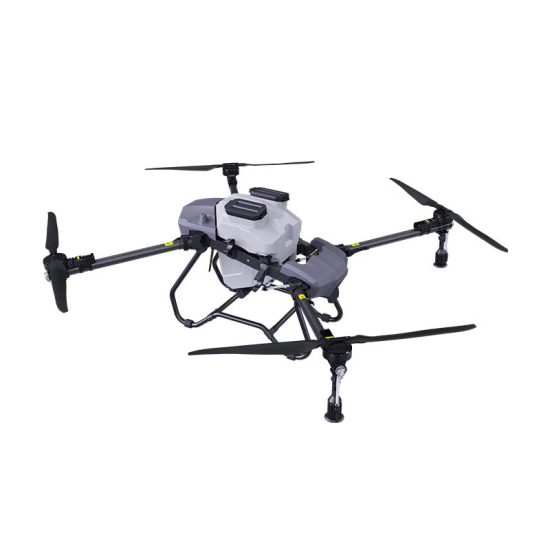
Engineered for aquatic environments, these drones feature: - Amphibious Designs: Waterproof motors and corrosion-resistant frames for operation in waterlogged fields.
- Obstacle Avoidance: AI-powered systems detect and bypass submerged rocks or uneven surfaces.
- High-Payload Capacities: 10–25 liter tanks for extended coverage across large paddies.
- Core Technologies Behind Rice Field Drone Sprayers
2.1 Advanced Navigation Systems
- RTK GPS with Water Surface Calibration: Ensures centimeter-level accuracy even in reflective waterlogged paddies.
- Thermal Imaging: Identifies stressed rice plants through canopy temperature variations caused by pest infestations.
- Swarm Intelligence: Coordinates fleets of drones for synchronized spraying in contiguous paddies. 2.2 Smart Spraying Mechanisms
- Pulse Jet Nozzles: Adjustable spray patterns to penetrate dense rice canopies without over-wetting grains.
- Environmental Sensors: Monitor water levels, wind speed (<5 m/s), and humidity to optimize spraying windows.
- AI Dosage Control: Reduces chemical use by 30–50% through real-time crop health analytics. 2.3 Energy Efficiency Innovations
- Hydrophobic Batteries: Treated with nanocoatings to resist moisture corrosion during prolonged use.
- Solar-Assisted Charging: Deployable solar panels for continuous operation in sunny regions like the Mekong Delta.
- Economic and Environmental Benefits
3.1 Cost Savings for Farmers
- Labor Reduction: Cut spraying workforce needs by 70%, saving $150–$300/hectare annually.
- Chemical Cost Optimization: Precision targeting reduces pesticide waste by 40%. 3.2 Sustainability Advantages
- Reduced Water Pollution: Prevents agrochemical runoff into rivers and groundwater.
- Lower Carbon Footprint: Eliminates diesel-powered tractor emissions in flooded fields. 3.3 Enhanced Crop Yields
- Healthier Canopies: Timely pest control boosts grain quality, increasing market value by 15–20%.
- Faster Application: Treat 20 hectares/day versus 5 hectares/day with manual methods.
- Applications Across Rice Cultivation Systems
4.1 Flooded Paddy Rice (Asia)
- Challenge: Frequent waterlogging complicates equipment access.
- Solution: Drones with buoyancy-assisted takeoff and landing systems. 4.2 Upland Rice (Africa)
- Challenge: Dryland paddies require efficient nutrient delivery.
- Solution: Drones apply foliar fertilizers based on soil moisture analytics. 4.3 Hybrid Rice Trials (Global)
- Challenge: High-yield hybrids demand precise nutrient management.
- Solution: Multi-spectral drones map nutrient deficiencies in real-time.
- Best Practices for Implementation
5.1 Pre-Season Preparation
- Paddy Mapping: Use drones to create 3D elevation models for flight path optimization.
- Chemical Calibration: Adjust nozzle settings for local rice varieties (e.g., Basmati vs. Arborio). 5.2 In-Season Execution
- Weather Monitoring: Schedule flights during dawn/dusk to minimize evaporation.
- Data Integration: Sync drone insights with farm management apps like FarmLogs. 5.3 Post-Treatment Protocols
- Residue Analysis: Test water samples post-spraying to ensure compliance with eco-regulations.
- Drone Maintenance: Clean corrosion-prone components after exposure to saline water.
- Case Studies: Global Success Stories
6.1 China’s Yangtze River Delta
A cooperative reduced pesticide use by 50% using AI-driven drones, increasing yields by 12% while cutting water pollution levels by 30%. 6.2 Vietnam’s Mekong Delta
Farmers deployed swarm drones to treat 500 hectares in 4 days, avoiding losses from typhoon-delayed spraying windows. 6.3 India’s Punjab Region
Drones treated drought-stressed rice paddies with foliar nutrients, boosting survival rates by 25% during erratic monsoons.
- Future Innovations in Rice Drone Technology
7.1 Hydrogel-Coated Nozzles
Self-cleaning nozzles prevent clogging in muddy water conditions.
7.2 Bio-Degrading Pesticide Carriers: Enzyme-based formulas reduce environmental residue.
7.3 AI-Powered Pest Forecasting: Predict outbreaks using weather and crop data integration.
- Policy and Market Considerations
- Subsidies in Asia: China’s 2023 subsidy program for rice drone adoption (up to 30% of equipment costs).
- Global Standards: FAO guidelines for safe pesticide application in flooded ecosystems.
Conclusion: Securing Global Food Security with Aerial Innovation
Rice field drone spraying is not just a technological leap but a necessity for sustainable agriculture. By combining precision engineering with ecological mindfulness, these drones empower farmers to meet the dual challenges of feeding a growing population and preserving natural resources. As AI algorithms evolve and battery tech advances, rice drones will become indispensable allies in securing global food security.



No comments yet