

Agricultural Spraying Drone: A Complete Guide for Farmers and Commercial Buyers
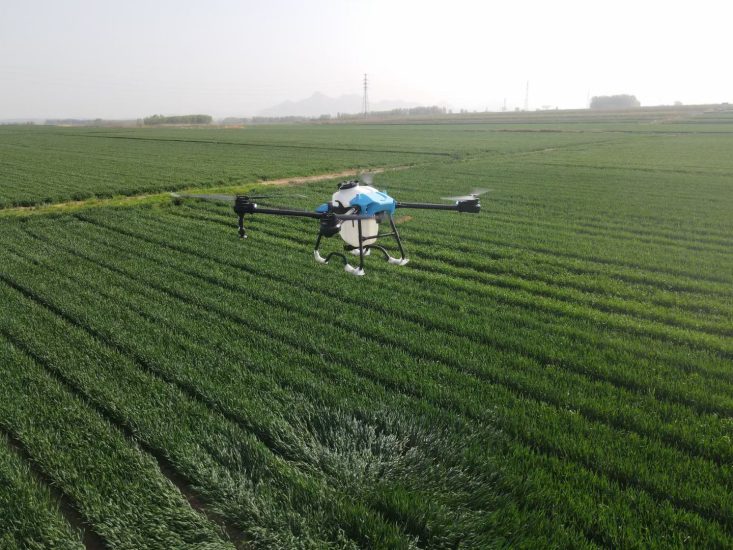
Agricultural spraying drones are becoming an increasingly practical tool for modern crop management. Instead of relying entirely on tractors, manually operated sprayers, or other conventional equipment, farms can use unmanned aerial systems to distribute liquid treatments across fields, orchards, and other agricultural areas.
The value of an agricultural spraying drone is not simply its ability to fly. A useful system needs to combine accurate spraying, sufficient payload capacity, stable flight control, efficient battery management, reliable positioning, and a configuration suitable for the crops and terrain where it will operate.
For farmers, agricultural service providers, distributors, and commercial buyers, understanding these factors is important before selecting a drone.
What Is an Agricultural Spraying Drone?
An agricultural spraying drone is an unmanned aerial vehicle designed to carry and distribute agricultural liquids from the air.
Depending on the configuration, the liquid tank may be used for applications such as crop protection treatments, liquid fertilizers, foliar nutrients, and other agricultural formulations permitted by local regulations.
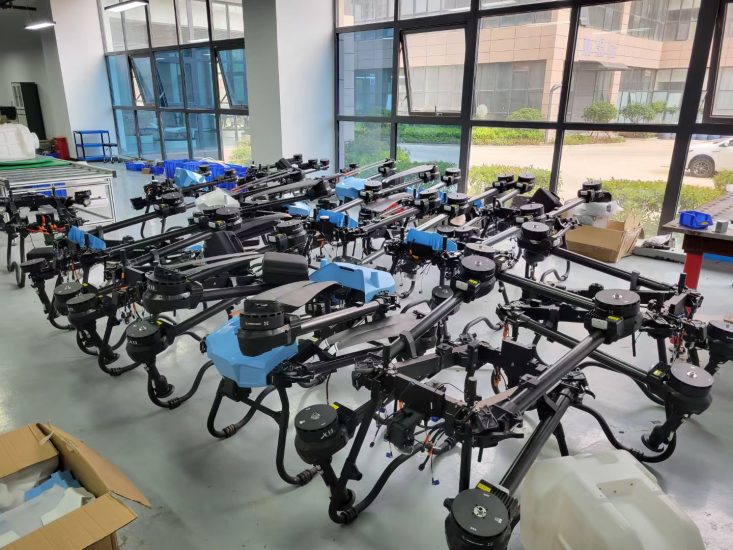
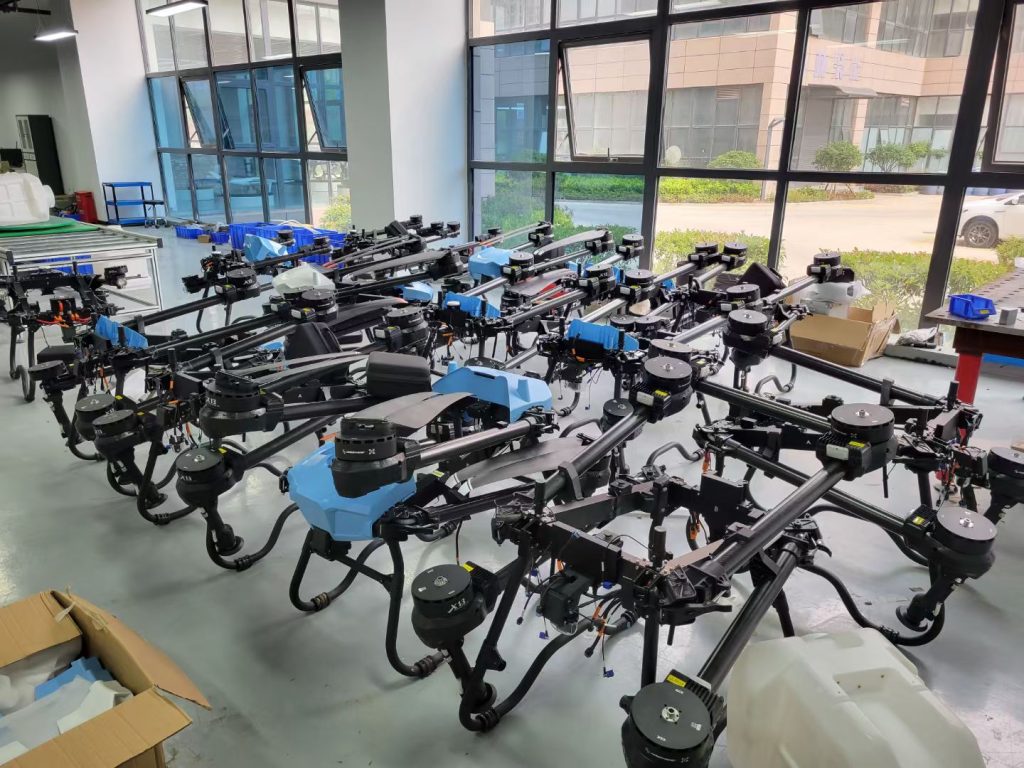
A typical spraying system consists of several major components:
- Flight platform
- Liquid tank
- Pump system
- Spray nozzles
- Flight controller
- Positioning system
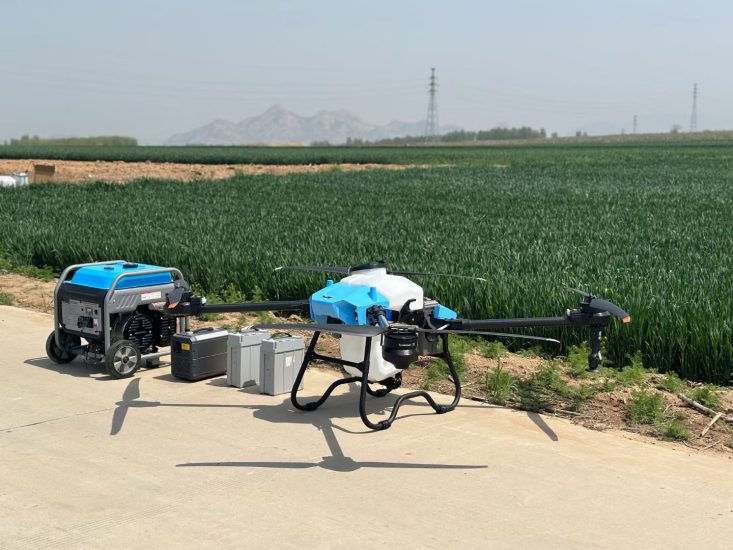
- Battery and power system
- Remote controller
- Obstacle sensing or terrain-following equipment
- Application control software
The aircraft carries the liquid payload while flying above or alongside the crop area. The spraying system then distributes the liquid through multiple nozzles according to the selected operating parameters.
Why Are Agricultural Drones Being Used in Farming?
One of the main advantages of aerial spraying is access.
Large agricultural machinery can have difficulty entering wet fields, steep terrain, narrow planting areas, orchards, or crops that are already tall. An aerial platform can operate without driving directly through the crop.
This can help reduce physical contact with plants and provide another method of reaching areas where conventional ground equipment is less convenient.
Agricultural drones can also be useful when farms need to respond quickly to changing field conditions. A lightweight aerial platform can be transported between different operating areas without requiring the same road access as a tractor-mounted system.
However, a drone does not automatically make every spraying operation more efficient. Actual performance depends on field size, crop type, formulation, weather, battery capacity, flight speed, application rate, and operator experience.
Important Specifications When Choosing a Spraying Drone
Buyers should look beyond the advertised payload number. Several specifications work together to determine the practical value of an agricultural drone.
1. Payload Capacity
Payload capacity determines how much liquid the aircraft can carry during one flight.
Common configurations range from smaller systems designed for specialized operations to larger platforms intended for commercial agricultural services.
A larger tank can reduce the number of refills required, but it also increases aircraft weight and can affect flight time, battery consumption, and operating requirements.
The appropriate payload should therefore be determined according to the farm’s operating conditions rather than simply choosing the largest available model.
2. Tank Capacity
Tank capacity directly affects how much liquid can be transported during each operation.
For smaller farms or applications involving difficult terrain, a smaller tank may provide easier handling. Larger agricultural operations may prefer higher-capacity systems to reduce the frequency of refilling.
Buyers should consider tank size together with payload capacity, pump performance, battery endurance, and refill logistics.
3. Spray Width
Spray width affects how much area can be covered during each flight pass.
A wider spraying system can increase operational coverage, but the actual effective width depends on nozzle design, flight altitude, flight speed, wind conditions, liquid characteristics, and application requirements.
For this reason, advertised spray width should not be considered independently from the complete spraying system.
4. Flight Time
Flight time determines how long the drone can remain in operation before the battery needs to be replaced or recharged.
Actual flight time can vary considerably depending on payload weight, battery condition, temperature, wind, flight speed, and operating altitude.
When comparing agricultural drones, buyers should ask for operating data under realistic payload conditions rather than relying only on unloaded flight-time figures.
5. Battery and Charging System
The battery system is one of the most important components of a commercial spraying drone.
A professional operation may require multiple batteries so that one battery can be charging while another is being used.
Buyers should examine:
- Battery capacity
- Charging time
- Expected service life
- Charging equipment
- Replacement cost
- Battery monitoring
- Operating temperature range
A drone with a large tank but an inefficient battery system may not provide the expected productivity in actual field operations.
How Agricultural Drones Are Used in Different Crops
Different crops create different spraying requirements.
Row Crops
Large agricultural fields may require long operating routes and consistent application across broad areas. Flight planning and battery management become particularly important.
Orchards
Orchards can be more challenging because trees create complex vertical structures. The drone configuration, flight path, altitude control, and airflow around the canopy can influence application results.
Rice and Other Wet-Field Crops
Wet agricultural fields can be difficult for heavy ground machinery. Aerial spraying can provide an alternative method that does not require the spraying vehicle to travel directly through the field.
Vegetables and Specialty Crops
Smaller fields and irregular planting areas may benefit from a flexible aerial platform, particularly where conventional machinery has difficulty maneuvering.
The correct configuration should always be selected according to the crop, terrain, treatment requirements, and local operating regulations.
How Much Area Can an Agricultural Spraying Drone Cover?
There is no single answer because field coverage depends on multiple variables.
Important factors include:
- Tank capacity
- Application rate
- Flight speed
- Spray width
- Battery capacity
- Refill time
- Battery replacement time
- Field shape
- Crop conditions
- Weather
- Operator experience
For example, two drones with identical tank capacities may achieve different practical productivity because their battery systems, refill procedures, spraying widths, or flight-control systems differ.
Commercial buyers should therefore evaluate complete operating efficiency, rather than comparing only tank size.
What Should Buyers Check Before Purchasing?
Before purchasing an agricultural spraying drone, buyers should request detailed technical information from the manufacturer or supplier.
Important questions include:
- What is the maximum payload?
- What is the recommended operating payload?
- How large is the liquid tank?
- What is the effective spraying width?
- What is the typical operating time under load?
- How long does battery charging take?
- How many batteries are recommended for continuous operation?
- What type of positioning system is used?
- Does the system support automatic route planning?
- How are spray flow and application rates controlled?
- What spare parts are available?
- What training and technical support are provided?
- Can the aircraft configuration be customized?
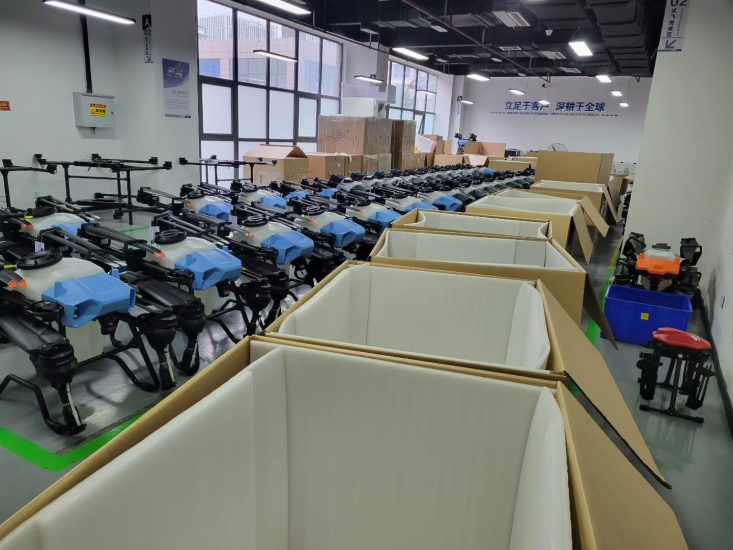
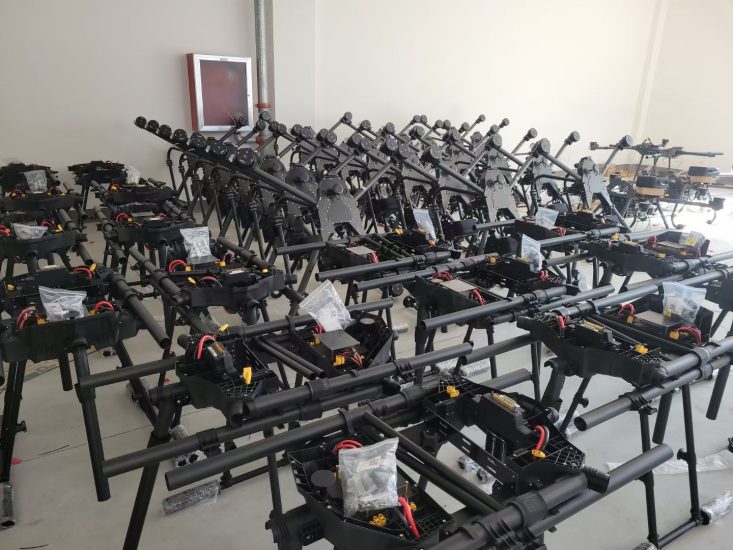
- Are OEM or ODM services available?
These questions can help buyers distinguish between a drone intended mainly for occasional use and a platform designed for professional agricultural operations.
Agricultural Drone OEM and ODM Options
For distributors and agricultural equipment businesses, purchasing a standard model is not always the only option.
OEM and ODM manufacturing can allow a buyer to develop a configuration according to a specific market or application.
Customization may involve areas such as:
- Product appearance
- Branding
- Packaging
- Controller configuration
- Battery specifications
- Tank capacity
- Spraying components
- Software requirements
- Accessories
- Documentation
The feasibility of customization depends on the required changes, production quantity, technical specifications, and certification requirements of the destination market.
For international buyers, it is also important to check import regulations, radio-frequency requirements, drone registration rules, agricultural chemical regulations, and other local requirements before placing an order.
Safety and Operating Considerations
Agricultural spraying drones should be operated by trained personnel and in accordance with local aviation and agricultural regulations.
Operators should pay particular attention to:
- Weather conditions
- Wind speed
- Flight restrictions
- People and animals nearby
- Electrical infrastructure
- Buildings and roads
- Battery condition
- Payload security
- Agricultural chemical handling
- Emergency procedures
Spraying should also be performed according to the instructions for the specific agricultural formulation being used. The drone is an application platform; it does not replace professional knowledge about the product being applied.
Why Manufacturer Support Matters
An agricultural drone is not simply a one-time hardware purchase.
Commercial users may eventually need replacement batteries, pumps, motors, nozzles, controllers, landing components, software updates, or technical assistance.
For this reason, buyers should evaluate the manufacturer’s ability to provide long-term support.
A reliable supply of spare parts can be particularly important for agricultural service companies because equipment downtime during critical crop-management periods can affect their entire operating schedule.
Frequently Asked Questions
Can agricultural spraying drones replace tractors?
Not in every application. Ground machinery and aerial drones have different operating characteristics. A drone can provide an alternative method for certain spraying operations, particularly where aerial access provides practical advantages.
Are larger agricultural drones always better?
No. A larger payload can reduce refill frequency, but it can also increase weight, battery consumption, and operating requirements. The correct capacity depends on the intended application.
Can agricultural spraying drones be customized?
Some manufacturers provide OEM and ODM services. Possible customization depends on the required specifications, production quantity, technical feasibility, and destination-market requirements.
What is the most important specification?
There is no single specification that determines the suitability of a spraying drone. Payload, tank capacity, flight endurance, spray system, positioning, control functions, battery performance, and after-sales support should be evaluated together.
Are agricultural drones suitable for orchards?
They can be used in orchard applications, but orchard spraying requires consideration of canopy structure, terrain, airflow, flight paths, application requirements, and local regulations.
Choosing an Agricultural Spraying Drone for Long-Term Use
The right agricultural spraying drone should be selected according to the actual operating environment rather than based on a single specification.
Farm size, crop type, terrain, application requirements, battery logistics, local regulations, maintenance requirements, and future expansion plans should all be considered before purchasing.
For professional agricultural users and international distributors, a manufacturer capable of providing suitable configurations, technical information, spare parts, and OEM/ODM support can also be an important part of the purchasing process.
MSOEN provides agricultural UAV solutions for different application requirements and can discuss specifications such as payload capacity, spraying configuration, flight system, customization, and OEM/ODM requirements with commercial buyers.


No comments yet