

The landscape of STEM education and academic research is defined by a single constraint: the gap between theoretical knowledge and physical application. As a foreign trade sales specialist in advanced robotics, I have spent the last five years collaborating with university professors, laboratory directors, and technical educators. Their feedback is unanimous: “We need a platform that doesn’t hide the complexity; we need one that reveals it.”
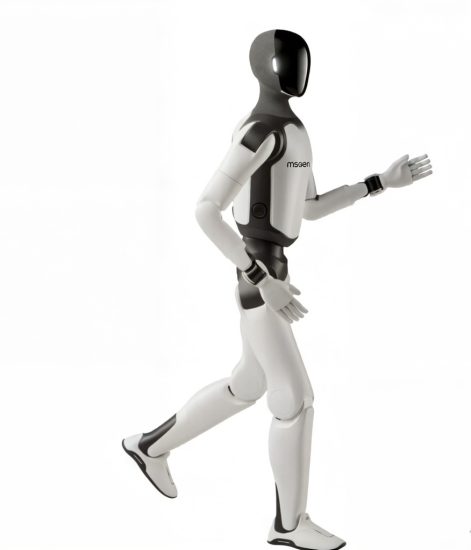
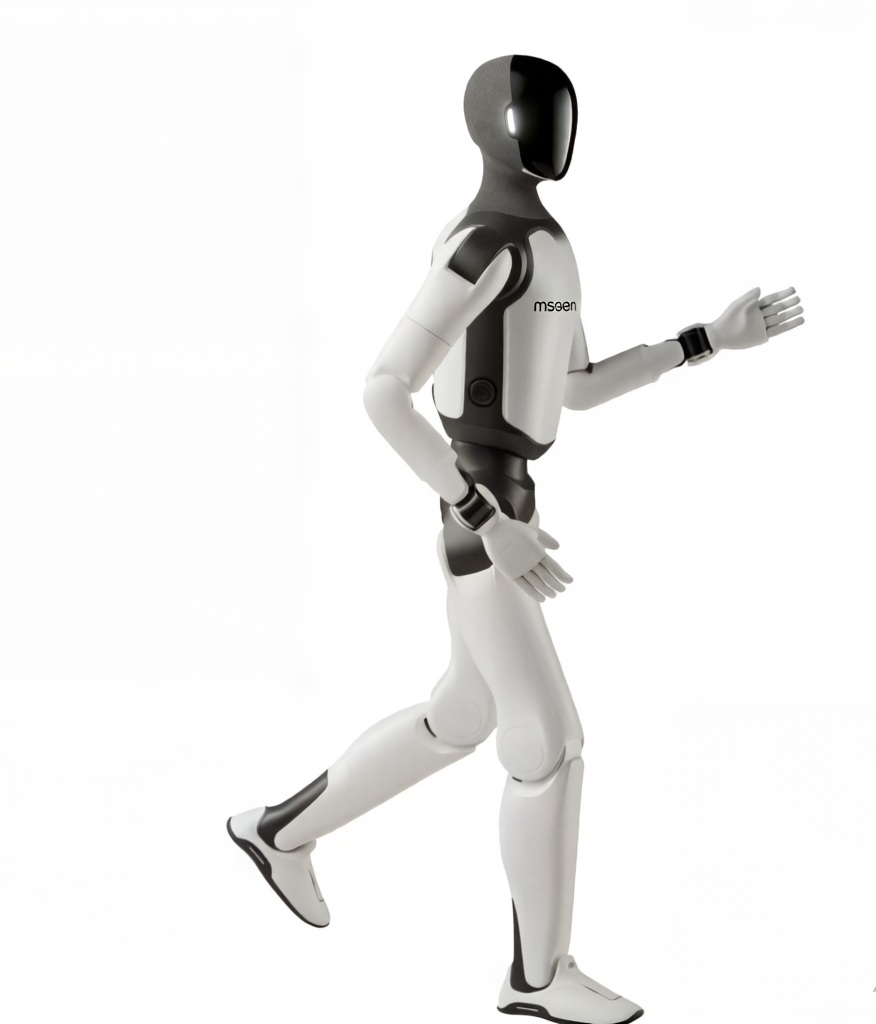
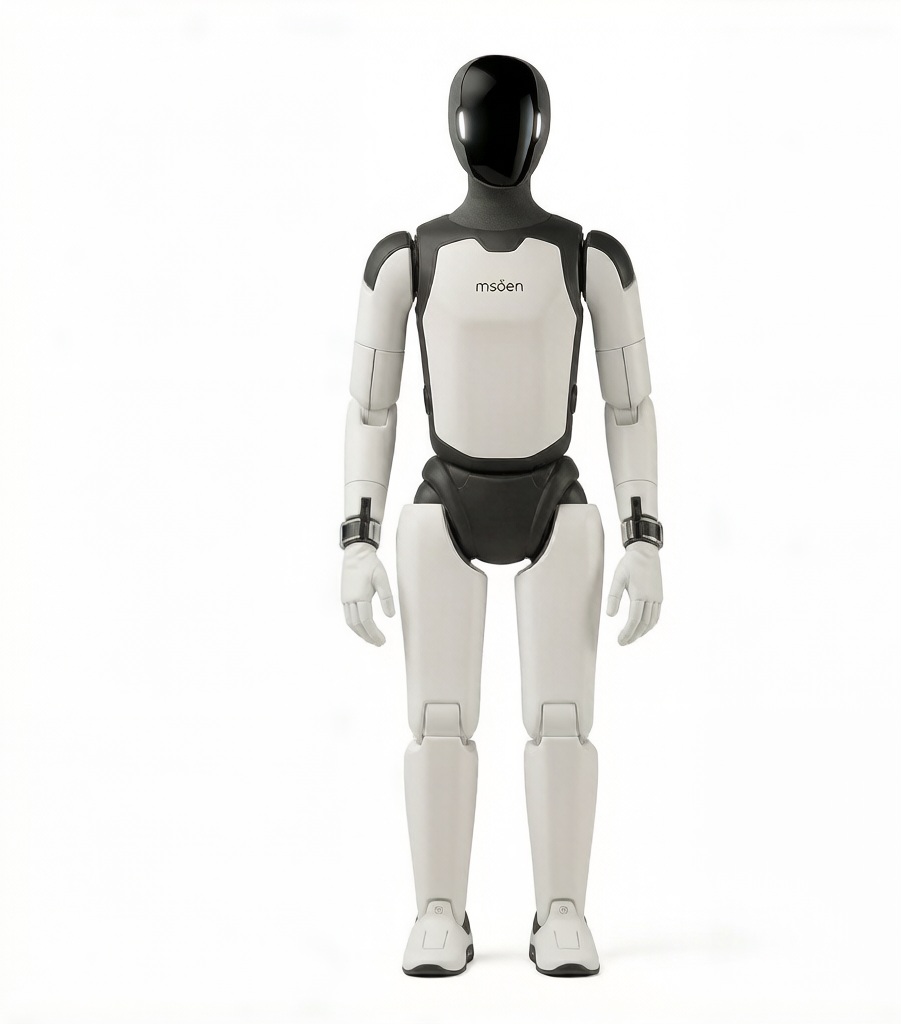
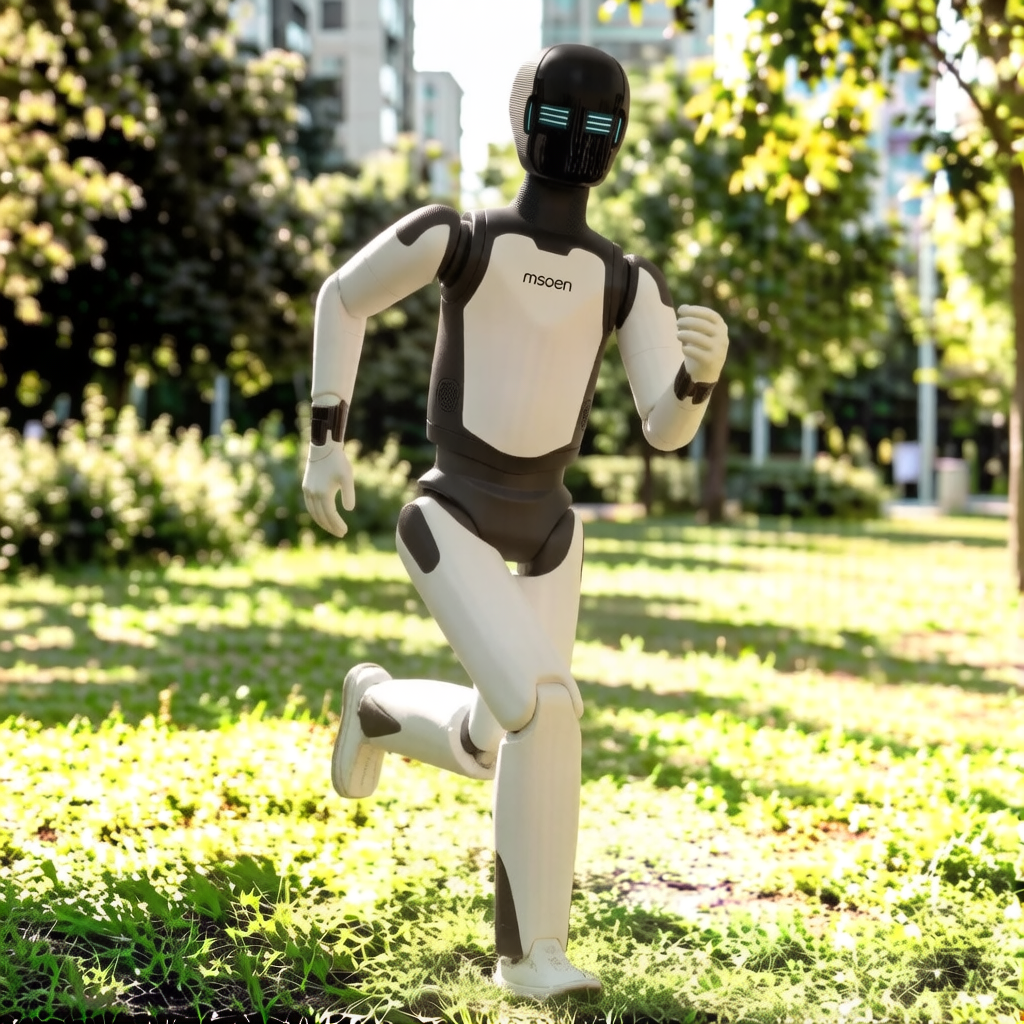
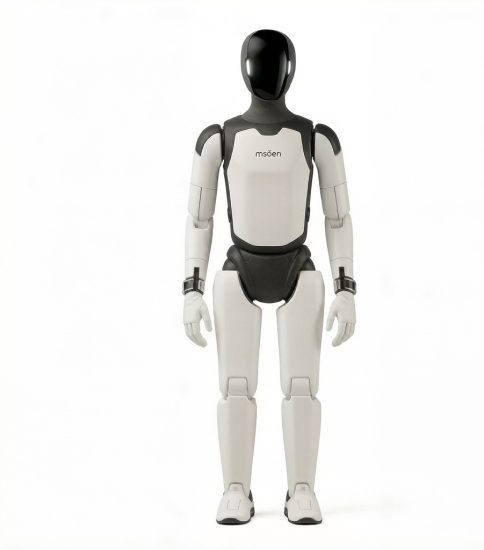
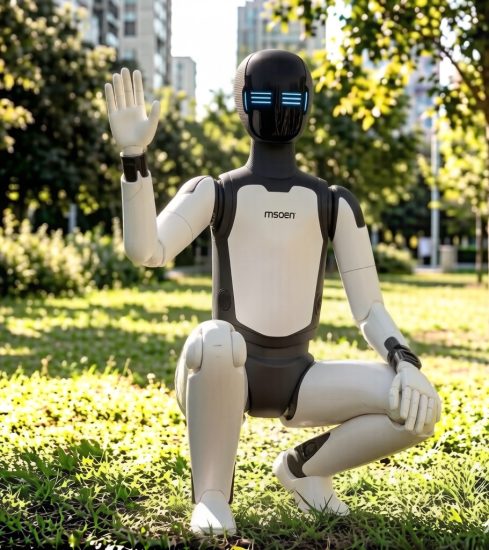
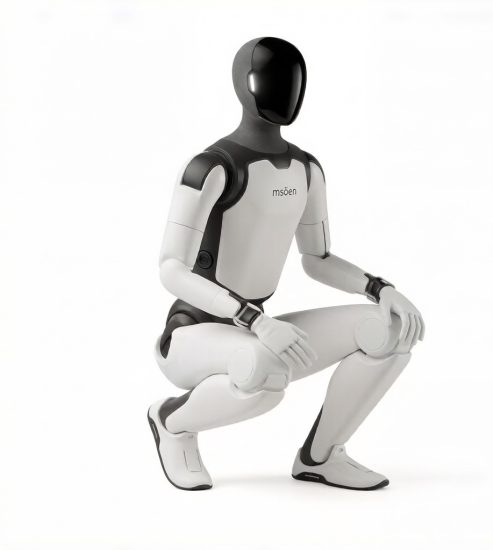
Our Programmable Educational Humanoid Robot Platform is the answer to that demand. It is not a toy or a black-box appliance. It is a transparent, high-performance cyber-physical system designed specifically for AI and robotics research, providing an unparalleled sandbox for innovation.
Core Philosophy: Radical Openness and Transparency
Most educational robots are closed ecosystems. They teach students how to use a robot. Our platform teaches them how to build one.
Hardware Architecture:
-
Modular Actuator Design: Each joint is a standalone smart servo with an open communication protocol. Users can access raw encoder data, current draw, and temperature readings.
-
High-Performance Computing Core: The robot features a swappable compute module. By default, it ships with an NVIDIA Jetson Orin Nano, but the chassis supports upgrades to higher-tier GPUs for intensive AI workloads.
-
Sensor Suite: Beyond standard IMU and cameras, the platform includes exposed GPIO pins, I2C, and UART interfaces, allowing researchers to solder on custom sensors—from gas detectors to tactile arrays.
Software Ecosystem:
-
Full ROS/ROS2 Compatibility: We provide native ROS drivers and URDF files. This allows students to simulate the robot in Gazebo or Webots before deploying code to the physical hardware.
-
Open-Source Firmware: The low-level PID controllers and inverse kinematics solvers are available on a private Git repository. Students are encouraged to modify the gait algorithms or write their own torque control loops.
Application Scenarios in Academia
This platform serves as a catalyst for breakthrough research across multiple disciplines:
-
Reinforcement Learning (RL) Labs: The robot’s robust construction makes it ideal for “trial-and-error” learning. Students can train bipedal walking algorithms without the fear of breaking expensive hardware.
-
Computer Vision & SLAM: Equipped with stereo cameras and a LiDAR mount, it is the perfect platform for testing Visual-Inertial Odometry (VIO) and Simultaneous Localization and Mapping algorithms.
-
Human-Robot Interaction (HRI): The expressive head and speech capabilities allow for studies into social robotics, proxemics, and multi-modal communication.
Frequently Asked Questions (FAQ)
In my experience selling to universities and research institutions, the technical depth of these questions is high. Here are the most rigorous inquiries I receive, answered with engineering-level detail.
1. What is the level of abstraction for the programming interface? Do you provide a “Blockly” version?
We provide a tiered approach. For introductory courses, we offer a Python API with high-level commands like walk_forward(distance) or wave_hand(). However, the true power lies in our low-level C++ SDK. Advanced users can bypass the high-level planner and send raw torque commands to the actuators. We intentionally do not offer a “Blockly” or drag-and-drop interface because our target audience—university researchers—needs to understand the underlying code logic.
2. How do you handle the “Sim-to-Real” gap for reinforcement learning?
This is a critical issue in robotics research. Our platform minimizes this gap through System Identification. We provide a calibrated physics model of the robot, including backlash, friction coefficients, and motor inductance, which can be imported directly into PyBullet or Isaac Gym. This allows the RL policy trained in simulation to transfer to the real robot with minimal fine-tuning.
3. What is the maximum payload for the arms during dynamic movement?
While the static payload is 5kg per arm, the dynamic payload during fast movements is limited to 1.5kg to prevent self-collision or excessive joint stress. The firmware includes a “Dynamic Load Monitor” that will throttle motor torque if inertial forces exceed safe thresholds. We provide the mathematical model for this calculation in our developer documentation.
4. Can the robot be controlled via Model Predictive Control (MPC)?
Yes. We expose the state-space matrices of the robot’s dynamics. Researchers can implement their own MPC controllers on the robot’s x86 compute module. We provide example code in MATLAB and Python that demonstrates how to solve the Quadratic Programming (QP) problem for whole-body control in real-time.
5. What is the policy on firmware modification and bricking?
We encourage modification. The robot features a Dual-Bootloader Recovery Mode. If a student flashes incorrect firmware that “bricks” the robot, they can simply hold down the physical reset button on the motherboard, and it will boot into a recovery partition to reflash the factory firmware. There is no risk of permanent damage from software experimentation.
6. How accurate is the joint position feedback?
Each joint uses a 14-bit magnetic absolute encoder. This provides a theoretical resolution of 0.022 degrees. However, due to gearbox backlash (typically 0.5 degrees), the repeatable positioning accuracy is ±0.1 degrees. We provide raw encoder data so that researchers can implement their own backlash compensation algorithms.
7. Is it possible to replace the onboard computer with a custom PC?
Absolutely. The internal bay is designed to fit standard Mini-ITX motherboards. We provide a wiring harness that converts the proprietary motor bus to standard USB and Ethernet connections. This allows researchers to use their own high-power PCs for computationally intensive tasks like real-time neural network inference.
8. What kind of support do you offer for research paper citations?
We are committed to academic collaboration. If our robot is used as the primary experimental platform for a published paper, we offer a discount on future purchases or free access to beta firmware features. We also maintain a database of reference papers that utilize our platform, which we share with new clients to accelerate their literature review.
Deployment in the Curriculum
Integrating this platform into a degree program requires careful planning. We recommend a phased approach:
-
Fundamentals (Year 1): Focus on kinematics, basic programming, and sensor data acquisition using our high-level Python API.
-
Intermediate Control (Year 2): Dive into PID tuning, state estimation, and sensor fusion using ROS.
-
Advanced Research (Year 3+): Implement custom controllers (MPC, RL), modify firmware, and conduct original research.
Conclusion
The Programmable Educational Humanoid Robot Platform is more than a teaching aid; it is a research instrument. It provides the transparency required to understand the “why” behind the movement and the robustness to survive the “how” of experimentation.
If you are looking to equip your laboratory with a tool that bridges the gap between simulation and reality, contact me to discuss how this platform can become the cornerstone of your robotics curriculum. Let’s build the next generation of roboticists together.
THE END


No comments yet