

Heavy lift drones are moving beyond experimental applications and becoming practical tools for construction, emergency response, infrastructure maintenance, remote logistics, and material transportation.
For buyers looking for a heavy lift drone manufacturer in China, the biggest mistake is to compare suppliers only by the advertised payload. A drone described as a “100 kg heavy lift UAV” may have very different flight endurance, battery configuration, control range, lifting system, safety equipment, and actual payload performance.
A reliable purchasing decision should start with the operating task rather than the largest number in a product listing.
This guide explains how to evaluate Chinese heavy lift drone manufacturers, what specifications should be requested before placing an order, realistic price ranges, and which questions should be included in a supplier quotation.
What Is a Heavy Lift Drone?
A heavy lift drone is an industrial unmanned aircraft designed to transport substantially heavier loads than conventional camera or agricultural drones.
Depending on the design, heavy lift UAVs may use four, six, eight, or more motors and propellers. Larger platforms generally require high-voltage battery systems, high-thrust motors, reinforced carbon-fiber structures, sophisticated flight controllers, and specialized payload systems.
Typical applications include:
-
Construction material transportation
-
Mountain logistics
-
Emergency supply delivery
-
Power-line and infrastructure maintenance
-
Rescue equipment transportation
-
Remote-area logistics
-
Mining operations
-
Offshore and coastal operations
-
Large equipment lifting
-
Industrial inspection with heavy sensors
-
Temporary material transportation
The term heavy lift drone covers a wide range of aircraft. A 20–30 kg payload drone and a 100 kg cargo UAV should not be evaluated using the same purchasing criteria.
Why Payload Capacity Alone Is Not Enough
Suppose two manufacturers both advertise a maximum payload of 100 kg.
That does not mean both aircraft can perform the same mission.
One may achieve 100 kg only under favorable conditions at low altitude and for a short flight. Another may have a more sophisticated power system and lifting mechanism designed for repeated commercial operations.
The following specifications are therefore more important than the headline payload number:
Specification |
Why It Matters |
|---|---|
Maximum payload |
Determines the upper lifting limit |
Recommended operating payload |
More useful for actual missions |
Flight time with payload |
Determines practical productivity |
Empty weight |
Influences efficiency and transport |
Maximum takeoff weight |
Indicates overall aircraft capability |
Battery capacity |
Determines energy available |
Number of batteries |
Affects redundancy and operating time |
Maximum flight speed |
Important for long-distance transport |
Wind resistance |
Critical for outdoor lifting |
Operating altitude |
Important for mountainous regions |
Control distance |
Determines operating area |
IP protection |
Important in rain and dusty environments |
Lifting system |
Determines how cargo is attached and released |
Obstacle avoidance |
Reduces operational risk |
Emergency landing system |
Important when carrying valuable loads |
Spare parts availability |
Directly affects long-term operation |
The most useful question for a manufacturer is not:
“How much can the drone lift?”
Instead, ask:
“What payload can the drone safely carry for my required distance, altitude, wind conditions and flight duration?”
That question produces a much more meaningful quotation.
Main Heavy Lift Drone Payload Classes
For procurement purposes, heavy lift drones can be roughly divided into several categories.
20–30 kg payload
These aircraft are suitable for relatively lightweight industrial logistics.
Potential applications include:
-
Small construction tools
-
Medical supplies
-
Emergency equipment
-
Food and package delivery
-
Lightweight industrial components
They normally have lower acquisition and operating costs than larger aircraft.
30–50 kg payload
This class is useful when the cargo becomes too heavy for conventional commercial delivery drones.
Typical applications include:
-
Construction materials
-
Equipment components
-
Rescue supplies
-
Remote-area logistics
-
Agricultural and industrial equipment
50–100 kg payload
This is where the aircraft begins to enter the heavy industrial transport category.
Potential applications include:
-
Building materials
-
Pipes and cables
-
Heavy tools
-
Emergency equipment
-
Industrial components
-
Remote construction logistics
Some current Chinese listings show 100 kg payload aircraft at approximately US$19,000–US$52,000, depending heavily on configuration and whether the quotation is for a complete aircraft or a particular configuration.
Above 100 kg
Once the required payload exceeds 100 kg, the project becomes considerably more specialized.
The manufacturer may need to design or modify:
-
Motor and propeller combinations
-
Battery architecture
-
Airframe structure
-
Payload attachment
-
Flight-control parameters
-
Redundancy systems
-
Ground control equipment
For this reason, buyers should expect project-based quotations rather than simple catalog pricing.
What Should You Check When Choosing a Chinese Manufacturer?
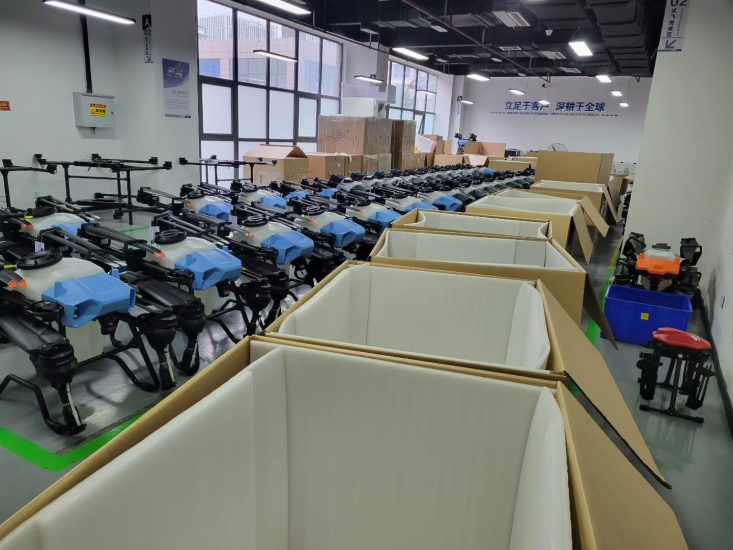
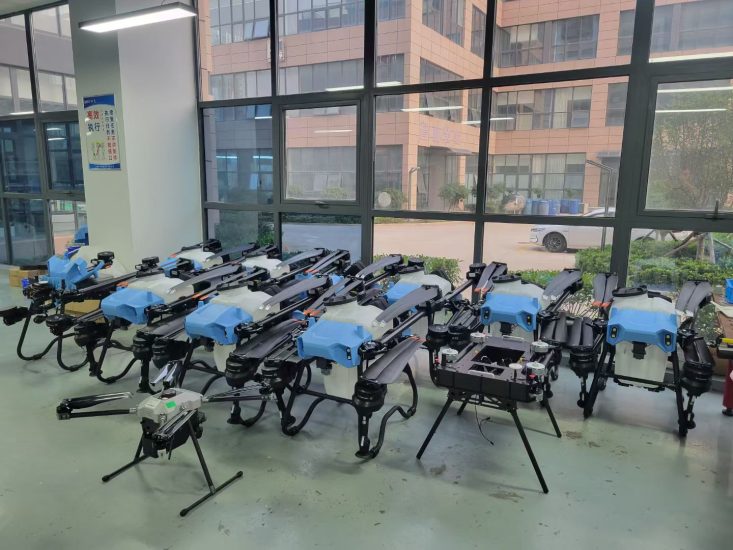
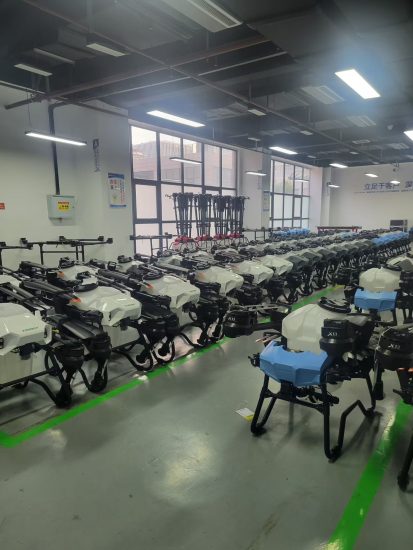
1. Verify Whether the Supplier Is Actually a Manufacturer
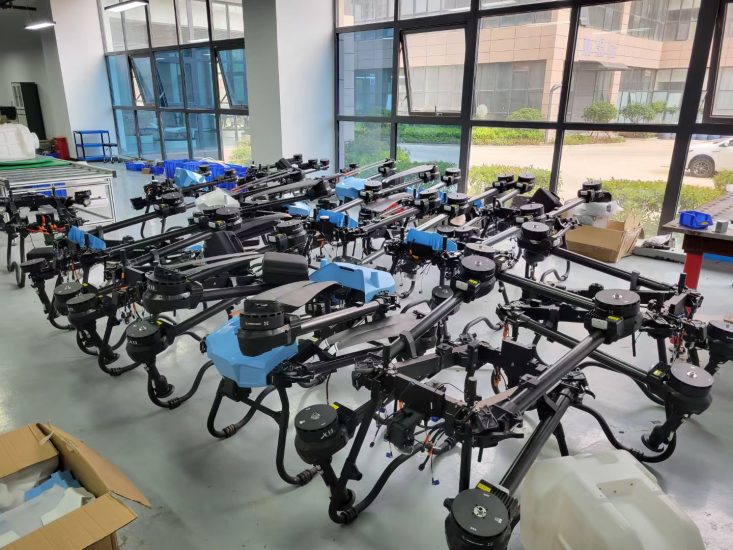
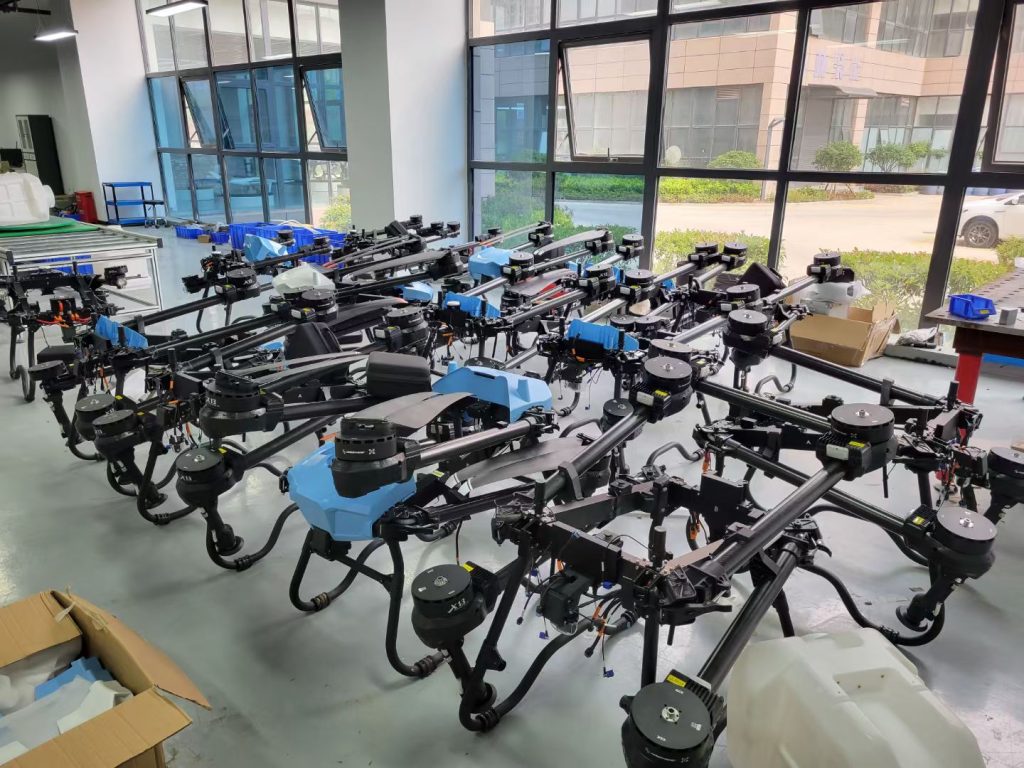
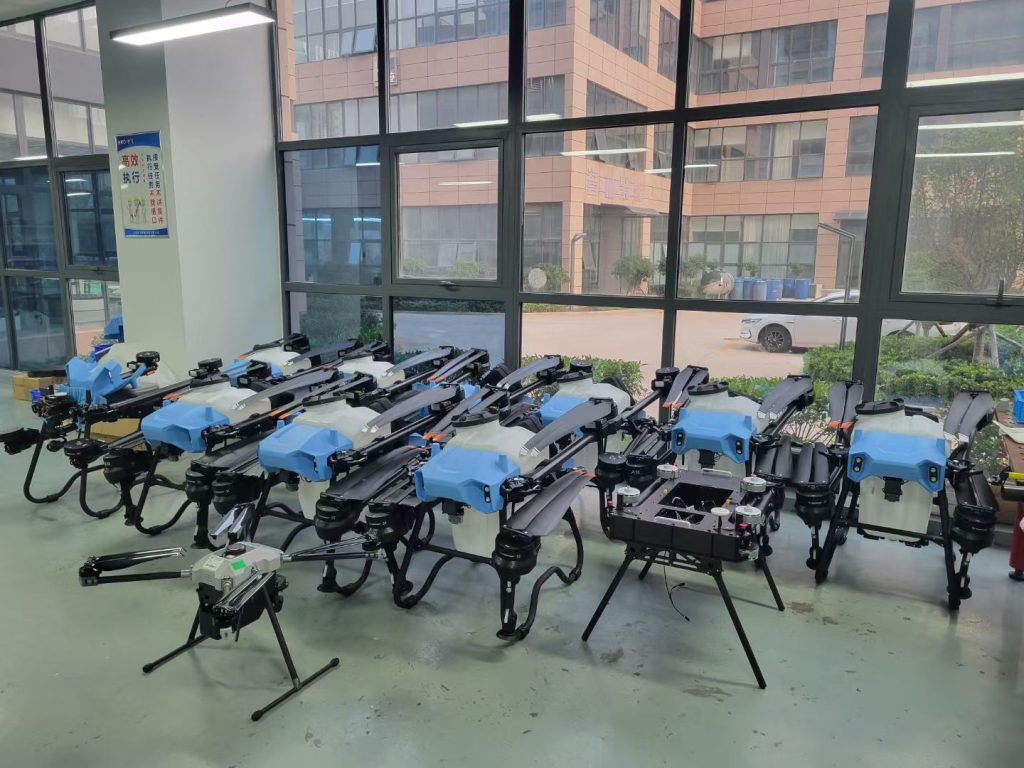
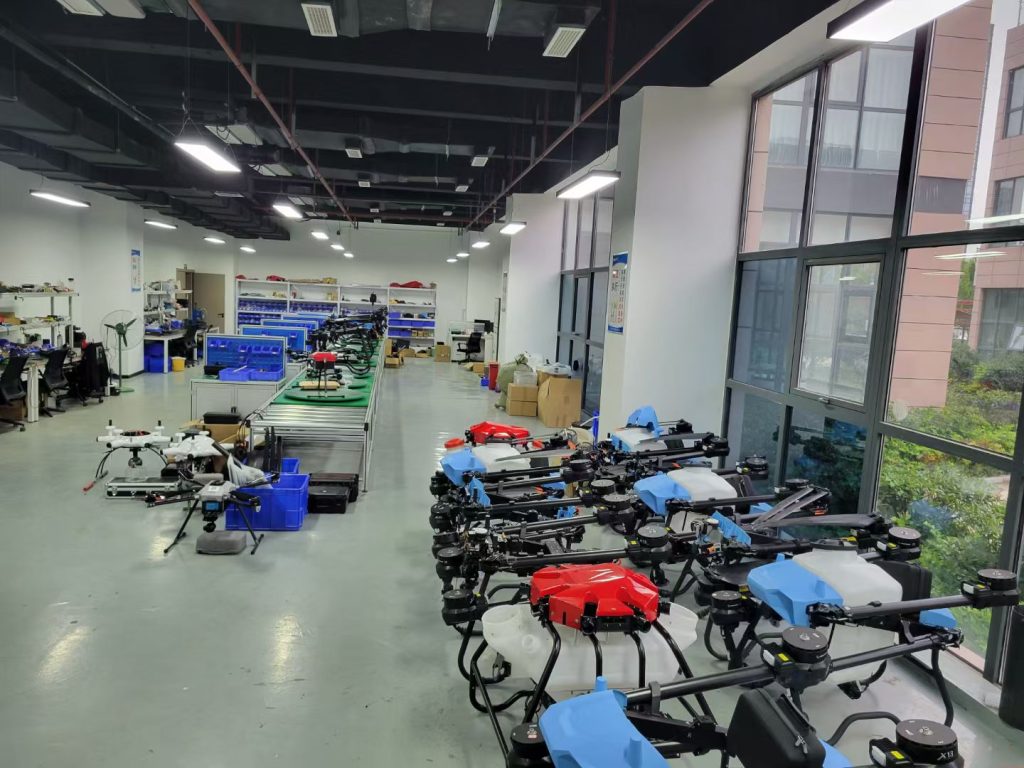
China has many companies selling heavy lift drones, but not every seller is the actual manufacturer.
Before paying a deposit, ask for:
-
Registered company name
-
Factory address
-
Product model
-
Technical datasheet
-
Factory photographs
-
Production photographs
-
Testing videos
-
Serial-number information
-
Certification documents
-
Export experience
-
Warranty terms
-
Spare-parts list
If possible, arrange a factory video inspection or third-party factory inspection.
A supplier that cannot clearly explain where the aircraft is designed, assembled and tested deserves additional scrutiny.
2. Ask for the Real Payload Test Conditions
A “100 kg payload” figure is meaningless without test conditions.
Ask the supplier:
-
At what altitude was the test performed?
-
What was the temperature?
-
What was the wind speed?
-
What battery configuration was used?
-
How long could the drone hover with the payload?
-
Was the payload 100 kg exactly?
-
Was the lifting system included in the payload calculation?
-
What was the remaining battery percentage after the test?
-
Was the test performed with a real cargo configuration?
For example, DJI’s current FlyCart 100 documentation states that its maximum payload is 100 kg with a single battery configuration and 85 kg with dual batteries, while also noting that the recommended loading weight depends on aircraft status, environmental conditions and the specific operation.
This is an important lesson for buyers: maximum payload and normal operating payload are not necessarily the same number.
3. Compare Flight Time With Payload
Manufacturers sometimes advertise impressive endurance figures based on an unloaded aircraft.
That figure should not be used for cargo planning.
For example, one current Chinese 100 kg-class listing specifies more than 90 minutes of endurance without payload, while separately listing its maximum load as 100 kg.
Another listed 100 kg-class aircraft specifies approximately 25 minutes of flight duration with a 100 kg payload.
These examples show why buyers should never compare “90 minutes” from one supplier with “30 minutes” from another without checking the payload condition.
When requesting a quotation, ask the supplier to provide a table like:
Payload |
Estimated Flight Time |
|---|---|
0 kg |
___ min |
30 kg |
___ min |
50 kg |
___ min |
75 kg |
___ min |
100 kg |
___ min |
This is far more useful than a single maximum-endurance figure.
4. Examine the Lifting System
A heavy lift drone is not simply a large agricultural drone with a hook attached underneath.
The lifting system can include:
-
Electric winch
-
Cable
-
Hook
-
Cargo sling
-
Cargo box
-
Release mechanism
-
Real-time weighing
-
Emergency cable release
-
Automatic balance control
DJI’s FlyCart 100, for example, offers both a flagship winch system and a dual-battery lifting system. Its winch system supports functions including cable release and retrieval, electric hook control, real-time weighing and emergency cable release.
For construction or mountain transportation, the lifting system can be just as important as the aircraft itself.
5. Check Wind Resistance
Wind is one of the most important factors in aerial lifting.
A drone carrying a large cargo load has much less operating margin than an unloaded drone.
Ask the manufacturer:
What is the maximum recommended wind speed when carrying the intended payload?
Do not rely only on a marketing term such as “strong wind resistance.”
Request actual test data.
You should also ask whether the published wind-resistance figure applies to:
-
Empty aircraft
-
Half payload
-
Maximum payload
These conditions can produce very different results.
6. Check Waterproof and Environmental Protection
Industrial cargo drones often operate outdoors.
The aircraft may encounter:
-
Rain
-
Dust
-
High humidity
-
Cold temperatures
-
High temperatures
-
Mountain wind
-
Salt air
-
Mud and construction-site debris
For example, DJI lists an IP55 protection rating for the FlyCart 100 and provides specific operating guidance for rain.
Some Chinese 100 kg-class listings advertise IP56 or IP67 protection, but buyers should request the manufacturer’s actual test documentation rather than assuming that an IP rating alone guarantees unrestricted operation in bad weather.
7. Evaluate the Battery System
Battery configuration can have a major impact on the total cost of ownership.
Ask about:
-
Battery voltage
-
Battery capacity
-
Number of batteries
-
Battery weight
-
Charging time
-
Fast charging options
-
Battery cycle life
-
Battery replacement price
-
Battery management system
-
Storage requirements
-
Transport requirements
A drone may be relatively inexpensive to purchase but expensive to operate if replacement batteries are costly.
For commercial operations, calculate the price of:
Aircraft + batteries + charger + spare batteries + spare propellers + motors + maintenance equipment
rather than comparing only the aircraft price.
8. Check the Control and Navigation System
A professional cargo drone should provide reliable navigation and communication.
Depending on the model, buyers may want:
-
GNSS
-
GPS
-
RTK
-
Remote controller
-
Real-time video
-
Telemetry
-
Route planning
-
Return-to-home
-
Geofencing
-
Obstacle avoidance
-
Terrain awareness
-
Emergency landing functions
RTK can be particularly useful where precise positioning is required.
For long-distance logistics, the control-link specification should also be evaluated under the actual operating environment rather than using the maximum theoretical communication distance.
9. Safety Features Matter More With Heavy Loads
The consequences of a failure become much greater as payload increases.
A reliable heavy lift UAV should therefore be evaluated for:
-
Motor redundancy
-
Power-system redundancy
-
Flight-controller redundancy
-
Battery monitoring
-
Obstacle detection
-
Emergency landing
-
Automatic return-to-home
-
Payload-release mechanism
-
Low-battery protection
-
Loss-of-signal procedures
-
Propeller failure response
DJI’s FlyCart 100, for example, incorporates a multi-sensor safety system including LiDAR, vision sensors, millimeter-wave radar and an integrated parachute.
For a custom Chinese heavy lift UAV, buyers should ask the manufacturer exactly which safety functions are included rather than assuming that a large drone automatically has aviation-grade redundancy.
Heavy Lift Drone Price in China
There is no single standard price for a heavy lift drone.
Current online Chinese market listings illustrate the wide range.
Examples include:
-
Around US$11,000–US$11,500 for certain 100 kg-class industrial cargo drone listings
-
Around US$18,500–US$20,000 for some 100 kg-class customizable UAV listings
-
Around US$19,199–US$19,988 for certain 100 kg payload industrial drones
-
Around US$45,000–US$52,000 for some complete 100 kg heavy-lift systems
-
Some frame/platform-only products are listed around US$1,600–US$1,800, but these should not be confused with a complete operational cargo drone.
Therefore, a practical procurement budget might be considered approximately as follows:
Drone Category |
Indicative China Market Range |
|---|---|
Heavy-lift frame/platform only |
US$1,500–3,000+ |
20–50 kg operational UAV |
US$5,000–15,000+ |
50–100 kg industrial UAV |
US$10,000–30,000+ |
Higher-end 100 kg complete system |
US$30,000–55,000+ |
100 kg+ custom industrial project |
US$30,000–100,000+ |
These are indicative market ranges, not fixed factory prices. Configuration, battery quantity, lifting equipment, controller, camera system, RTK, obstacle avoidance, certification, training, spare parts and shipping can significantly change the final quotation.
A buyer should be especially careful when seeing a “100 kg heavy lift drone” priced below US$2,000. Such a listing may refer only to a frame, propulsion platform or partial kit rather than a complete ready-to-operate cargo UAV. Current marketplace listings show examples of approximately US$1,799 for 100 kg-class frames, alongside complete systems priced above US$20,000.
How Much Does a 100 kg Heavy Lift Drone Cost?
For buyers specifically looking for a 100 kg payload aircraft, a realistic starting point for a complete industrial system is often tens of thousands of US dollars, rather than a few thousand dollars.
One currently listed Chinese HZH Y100 system is advertised at approximately US$52,190, with a 100 kg maximum payload and a stated 60-minute flight time.
Another Chinese HF101Z 100 kg payload model is listed at approximately US$45,000 and specifies around 25 minutes of flight duration with a 100 kg payload.
The large difference between these specifications demonstrates why price alone should never be the main selection criterion.
A cheaper aircraft may offer shorter loaded flight time, fewer safety systems, a smaller battery package, less sophisticated lifting equipment, or a less complete support package.
How to Request a Heavy Lift Drone Quotation
Instead of sending a supplier a simple message saying:
“Please quote 100 kg drone.”
Send a detailed requirement.
For example:
Payload: 60 kg
Maximum payload: 80–100 kg
Cargo type: Construction materials
Mission distance: 5 km one way
Altitude: 500–1,500 m
Wind: Up to 8–10 m/s
Required flight time: 20–30 minutes loaded
Lifting method: Winch/hook
Operating environment: Outdoor mountainous area
Navigation: GPS + RTK preferred
Obstacle avoidance: Required
Remote control: Required
Batteries: Minimum two sets
Charger: Fast charger preferred
Spare parts: Required
Destination: [Country]
This gives the manufacturer enough information to recommend an appropriate configuration.
What Should Be Included in the Quotation?
Ask the supplier to separate the quotation into individual components.
Aircraft
-
Airframe
-
Motors
-
ESCs
-
Propellers
-
Flight controller
-
Navigation system
Power system
-
Batteries
-
Battery charger
-
Charging equipment
-
Spare batteries
Payload system
-
Winch
-
Hook
-
Cable
-
Cargo container
-
Release system
Control system
-
Remote controller
-
Ground station
-
Video transmission
-
Antennas
Safety equipment
-
Parachute
-
Obstacle sensors
-
Emergency release
-
Warning systems
Support
-
Training
-
Installation
-
Commissioning
-
Warranty
-
Spare parts
-
Technical support
This prevents unexpected additional costs after the order has been placed.
What Documents Should a Chinese Manufacturer Provide?
For an international buyer, documentation is part of the product.
Request:
-
Product datasheet
-
User manual
-
Battery specifications
-
Charger specifications
-
Flight test report
-
Payload test data
-
Maintenance manual
-
Spare-parts catalogue
-
Warranty terms
-
Certification documents applicable to the destination market
-
Packing information
-
Commercial invoice
-
Certificate of origin where required
-
Export documentation
The exact regulatory requirements depend on the destination country.
Buyers should not assume that a CE, FCC or other document automatically gives them permission to operate a heavy UAV commercially in their country.
Regulatory Compliance Should Be Checked Before Purchase
A heavy cargo drone is not simply another piece of industrial equipment.
The buyer may need to consider:
-
UAV registration
-
Operator certification
-
Pilot qualifications
-
Airspace restrictions
-
Flight permissions
-
Commercial operation requirements
-
Import requirements
-
Radio-frequency requirements
-
Insurance
-
Local safety rules
Requirements differ considerably between countries.
For example, Shanghai’s current civil UAV rules require real-name registration for civil unmanned aircraft and require organizations operating most non-micro civil UAVs to obtain an operator certificate, subject to statutory exceptions.
This is why an experienced manufacturer should be able to provide technical documentation that helps the buyer complete local compliance procedures, even though the buyer remains responsible for complying with the laws of the operating country.
Factory Inspection: What Should Buyers Look At?
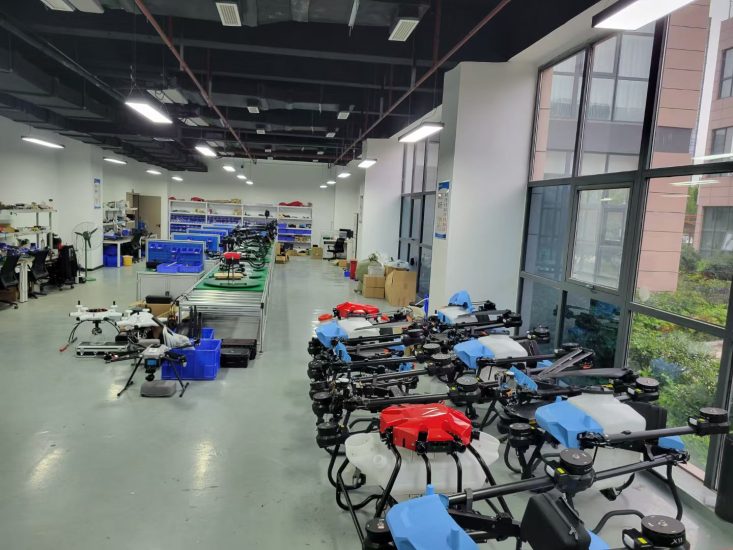
If the purchase value is significant, a factory inspection is worthwhile.
Do not spend the entire inspection looking at the showroom.
Ask to see:
Assembly area
Look at how:
-
Motors are installed
-
Wiring is protected
-
Batteries are connected
-
Carbon-fiber structures are assembled
-
Flight-control systems are configured
Testing area
Ask whether the company performs:
-
Motor testing
-
Battery testing
-
Flight testing
-
Payload testing
-
Communication testing
-
Emergency-system testing
Spare-parts inventory
Check whether commonly replaced parts are actually stocked.
A manufacturer may provide a beautiful aircraft but have poor after-sales support.
For commercial operations, parts availability can be more important than a small difference in the initial purchase price.
Common Mistakes When Buying a Heavy Lift Drone
Mistake 1: Choosing the cheapest quotation
A US$10,000 drone and a US$30,000 drone may not be directly comparable.
Check the configuration first.
Mistake 2: Comparing maximum payload only
A 100 kg maximum payload does not tell you how long the drone can fly with 100 kg.
Mistake 3: Ignoring battery costs
For commercial use, batteries are consumable equipment and should be included in the operating budget.
Mistake 4: Assuming “OEM” means unlimited customization
Ask exactly what can be customized:
-
Payload system
-
Battery
-
Communication
-
Software
-
Color
-
Branding
-
Cargo container
-
Flight controller
-
Sensors
Mistake 5: Buying before checking local regulations
A drone that can legally operate in China may require additional approval or equipment in another country.
Mistake 6: Not testing with real cargo
A drone should be evaluated using a representative payload whenever possible.
Heavy Lift Drone Manufacturer vs. Trading Company
For a single small purchase, a trading company may sometimes offer a competitive price.
For a commercial heavy lift program, however, direct communication with the actual manufacturer can provide advantages:
-
Faster technical communication
-
Better customization
-
Easier spare-parts sourcing
-
Better access to engineers
-
More direct warranty support
-
Easier factory inspection
-
Better control over future modifications
That does not mean every manufacturer is automatically better than every trading company.
The important question is:
Who will actually support the aircraft after delivery?
Get the answer in writing before placing the order.
A Practical Supplier Evaluation Scorecard
A buyer can score each supplier from 1 to 5.
Category |
Weight |
|---|---|
Payload performance |
20% |
Loaded flight endurance |
15% |
Safety system |
15% |
Manufacturer credibility |
15% |
Technical support |
10% |
Spare parts |
10% |
Price |
10% |
Documentation/compliance support |
5% |
This approach prevents price from becoming the only deciding factor.
A supplier offering the lowest price may not be the lowest-cost solution over three or five years.
Questions to Send to a Chinese Heavy Lift Drone Manufacturer
Before requesting a formal quotation, ask:
-
What is the maximum payload?
-
What is the recommended continuous operating payload?
-
How long can the drone fly with 50 kg payload?
-
How long can it fly with maximum payload?
-
What is the maximum takeoff weight?
-
What battery configuration is included?
-
How many batteries are included?
-
How long does charging take?
-
What is the maximum wind resistance with payload?
-
What is the maximum operating altitude?
-
What is the control distance?
-
Does it support RTK?
-
Does it have obstacle avoidance?
-
Does it have an emergency payload-release system?
-
Is a winch included?
-
Is real-time payload weighing supported?
-
What is the IP rating?
-
What spare parts are recommended?
-
What is the warranty period?
-
Can you provide a payload flight-test video?
-
Can we inspect the factory?
-
What is the complete FOB/EXW price?
-
What is the shipping package size and gross weight?
-
Can you provide export documentation?
-
Can you support customization?
A supplier that answers these questions clearly is much easier to evaluate than one that simply sends a product catalogue.
FAQ
How much does a heavy lift drone cost in China?
For industrial models, current public listings show a very broad range. Complete 100 kg-class systems are commonly listed from roughly US$10,000 to more than US$50,000, while premium configurations and customized projects can cost considerably more. Some listings below US$2,000 are for frames or partial platforms rather than complete operational drones.
How much does a 100 kg payload drone cost?
A complete 100 kg-class cargo drone can commonly fall in the US$20,000–US$55,000+ range depending on configuration. Current Chinese listings include examples around US$45,000 and US$52,000.
Can a 100 kg drone really carry 100 kg?
Yes, some commercial UAVs are designed and advertised for 100 kg maximum payloads. However, maximum payload should not be confused with the payload that is practical for a particular mission. Flight time, altitude, temperature, wind and battery configuration all affect the recommended load.
How long can a heavy lift drone fly?
It depends heavily on payload. An unloaded aircraft may achieve significantly longer endurance than the same aircraft carrying 50 or 100 kg. One current 100 kg-class Chinese listing states more than 90 minutes without payload, while another specifies approximately 25 minutes with a 100 kg payload.
What is the best payload for commercial operation?
There is no universal answer. If your mission requires carrying 60 kg repeatedly, a drone rated for 100 kg may provide useful operating margin. The correct selection should be based on cargo weight, distance, altitude, wind, temperature and required flight time.
Are heavy lift drones waterproof?
Some industrial drones have IP-rated protection. However, the actual protection level varies by model and component. For example, DJI lists IP55 for the FlyCart 100. Buyers should check the manufacturer’s exact environmental limitations rather than assuming that an IP rating means unrestricted operation in heavy rain.
Can I customize a heavy lift drone?
Many Chinese manufacturers offer OEM or customization options. Possible modifications include payload systems, batteries, communication systems, cargo boxes, branding, sensors and software. The exact customization scope should be confirmed before ordering.
Should I buy a 100 kg drone if my cargo is only 50 kg?
Not necessarily. A larger aircraft can provide additional payload margin, but it can also increase purchase price, battery consumption, transportation requirements and operating complexity. The better approach is to select the smallest aircraft that safely meets the complete mission requirement.
How do I verify a Chinese heavy lift drone manufacturer?
Ask for the registered company information, factory address, product documentation, test reports, serial numbers, warranty terms and customer references where available. For high-value purchases, arrange a factory video inspection or independent third-party inspection before shipment.
Can I import a heavy lift drone directly from China?
In many cases, industrial UAVs can be exported, but import and operational requirements depend on the destination country. Before ordering, check local UAV registration, airspace, operator certification, radio equipment and commercial-operation rules.
Final Buying Advice
Finding a reliable heavy lift drone manufacturer in China is less about finding the supplier with the largest advertised payload and more about finding the manufacturer whose aircraft matches your actual mission.
For a serious commercial project, start with these six numbers:
Payload + distance + altitude + flight time + wind + lifting method.
Once those are defined, request a complete technical quotation covering the aircraft, batteries, charger, lifting equipment, controller, safety systems, spare parts, warranty, training and shipping.
If your requirement is around 50–100 kg payload, do not simply ask Chinese suppliers for their “100 kg drone price.” Ask them to provide loaded flight-time data, payload test conditions, battery configuration, lifting-system specifications and complete system pricing.
That information will make supplier comparisons much more accurate and will greatly reduce the risk of purchasing a drone that looks powerful on paper but cannot perform the required job in real operating conditions.
For buyers planning to purchase from China, the most useful next step is to send manufacturers a detailed mission specification and request a formal quotation based on the same configuration. This allows you to compare Chinese suppliers on performance, safety, after-sales support and total project cost—not just the headline price.
THE END


No comments yet