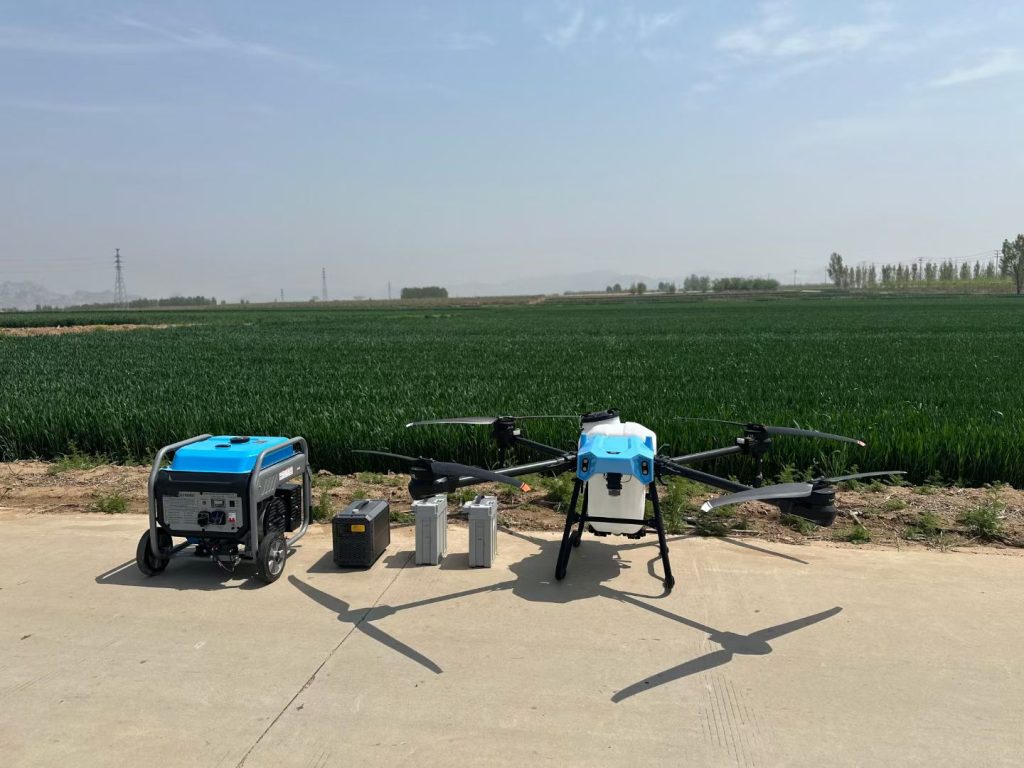
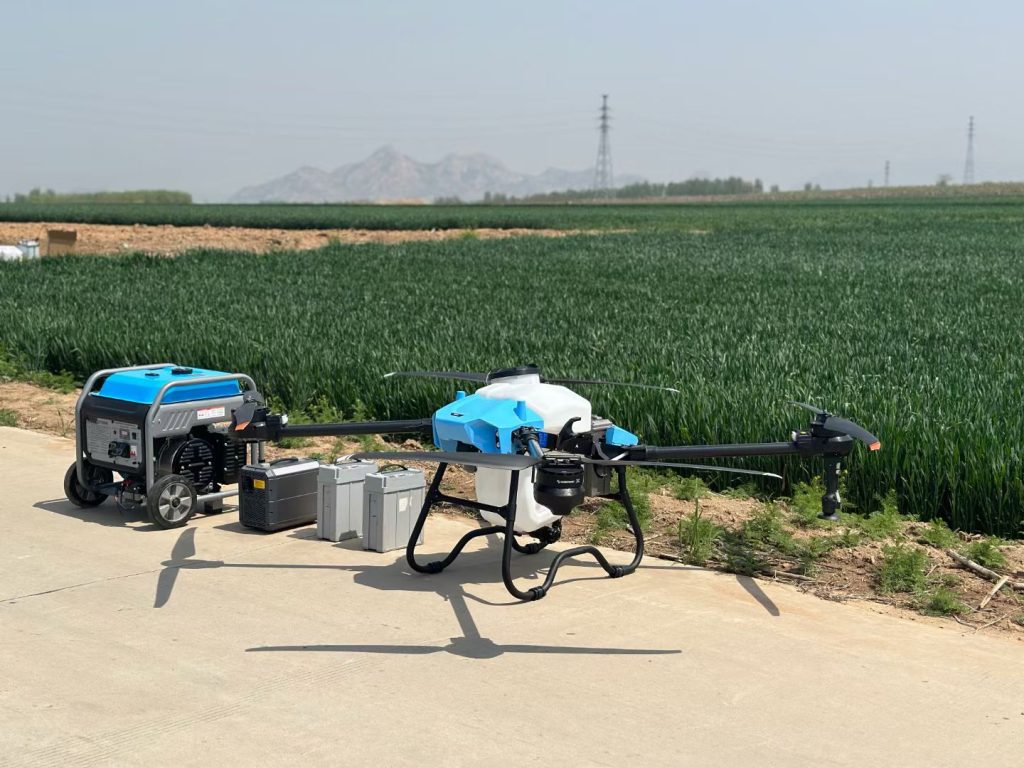
Construction and industrial companies are increasingly using heavy lift drones to move materials where conventional transportation is slow, expensive, or physically difficult.
A drone can carry construction components across a job site, transport equipment into mountainous areas, deliver emergency supplies to isolated locations, or move materials between locations without requiring a road or crane to reach every point.
However, choosing a heavy lift drone for construction is considerably more complicated than choosing a normal commercial UAV.
The correct aircraft depends on the payload, transport distance, lifting method, terrain, altitude, wind conditions, battery system, safety requirements, and local aviation regulations.
A drone advertised as capable of carrying 100 kg may not be the best choice for a company that normally transports 50 kg loads. In some cases, a smaller aircraft can provide better endurance, lower operating costs, and easier deployment.
This guide explains what construction and industrial buyers should evaluate before purchasing a heavy lift drone.
Why Construction Companies Are Using Heavy Lift Drones
Traditional material transportation on construction sites can require:
-
Cranes
-
Trucks
-
Temporary roads
-
Workers carrying materials
-
Helicopters
-
Hoists
-
Cable systems
These methods are not equally practical everywhere.
A heavy lift drone becomes particularly useful when the material needs to cross:
-
Mountains
-
Rivers
-
Valleys
-
Construction sites without roads
-
Forested areas
-
Dam sites
-
High-rise construction areas
-
Remote infrastructure projects
-
Disaster zones
The biggest advantage is not simply speed.
It is accessibility.
A drone can travel directly from a loading point to a designated delivery point without requiring a continuous physical route between them.
For certain construction and industrial applications, that can reduce the need for temporary infrastructure.
What Types of Materials Can a Heavy Lift Drone Transport?
The appropriate payload depends on the drone and lifting system.
Typical industrial cargo may include:
-
Pipes
-
Electrical cables
-
Construction tools
-
Metal components
-
Small machinery
-
Spare parts
-
Building materials
-
Rescue equipment
-
Medical supplies
-
Communication equipment
-
Inspection equipment
-
Emergency supplies
However, weight is not the only consideration.
The shape and dimensions of the cargo are equally important.
For example, a 40 kg compact box may be easier to transport than a 25 kg long pipe because long cargo can create additional aerodynamic drag and may swing underneath the aircraft.
Therefore, suppliers should receive information about both:
Cargo weight + cargo dimensions
before recommending a drone.
Step 1: Calculate Your Real Payload Requirement
The first mistake buyers make is choosing the maximum payload they can find.
Instead, determine the normal operating payload.
For example:
Requirement
|
Example
|
Normal cargo
|
40 kg
|
Heavy cargo
|
55 kg
|
Maximum cargo
|
65 kg
|
One-way distance
|
4 km
|
Round-trip distance
|
8 km
|
Operating altitude
|
800 m
|
Typical wind
|
6–8 m/s
|
Maximum wind
|
10 m/s
|
If the normal load is 40–50 kg, buying a drone capable of 100 kg may not automatically be the most economical decision.
The additional capacity can be useful as a safety margin, but it also means a larger airframe, larger batteries, more powerful propulsion, and potentially higher operating costs.
Maximum Payload vs. Recommended Payload
This distinction is extremely important.
Maximum payload is the highest load the aircraft can carry under specified test conditions.
Recommended operating payload is the load the manufacturer considers appropriate for actual operations under particular environmental and mission conditions.
These numbers can be different.
For example, DJI’s FlyCart 100 documentation states a maximum payload of up to 100 kg in single-battery configuration and 85 kg in dual-battery configuration, while its system also calculates recommended loading weight based on aircraft condition, environment and task.
Therefore, when comparing suppliers, ask:
What is the recommended payload for continuous commercial operation?
That is a much better question than simply asking for the maximum payload.
Step 2: Determine the Required Flight Distance
A construction drone does not need the same endurance as a delivery drone operating across an entire city.
Measure:
Loading point → destination → return or recovery point
For example:
-
One-way: 3 km
-
Round trip: 6 km
But the aircraft should not be selected based on a theoretical 6 km flight distance alone.
The calculation must consider:
-
Payload
-
Wind
-
Altitude
-
Temperature
-
Battery reserve
-
Takeoff and landing
-
Return-to-home requirements
A drone that can theoretically fly 12 km under laboratory-like conditions does not necessarily provide a 12 km practical transport mission with maximum cargo.
DJI’s published FC100 specifications, for example, state a maximum flight distance of 12 km at a takeoff weight below 149.9 kg with dual batteries under specified test conditions, including 25°C, sea level and windless conditions.
This is why buyers should request payload-specific flight data, not just maximum flight distance.
Step 3: Evaluate Flight Time With Cargo
This may be the single most important technical parameter after payload.
Ask the manufacturer to provide:
Payload
|
Flight Time
|
No payload
|
___ min
|
20 kg
|
___ min
|
40 kg
|
___ min
|
60 kg
|
___ min
|
80 kg
|
___ min
|
Maximum payload
|
___ min
|
This lets you calculate actual productivity.
For example, if a drone carries 50 kg for 15 minutes, that may be more useful to a construction company than an aircraft advertised with 40 minutes of endurance but only without payload.
Official DJI documentation also warns that flight-time figures vary depending on payload, environment and operating conditions.
Step 4: Choose the Right Payload System
There are two common approaches to transporting cargo:
Winch system
The cargo is connected to a cable and lowered or released from the aircraft.
This can be useful when the drone cannot land at the destination.
Advantages include:
-
Delivery without landing
-
Suitable for uneven terrain
-
Useful around construction sites
-
Adjustable cable length
-
Easier delivery over obstacles
For example, DJI’s FC100 winch system supports a cable length of up to 30 meters, real-time weighing, automatic balance control, hook opening/closing and emergency cable release.
Direct lifting system
The cargo is attached directly beneath the aircraft.
This can provide a relatively simple lifting arrangement and may be appropriate when the delivery point has sufficient landing or unloading space.
The choice depends on the site.
For a mountain construction project, a winch may be more useful.
For transporting standardized cargo between two open areas, a direct lifting system may be simpler.
Step 5: Consider Cargo Stability
Suspended cargo behaves differently from cargo mounted directly to the aircraft.
A hanging load can swing because of:
-
Wind
-
Acceleration
-
Deceleration
-
Sudden direction changes
-
Turbulence
-
Uneven cargo weight
This is particularly important when transporting:
-
Long pipes
-
Cables
-
Steel structures
-
Irregular materials
-
Large bags
-
Construction components
Ask the manufacturer whether the flight controller supports:
-
Automatic load balancing
-
Swing suppression
-
Controlled acceleration
-
Controlled descent
-
Payload weighing
-
Emergency release
A drone may have enough lifting power but still be unsuitable for a particular cargo shape.
Step 6: Check Wind Performance
Construction sites rarely provide laboratory conditions.
The drone may need to operate around:
-
Buildings
-
Cranes
-
Mountains
-
Trees
-
Temporary structures
-
Open fields
Wind can also be significantly stronger at altitude than at ground level.
Ask the manufacturer for two wind specifications:
Maximum wind resistance without payload
and
Recommended wind speed with the intended payload
These should not automatically be assumed to be the same.
For reference, DJI lists a maximum wind resistance of 12 m/s for the FC100 under its specified conditions.
The important question for a buyer, however, is whether the aircraft can safely transport the required cargo under the wind conditions at the actual worksite.
Step 7: Check Operating Altitude
Altitude has a direct effect on propulsion performance.
High-altitude construction projects can present additional challenges because air density decreases as altitude increases.
This can affect:
-
Propeller thrust
-
Motor efficiency
-
Battery consumption
-
Maximum payload
-
Flight endurance
If the project is located at 2,000–4,000 meters above sea level, do not purchase an aircraft based solely on sea-level specifications.
Give the manufacturer:
Takeoff altitude + delivery altitude + expected temperature
and ask for a performance estimate.
DJI’s FC100 documentation, for example, states a maximum altitude of 6,000 m above sea level but also notes that payload capacity decreases with increasing takeoff height.
Step 8: Examine the Battery Architecture
Heavy lift drones consume significantly more energy than conventional camera drones.
The battery system therefore becomes a major part of the purchase decision.
Check:
-
Battery voltage
-
Battery capacity
-
Battery weight
-
Number of batteries
-
Charging time
-
Charging power
-
Battery cycle life
-
Battery replacement price
-
Battery temperature management
-
Spare battery availability
As an example, DJI lists its DB2160 intelligent flight battery at 52 V and 41 Ah, with a weight of approximately 14.7 kg.
Large batteries can provide substantial energy, but they also become part of the aircraft’s takeoff weight.
That is why a larger battery does not automatically mean longer loaded flight time.
Step 9: Fast Charging Can Change Productivity
For commercial construction operations, charging time can be almost as important as flight time.
Imagine two drones:
Drone A
-
20-minute loaded flight
-
60-minute charging
Drone B
-
18-minute loaded flight
-
15-minute charging
Drone B may actually complete more missions during a working day.
DJI’s FC100 system lists a C12000 power supply with a stated 9-minute charging time from 30% to 95% under specified conditions.
However, buyers should check:
-
Required electrical supply
-
Three-phase vs. single-phase power
-
Generator requirements
-
Charging temperature
-
Charging infrastructure
A high-power charger may not be practical at a remote construction site without a suitable power source.
Step 10: Safety Systems Are Essential
A 5 kg camera drone and a 70 kg industrial cargo drone should not be treated as equivalent equipment.
The heavier the payload, the greater the consequence of a failure.
Look for:
-
Redundant propulsion
-
Battery monitoring
-
GNSS positioning
-
RTK
-
Obstacle detection
-
Radar
-
LiDAR
-
Emergency landing
-
Automatic return-to-home
-
Loss-of-signal protection
-
Low-battery protection
-
Emergency cargo release
-
Parachute where appropriate
DJI’s FC100 uses a combination of millimeter-wave radar, LiDAR, vision sensors and FPV equipment, and its published specifications include an integrated parachute system.
For a custom Chinese UAV, buyers should request the exact safety-system configuration instead of accepting a general statement such as “high safety.”
Step 11: RTK Can Be Valuable on Construction Sites
Construction projects often require accurate positioning.
RTK can improve positioning accuracy when suitable correction services or base-station configurations are available.
DJI’s FC100 specifications state RTK hovering accuracy of approximately ±10 cm horizontally and vertically under the specified strong-GNSS conditions.
RTK may be particularly useful for:
-
Repeated delivery points
-
Precision placement
-
Surveying
-
Infrastructure projects
-
Industrial inspection
-
Route repeatability
However, RTK does not eliminate the need for a safe operating environment.
Step 12: Evaluate Obstacle Avoidance for the Actual Site
Obstacle avoidance is useful, but buyers should not treat it as an automatic safety guarantee.
Construction sites contain:
-
Cranes
-
Steel structures
-
Cables
-
Scaffolding
-
Trees
-
Buildings
-
Temporary structures
Some objects may be difficult for sensors to detect, particularly thin cables.
DJI specifically notes that its FC100 sensing and obstacle-avoidance functions have environmental limitations and that cargo and lifting cables can present collision risks.
Therefore, the operator still needs:
-
Site planning
-
Flight paths
-
Exclusion zones
-
Visual awareness
-
Proper operator training
Heavy Lift Drone Parameters Buyers Should Compare
A practical comparison sheet should look like this:
Parameter
|
Recommended Information
|
Maximum payload
|
kg
|
Recommended operating payload
|
kg
|
MTOW
|
kg
|
Loaded flight time
|
min
|
Maximum flight distance
|
km
|
Practical operating distance
|
km
|
Maximum speed
|
m/s
|
Wind resistance
|
m/s
|
Operating altitude
|
m
|
Temperature range
|
°C
|
Protection rating
|
IP rating
|
Battery voltage
|
V
|
Battery capacity
|
Ah/Wh
|
Charging time
|
min
|
Number of batteries
|
pcs
|
RTK
|
Yes/No
|
Obstacle avoidance
|
Radar/LiDAR/Vision
|
Winch
|
Yes/No
|
Cable length
|
m
|
Emergency release
|
Yes/No
|
Payload weighing
|
Yes/No
|
Parachute
|
Yes/No
|
Remote-control range
|
km
|
Warranty
|
months
|
Spare parts
|
Available/Not available
|
This is much more useful than comparing supplier brochures based on a single payload number.
Typical Heavy Lift Drone Price in China
The price of a heavy lift drone varies substantially depending on the payload class and configuration.
As a practical procurement reference, buyers may encounter approximately these ranges:
Category
|
Indicative China Price
|
Heavy-lift frame/platform
|
US$1,500–4,000+
|
20–30 kg operational drone
|
US$5,000–12,000+
|
30–50 kg industrial drone
|
US$8,000–20,000+
|
50–80 kg cargo drone
|
US$12,000–30,000+
|
80–100 kg industrial drone
|
US$18,000–40,000+
|
Premium 100 kg-class complete system
|
US$40,000–60,000+
|
100 kg+ customized industrial UAV
|
US$40,000–100,000+
|
These are indicative procurement ranges rather than fixed factory prices.
The final quotation can change significantly depending on:
-
Battery quantity
-
Charger
-
Winch
-
Cargo hook
-
RTK
-
Radar
-
LiDAR
-
Parachute
-
Remote controller
-
Ground station
-
Spare parts
-
Training
-
Software
-
OEM requirements
-
Certification
-
Packaging
-
Export requirements
A low online price may represent a frame or partial kit rather than a complete commercial system.
Why Two 100 kg Drones Can Have Very Different Prices
Consider two hypothetical suppliers.
Supplier A
US$18,000
-
100 kg maximum payload
-
Basic controller
-
Standard battery
-
Basic lifting system
-
Limited spare parts
-
No advanced obstacle sensing
Supplier B
US$45,000
-
100 kg-class payload
-
Dual-battery architecture
-
Advanced navigation
-
RTK
-
Radar/LiDAR
-
Winch system
-
Payload weighing
-
Emergency release
-
Parachute
-
Fast charger
-
Training
-
Spare parts
The second drone is not necessarily “overpriced.”
The two products are simply not equivalent.
This is why buyers should request a complete configuration sheet with every quotation.
What Should a Construction Company Budget For?
The aircraft itself is only one part of the project.
A realistic procurement budget may include:
Drone + batteries + charger + payload system + remote controller + spare parts + training + transportation + local compliance + maintenance equipment
For commercial operations, also calculate:
-
Battery replacement
-
Electricity/fuel
-
Insurance
-
Operator labor
-
Maintenance
-
Spare motors
-
Propellers
-
Cables
-
Winch components
-
Software
-
Annual inspections where required
The total cost of ownership is more important than the purchase price.
When Is a Heavy Lift Drone Better Than a Crane?
A heavy lift drone does not replace a crane in every situation.
A crane remains more practical when:
-
The load is extremely heavy
-
The lifting operation is stationary
-
The site has easy crane access
-
The load must remain suspended for a long period
-
Very high precision is required
A drone can become attractive when:
-
The destination is difficult to access
-
Temporary roads would be expensive
-
Multiple delivery points are required
-
The terrain is mountainous
-
Construction materials must cross obstacles
-
Conventional lifting equipment cannot easily reach the destination
The best comparison is therefore not simply:
Drone vs. Crane
but:
Which transportation method has the lowest total cost for this specific site?
When Is a Heavy Lift Drone Better Than a Truck?
Trucks are extremely efficient when roads already exist.
A drone becomes more interesting when the last section of transportation is the problem.
For example:
Truck → staging area → drone → remote construction location
This hybrid model can be more practical than attempting to replace all ground transportation.
The drone handles the difficult final segment while trucks or other conventional equipment handle bulk transportation.
How to Choose Between a 50 kg and 100 kg Drone
Suppose a construction company normally transports:
A 50–60 kg-class drone may be sufficient.
But if the company regularly transports:
then a 100 kg-class platform may provide a more useful operating margin.
Do not size the aircraft solely around the heaviest possible load.
Instead, calculate:
Normal payload × mission frequency × distance × required reserve
That gives a better indication of the right aircraft class.
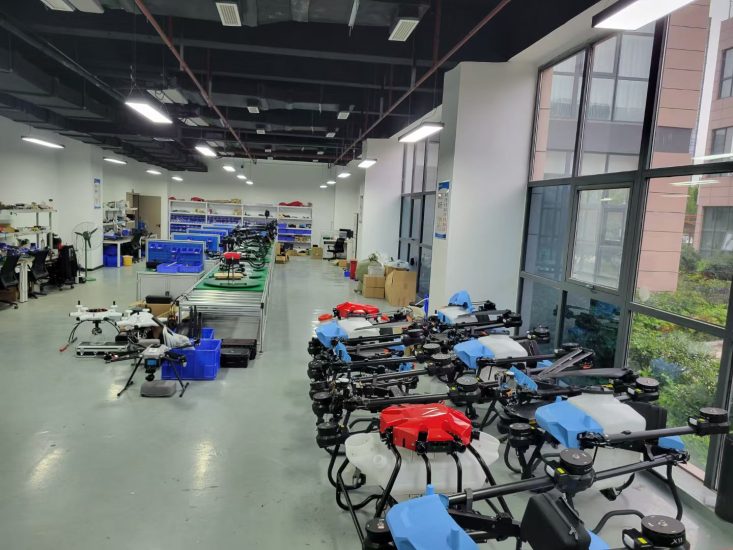
How to Verify a Chinese Heavy Lift Drone Manufacturer
Before placing a large order, request:
Company information
-
Legal company name
-
Factory address
-
Business registration information
-
Export experience
Technical information
-
Datasheet
-
User manual
-
Flight-test data
-
Payload-test data
-
Battery specifications
-
Maintenance documentation
Production evidence
-
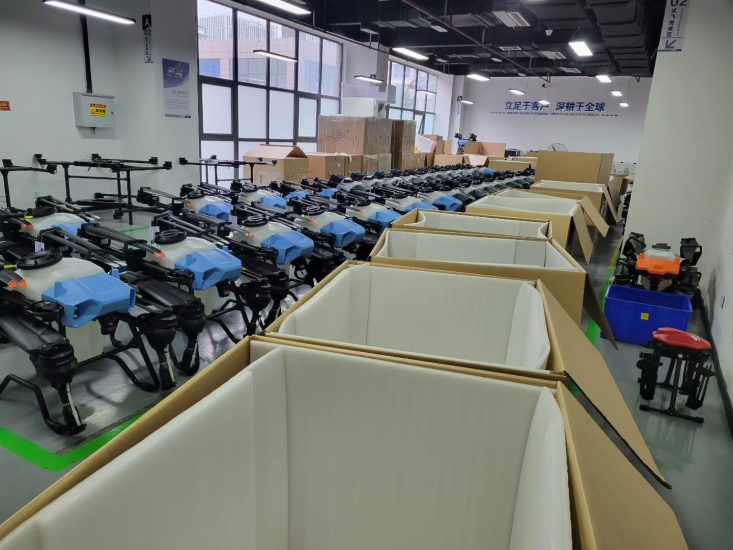
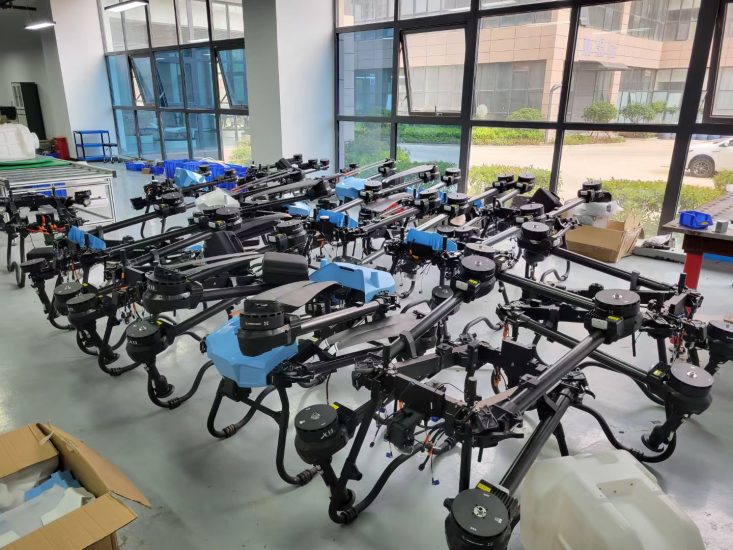
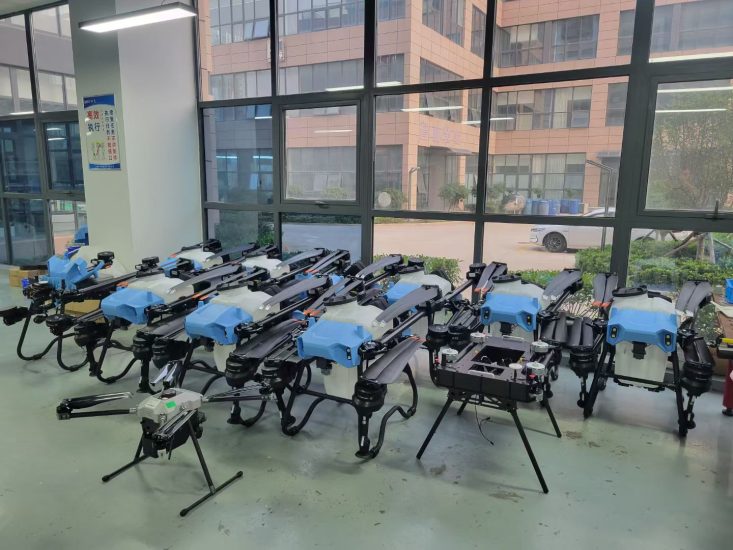
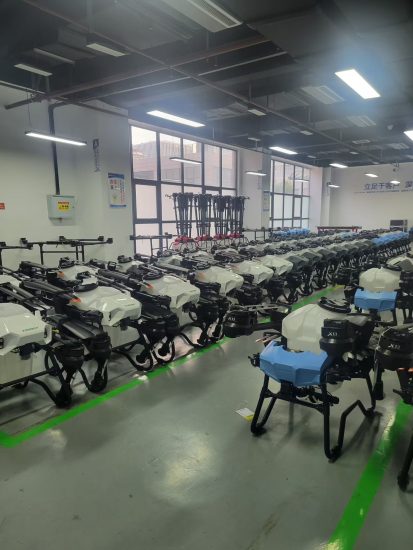
Factory photographs
-
Assembly-line photographs
-
Testing videos
-
Live video inspection
-
Serial-number examples
Commercial information
-
EXW price
-
FOB price
-
Warranty
-
Spare-parts pricing
-
Lead time
-
Packaging dimensions
-
Gross weight
For an expensive project, a third-party factory inspection can provide additional protection before payment.
Ask for a Real Payload Demonstration
If your requirement is 60 kg, do not be satisfied with a video showing an empty drone flying.
Ask the supplier to demonstrate:
60 kg payload + actual lifting equipment + actual battery configuration
Ideally, the demonstration should show:
-
Takeoff
-
Hover
-
Climb
-
Horizontal flight
-
Acceleration
-
Deceleration
-
Cargo delivery
-
Return flight
-
Landing
-
Remaining battery level
Also ask the manufacturer to state the test conditions.
This provides much more useful information than promotional footage.
Questions to Ask Before Buying
Send the following questions to every shortlisted manufacturer:
-
What is the maximum payload?
-
What is the recommended operating payload?
-
What is the flight time with 30 kg?
-
What is the flight time with 50 kg?
-
What is the flight time with 80 kg?
-
What is the flight time at maximum payload?
-
What is the maximum takeoff weight?
-
What is the maximum wind speed with payload?
-
What is the maximum operating altitude?
-
What is the maximum horizontal range?
-
What is the recommended operating range?
-
Does it support RTK?
-
What obstacle sensors are installed?
-
Is a parachute included?
-
Is a winch included?
-
What is the maximum cable length?
-
Does the system support automatic load balancing?
-
Does it provide real-time payload weighing?
-
Is emergency cargo release available?
-
How many batteries are included?
-
What is the battery replacement price?
-
How long does charging take?
-
What charger or generator is required?
-
What spare parts should be purchased?
-
What is the warranty period?
-
Can the factory provide training?
-
Can the aircraft be customized?
-
What certifications are available?
-
Can you provide a complete flight-test video?
-
Can we arrange a factory inspection?
A manufacturer that provides clear answers to these questions is much easier to evaluate.
A Sample RFQ for Construction Heavy Lift Drones
If you are contacting Chinese manufacturers, a detailed RFQ can look like this:
Product: Heavy Lift Drone for Construction Material Transport
Required Payload: 60 kg normal / 80 kg maximum
Cargo: Construction materials and equipment
Cargo Dimensions: Up to 100 × 60 × 50 cm
One-Way Distance: 5 km
Round-Trip Mission: Approximately 10 km
Operating Altitude: 500–1,500 m
Expected Wind: 6–8 m/s
Maximum Required Wind: 10 m/s
Payload System: Winch preferred
Cable Length: 20–30 m preferred
Navigation: GPS + RTK
Obstacle Avoidance: Required
Payload Weighing: Preferred
Emergency Release: Required
Battery: Minimum two sets
Fast Charger: Required
Spare Parts: Required
Destination Country: [Country]
Required Information: Technical datasheet, loaded flight-time data, complete price, lead time, warranty and shipping dimensions.
This type of RFQ gives a Chinese manufacturer enough information to recommend a specific configuration rather than sending a generic product catalogue.
FAQ
What payload should a construction heavy lift drone have?
It depends on the materials being transported. For many construction applications, the 30–100 kg class is particularly relevant, but the correct size depends on the normal payload, maximum payload, distance and environmental conditions.
How much does a construction heavy lift drone cost?
Indicative Chinese market pricing ranges from approximately US$5,000–US$20,000 for smaller industrial systems and around US$18,000–US$60,000+ for larger 80–100 kg-class complete systems. Highly customized 100 kg+ industrial projects can exceed US$100,000.
The final price depends heavily on configuration.
How much does a 50 kg heavy lift drone cost?
A 50 kg-class industrial cargo drone may typically fall around US$10,000–US$25,000, depending on battery configuration, controller, payload system, sensors and customization.
How much does a 100 kg heavy lift drone cost?
A complete 100 kg-class system may typically cost approximately US$20,000–US$60,000+. Premium systems with advanced safety, winch, RTK, high-power charging and additional batteries can cost more.
Can a heavy lift drone carry its maximum payload for the full advertised flight time?
Normally, buyers should not assume this.
Maximum flight time is often measured under different conditions from maximum payload. Always request flight-time data with your intended payload.
Is a winch better than a cargo box?
Not necessarily.
A winch is useful when the drone needs to deliver cargo without landing. A cargo box or direct lifting system may be more practical for standardized cargo and controlled landing areas.
How far can a heavy lift drone fly?
The theoretical range varies by model. Practical range depends on payload, wind, altitude, temperature, battery reserve and regulatory restrictions.
For commercial procurement, ask for loaded operating range, not just maximum range.
Can heavy lift drones work in mountainous construction sites?
Yes, they can be particularly useful in mountainous areas, but altitude and wind must be included in the aircraft selection. Payload capability generally decreases as operating altitude increases.
Can a heavy lift drone operate in rain?
Some industrial UAVs have IP-rated protection. For example, DJI lists IP55 protection for the FC100, but its documentation also specifies limitations and post-rain procedures.
Buyers should ask the manufacturer exactly what rainfall conditions are permitted.
Is RTK necessary for a construction drone?
Not for every project. RTK becomes more valuable when accurate positioning, repeatable routes or precision delivery is required.
Do heavy lift drones require a special operator?
In many countries, commercial heavy UAV operations are subject to registration, operator qualifications, airspace restrictions and other requirements. Buyers should check the regulations of the country where the drone will actually operate before purchasing.
Should I buy directly from a Chinese manufacturer?
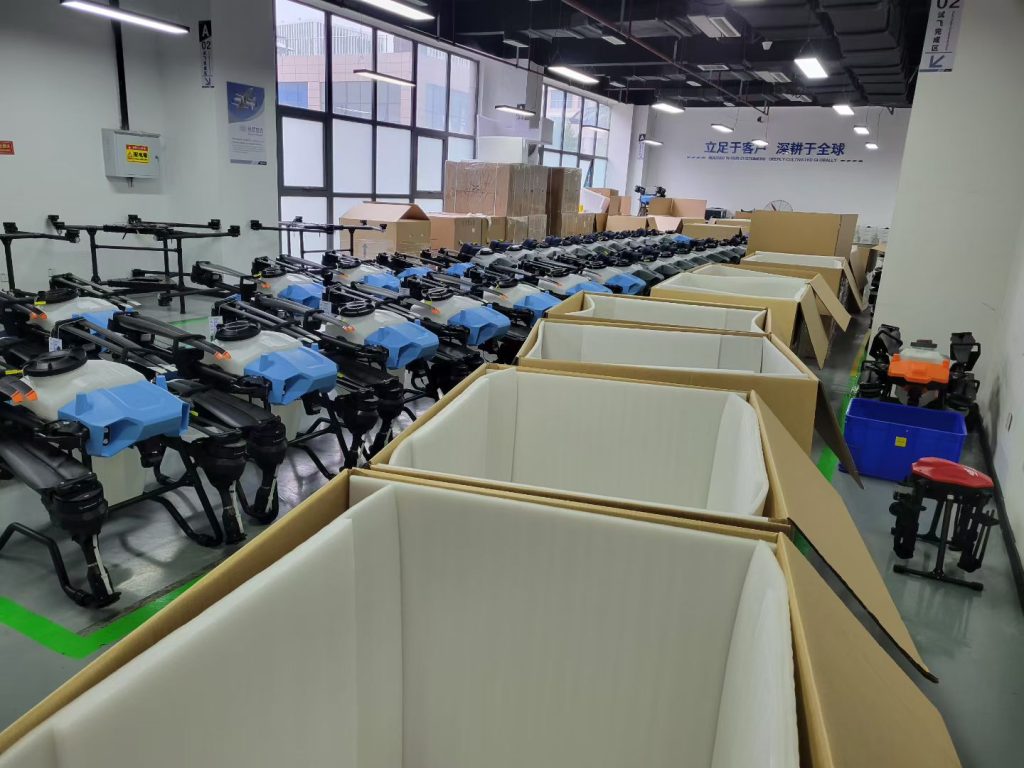
Direct factory purchasing can be advantageous for larger projects because it may provide better access to engineering support, customization and spare parts. However, buyers should verify that the company is actually capable of manufacturing and supporting the aircraft rather than choosing solely based on the word “factory.”
What is more important: payload or flight time?
Neither can be considered independently.
A drone with a very high payload but extremely short loaded endurance may be less useful than a slightly smaller aircraft that can repeatedly transport the required load over the entire route.
The correct selection is based on:
Payload + distance + altitude + wind + flight time + lifting method.
Final Buying Recommendation
For construction and industrial transport, the best heavy lift drone is not necessarily the one with the largest payload.
Start with the actual job.
Determine:
What are you carrying?
How heavy is it?
How large is it?
How far must it travel?
How high is the worksite?
What wind conditions are expected?
Does the drone need to land or use a winch?
How many missions must it complete per hour?
Once these factors are known, you can compare manufacturers using meaningful technical data.
For most serious projects, request at least three comparable quotations and make sure every supplier quotes the same configuration. Compare loaded flight time, operating payload, battery system, lifting equipment, safety systems, charging time, spare parts and after-sales support, not just the advertised maximum payload.
A reliable heavy lift drone should be evaluated as a complete transportation system—not simply as a large aircraft with powerful motors.




No comments yet