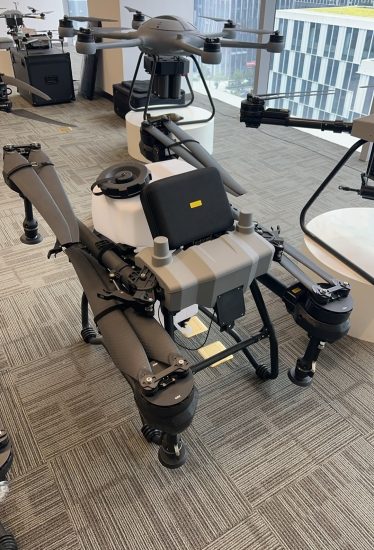




Agricultural drones are changing the way farmers manage crops around the world. Traditional farming methods often require large amounts of labor, time, and resources for pesticide and fertilizer application. With the development of precision agriculture, drones have become an efficient solution for improving spraying accuracy and reducing operating costs.
By using advanced flight systems, intelligent spraying technology, and automated operation features, agricultural drones help farmers achieve better crop protection while saving resources.
This article explains how agricultural drones improve crop spraying efficiency and help reduce farming expenses.
1. Faster Crop Spraying Operations
One of the biggest advantages of agricultural drones is their high working efficiency.
Traditional spraying methods usually require:
- Manual labor
- Large agricultural machinery
- More preparation time
- Higher operating costs
Agricultural drones can quickly cover large farmland areas with less manpower.
Benefits include:
- Faster spraying speed
- Reduced labor requirements
- Better farm management efficiency
- Ability to operate in difficult terrain
For large farms, drones can significantly shorten spraying time and improve productivity.
2. More Accurate Spray Application
Precision is essential in modern agriculture.
Agricultural drones use advanced technologies such as:
- GPS positioning
- Intelligent flight control
- Automatic route planning
- Flow control systems
These technologies allow drones to distribute pesticides and fertilizers more evenly.
Accurate spraying helps farmers:
- Reduce chemical waste
- Improve crop protection
- Avoid excessive application
- Lower environmental impact
Precision agriculture allows resources to be used more effectively.
3. Reduce Labor Costs
Labor shortages are becoming a challenge for many agricultural regions.
Agricultural drones reduce dependence on manual workers by automating spraying operations.
Farmers can reduce costs related to:
- Worker wages
- Equipment operation
- Field preparation
- Long working hours
A drone operator can manage large areas of farmland efficiently, making farming operations more economical.
4. Save Pesticides and Fertilizers
Traditional spraying methods may cause uneven application and unnecessary chemical usage.
Agricultural drones improve resource utilization through:
- Precise spraying volume control
- Adjustable spray speed
- Targeted application
This helps farmers save:
- Pesticides
- Fertilizers
- Water resources
Reducing chemical waste not only lowers costs but also supports more sustainable farming practices.
5. Better Access to Difficult Farming Areas
Some farmland areas are difficult for traditional equipment to reach.
Examples include:
- Mountain farms
- Wet fields
- Large plantations
- Uneven agricultural land
Agricultural drones can operate in these areas without requiring heavy machinery.
This makes crop protection easier and more efficient in challenging environments.
6. Improve Crop Management Through Data
Modern agricultural drones can do more than spraying.
Some drone systems can collect agricultural data through cameras and sensors.
Farmers can use this information for:
- Crop growth monitoring
- Disease detection
- Field analysis
- Better farming decisions
Combining drone spraying with data management helps create smarter farming systems.
7. Lower Long-Term Farming Costs
Although purchasing an agricultural drone requires an initial investment, the long-term benefits can be significant.
Cost advantages include:
- Lower labor expenses
- Reduced chemical usage
- Faster operation speed
- Improved crop management
For professional farming businesses, drones can provide a strong return on investment over time.
8. Choosing the Right Agricultural Drone Supplier
To achieve the best results, buyers should select a reliable drone manufacturer.
Important factors include:
- Product quality
- Battery performance
- Spraying system reliability
- Flight stability
- Technical support
- Spare parts availability
A professional supplier can provide suitable drone solutions based on different farming requirements.
Frequently Asked Questions (FAQ)
Q1: How do agricultural drones improve spraying efficiency?
Agricultural drones improve efficiency through automated flight, accurate spraying systems, and the ability to quickly cover large farming areas.
Q2: Can agricultural drones reduce farming costs?
Yes. Drones can reduce labor costs, decrease chemical waste, and improve operation efficiency.
Q3: Are agricultural drones suitable for large farms?
Yes. Agricultural drones are especially useful for large farms because they can quickly complete spraying tasks over wide areas.
Q4: What crops can agricultural drones spray?
Agricultural drones can be used for many crops, including rice, wheat, corn, vegetables, fruit trees, and other commercial crops.
Q5: What should buyers consider when purchasing agricultural drones?
Buyers should evaluate flight performance, spraying capacity, battery system, supplier experience, after-sales service, and customization options.
Conclusion
Agricultural drones are becoming an important technology for modern farming. They help farmers improve spraying efficiency, reduce operating costs, save resources, and achieve more precise crop management.
For global agricultural businesses, investing in reliable drone solutions can improve productivity and create more efficient farming operations. As precision agriculture continues to grow, agricultural drones will play an increasingly important role in the future of farming.


No comments yet