



Agriculture is facing increasing pressure from rising labor expenses, chemical costs, and the need for higher productivity. Farmers, agricultural cooperatives, and service providers are searching for ways to improve operational efficiency without sacrificing crop quality.
Agricultural drones are becoming a practical solution because they help reduce manual labor requirements, improve spraying precision, and minimize unnecessary pesticide or fertilizer waste.
However, cost reduction does not happen simply by replacing workers with machines. The real value comes from improving application accuracy, increasing operational speed, and reducing inefficiencies in daily farm management.
Why Traditional Spraying Creates High Costs
Traditional spraying methods often depend on manual labor, tractors, or backpack sprayers.
These methods can create several challenges:
- High labor requirements during peak farming seasons
- Uneven spraying results between workers
- Increased chemical waste due to over-application
- Slow operation speed in large farming areas
- Higher physical workload and safety concerns
In many regions, labor shortages make seasonal farm operations even more difficult. Delays in spraying can directly affect crop health and yield quality.
For large farms especially, operational timing matters.
Missing the ideal spraying period may increase pest pressure or reduce fertilizer effectiveness.
Reducing Labor Dependency
One of the biggest advantages of agricultural drones is labor efficiency.
Instead of requiring multiple workers to cover large fields manually, a trained drone operator can complete spraying tasks much faster.
For example:
A field that previously required several workers and an entire day may be completed in a much shorter period using an agricultural drone system.
This becomes especially valuable during:
- Pesticide application periods
- Fertilizer spraying seasons
- Emergency pest outbreaks
- Time-sensitive crop management tasks
In areas with rising wages or labor shortages, reducing workforce dependency can significantly improve farm profitability.
Faster Coverage Means Lower Operating Costs
Time affects cost.
Agricultural drones can cover farmland more efficiently than traditional manual spraying methods.
Faster coverage provides several advantages:
- Lower labor hours per hectare
- Reduced fuel dependency compared with some machinery
- More consistent scheduling
- Improved productivity during narrow weather windows
Efficiency becomes particularly important for rice, wheat, corn, soybean, and large commercial farms where delays increase operational risk.
A fast response can help farmers complete spraying during ideal weather conditions instead of losing valuable time.
More Precise Spraying Reduces Chemical Waste
Chemical cost is one of the largest operating expenses in farming.
Over-spraying wastes money.
Under-spraying may reduce effectiveness and require repeat treatment.
Agricultural drones improve precision through controlled flight paths and adjustable spraying systems.
Benefits include:
- Better target coverage
- More consistent liquid distribution
- Reduced overlap between spray areas
- Lower chemical waste
Precision spraying helps farmers use chemicals more efficiently rather than simply increasing application volume.
Over time, even small improvements in application accuracy may lead to meaningful savings.
Better Access to Difficult Terrain
Certain farmland conditions make traditional spraying difficult.
Examples include:
- Rice fields with wet ground
- Hillsides and mountain farms
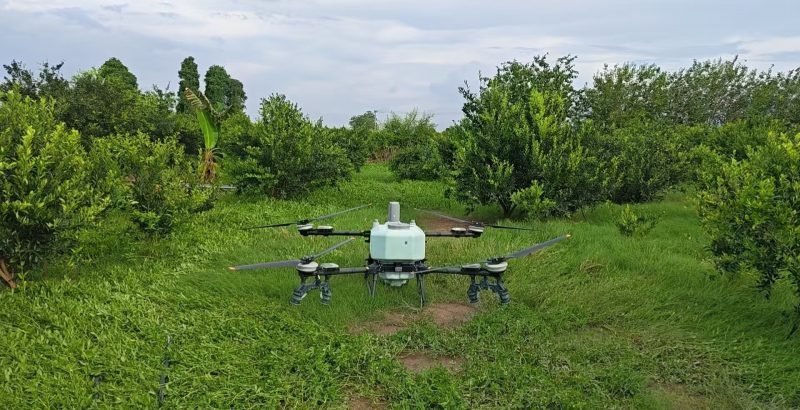
- Orchards with irregular terrain
- Soft soil areas inaccessible to heavy machinery
Agricultural drones reduce the need for workers to physically enter difficult environments.
This lowers operational effort while maintaining productivity.
For farms with complex terrain, reduced accessibility problems can translate directly into lower labor costs.
Minimizing Crop Damage
Ground machinery sometimes damages crops during field operations.
Repeated vehicle movement may:
- Crush plants
- Compact soil
- Reduce planting consistency
Drone spraying avoids direct contact with crops.
Less crop damage can improve productivity and reduce hidden operational losses.
Although difficult to measure immediately, minimizing physical crop stress often contributes to better long-term efficiency.
Improving Seasonal Productivity
Agricultural operations are highly time-sensitive.
Weather, pest outbreaks, and fertilization schedules often create short working windows.
Agricultural drones allow farms to react faster.
Instead of organizing large labor teams, farmers can begin treatment more quickly and complete operations before weather changes.
This operational flexibility helps reduce delays and improve resource planning.
In many cases, saving time indirectly lowers labor and chemical expenses.
Choosing the Right Drone Matters
Cost reduction depends heavily on choosing equipment suited to farm conditions.
Factors to consider include:
- Farm size
- Crop type
- Payload capacity
- Battery workflow
- Spraying system quality
- Maintenance support
A drone that is too small may reduce productivity.
A drone that is unnecessarily large may increase operating expenses.
The best system balances efficiency with real farming requirements.
Long-Term Return on Investment
Agricultural drones should not be viewed only as equipment purchases.
They are productivity tools.
The long-term goal is to improve:
- Labor efficiency
- Chemical usage efficiency
- Operational speed
- Crop consistency
- Farm management flexibility
When properly integrated into farming operations, agricultural drones may help reduce recurring operational costs while improving field performance.
FAQ
Do agricultural drones really reduce labor costs?
Yes. Agricultural drones can reduce the number of workers needed for spraying operations and improve efficiency during busy farming periods.
How do drones reduce pesticide waste?
Drones improve spraying precision through controlled flight paths and optimized liquid distribution, reducing overlap and unnecessary application.
Are agricultural drones suitable for large farms?
Yes. Large farms often benefit significantly because drones improve operational speed and reduce time-sensitive labor pressure.
Can drones work in difficult terrain?
Yes. Agricultural drones are especially useful in rice fields, orchards, hillsides, and soft ground where traditional machinery may struggle.
Are agricultural drones worth the investment?
For many farms and agricultural service providers, drones provide long-term value by improving efficiency, reducing labor dependence, and lowering unnecessary operating costs.


No comments yet