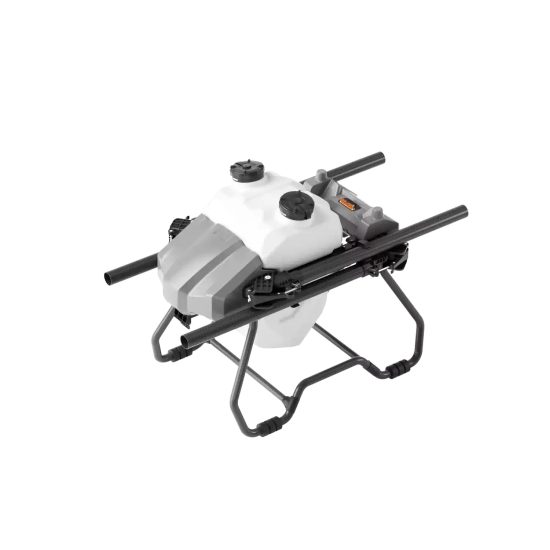



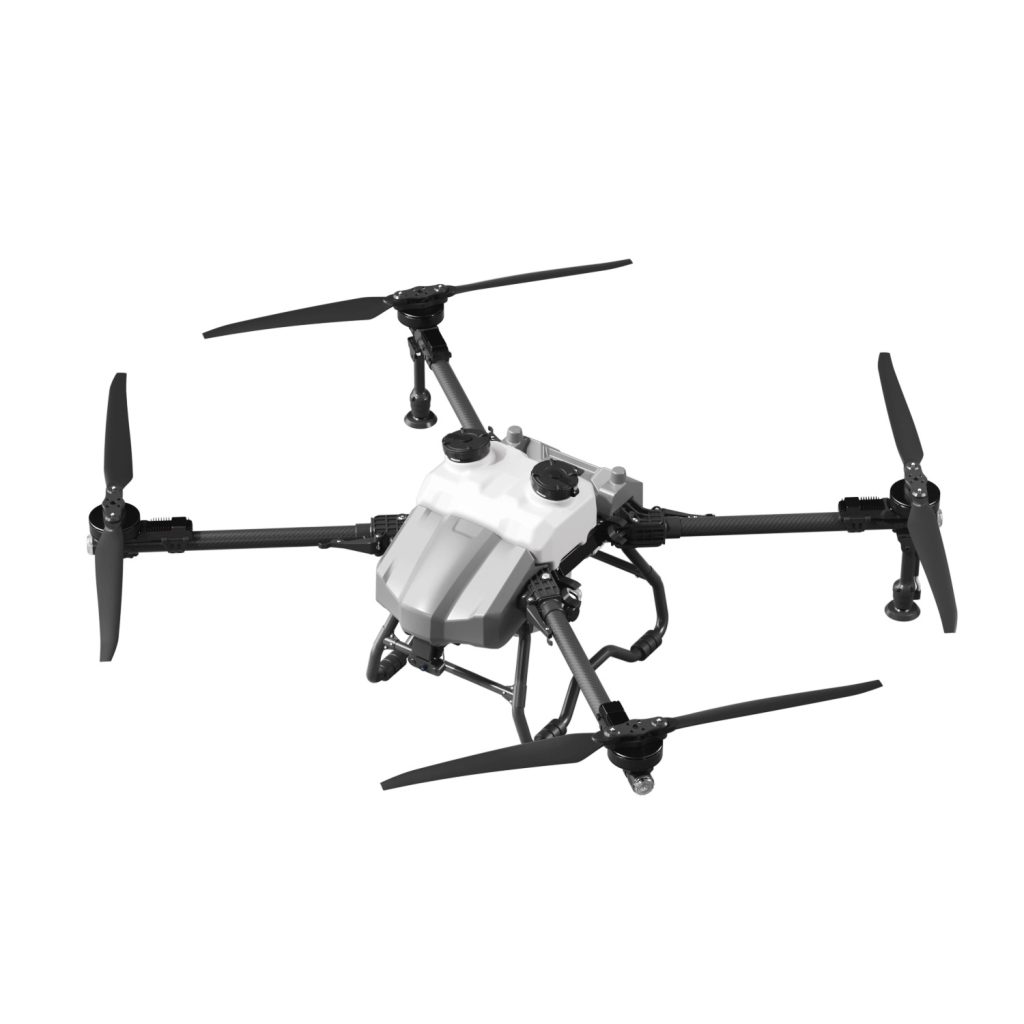
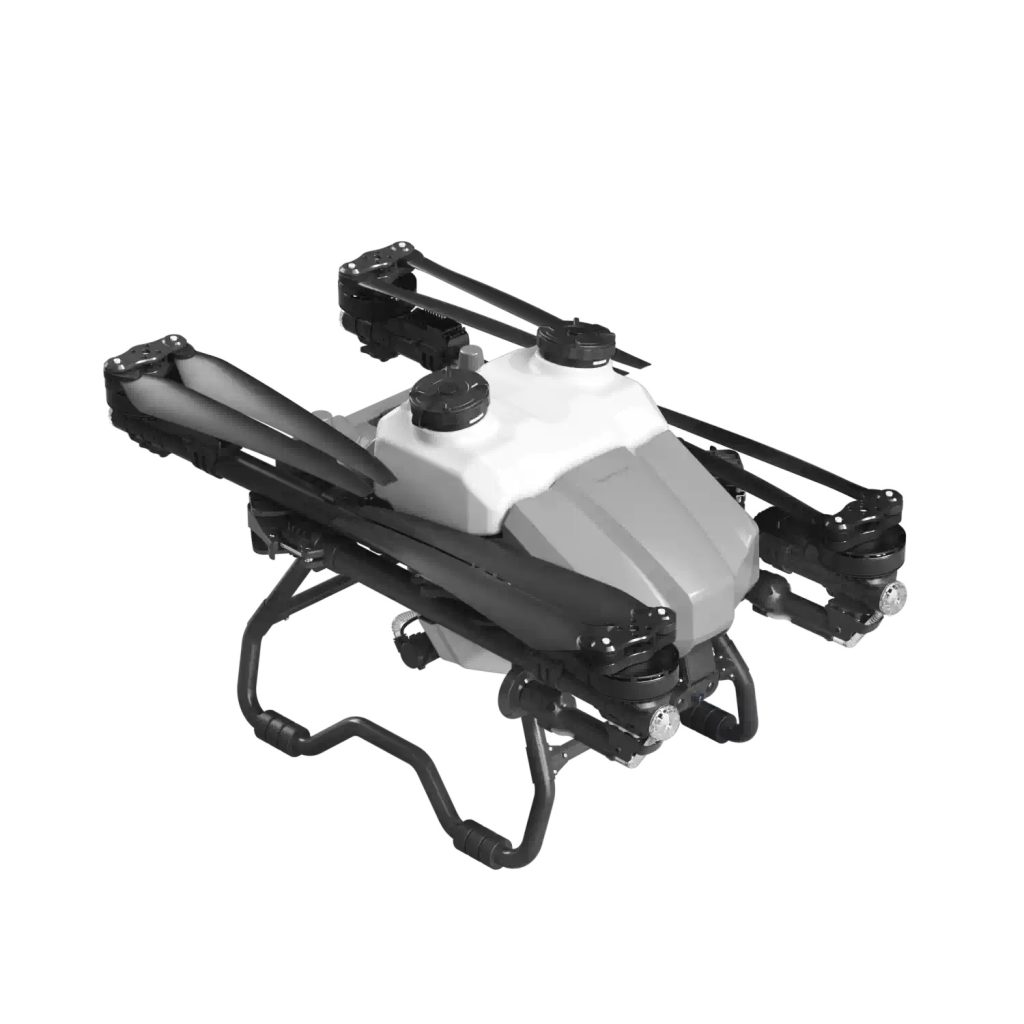
Managing a large farm is not only about planting and harvesting. One of the biggest operational challenges is completing spraying work efficiently while controlling labor costs, reducing downtime, and maintaining crop protection quality.
For farms covering hundreds or even thousands of hectares, traditional spraying methods often become slow, expensive, and difficult to manage. Agricultural drones are increasingly becoming a practical solution for large-scale spraying operations because they improve efficiency and make field management more flexible.
Challenges of Large-Scale Farm Spraying
Large farms face different problems compared with small agricultural operations. When spraying tasks are delayed or inefficient, the impact on crop performance and operational costs becomes more significant.
Common challenges include:
- Large coverage areas requiring long working hours
- Labor shortages during peak agricultural seasons
- High fuel and maintenance costs for traditional machinery
- Uneven spraying quality across different field zones
- Difficult access to wet, soft, or uneven land
When farms expand in size, traditional methods may no longer provide the speed and flexibility needed for modern agricultural management.
Why Agricultural Drones Are a Practical Solution
Agricultural drones are designed to simplify spraying operations across large farming areas. Instead of depending completely on manual labor or heavy ground equipment, farms can use drones to improve operational efficiency and reduce delays.
1. Faster Coverage for Large Fields
One major advantage of drone spraying is speed.
Large farms often require urgent spraying when weather conditions are suitable or when pests appear unexpectedly. Delayed action can affect crop growth and productivity.
Agricultural drones help operators complete spraying tasks more efficiently, allowing farms to respond faster during critical periods.
2. Lower Labor Dependence
Finding skilled farm workers is becoming more difficult in many agricultural regions.
Instead of relying on multiple workers to spray fields manually, drone operations can reduce labor pressure and simplify field management.
This is especially useful for commercial farms that manage large planting areas.
3. More Flexible Field Access
Heavy spraying vehicles may struggle in muddy or uneven environments.
Large farms often contain areas that are difficult to reach using traditional machines, especially after rainfall or irrigation.
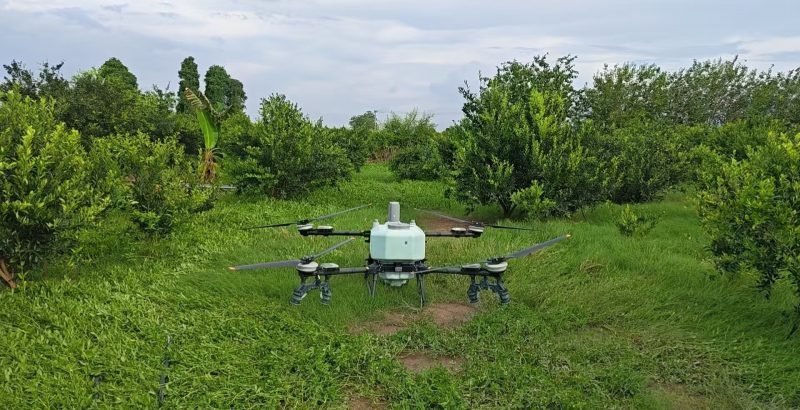
Agricultural drones fly above crops and can work without direct ground contact, helping operators maintain spraying schedules under more challenging field conditions.
4. Improved Operational Efficiency
Efficiency is important in commercial agriculture.
Large-scale farm managers often need to coordinate multiple activities such as irrigation, fertilization, pest control, and harvesting schedules.
Drone spraying can help reduce operational bottlenecks by improving workflow and reducing delays in field treatment.
5. Better Resource Management
Large farms need to control operating costs carefully.
By improving spraying efficiency and reducing unnecessary overlap, agricultural drones may help improve input management and support more organized farm operations.
What Makes a Good Drone for Large Farms?
When selecting a spraying drone for large-scale agricultural use, several factors matter.
Payload Capacity
Larger tanks may reduce refill frequency and improve operational continuity.
Stable Flight Performance
Reliable operation is important for maintaining spraying consistency across wide planting areas.
Battery Efficiency
Large farms benefit from systems designed for repeated operation and efficient battery management.
Easy Maintenance
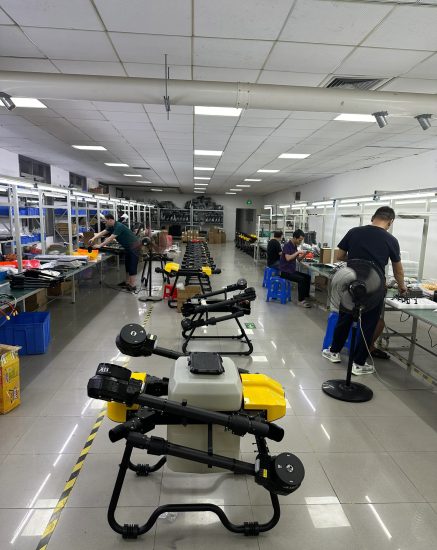
Commercial farming requires equipment that is practical to maintain during busy seasons.
Technical Support and Spare Parts
Reliable after-sales support helps reduce downtime and keeps operations running smoothly.
When Should Large Farms Consider Drone Spraying?
Agricultural drones may be especially useful when:
- Labor costs continue increasing
- Farm areas become difficult to manage manually
- Faster spraying response is needed
- Traditional machinery causes delays or crop damage
- The business wants more efficient field management
For many commercial farms, drone technology is no longer only an experiment. It is becoming part of long-term agricultural planning.
Final Thoughts
Large-scale farming requires smarter operational decisions.
Agricultural drones offer a practical spraying solution for farms that want to improve efficiency, reduce labor dependence, and simplify field management.
Choosing the right drone system depends on farm size, crop type, operating conditions, and long-term production goals.
FAQ
1. Are agricultural drones suitable for large farms?
Yes. Agricultural drones are commonly used to support medium and large farming operations where faster spraying and flexible field management are important.
2. Can drone spraying reduce labor requirements?
In many cases, yes. Drone operations may reduce dependence on multiple field workers during spraying seasons.
3. Do drones work better than traditional spraying machines?
It depends on farm conditions, crop type, and operational goals. Some farms use drones alongside traditional equipment to improve flexibility.
4. Can drones spray uneven or muddy farmland?
Yes. Since drones operate above crops, they can work in areas that are difficult for ground machinery to access.
5. What should large farms consider before buying a spraying drone?
Important considerations include tank size, battery performance, maintenance, ease of operation, technical support, and suitability for field size.


No comments yet