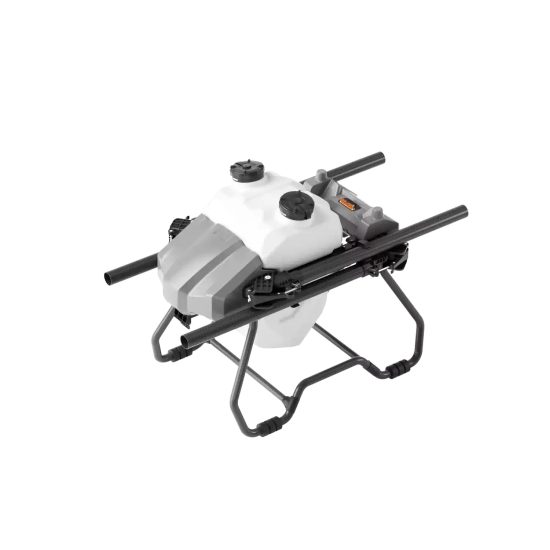



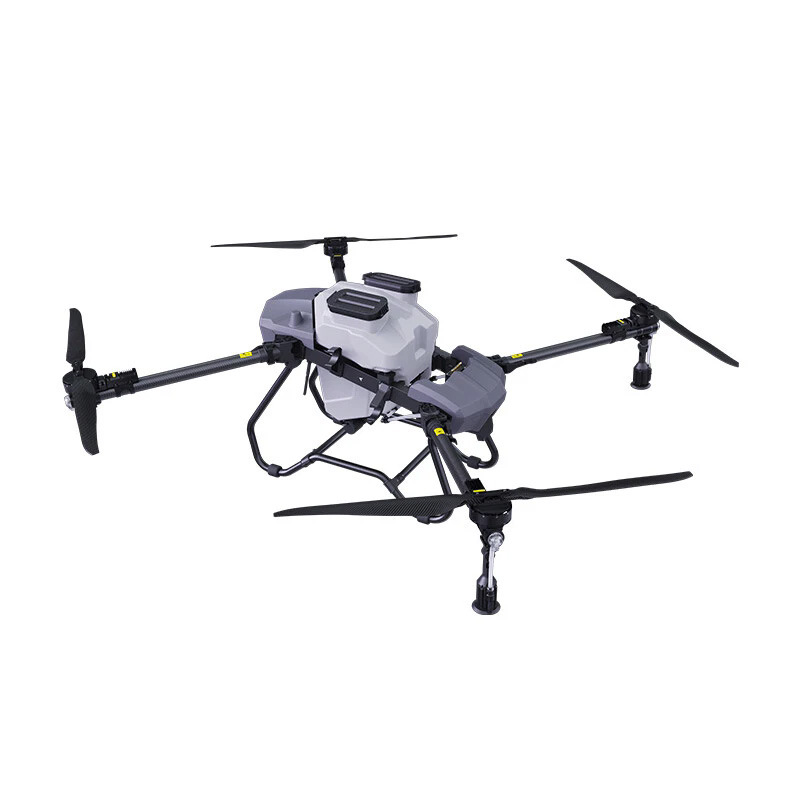
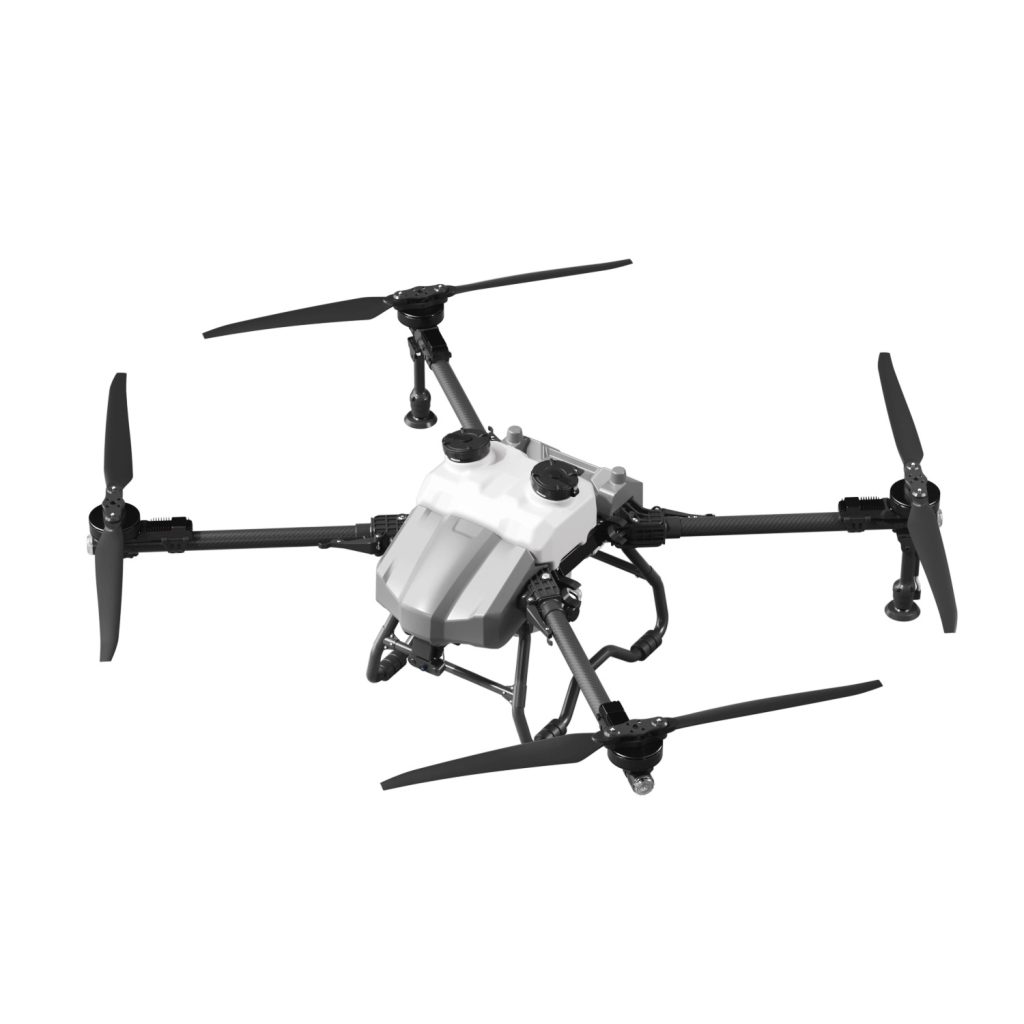
Agricultural drones are increasingly used in modern farming because they can help improve the efficiency of spraying, fertilizing, spreading, and crop protection operations. However, not every agricultural drone is suitable for every type of crop.
Rice fields, wheat farms, corn fields, orchards, vineyards, vegetables, and mountainous crops have different requirements. Crop height, planting density, terrain, field size, and application method can all affect the performance of an agricultural drone.
For farmers, agricultural service providers, distributors, and importers, understanding the relationship between agricultural drones and different crop types is important when selecting the right equipment.
1. Agricultural Drones for Rice Fields
Rice is one of the crops commonly associated with agricultural drone operations.
Rice fields are often large and relatively open, making them suitable for drone-based spraying and spreading.
Agricultural drones can be used for:
-
Pest control
-
Disease prevention
-
Liquid fertilizer application
-
Foliar nutrient spraying
-
Granular fertilizer spreading
-
Seed spreading
Rice fields can also be wet and difficult for traditional ground equipment to access. An agricultural drone can operate from the air without driving directly through the field, which may help reduce crop damage.
When selecting a drone for rice farming, buyers should consider:
-
Tank or hopper capacity
-
Spray width
-
Spreading accuracy
-
Flight time
-
Battery replacement speed
-
Route planning functions
For large rice farms, productivity and efficient battery management are especially important.
2. Agricultural Drones for Wheat
Wheat is commonly grown across large areas, making operating efficiency an important consideration.
Agricultural drones can be used for:
-
Fungicide spraying
-
Insect control
-
Nutrient application
-
Disease management
Because wheat fields can cover large areas, farmers may benefit from a drone with a suitable combination of payload capacity, flight time, and spraying width.
A drone with a small tank may require frequent refilling. On the other hand, a very large drone may not be necessary for smaller farms.
The right choice depends on:
-
Total farmland area
-
Crop growth stage
-
Required application frequency
-
Available labor
-
Daily operating requirements
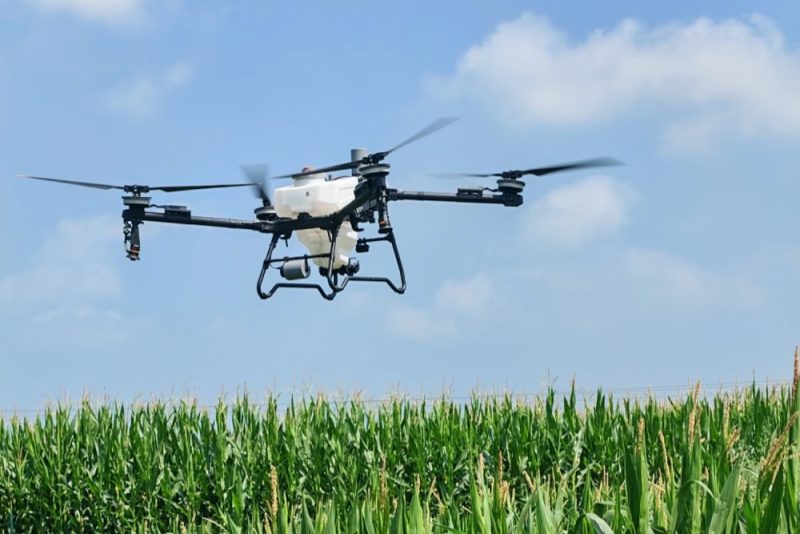
3. Agricultural Drones for Corn
Corn fields may require different operating strategies depending on the growth stage.
Agricultural drones can assist with:
-
Pest control
-
Disease prevention
-
Foliar fertilizer application
-
Crop protection
As corn grows taller, the operating environment can become more challenging. The drone must maintain stable flight and provide appropriate spray coverage.
Important considerations include:
-
Flight altitude
-
Spray droplet characteristics
-
Airflow
-
Crop height
-
Spray penetration
A suitable spraying system can help improve application efficiency while reducing unnecessary product waste.
4. Agricultural Drones for Soybeans
Soybeans may require multiple agricultural treatments during the growing season.
Common applications include:
-
Pest control
-
Disease management
-
Foliar nutrients
-
Liquid fertilizer
Soybean fields can vary significantly in size and terrain. A drone used for soybean farming should be selected based on the total operating area and the expected application workload.
For large-scale soybean production, efficient route planning and battery management can help improve daily productivity.
5. Agricultural Drones for Vegetable Farms
Vegetable crops may require careful application control.
Different vegetables may have different sensitivities to agricultural products. Excessive application or uneven spraying may affect crop quality.
Agricultural drones can be used for:
-
Pest management
-
Disease control
-
Liquid fertilizer
-
Foliar nutrition
For vegetable farms, accurate flow control and uniform spray distribution are particularly important.
Farmers should choose a drone that allows the application rate to be adjusted according to crop requirements.
6. Agricultural Drones for Orchards
Orchard operations can be more complex than spraying open farmland.
Fruit trees may have:
-
Different heights
-
Dense leaves
-
Uneven spacing
-
Narrow operating areas
-
Sloping terrain
Agricultural drones can be used for:
-
Fruit tree pest control
-
Disease prevention
-
Foliar nutrient application
-
Orchard fertilization
When choosing an agricultural drone for orchards, buyers should pay attention to:
-
Terrain-following capability
-
Flight stability
-
Spray airflow
-
Operating height
-
Obstacle detection
-
Narrow-area maneuverability
A drone designed for open fields may not always provide the best performance in dense orchards.
7. Agricultural Drones for Citrus Orchards
Citrus orchards can benefit from aerial spraying technology, especially when trees are densely planted or located on uneven terrain.
Agricultural drone applications may include:
-
Pest control
-
Disease prevention
-
Nutrient spraying
-
Tree canopy treatment
The effectiveness of spraying depends on factors such as:
-
Tree height
-
Canopy density
-
Flight altitude
-
Spray system design
-
Wind conditions
Operators should adjust flight parameters according to the actual orchard environment.
8. Agricultural Drones for Vineyards
Vineyards often have narrow rows and unique planting layouts.
An agricultural drone for vineyard operations should be able to:
-
Fly accurately between rows
-
Maintain stable altitude
-
Follow planned routes
-
Apply products evenly
Because vineyard rows can be narrow, maneuverability may be more important than maximum payload capacity.
A compact and stable drone may be more suitable for certain vineyard environments.
9. Agricultural Drones for Cotton
Cotton fields may require repeated crop protection operations throughout the growing season.
Agricultural drones can assist with:
-
Pest control
-
Disease management
-
Foliar fertilizer application
For large cotton fields, the key factors may include:
-
Working efficiency
-
Spray width
-
Battery management
-
Route planning
-
Application consistency
A properly configured agricultural drone can help reduce the need for manual field operations.
10. Agricultural Drones for Sugarcane
Sugarcane fields can cover large areas and may be difficult to access with traditional equipment during certain growth stages.
Agricultural drones can be used for:
-
Pest control
-
Disease prevention
-
Nutrient application
-
Field treatment
Because sugarcane can grow tall and dense, operators should consider spray coverage and the relationship between flight altitude and crop height.
11. Agricultural Drones for Tea Plantations
Tea plantations are often located in hilly or uneven areas.
Traditional agricultural equipment may have difficulty operating in steep terrain. Agricultural drones can provide greater flexibility because they do not need to drive directly through the plantation.
Important functions may include:
-
Terrain following
-
Stable positioning
-
Automatic altitude adjustment
-
Obstacle detection
A drone with good flight stability can be particularly useful in areas with changing elevations.
12. Agricultural Drones for Mountainous Crops
Mountainous farming presents unique challenges.
Fields may be:
-
Steep
-
Irregular
-
Difficult to access
-
Divided into small sections
Agricultural drones can help reduce the need for heavy ground equipment in these environments.
However, buyers should pay close attention to:
-
Wind resistance
-
Positioning accuracy
-
Terrain-following functions
-
Battery performance
-
Signal stability
The actual terrain should always be considered before selecting a drone.
13. Agricultural Drones for Greenhouse Operations
Agricultural drones can also have potential applications in certain greenhouse environments.
However, greenhouse operations require careful consideration of:
-
Indoor positioning
-
Available operating space
-
Ventilation
-
Obstacle avoidance
-
Crop height
A drone designed for large outdoor fields may not be suitable for a confined greenhouse.
Compact models may be more appropriate for specific indoor applications.
14. Agricultural Drones for Seed Spreading
Some agricultural drones can be equipped with spreading systems for seeds and granular materials.
Applications may include:
-
Rice seeds
-
Grass seeds
-
Cover crop seeds
-
Granular fertilizer
-
Other agricultural materials
When choosing a spreading drone, buyers should consider:
-
Hopper capacity
-
Spreading width
-
Material compatibility
-
Feeding accuracy
-
Flow adjustment
Different materials have different physical properties, so the spreading system should be matched to the material being applied.
15. How to Choose a Drone Based on Crop Type
The best agricultural drone should be selected according to the actual crop and operating environment.
For Large Open Fields
Consider:
-
Larger payload capacity
-
Long working time
-
Efficient route planning
-
Wide spraying coverage
For Orchards
Consider:
-
Terrain following
-
Stable flight
-
Suitable airflow
-
Obstacle detection
-
Flexible maneuverability
For Mountainous Areas
Consider:
-
Strong positioning capability
-
Wind resistance
-
Terrain adaptation
-
Stable communication
For Small Farms
Consider:
-
Compact design
-
Easy transportation
-
Simple operation
-
Lower operating cost
For Commercial Agricultural Services
Consider:
-
High productivity
-
Fast battery charging
-
Multiple battery systems
-
Durable components
-
Reliable spare parts supply
16. One Agricultural Drone May Not Be Suitable for Every Crop
A common mistake is assuming that one agricultural drone can perform equally well in every environment.
For example:
-
A large drone may be efficient in open fields but difficult to operate in narrow orchards.
-
A compact drone may be flexible in small farms but less efficient for very large areas.
-
A standard spraying system may be suitable for liquid applications but unsuitable for granular materials.
-
A drone designed for flat farmland may require additional functions for mountainous terrain.
Therefore, buyers should consider whether they need:
-
A dedicated spraying drone
-
A spreading drone
-
A multi-function agricultural drone
-
A customized configuration
Frequently Asked Questions
What crops can agricultural drones be used for?
Agricultural drones can be used for many crops, including rice, wheat, corn, soybeans, vegetables, fruit trees, cotton, sugarcane, tea, and other agricultural products.
Are agricultural drones suitable for orchards?
Yes. Some agricultural drones are designed for orchard applications. Buyers should consider flight stability, terrain following, spray coverage, and the ability to operate around trees.
Can agricultural drones be used in mountainous areas?
Yes. Agricultural drones can be particularly useful in difficult terrain, but the selected model should have suitable positioning, flight stability, wind resistance, and terrain-following functions.
Can agricultural drones spread seeds?
Some agricultural drones can be equipped with a spreading system for seeds and granular materials. The hopper and feeding system should be matched to the specific material.
Is one agricultural drone suitable for all crops?
Not necessarily. Different crops and terrains have different requirements. The best configuration depends on the crop, field size, application method, and operating environment.
What is the best agricultural drone for large farms?
Large farms often require a combination of good payload capacity, efficient spraying, long operating time, fast battery management, and reliable route planning.
Final Thoughts
Agricultural drones can be used in many different crop production environments, but the right model depends on the specific application.
Open-field crops such as rice, wheat, corn, and soybeans may benefit from high operating efficiency and suitable payload capacity. Orchards and vineyards may require greater maneuverability and specialized spraying performance. Mountainous farms may need strong flight stability and terrain-following functions.
Before purchasing an agricultural drone, buyers should carefully evaluate the crop type, farmland size, terrain, application requirements, and expected workload.
Choosing a drone based on actual agricultural needs rather than simply selecting the largest or cheapest model can help improve operating efficiency and provide better long-term value for farmers, agricultural service providers, distributors, and international buyers.
THE END


No comments yet