

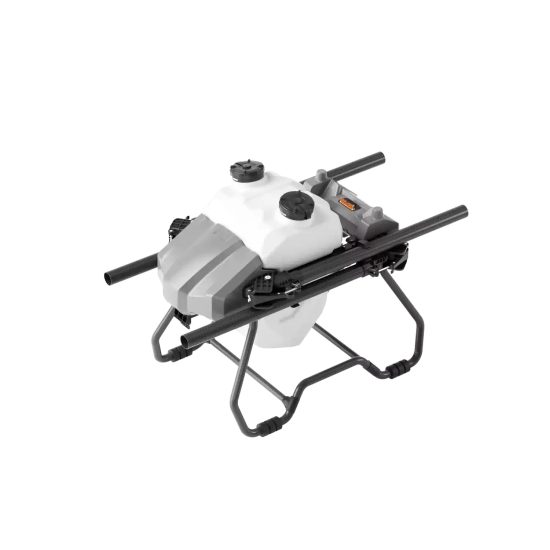
Choosing the right payload capacity is one of the most important decisions when purchasing an agricultural spraying drone. A 20L drone may be ideal for small and medium-sized farms, while a 30L or 40L agricultural drone can be more suitable for large commercial operations and professional agricultural service providers.
However, choosing a drone based only on tank capacity can lead to the wrong purchasing decision. Payload capacity affects flight time, battery consumption, refill frequency, transportation, operating efficiency, and overall investment.
This guide compares 20L, 30L, and 40L agricultural spraying drones and explains how to choose the right capacity for your farming business.
1. What Does 20L, 30L, or 40L Mean?
The capacity generally refers to the maximum liquid volume that the drone’s spraying tank can carry.
For example:
-
20L agricultural drone: up to approximately 20 liters of spraying liquid
-
30L agricultural drone: up to approximately 30 liters
-
40L agricultural drone: up to approximately 40 liters
The actual usable payload and operating performance depend on the drone’s design, battery system, motor configuration, flight conditions, and application requirements.
A larger tank can reduce the number of refills required, but it also increases the total aircraft weight during operation.
Therefore, tank capacity should always be evaluated together with the drone’s complete system.
2. 20L Agricultural Drone: Best for Flexibility
A 20L agricultural spraying drone is often a practical choice for small and medium-sized farms, agricultural contractors, and operators who need a balance between capacity and maneuverability.
Advantages of a 20L Drone
A 20L drone can provide several benefits:
-
Relatively compact size
-
Easier transportation
-
Lower payload compared with larger models
-
Good maneuverability
-
Suitable for many crop applications
-
Easier battery and equipment handling
-
Lower initial investment than larger systems
A 20L drone may be particularly useful when farms are divided into smaller fields or when transportation between fields is frequent.
Potential Limitations
The main limitation is refill frequency.
If you are working across a very large area, a smaller tank may require more frequent refilling.
This can increase downtime if the water or chemical mixing station is far from the field.
Therefore, 20L is not necessarily the best option for every commercial application.
3. 30L Agricultural Drone: A Balanced Commercial Option
A 30L agricultural drone provides a middle ground between capacity and maneuverability.
It can be attractive to:
-
Commercial farms
-
Agricultural service providers
-
Crop protection companies
-
Agricultural contractors
-
Equipment distributors
The additional capacity compared with a 20L drone can reduce the number of refilling cycles while maintaining a relatively manageable operating size.
For businesses serving multiple farms, this balance can be particularly useful.
A 30L system may provide enough capacity for larger operations without requiring the same level of investment and logistical support as a very large drone.
4. 40L Agricultural Drone: Designed for Larger Operations
A 40L agricultural spraying drone is generally aimed at users who prioritize higher payload capacity and reduced refill frequency.
Potential users include:
-
Large commercial farms
-
Agricultural service companies
-
Professional spraying contractors
-
Large-scale crop protection operations
-
Agricultural equipment distributors
The biggest advantage is the ability to carry more spraying liquid per flight.
This can reduce the number of trips required to a refill station.
However, a larger payload also means higher total operating weight.
This makes battery performance, motor power, flight control, and structural strength especially important.
5. 20L vs 30L vs 40L: Quick Comparison
Feature |
20L |
30L |
40L |
|---|---|---|---|
Tank capacity |
Lower |
Medium |
Higher |
Refill frequency |
Higher |
Medium |
Lower |
Maneuverability |
High |
Good |
Depends on model |
Transportation |
Easier |
Moderate |
More demanding |
Initial investment |
Lower |
Medium |
Higher |
Large-area operations |
Suitable with more refills |
Good |
Very suitable |
Small fields |
Excellent |
Good |
May be excessive |
Commercial operations |
Good |
Excellent |
Excellent |
Battery demand |
Lower than larger models |
Medium |
Higher |
Logistics |
Easier |
Moderate |
More demanding |
The table provides a general comparison. Actual performance depends on the specific drone design and operating conditions.
6. Farm Size Should Not Be the Only Consideration
It may seem logical to choose:
Small farm = 20L
Medium farm = 30L
Large farm = 40L
But real-world purchasing decisions are more complicated.
Two farms with the same acreage may require completely different drone configurations.
For example, one farm may have large, open fields close to a water source.
Another may have small fields separated by roads, buildings, hills, or other obstacles.
The second farm may benefit from a smaller and more maneuverable drone even if the total acreage is relatively large.
Therefore, field layout is just as important as total acreage.
7. Crop Type Also Matters
Different crops create different spraying requirements.
Agricultural drones may be used for:
-
Rice
-
Wheat
-
Corn
-
Soybeans
-
Cotton
-
Vegetables
-
Tea
-
Fruit trees
-
Orchards
-
Other commercial crops
Flat-field crops may allow larger drones to operate efficiently.
Orchards and plantations can require more precise flight paths and specialized spraying strategies.
Before selecting a 20L, 30L, or 40L drone, explain your crop type to the manufacturer.
A professional supplier should be able to recommend a suitable configuration based on the actual application.
8. Application Rate Is Critical
Tank capacity alone does not determine how much area a drone can cover.
The application rate is also important.
For example, if your operation requires a relatively low application volume, a smaller tank may still cover a significant area before refilling.
If your application requires a higher volume per hectare, a larger tank may provide greater practical efficiency.
The basic relationship can be considered as:
Approximate Coverage = Tank Capacity ÷ Application Rate
However, actual coverage also depends on spraying width, flight speed, terrain, refill time, battery changes, and operating conditions.
Therefore, buyers should ask manufacturers for realistic operating estimates instead of relying only on theoretical calculations.
9. Battery Performance Becomes More Important With Larger Drones
A 40L drone carrying a full payload can be significantly heavier than a 20L configuration.
As payload increases, the propulsion system must work harder.
This means buyers should pay close attention to:
-
Battery voltage
-
Battery capacity
-
Battery weight
-
Flight time
-
Charging time
-
Battery cycle life
-
Number of batteries required
A large drone with insufficient battery support may not provide the expected productivity.
For commercial operations, it can be more useful to calculate the number of flights possible per battery set than simply looking at the tank size.
10. Refill Time Can Change the Real Productivity
Suppose a large drone can carry more liquid but takes significantly longer to refill.
The expected productivity advantage may be reduced.
When evaluating a drone, calculate the complete operating cycle:
Takeoff → Spraying → Return → Refill → Battery Replacement → Takeoff
This is more meaningful than looking only at tank capacity.
For example, a slightly smaller drone with faster refilling and battery replacement may outperform a larger drone in certain operating environments.
11. Transportation Requirements
Drone size affects transportation.
A 20L system may be easier to move between fields using a standard vehicle.
A larger 40L system may require more space for:
-
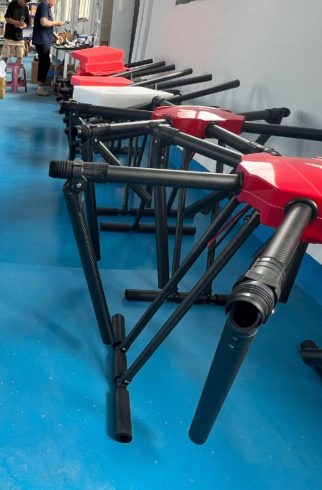
Drone frame
-
Batteries
-
Charger
-
Spare parts
-
Mixing equipment
-
Transportation cases
If your business moves equipment between different farms every day, transportation efficiency should be part of the purchasing decision.
12. Operator Experience Matters
The larger the agricultural drone, the more important proper training and operational procedures become.
Operators should understand:
-
Flight planning
-
Payload management
-
Battery safety
-
Spraying settings
-
Weather conditions
-
Obstacle avoidance
-
Emergency procedures
-
Routine maintenance
For a new operator, a smaller drone may be easier to learn.
For an experienced agricultural service company, a larger drone may offer greater productivity.
The best choice depends on the operator’s experience and business model.
13. Consider the Field Environment
A drone that performs well in a large open field may not be ideal for every environment.
Consider whether your fields include:
-
Trees
-
Power lines
-
Buildings
-
Hills
-
Narrow access roads
-
Water channels
-
Uneven terrain
-
High crop density
For complex environments, maneuverability and navigation technology may be more important than maximum payload.
For open agricultural land, higher capacity may provide greater efficiency.
14. Wind Conditions Should Be Considered
Larger payloads can influence flight performance under challenging weather conditions.
Before choosing a drone, ask the manufacturer about:
-
Recommended operating wind speed
-
Maximum wind resistance
-
Flight stability
-
Payload limitations under windy conditions
The manufacturer should provide realistic operating recommendations.
Do not assume that a larger drone will automatically perform better in every weather condition.
15. How Much Can a 20L Drone Cover?
The answer depends on the application rate.
For example, if the application rate is 10L per hectare, a theoretical 20L tank contains enough liquid for approximately 2 hectares.
At 15L per hectare, the same tank contains enough liquid for approximately 1.33 hectares.
However, these are simplified calculations.
Actual field coverage will be affected by:
-
Refilling
-
Battery replacement
-
Flight path
-
Spraying width
-
Terrain
-
Wind
-
Operator experience
Therefore, always use your actual application rate when estimating productivity.
16. How Much Can a 30L Drone Cover?
Using the same simplified calculation:
At 10L per hectare:
30L ÷ 10L/ha = 3 hectares
At 15L per hectare:
30L ÷ 15L/ha = 2 hectares
Again, this is theoretical tank coverage rather than guaranteed field productivity.
Real-world operating efficiency depends on the complete workflow.
17. How Much Can a 40L Drone Cover?
At an application rate of 10L per hectare:
40L ÷ 10L/ha = 4 hectares
At 20L per hectare:
40L ÷ 20L/ha = 2 hectares
These calculations demonstrate why application rate is essential when comparing drone capacities.
A buyer should provide the manufacturer with the desired application rate and crop information before deciding which model is appropriate.
18. Which Capacity Is Best for Agricultural Contractors?
Agricultural contractors often work across multiple farms.
They may prioritize:
-
Productivity
-
Reduced downtime
-
Easy transportation
-
Battery availability
-
Spare parts
-
Reliability
-
Operator training
For these users, a 30L or 40L agricultural drone may be attractive when working across large areas.
However, if the contractor frequently operates in smaller or more complicated fields, a 20L model may provide greater flexibility.
The best solution may even be a combination of different capacities.
19. Which Capacity Is Best for Distributors?
Distributors should consider more than their own agricultural operations.
They need to understand what their local customers actually require.
A distributor may consider offering:
-
Entry-level capacity
-
Mid-range commercial capacity
-
High-capacity professional models
This allows customers to select equipment according to farm size and application.
Distributors should also evaluate:
-
Wholesale pricing
-
MOQ
-
OEM options
-
Spare parts
-
Warranty
-
Training
-
Technical support
-
Packaging
-
Shipping
A manufacturer that can support multiple configurations may provide greater flexibility for distributors.
20. Don’t Compare Capacity Without Comparing the Complete System
A 20L drone from one manufacturer may not be directly comparable with a 20L drone from another.
Compare:
-
Payload
-
Flight time
-
Battery
-
Motor system
-
Spraying system
-
Pump
-
Nozzles
-
Navigation
-
RTK capability
-
Obstacle avoidance
-
Remote controller
-
Charger
-
Spare parts
-
Warranty
-
Technical support
This provides a more accurate picture of value.
21. 20L vs 30L vs 40L: Which One Should You Choose?
Choose a 20L agricultural drone if:
-
You operate smaller or fragmented fields
-
Transportation flexibility is important
-
You want a lower initial investment
-
You need good maneuverability
-
Your daily working area is moderate
Choose a 30L agricultural drone if:
-
You want a balance between capacity and flexibility
-
You operate medium to large fields
-
You provide commercial spraying services
-
You want to reduce refill frequency
-
You need a versatile professional platform
Choose a 40L agricultural drone if:
-
You operate large agricultural areas
-
Productivity is a major priority
-
Refill frequency needs to be minimized
-
Your operation has suitable transportation and charging infrastructure
-
You have experienced operators
22. Questions to Ask the Manufacturer
Before choosing a capacity, ask the manufacturer:
-
What is the recommended payload for my crop?
-
What is the actual flight time with a full tank?
-
How many batteries are required for continuous operation?
-
What is the recommended application rate?
-
What is the effective spraying width?
-
How long does refilling take?
-
How long does battery replacement take?
-
What is the recommended operating wind speed?
-
Which crops have been tested with this model?
-
What spare parts are included?
-
Can you provide OEM or ODM services?
-
What is the warranty period?
-
Can you provide technical training?
-
Can you supply replacement batteries and spare parts?
-
Can you provide a complete quotation for the drone, batteries, charger, spare parts, and shipping?
FAQ
Is a 20L agricultural drone suitable for commercial use?
Yes. A 20L drone can be suitable for commercial agricultural operations, especially where fields are smaller, fragmented, or require greater maneuverability.
Is a 30L drone better than a 20L drone?
Not necessarily. A 30L drone can reduce refill frequency, but the best option depends on your field conditions, crop type, application rate, battery system, and transportation requirements.
Is a 40L agricultural drone suitable for small farms?
It can be used, but it may not always be the most economical choice. A smaller drone may be easier to transport and operate for small or fragmented fields.
Does a larger tank mean higher productivity?
Not automatically. Productivity depends on the entire operating cycle, including flight time, spraying width, refill time, battery replacement, and field conditions.
Which agricultural drone is best for distributors?
Distributors should select models based on local market demand, target crops, farm sizes, price positioning, OEM requirements, spare-parts availability, and technical support.
Can one drone be used for different crops?
Many agricultural spraying drones can be used for multiple crops, but spraying parameters and application methods may need to be adjusted for different crops and agricultural products.
Final Buying Recommendation
There is no universal answer to whether a 20L, 30L, or 40L agricultural spraying drone is best.
A 20L drone may provide excellent flexibility and maneuverability.
A 30L drone can provide a useful balance between capacity and operational efficiency.
A 40L drone may be better suited to large-scale operations where reducing refill frequency is a priority.
The correct choice should be based on your farm size, field layout, crop type, application rate, terrain, battery system, transportation requirements, operator experience, and daily working area.
Before purchasing, provide these details to the manufacturer and request a configuration-specific quotation.
A professional agricultural drone supplier should be able to recommend the appropriate capacity rather than simply selling you the largest model.
The goal is not to buy the biggest agricultural drone.
The goal is to choose the agricultural drone that delivers the best productivity, reliability, and total operating value for your specific business.
THE END


No comments yet