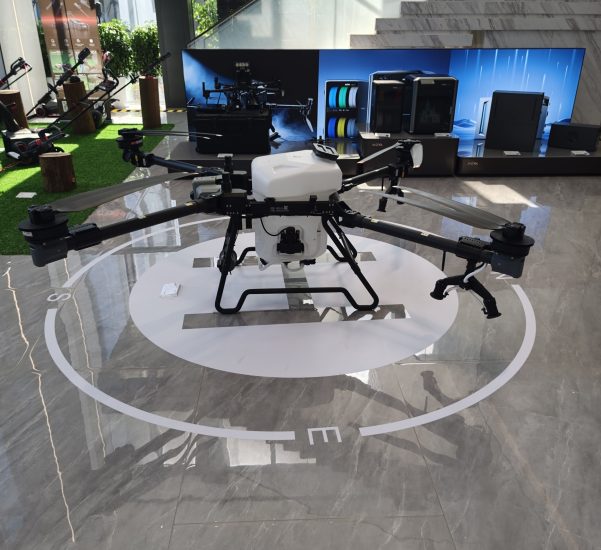



China has become an important manufacturing base for agricultural drones, including spraying drones, spreading drones, mapping UAVs, and customized agricultural UAV systems. For distributors, agricultural service companies, farm operators, and equipment importers, sourcing directly from a Chinese manufacturer can provide access to competitive pricing, product customization, spare parts, and OEM opportunities.
However, importing agricultural drones is more complicated than purchasing an ordinary electronic product. Buyers need to consider product specifications, batteries, export documentation, transportation, customs clearance, local regulations, quality inspection, after-sales service, and total landed cost.
This guide explains how to import agricultural drones from China step by step.
1. Define Your Agricultural Drone Requirements
Before contacting Chinese manufacturers, define exactly what you need.
A supplier cannot provide an accurate quotation if the requirements are unclear.
Start with the following questions:
- What crops will the drone be used for?
- What is the average farm size?
- Do you need spraying, spreading, or both?
- What payload capacity do you need?
- How many units do you initially plan to purchase?
- Which country will the drones be imported into?
- Do you need an OEM brand?
- Do you need spare parts?
- What type of battery system do you require?
- What level of navigation accuracy is necessary?
For example, a distributor serving large farms may require a higher-capacity commercial spraying drone, while a smaller agricultural service provider may prefer a more compact model.
Defining these requirements first makes supplier comparison much easier.
2. Choose the Right Agricultural Drone Capacity
Agricultural spraying drones are available in different payload classes.
Common configurations include smaller drones for light-duty operations and larger drones designed for commercial agricultural applications.
When selecting capacity, consider more than the tank size.
Important specifications include:
- Maximum recommended payload
- Empty drone weight
- Flight time
- Flight time under load
- Spraying width
- Flow rate
- Battery capacity
- Charging time
- Number of nozzles
- Pump performance
A drone with a larger tank may reduce the number of refilling operations, but it may also require more powerful batteries and charging equipment.
The correct model depends on your operating environment.
3. Find Agricultural Drone Manufacturers in China
Once your requirements are clear, begin searching for suitable suppliers.
Potential sources include:
- Manufacturer websites
- B2B platforms
- Industry exhibitions
- Agricultural equipment networks
- Distributor recommendations
- Industry associations
- Professional UAV companies
Do not immediately choose the supplier with the lowest price.
First determine whether the company can actually manufacture the product you need.
Ask for:
- Product catalog
- Factory information
- Technical specifications
- Production photos
- Testing information
- Certifications
- User manuals
- Warranty policy
- Spare-parts list
- OEM information
The objective is to identify manufacturers that can support long-term cooperation rather than simply complete one transaction.
4. Verify the Chinese Manufacturer
Supplier verification is one of the most important steps in the importing process.
A professional website alone is not sufficient evidence of manufacturing capability.
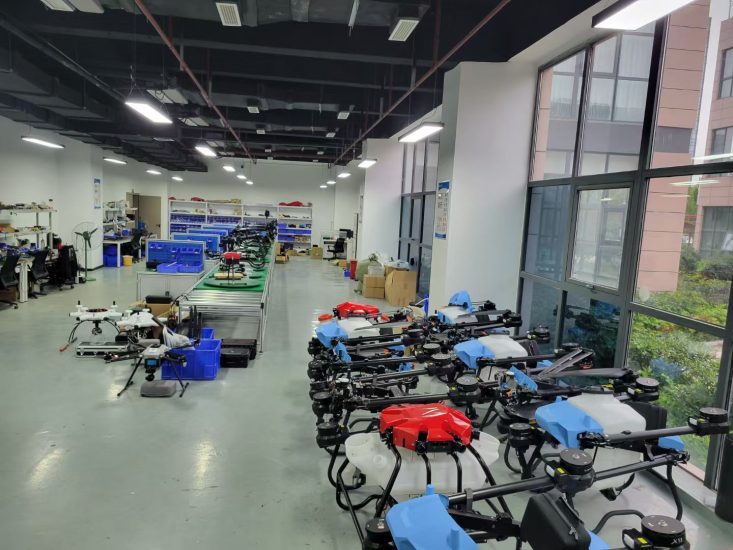
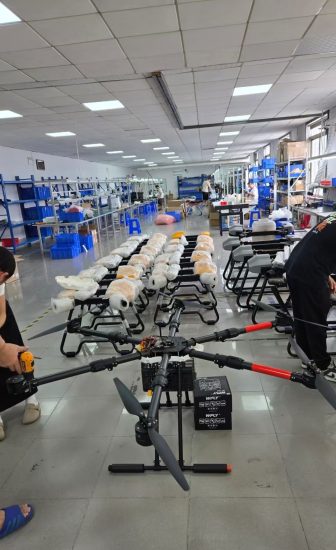
Ask the supplier for company and factory information and, when practical, arrange a video factory tour.
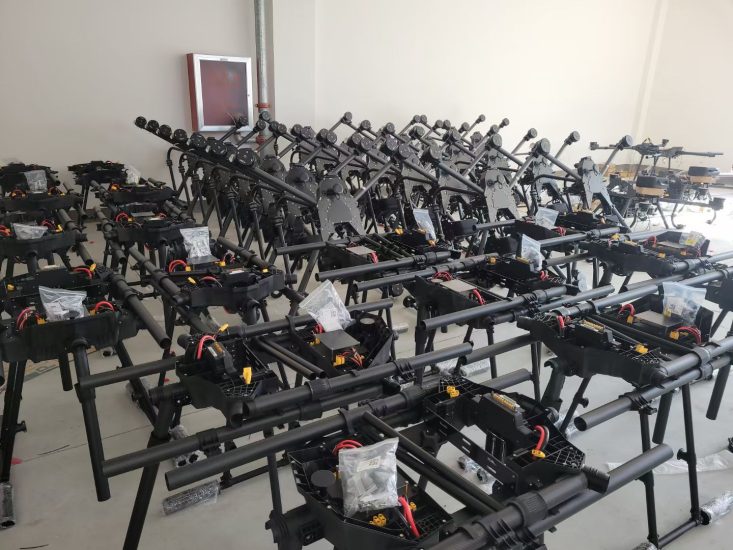
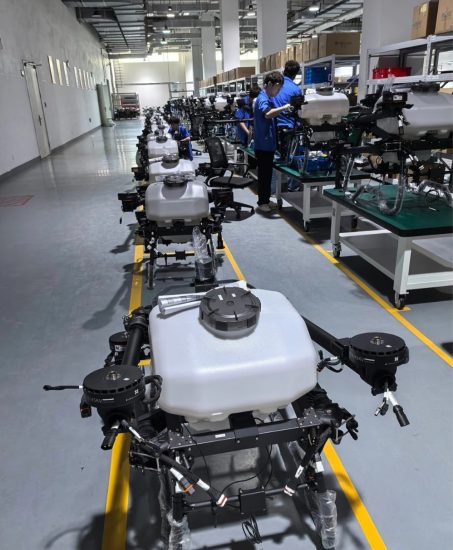
During the factory visit or video call, look for:
- Assembly areas
- Testing areas
- Finished products
- Component inventory
- Quality-control procedures
- Engineering facilities
- Packaging operations
- Spare-parts inventory
You can also ask technical questions about the drone.
For example:
How is the spraying flow controlled?
What is the recommended payload?
How long does the battery operate under a full load?
What happens if communication is interrupted?
A genuine manufacturer should be able to answer detailed technical questions.
5. Compare Product Specifications
Do not compare agricultural drones based only on photographs.
Create a technical comparison sheet.
Important specifications include:
| Category | Specifications to Compare |
|---|---|
| Payload | Recommended and maximum payload |
| Tank | Capacity and material |
| Flight | Typical flight time |
| Spraying | Width and flow rate |
| Pump | Type and performance |
| Nozzles | Quantity and configuration |
| Battery | Voltage and capacity |
| Charger | Charging power and time |
| Navigation | GPS/RTK options |
| Radar | Detection functions |
| Controller | Display and operating functions |
| Protection | Dust and water protection |
| Spare parts | Availability and cost |
Two drones with the same tank capacity can have very different operating performance.
Always compare the complete configuration.
6. Request a Sample Before a Large Order
For a new supplier, purchasing a sample or demonstration unit can significantly reduce risk.
A sample allows you to evaluate:
Flight performance
Test:
- Takeoff
- Hovering
- Turning
- Landing
- Return-to-home
- Battery performance
- Controller response
Spraying performance
Test:
- Pump stability
- Spray uniformity
- Flow control
- Nozzle performance
- Leakage
- Coverage
Hardware quality
Inspect:
- Frame
- Motors
- Wiring
- Connectors
- Landing structure
- Tank
- Pump
- Battery connections
A sample is especially important if you intend to become a distributor or purchase large quantities.
7. Check Local Agricultural Drone Regulations
Before importing agricultural drones, check the regulations of your destination country.
Agricultural UAVs may be subject to requirements concerning:
- UAV registration
- Operator qualifications
- Flight restrictions
- Radio equipment
- Frequency use
- Product certification
- Agricultural chemical application
- Environmental requirements
- Insurance
- Import documentation
These requirements vary from country to country.
A drone that can legally be exported from China may not automatically be approved for commercial operation in your destination market.
Therefore, regulatory research should be completed before placing a large order.
8. Verify Radio and Communication Requirements
Agricultural drones use wireless communication between the aircraft and remote controller.
Depending on the market, radio equipment may be subject to local regulations.
Before importing, confirm:
- Communication frequency
- Transmitter specifications
- Radio certification
- Remote-controller requirements
- Applicable local standards
Do not assume that a configuration designed for one country can automatically be sold and operated in another country.
Ask the manufacturer whether different communication configurations are available for different markets.
9. Pay Special Attention to Lithium Batteries
Battery logistics is one of the most important issues when importing agricultural drones.
Many agricultural UAVs use high-capacity lithium batteries.
These batteries may be subject to special transportation requirements.
Before shipping, confirm:
- Battery type
- Rated capacity
- Voltage
- Packaging requirements
- Transportation classification
- Required documents
- Applicable shipping method
The exact requirements depend on the battery specification, transport mode, destination, and current regulations.
For international shipments, work with a logistics provider experienced in lithium-battery cargo.
Do not treat the battery as ordinary electronic cargo.
10. Ask the Manufacturer for Export Documents
Before shipment, request the documents required for your transaction and destination market.
Depending on the product and shipping method, documentation may include:
- Commercial invoice
- Packing list
- Sales contract
- Product specifications
- Battery documentation
- Shipping documents
- Certificate of origin when applicable
- Export-related documents
- Certification documents where applicable
Your customs broker or freight forwarder should confirm exactly which documents are required.
The manufacturer should provide accurate product information that matches the actual shipment.
11. Understand Incoterms
When purchasing agricultural drones from China, you may encounter terms such as:
- EXW
- FOB
- CIF
- DAP
- DDP
These terms determine which party is responsible for transportation, costs, and certain risks.
For example, under EXW, the buyer generally takes responsibility for much more of the transportation process from the seller’s premises.
Under FOB, the seller handles specified responsibilities up to the agreed shipping point, while the buyer handles subsequent transportation.
DAP and DDP involve different levels of seller responsibility for delivery.
Because Incoterms can affect your total landed cost, make sure you understand what is included in the quotation before comparing suppliers.
12. Calculate the Total Landed Cost
The supplier’s factory price is not your final import cost.
Your landed cost may include:
Drone price + batteries + charger + spare parts + packaging + inland transportation + export handling + international freight + insurance + customs charges + import taxes + local delivery
For example, a supplier may offer a low factory price but charge separately for:
- Additional batteries
- Spare parts
- OEM packaging
- Special labeling
- Documentation
- Transportation
Always request a detailed quotation.
This prevents unexpected costs later.
13. Choose the Right Shipping Method
The best shipping method depends on:
- Order quantity
- Product weight
- Battery configuration
- Destination
- Required delivery time
- Budget
Possible transportation methods may include:
Air freight
Suitable when speed is important.
However, lithium batteries can make air transportation more complicated than ordinary cargo.
Sea freight
More suitable for larger commercial shipments when delivery time is less urgent.
Courier or express services
May be practical for documents, samples, or certain small shipments, but battery restrictions must be checked before booking.
Specialized logistics services
Some freight forwarders specialize in batteries, UAVs, or other sensitive cargo.
For commercial imports, compare the complete transportation solution rather than simply asking for the cheapest freight rate.
14. Work With an Experienced Freight Forwarder
A freight forwarder can help coordinate:
- Pickup from the Chinese factory
- Export handling
- Battery transportation
- International freight
- Customs clearance
- Destination delivery
- Documentation
When selecting a forwarder, explain that the shipment contains agricultural drones and lithium batteries.
Provide:
- Product model
- Battery specifications
- Quantity
- Total weight
- Package dimensions
- Origin
- Destination
- Required delivery term
The forwarder can then determine an appropriate transportation solution.
15. Check Packaging Before Shipment
Agricultural drones contain electronic and mechanical components that can be damaged during transportation.
Ask the manufacturer how the drones will be packaged.
The packaging should protect:
- Drone frame
- Motors
- Propellers
- Spraying system
- Remote controller
- Batteries
- Charger
- Accessories
For larger orders, buyers may also want to consider stronger outer packaging to reduce transportation damage.
Confirm the package dimensions and weight before booking freight.
This information is necessary for accurate freight calculations.
16. Conduct Pre-Shipment Inspection
For large orders, a pre-shipment inspection can be useful.
The inspection may check:
- Quantity
- Model
- Serial numbers
- Product appearance
- Accessories
- Battery quantity
- Charger quantity
- Packaging
- Product labels
- Function testing
- Spare parts
The inspection should compare the actual products with the purchase order and approved sample.
This helps identify problems before the goods leave China.
17. Confirm Serial Numbers and Product Identification
For commercial distribution, product identification is important.
Ask whether each drone has:
- Serial number
- Model number
- Product label
- Battery identification
- Manufacturer information
Maintain records of the serial numbers supplied to customers.
This can help with:
- Warranty claims
- Spare-parts management
- Product tracking
- After-sales service
A structured product-identification system becomes increasingly important as your distribution volume grows.
18. Prepare for Customs Clearance
Before the shipment arrives, provide the necessary documents to your customs broker or import agent.
They may need:
- Commercial invoice
- Packing list
- Shipping documents
- Product description
- Customs classification information
- Battery information
- Certification documents where required
The exact customs requirements vary by destination.
Do not guess the customs classification or import requirements.
Confirm them with the appropriate customs broker or authority before shipment.
19. Understand Agricultural Drone Import Taxes
Import taxes depend on the destination country and the applicable product classification.
Your total import cost may involve:
- Customs duty
- VAT or sales tax
- Import processing charges
- Customs broker fees
- Port or terminal charges
- Local transportation
Do not calculate your business margin based only on the Chinese factory price.
A distributor should calculate the expected landed cost before negotiating a retail price.
20. Plan Spare Parts Before the First Shipment
A common mistake among new importers is ordering only the drones.
Agricultural drones operate in demanding environments, and some components may eventually require replacement.
Consider ordering suitable quantities of:
- Propellers
- Motors
- Pumps
- Nozzles
- Filters
- Spray components
- Landing parts
- Batteries
- Chargers
- Electronic components
Ask the manufacturer to recommend a starter spare-parts package based on the number of drones purchased.
This can help reduce downtime after the products arrive.
21. Establish an After-Sales Process
If you are importing agricultural drones for resale, you are not simply selling hardware.
Your customers may need help with:
- Drone setup
- Calibration
- Flight operation
- Spraying configuration
- Battery management
- Maintenance
- Software
- Troubleshooting
Before signing a long-term supply agreement, discuss how the manufacturer will support your team.
Useful support may include:
- Product manuals
- Training videos
- Technical documents
- Remote technical support
- Troubleshooting instructions
- Spare-parts support
- Operator training
A strong after-sales system can be an important competitive advantage for distributors.
22. Consider OEM Branding
If you plan to build your own agricultural equipment brand, discuss OEM options with the manufacturer before placing the order.
OEM customization may include:
- Logo
- Product labels
- Packaging
- User manuals
- Colors
- Accessories
- Remote-controller branding
For larger projects, ODM customization may include deeper hardware or software modifications.
Clarify:
- MOQ
- Development fees
- Production lead time
- Tooling
- Certification
- Intellectual property
- Warranty
- Spare parts
The earlier these issues are discussed, the fewer problems are likely to occur during production.
23. Avoid These Common Importing Mistakes
Choosing the cheapest supplier
The lowest quotation may not provide the best product.
Ordering too many units immediately
Test a sample before making a large investment.
Ignoring local regulations
Importing and operating a drone are separate issues.
Treating lithium batteries as normal cargo
Battery transportation requires additional attention.
Comparing incomplete quotations
Make sure all suppliers quote equivalent configurations.
Ignoring spare parts
A lack of replacement components can cause long periods of downtime.
Failing to inspect the shipment
A pre-shipment inspection can identify problems before the cargo leaves China.
Not calculating landed cost
Factory price is not the same as final cost.
24. A Practical China Agricultural Drone Import Process
A simple purchasing workflow can look like this:
Step 1: Define your application.
Step 2: Determine the required drone capacity.
Step 3: Identify several Chinese manufacturers.
Step 4: Verify their manufacturing capabilities.
Step 5: Compare technical specifications.
Step 6: Request quotations.
Step 7: Purchase a sample.
Step 8: Test the product.
Step 9: Confirm local regulations.
Step 10: Negotiate the commercial agreement.
Step 11: Confirm OEM requirements if applicable.
Step 12: Arrange pre-shipment inspection.
Step 13: Prepare export and import documents.
Step 14: Select a suitable freight solution.
Step 15: Complete customs clearance.
Step 16: Receive and inspect the shipment.
Step 17: Stock spare parts.
Step 18: Begin local distribution and after-sales support.
This step-by-step process reduces the risk of making a large purchasing decision before the product and supplier have been properly evaluated.
25. Questions to Ask a Chinese Agricultural Drone Manufacturer
Before placing an order, ask the manufacturer:
- What agricultural drone models do you manufacture?
- What is the recommended payload?
- What is the flight time under normal operating conditions?
- What is the spraying width?
- What is the flow rate?
- What battery is included?
- How many batteries are recommended?
- What charger is included?
- What spare parts are available?
- What is the MOQ?
- Can you provide a sample?
- Do you support OEM?
- Do you support ODM?
- What is the production lead time?
- What is the warranty?
- What technical support is provided?
- What export documents can you provide?
- Can you provide battery documentation?
- How is the product packaged?
- Can you arrange pre-shipment inspection?
The answers should be documented before the purchase order is finalized.
26. How to Choose the Right Long-Term Supplier
A successful agricultural drone import business depends on more than one shipment.
The ideal supplier should be able to support your business as it grows.
Evaluate:
- Product consistency
- Production capacity
- R&D capability
- Quality control
- Delivery reliability
- Spare-parts availability
- OEM capability
- Technical support
- Communication
- Export experience
A supplier that performs well with a sample order but cannot maintain quality or delivery schedules at larger volumes may not be suitable for long-term cooperation.
Conclusion
Importing agricultural drones from China can provide distributors and agricultural businesses with access to competitive manufacturing, flexible product configurations, OEM opportunities, and a broad range of UAV technologies.
However, successful importing requires careful planning.
The process should begin with defining your agricultural application and selecting the right drone configuration. You should then verify the manufacturer, test a sample, confirm local regulations, check battery transportation requirements, calculate the complete landed cost, prepare the necessary documents, inspect the shipment, and establish an after-sales support system.
The most important principle is simple:
Do not choose an agricultural drone supplier based only on price. Choose a manufacturer that can provide the right product, reliable quality, documentation, spare parts, technical support, and long-term supply capability.
For buyers sourcing agricultural drones from China, a carefully planned purchasing process can reduce import risks and create a stronger foundation for long-term distribution, farming services, and OEM business.


No comments yet